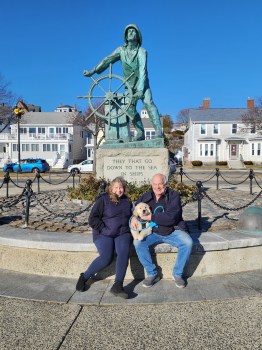
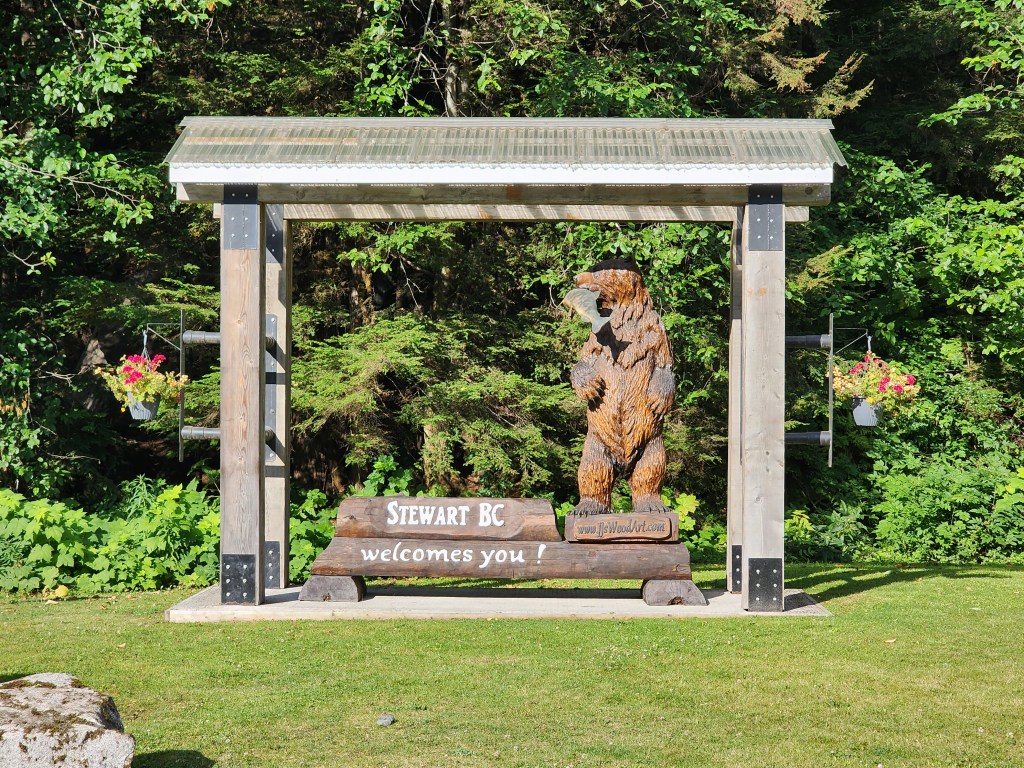
We headed further south to Stewart, British Columbia which is about 5 miles from the border with Alaska and the town of Hyder.
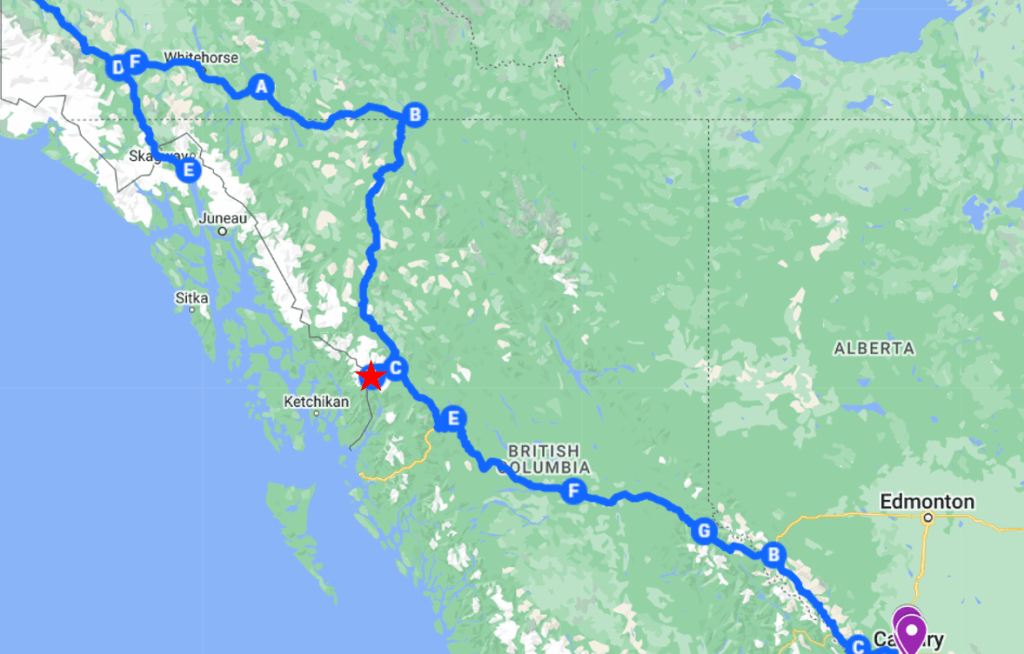
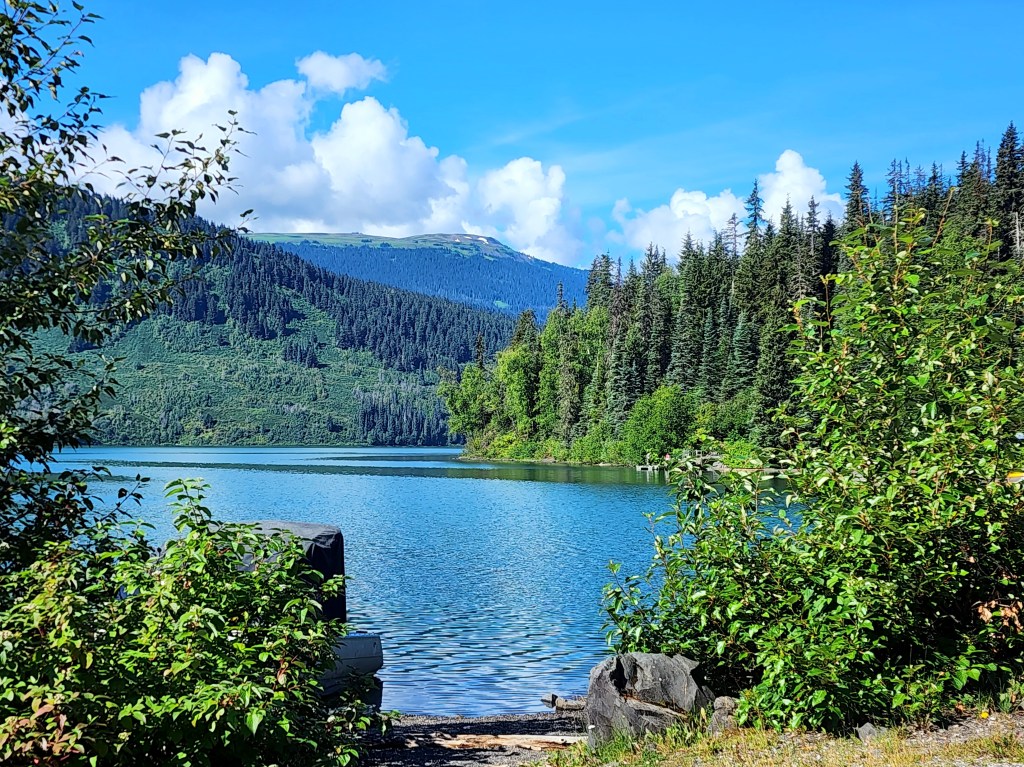
We were supposed to camp a night along the way, however all of the campgrounds were either closed or had been commandeered as housing for the road repair contractors. It ended up being an eight hour drive until we reached a Provincial Park at Mezidian Lake. It is a beautiful place and in the late afternoon, we snagged the last campsite with no hookups (it’s called boondocking).
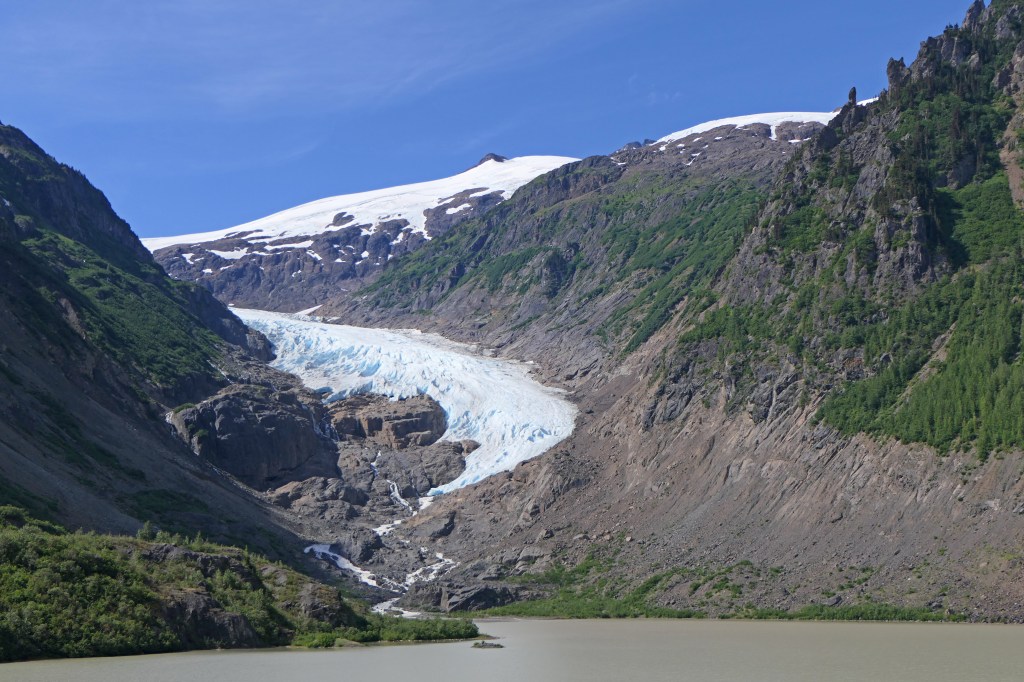
The good news was the next day we had a short and beautiful trip back out towards the coast to Stewart and on the way we passed Bear Glacier.
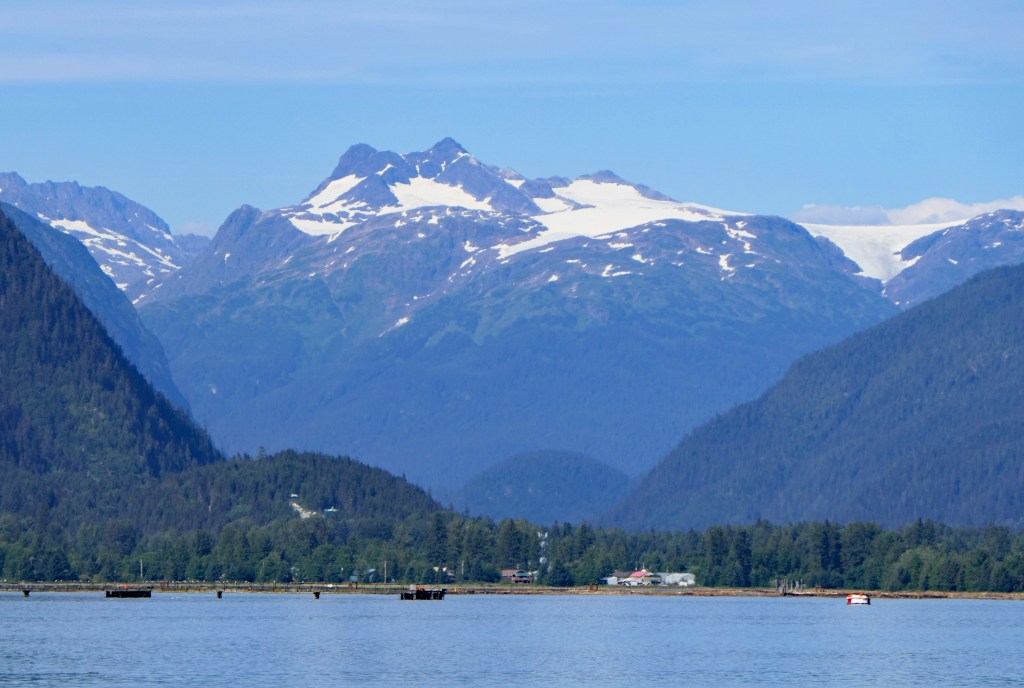
Stewart is at the head of another very narrow fjord, the Portland Canal. Before the crash of 1929, the town had over 10,000 people, now it has ~500. In those days, the town boomed because of the ocean access and the gold and silver mines nearby.
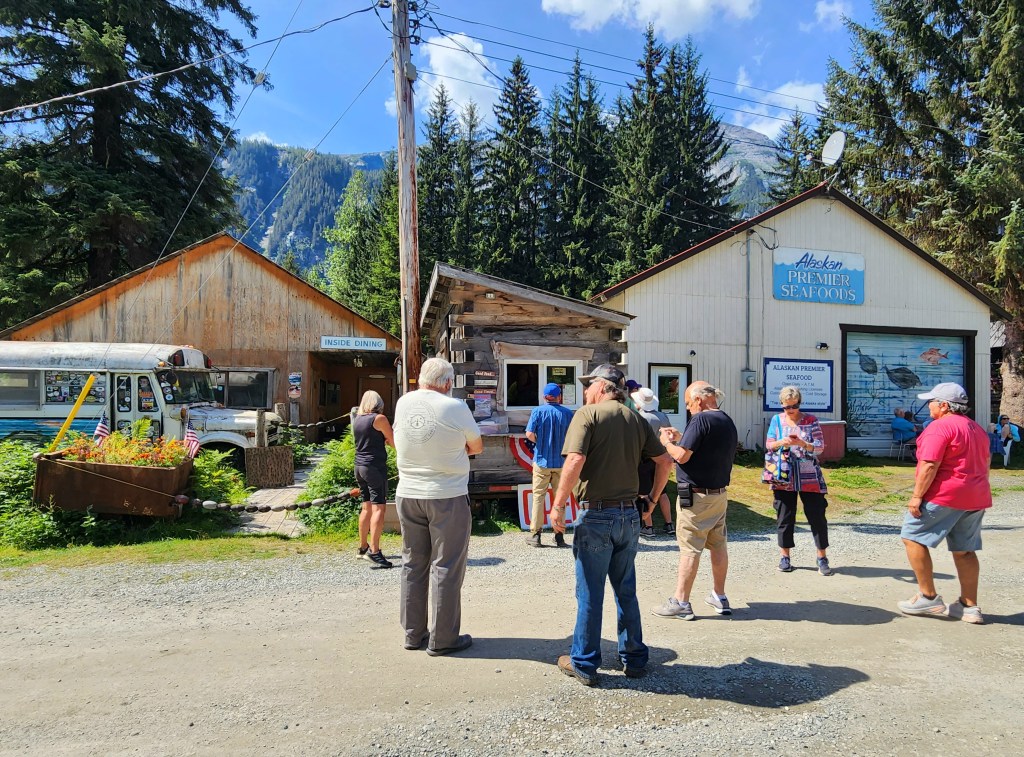
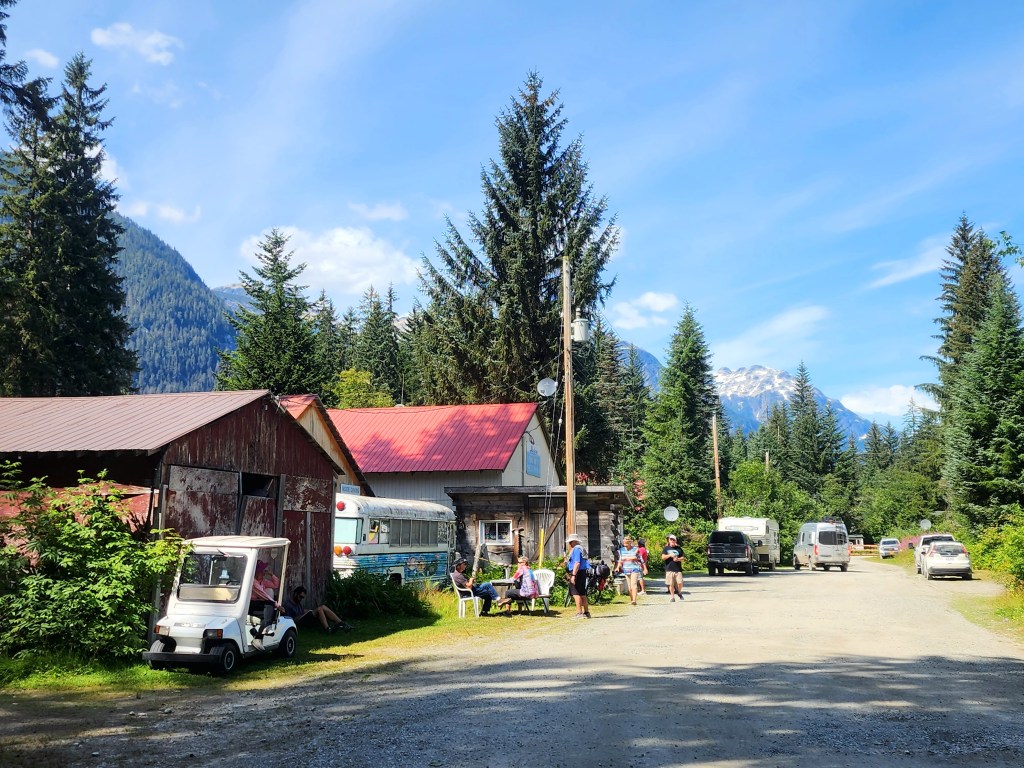
Nearby Hyder calls itself the “friendliest ghost town in Alaska” and only has a population of a 100 or so folks now. The best place to eat is called the Bus that is run by a woman whose husband catches the halibut and shrimp that she fries up and sells for a few hours most days. She used to cook out of the bus, but now has a nice little shack. Popular place, and the food was truly delicious!
Other than her great food and the homemade fudge at a little gift shop nearby, one of the big draws now is the salmon stream, Fish Creek. On Fish Creek, the Tongass National Forest has a bear viewing platform, where the bear come in to feed on the spawning chum (also called dog) salmon that are easy pickings. They are called that because they are not all that great for us humans to eat. We didn’t see any bear (missed one by ~10 minutes), but the views of the unbelievable numbers of salmon spawning were really cool. All the little black marks in this picture are a salmon writhing their way up stream. Some people stay there all day, trying to catch a glimpse of the bears feeding.
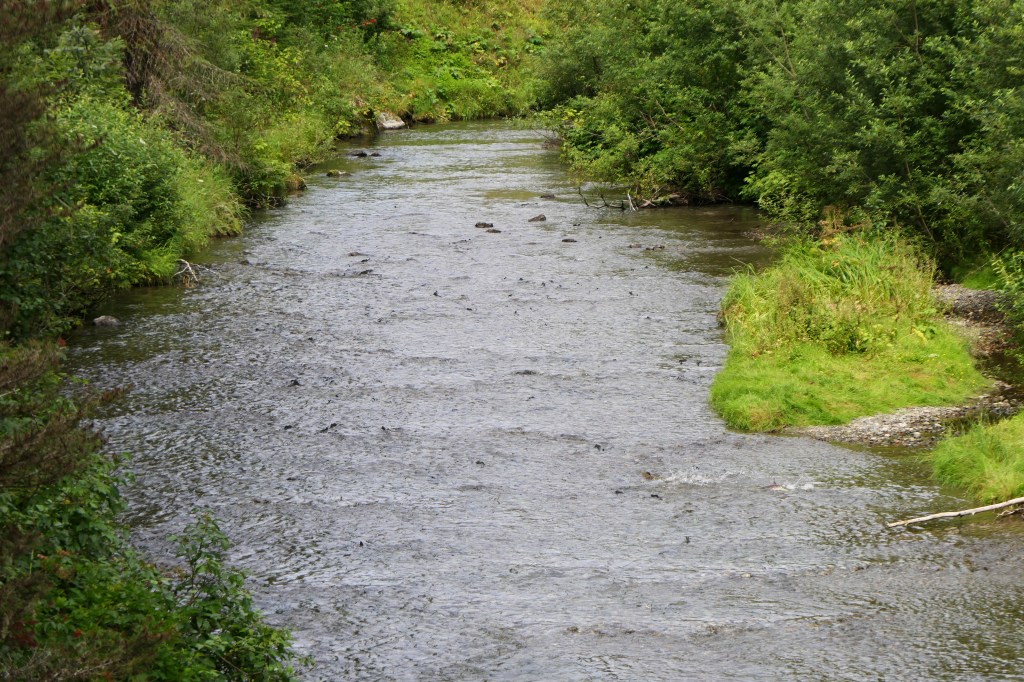
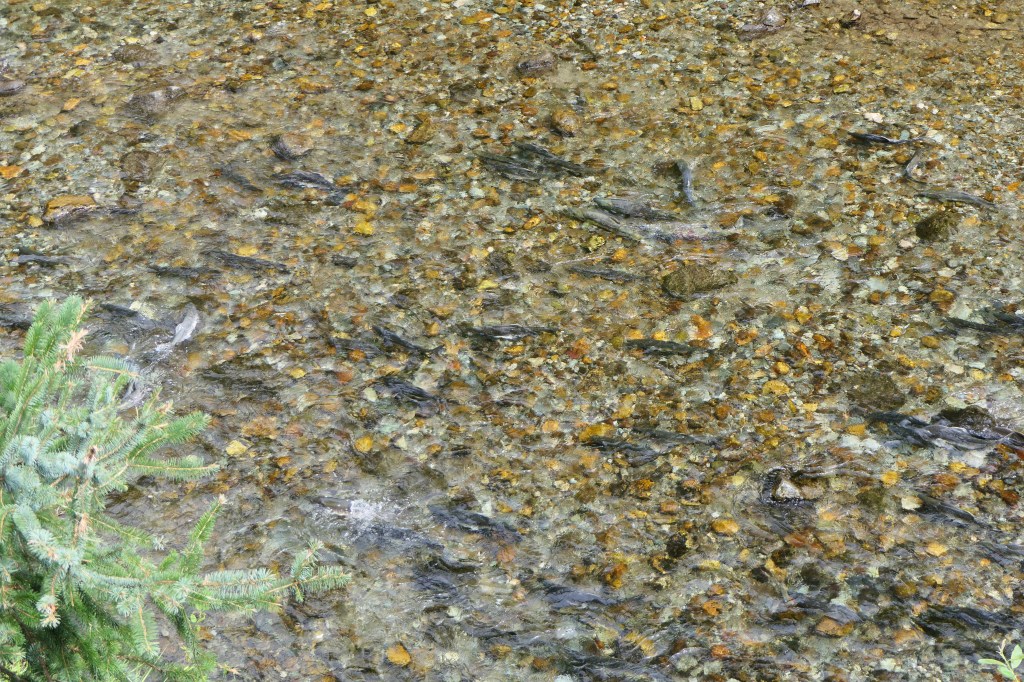
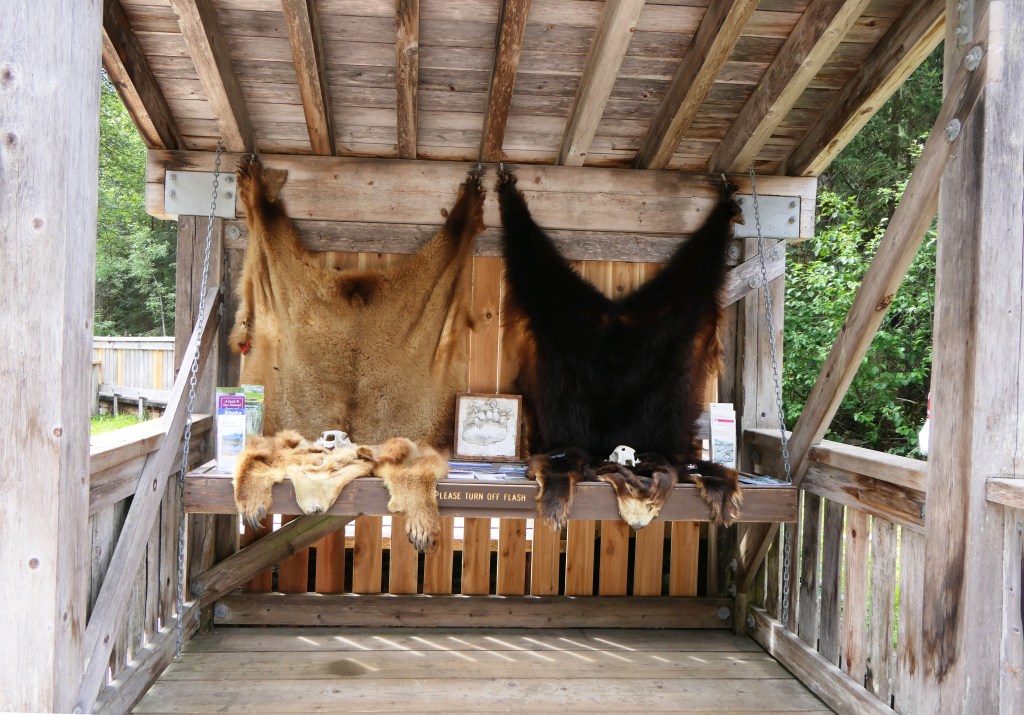
They have a nice display showing the differences between grizzly and black bears, both feed in the stream.
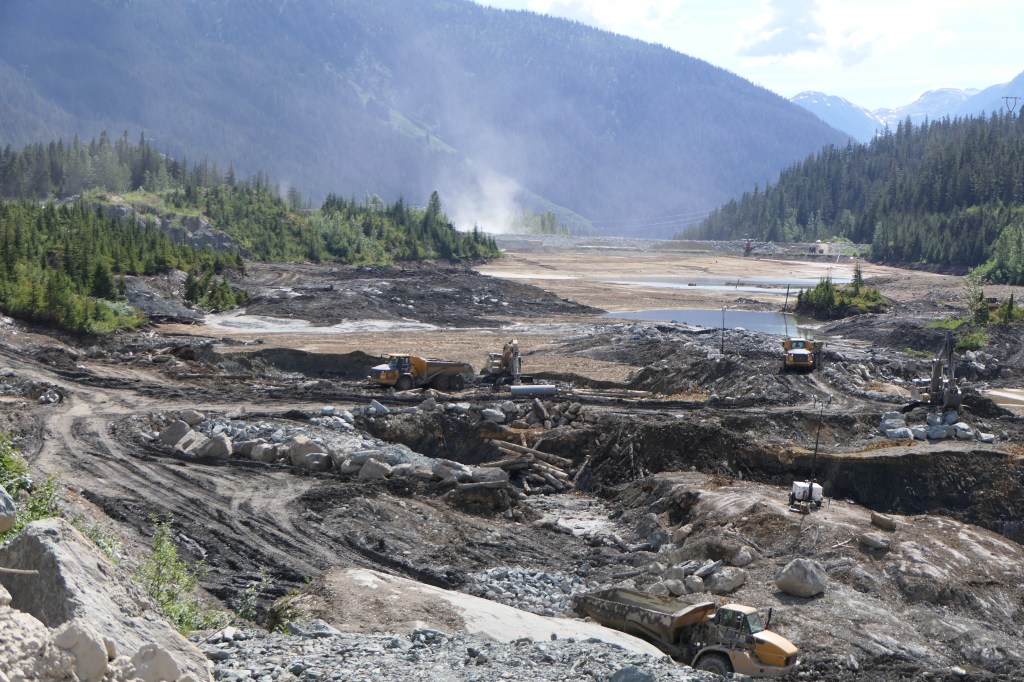
Further down the road, the Premier gold and silver mine is being reopened after historically producing a large amount of ore in the early 1900’s. It is going to continue operation as a underground mine, and currently there are extensive efforts ongoing to improve the mining infrastructure including hydropower, surface water and tailings management. The project is projected to bring in almost 4 million tonnes of gold and silver.
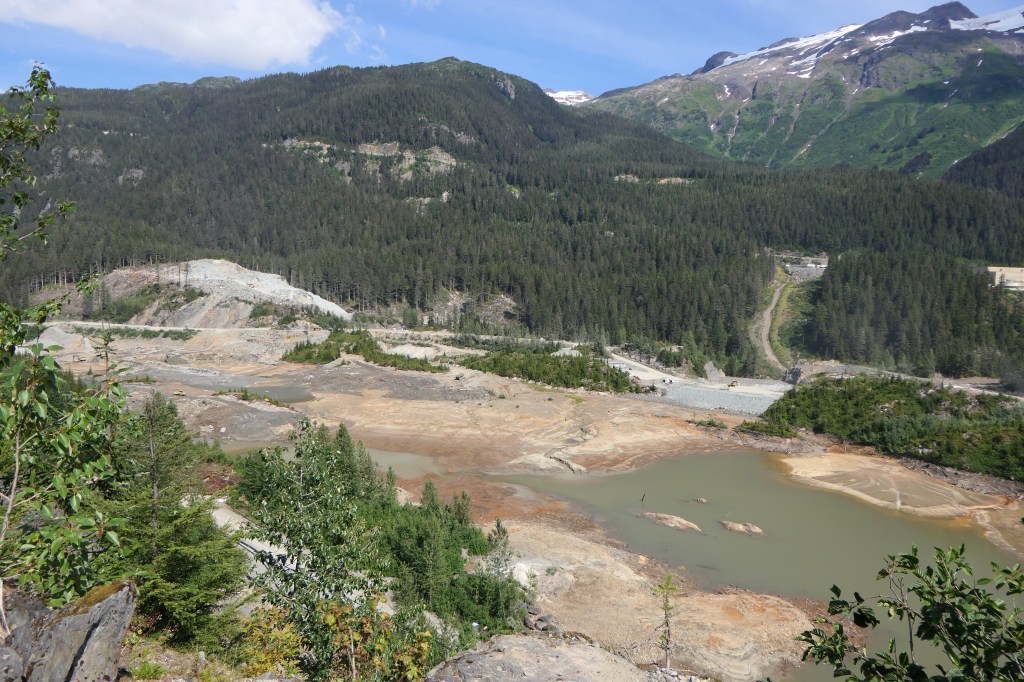
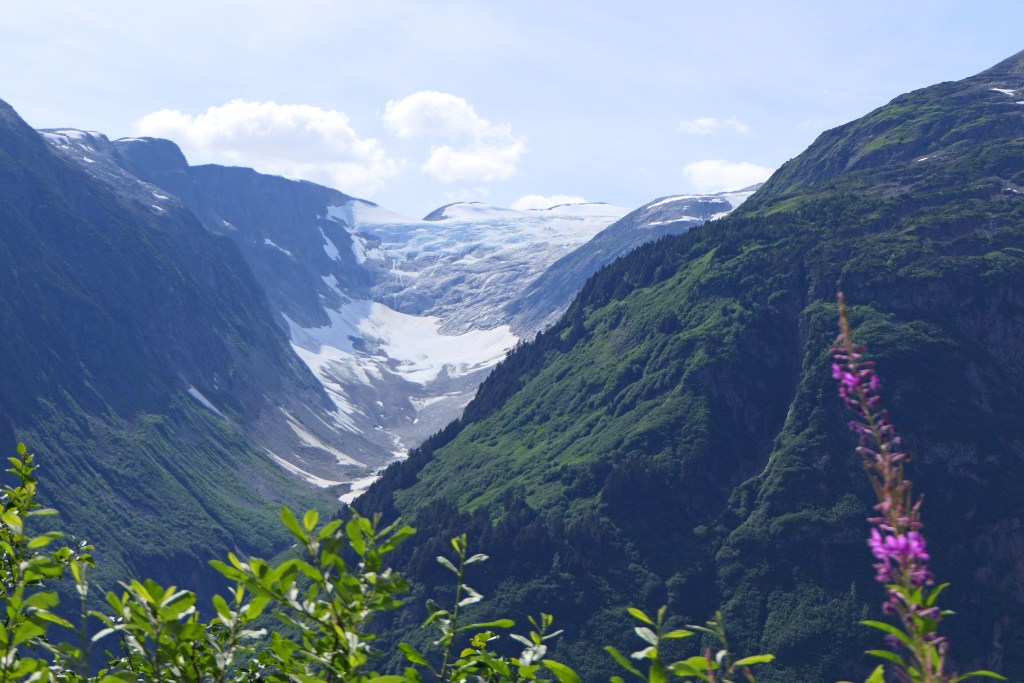
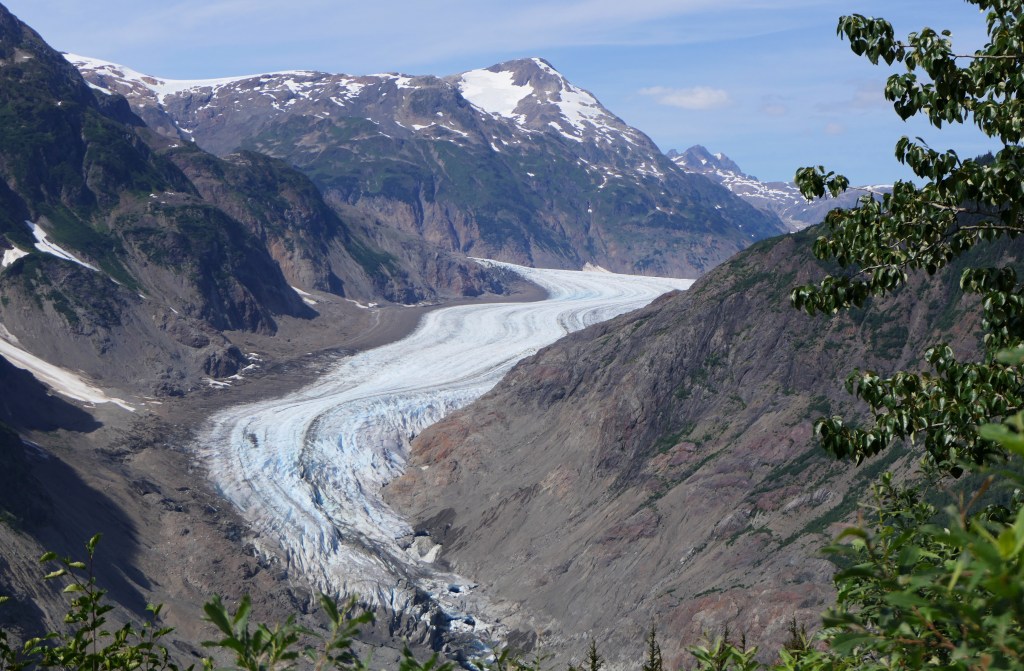
Beyond the mine, the road continues to Salmon Glacier, a nail-biting drive with no guard rails and incredibly steep drop offs. I don’t have a lot of pictures from that drive 🙂
Next, heading further south to the Canadian Rockies.
 3 For the Road