Recent Posts – also see link in the menu above to the right.
RV Trip West – Spring 2026
Arizona – Petrified Forest National Park
We stayed in a town called Show Low. It was very interesting how it got it’s name. Supposedly two men owned a huge ranch, but no longer got along. They decided to play poker to decide who would get to keep the ranch. The game went on and on until one suggested they “show low” which meant the one with the lowest card in their hand would win. One of the men had the 2 of spades which was the lowest card and won. The main drag in town in called the Deuces of Spades. The campground is at 6,400 feet in the hills so it has been very pleasant, highs in the 60-70’s.
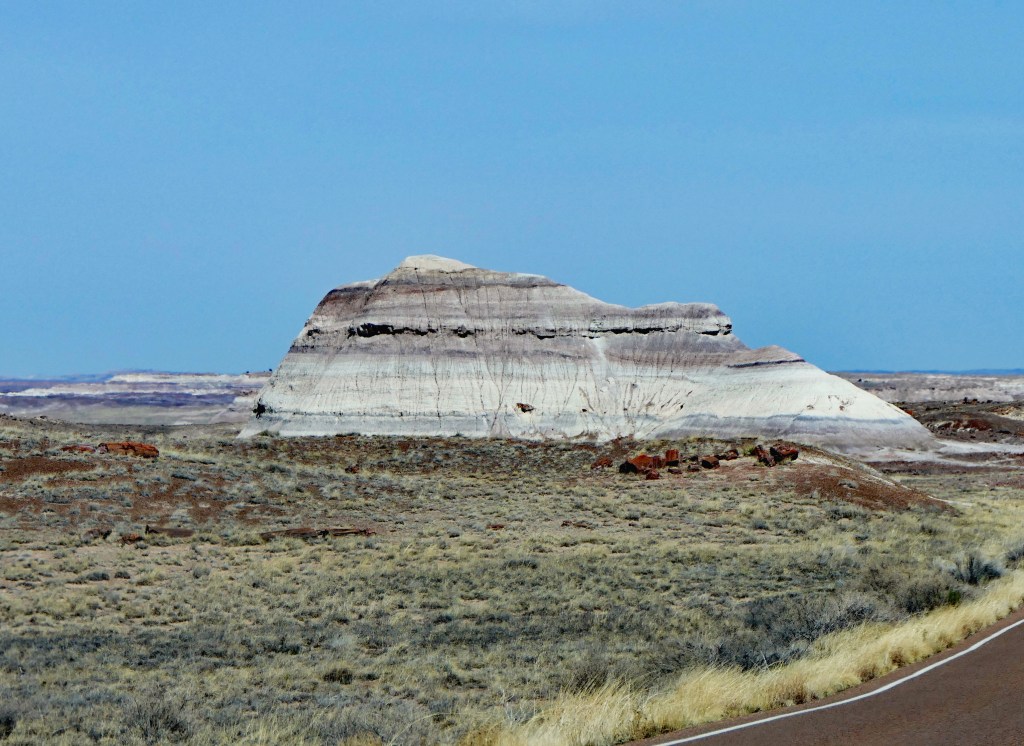
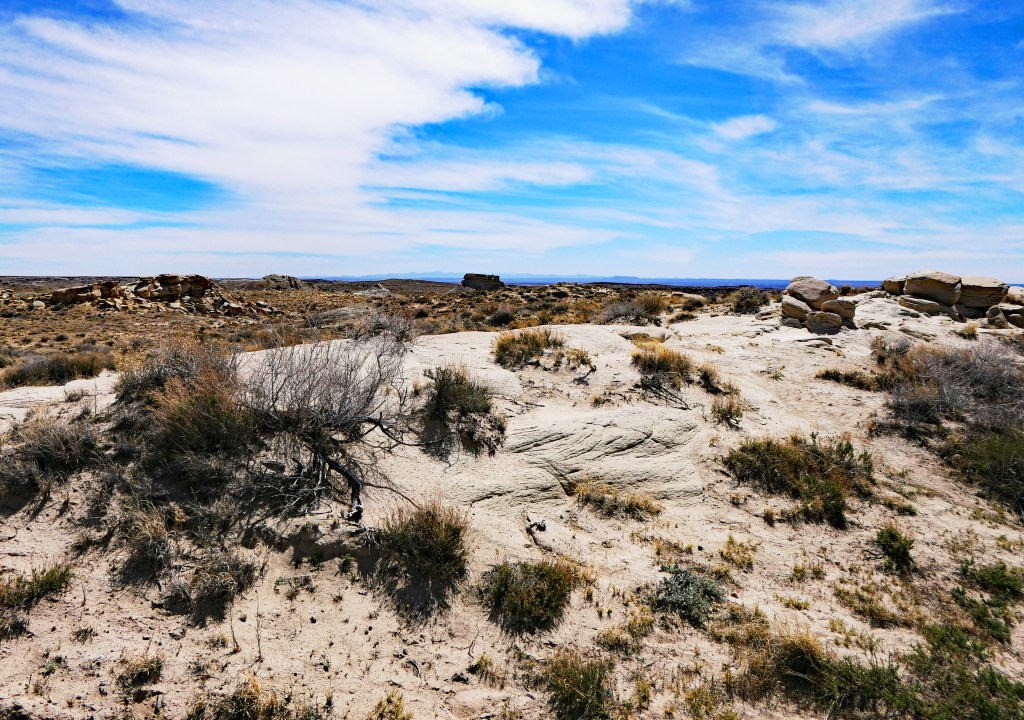
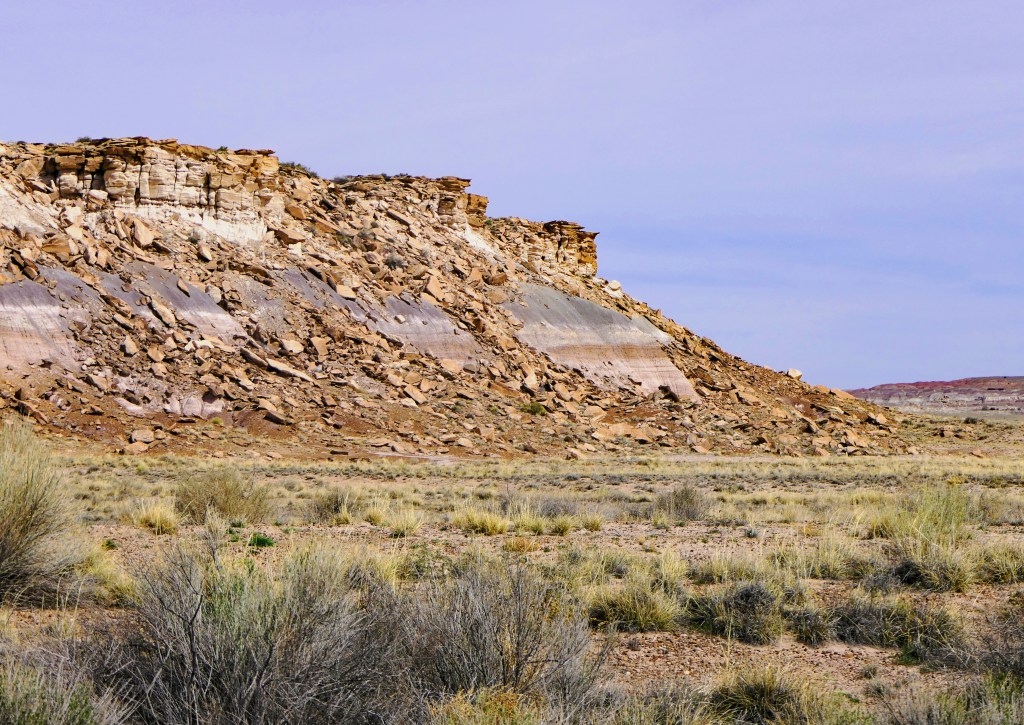
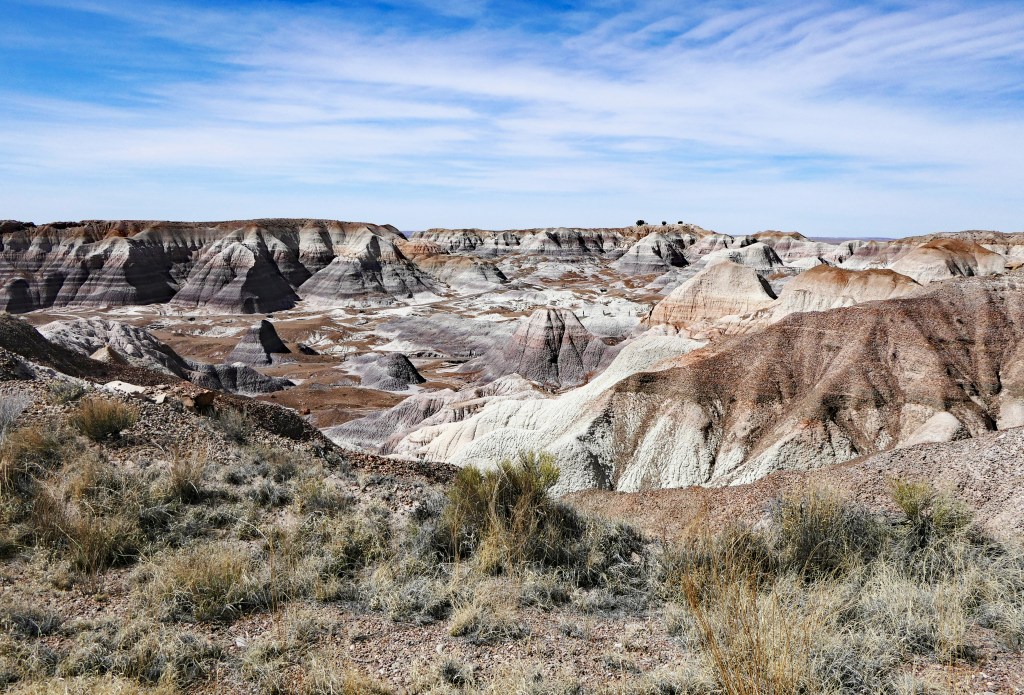
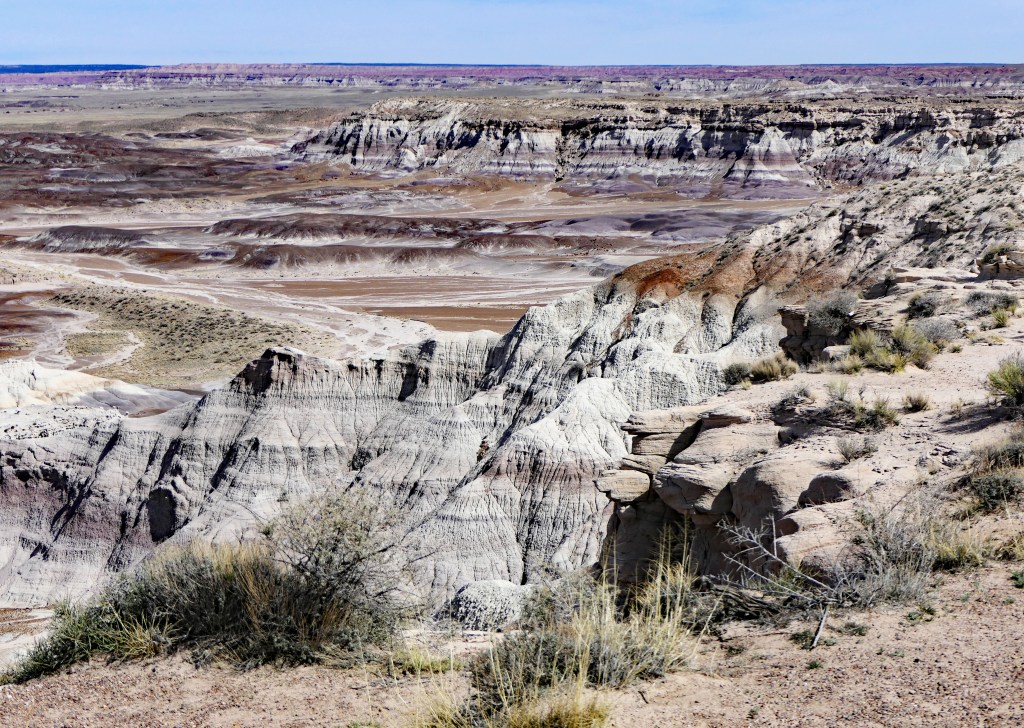
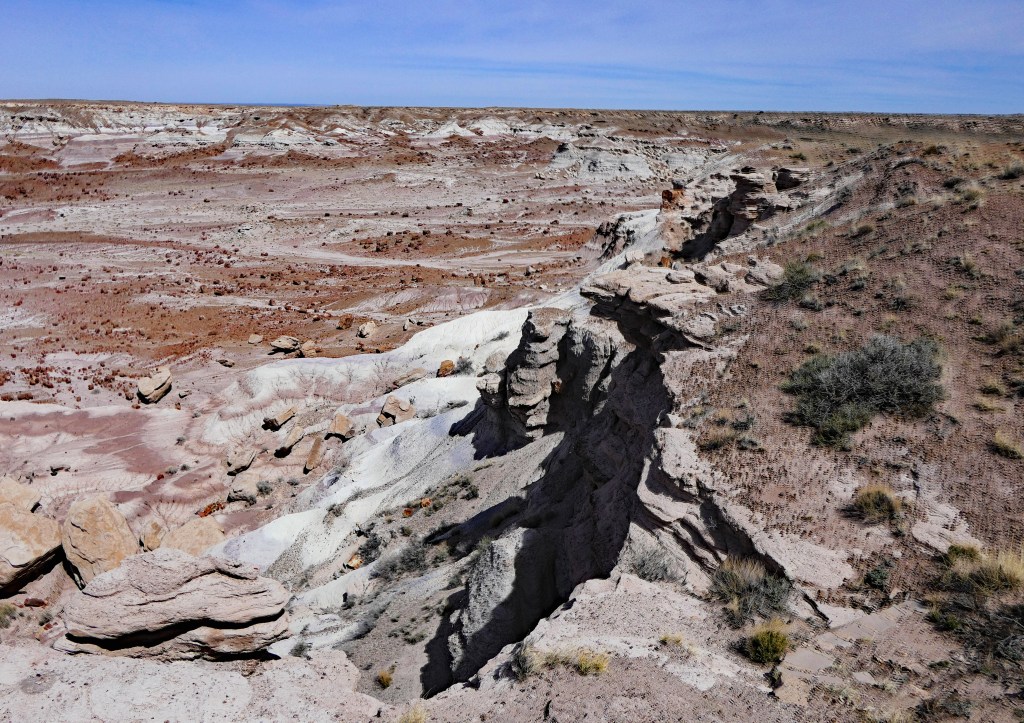
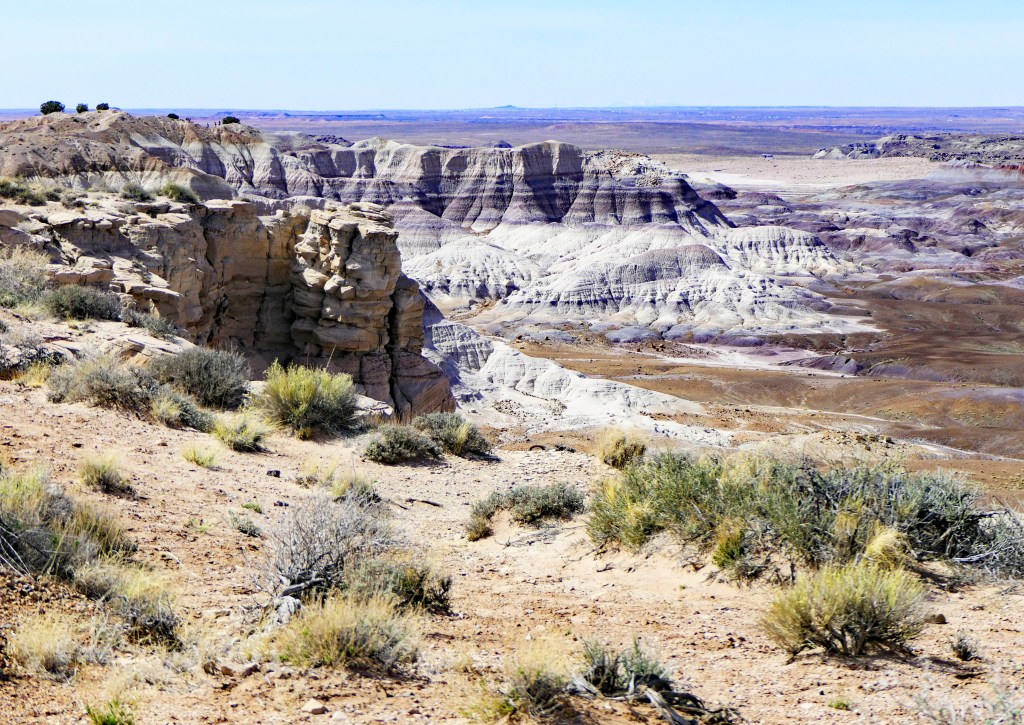
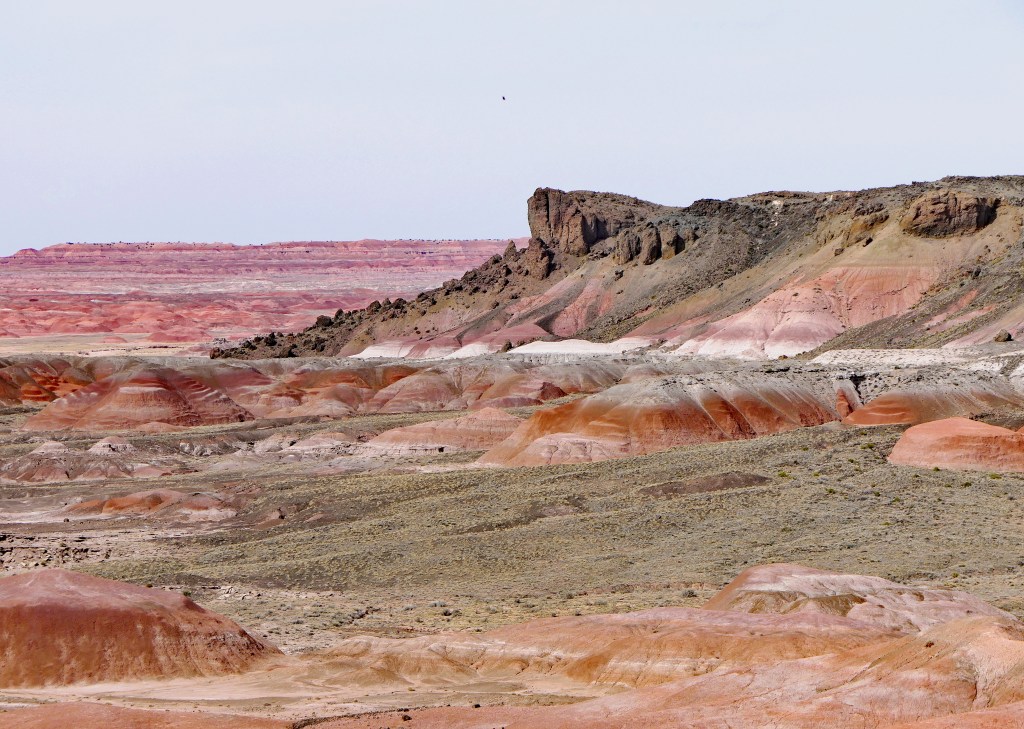
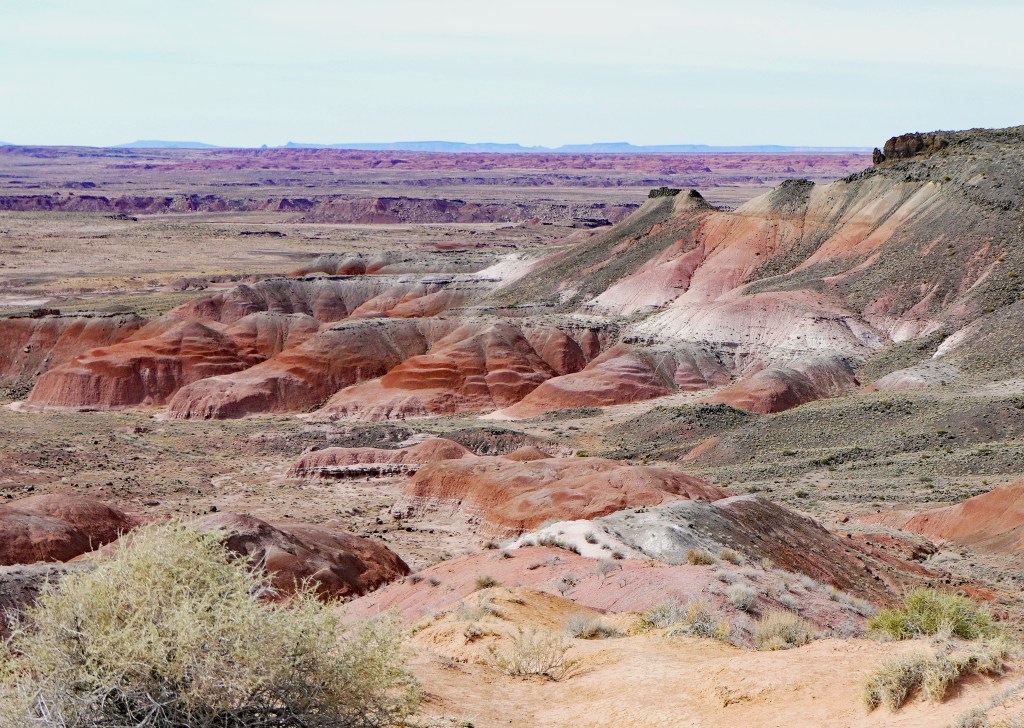
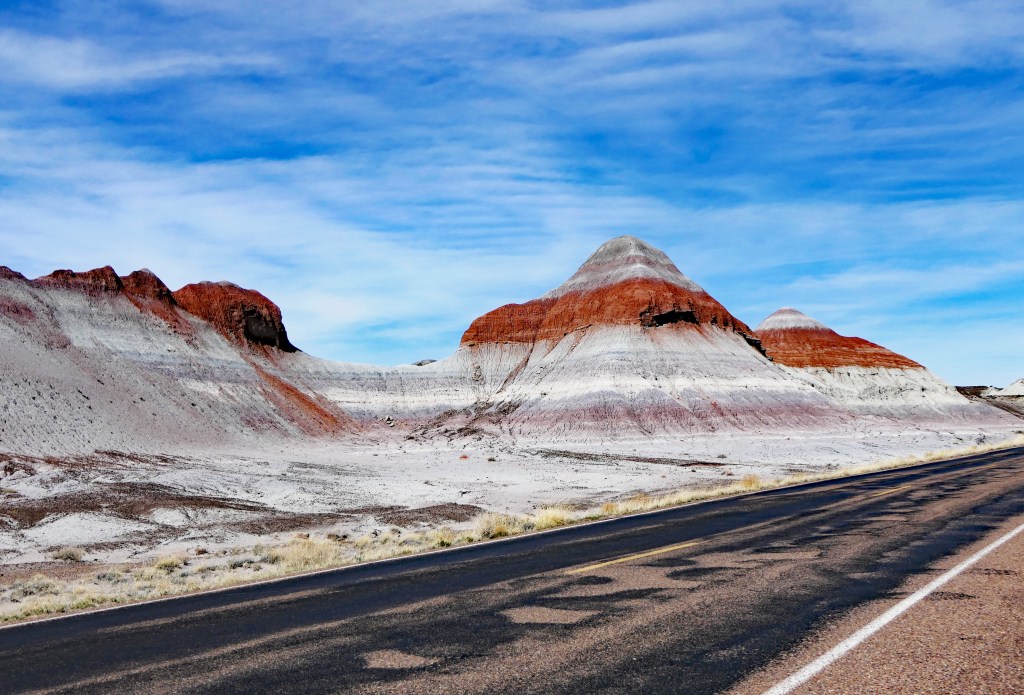
Yesterday we went to the Petrified Forest National Park which also includes the Painted Desert. It was gorgeous in an otherworldly way. We started at the southern end which is where most of the petrified remains from a forest millions of years ago are found.
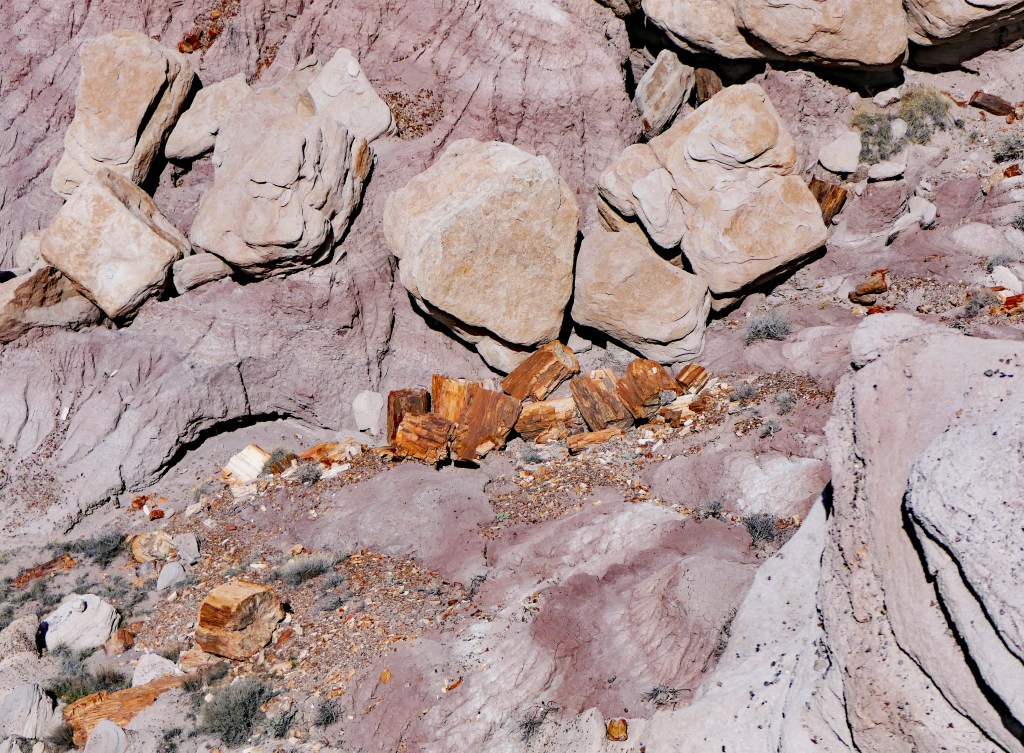
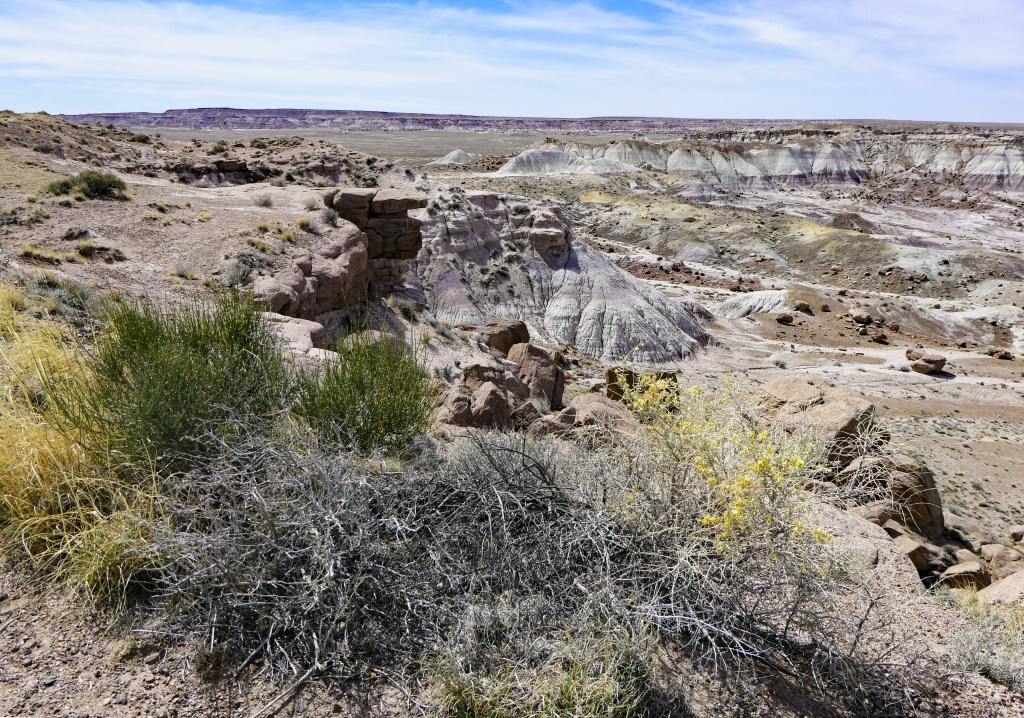
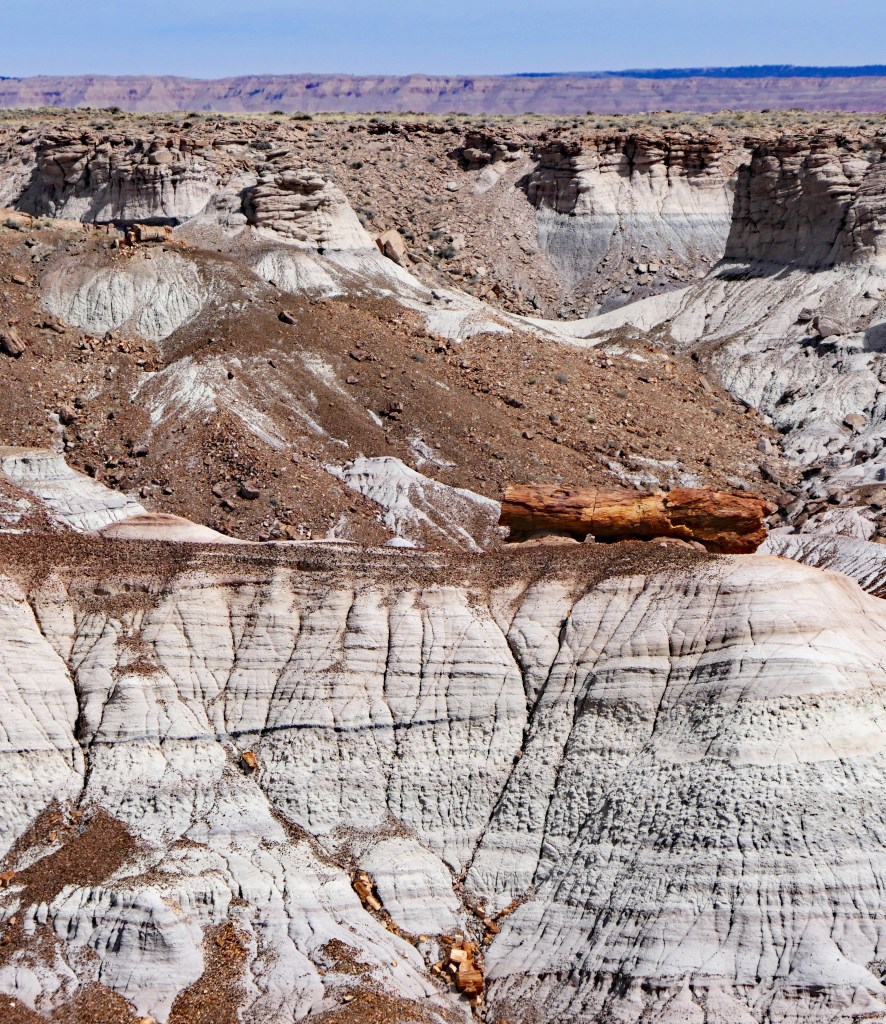
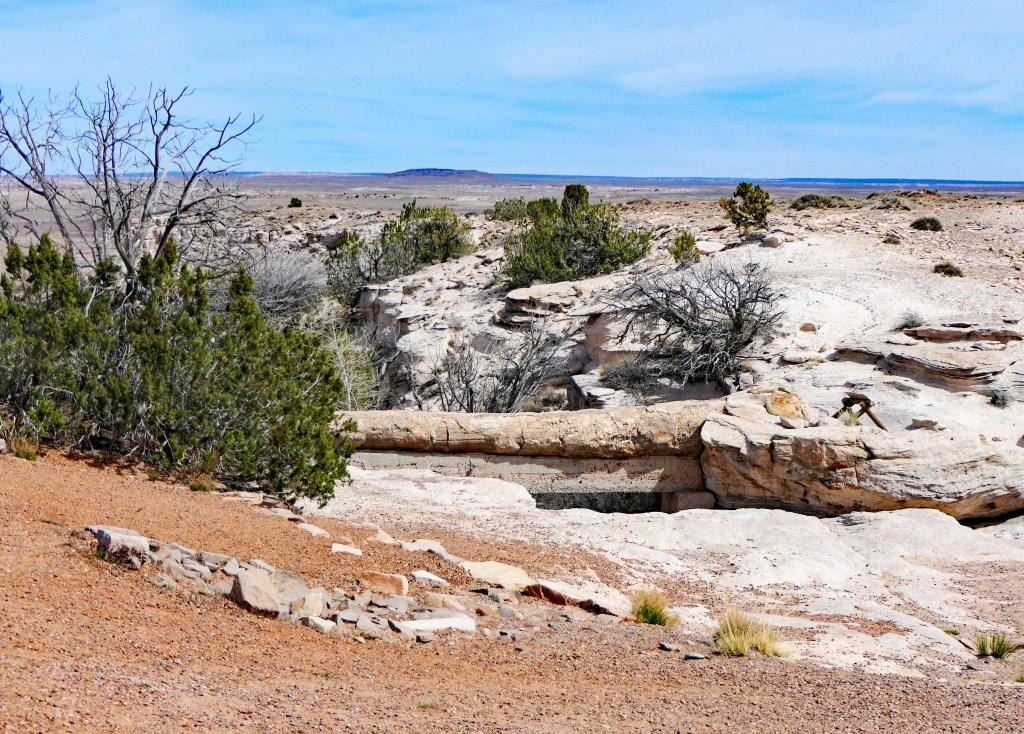
This petrified log is 110 feet long. The logs look like they were cut by a chainsaw but it was because of the crystalline structure of the petrification. It was historically reinforced with concrete to keep it in place.
The geology of the area is incredibly interesting, with layers that show the evolution of the area for millions of years. In millions of years ago the area was a jungle if you can believe it! They have found not only dinosaurs but an animal that looks like a dinosaur but is actually closely related to crocodiles.
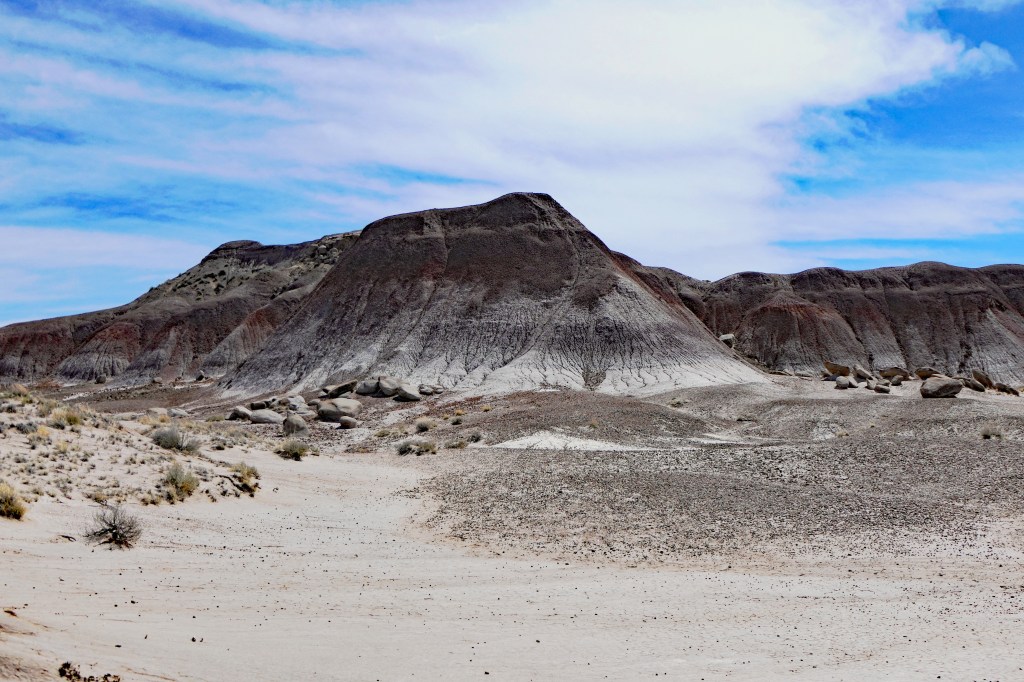
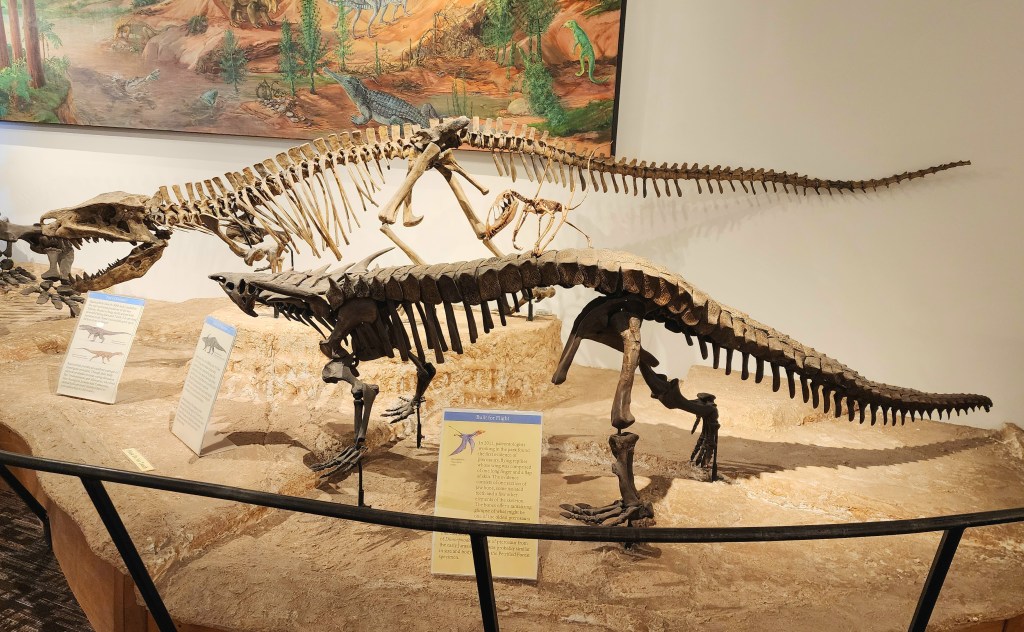
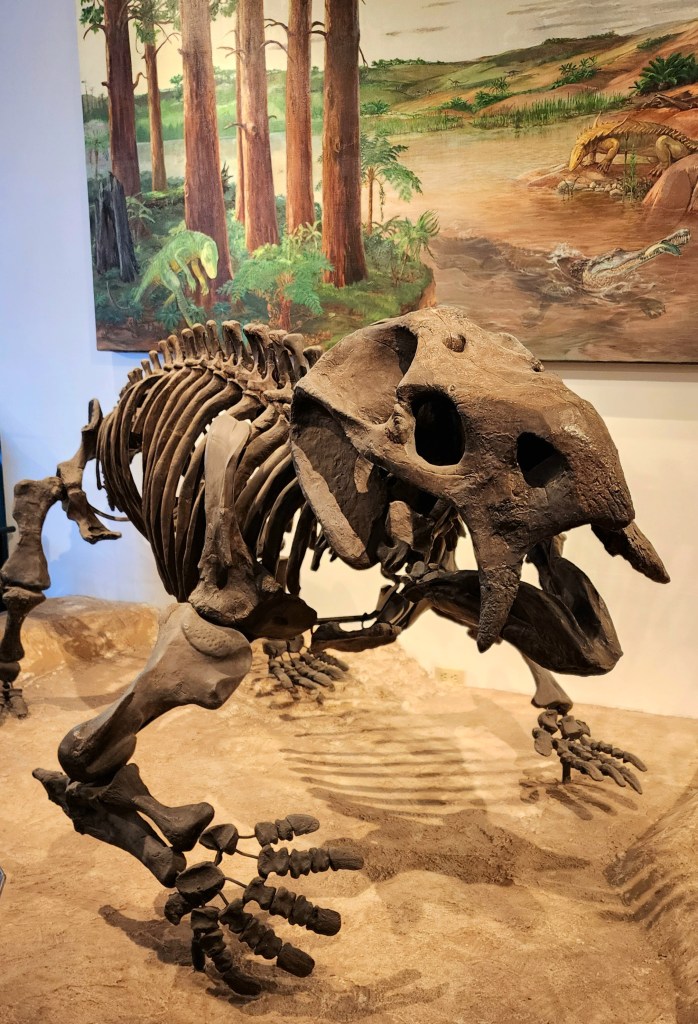
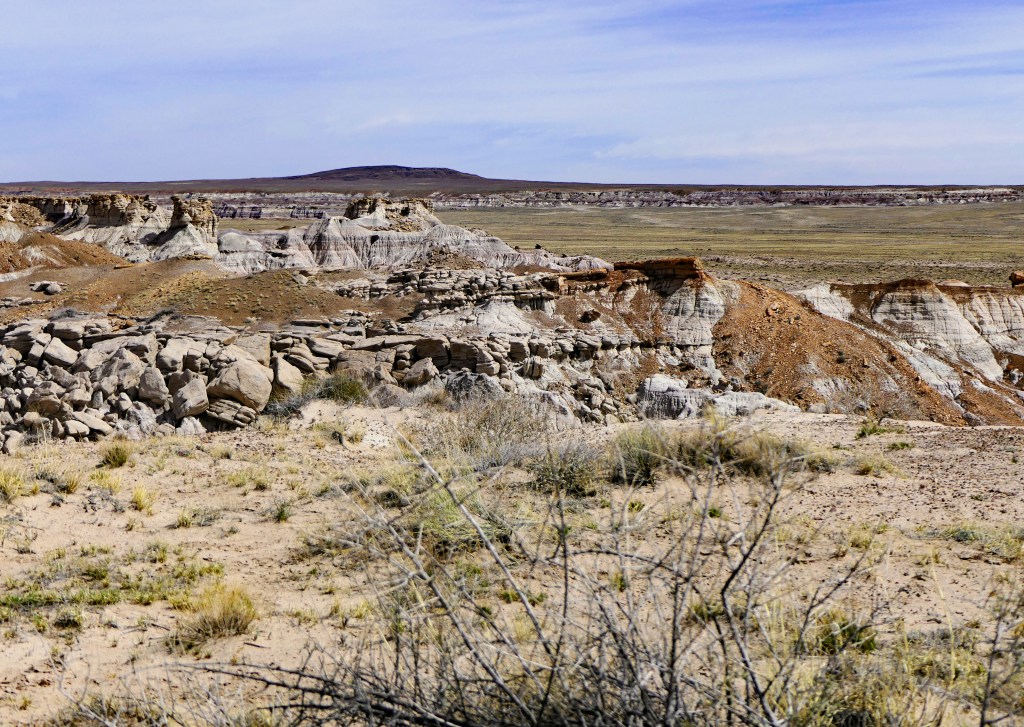
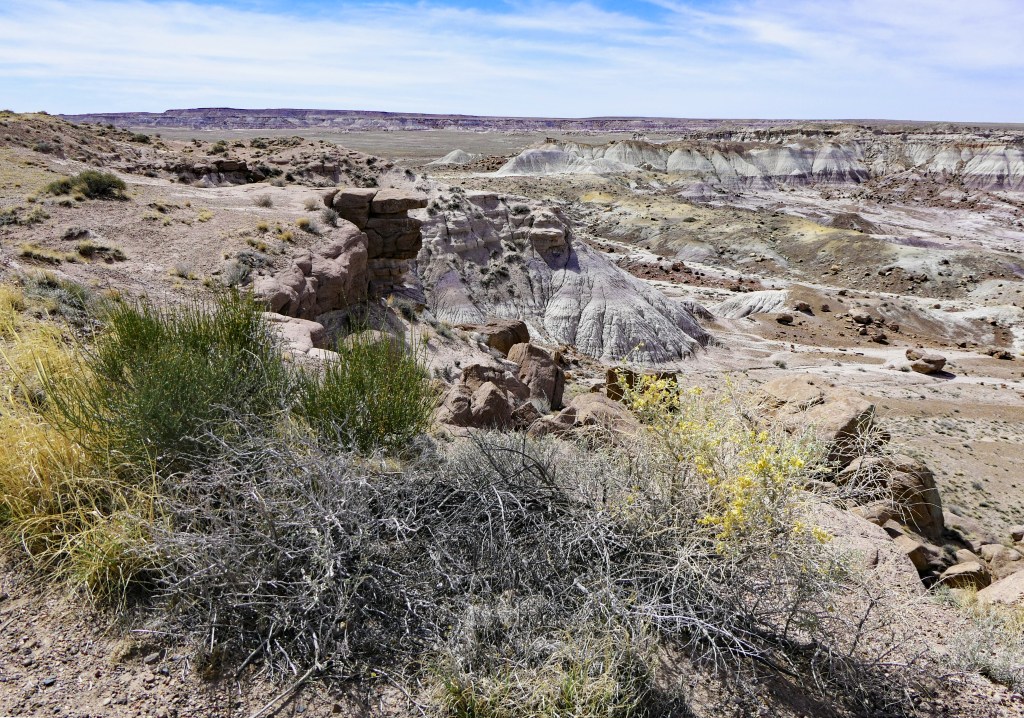
As we drove north we transitioned into the Painted Desert area of the park. This is were the geologic layers were most distinctive. The layers show the evolution of the millenia of changes in the habitats of the area during evolution and the deposition and weathering of the sedimentary layers.
The Painted Desert Inn.
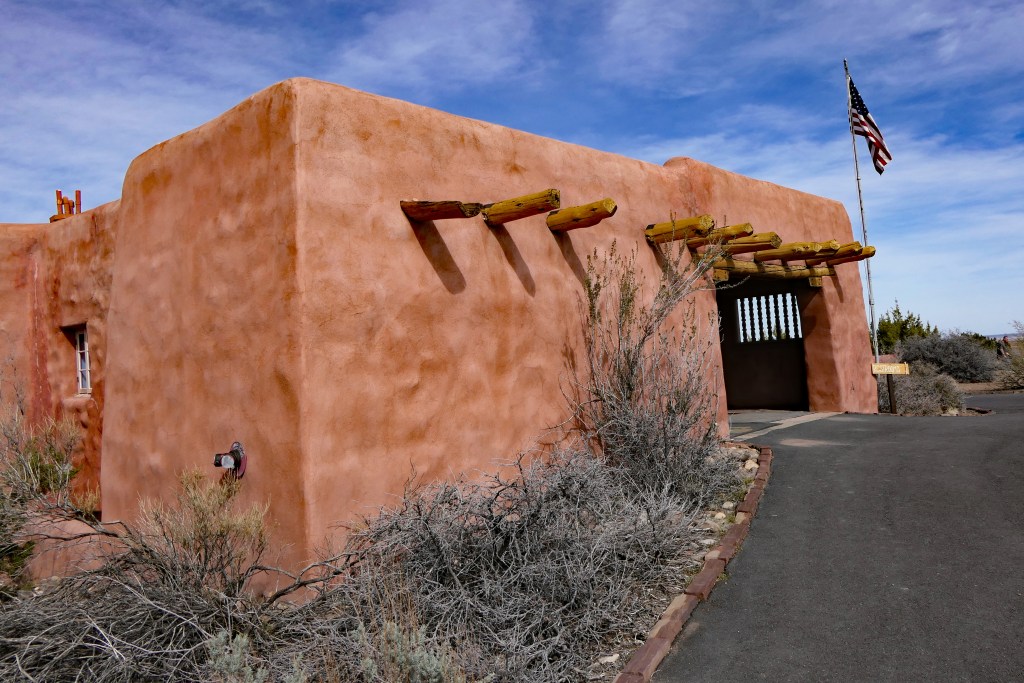
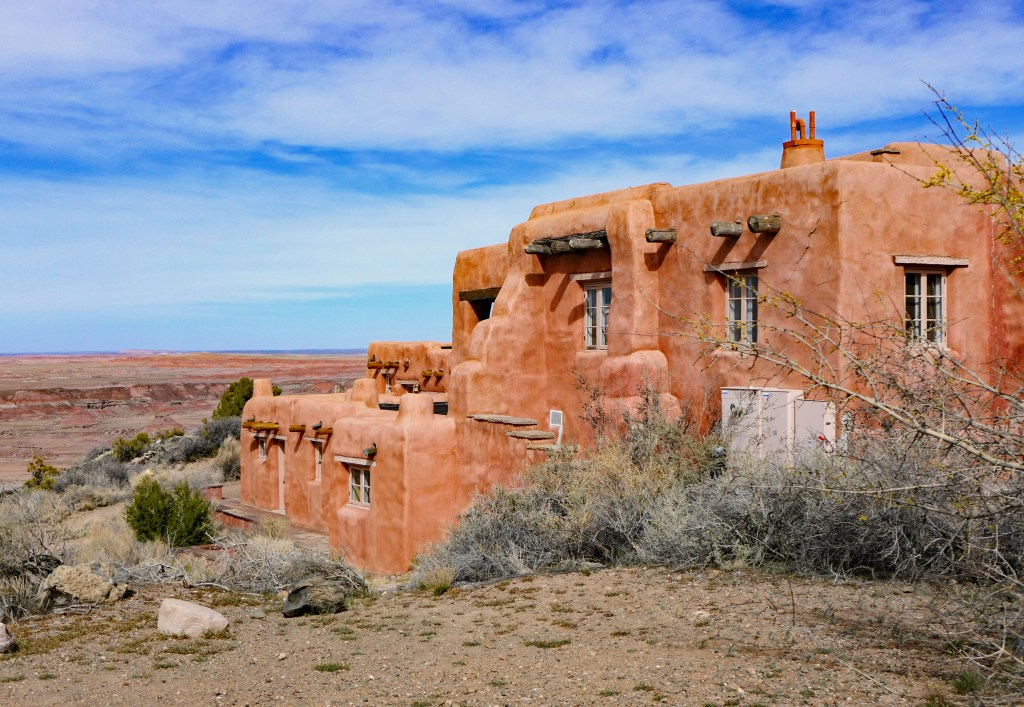
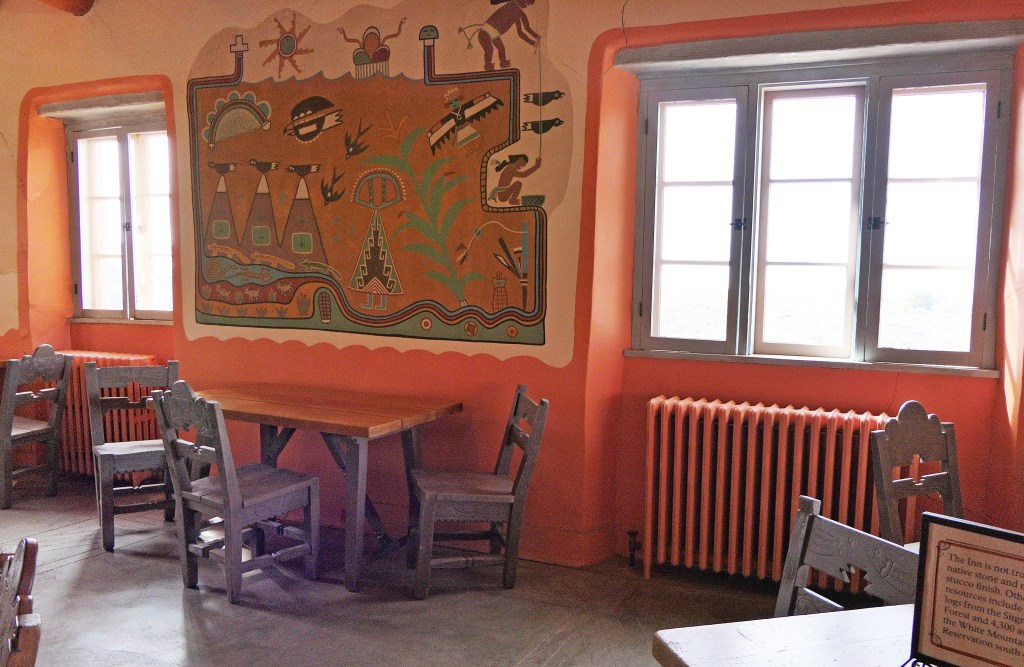
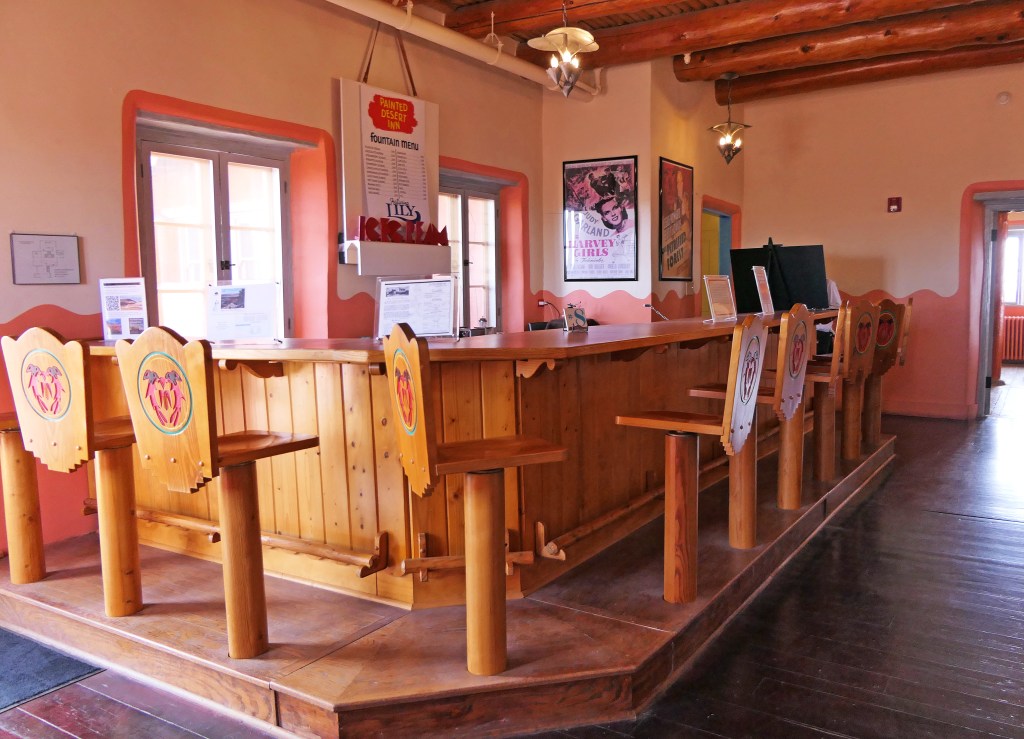
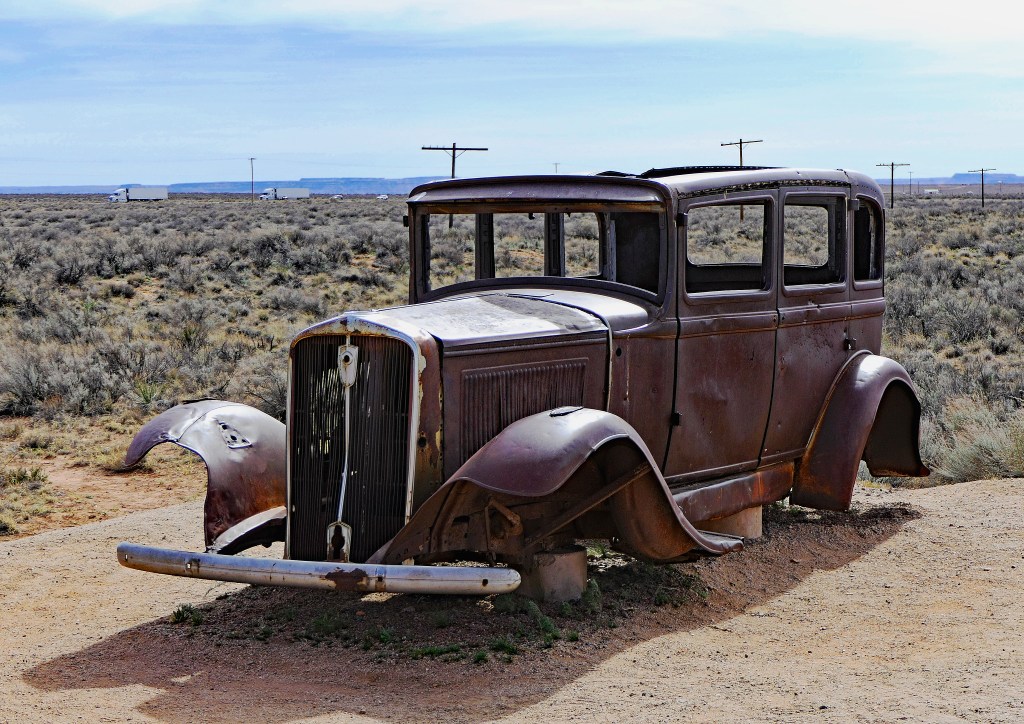
At the very northern end of the park it joins with a remnant of the old but famous Route 66. This picture is a 1926 Studebaker and the poles behind it line the old highway which has been reclaimed by the land.
Safari Stop #3 – Namiri Plains Camp in the Serengeti, Tanzania
The managers Ann, Mennina, and Edwin had a lovely sendoff for us in the morning from Naboisho. We all agreed that the people in Kenya are some of the warmest and most caring folks we’ve ever encountered traveling.
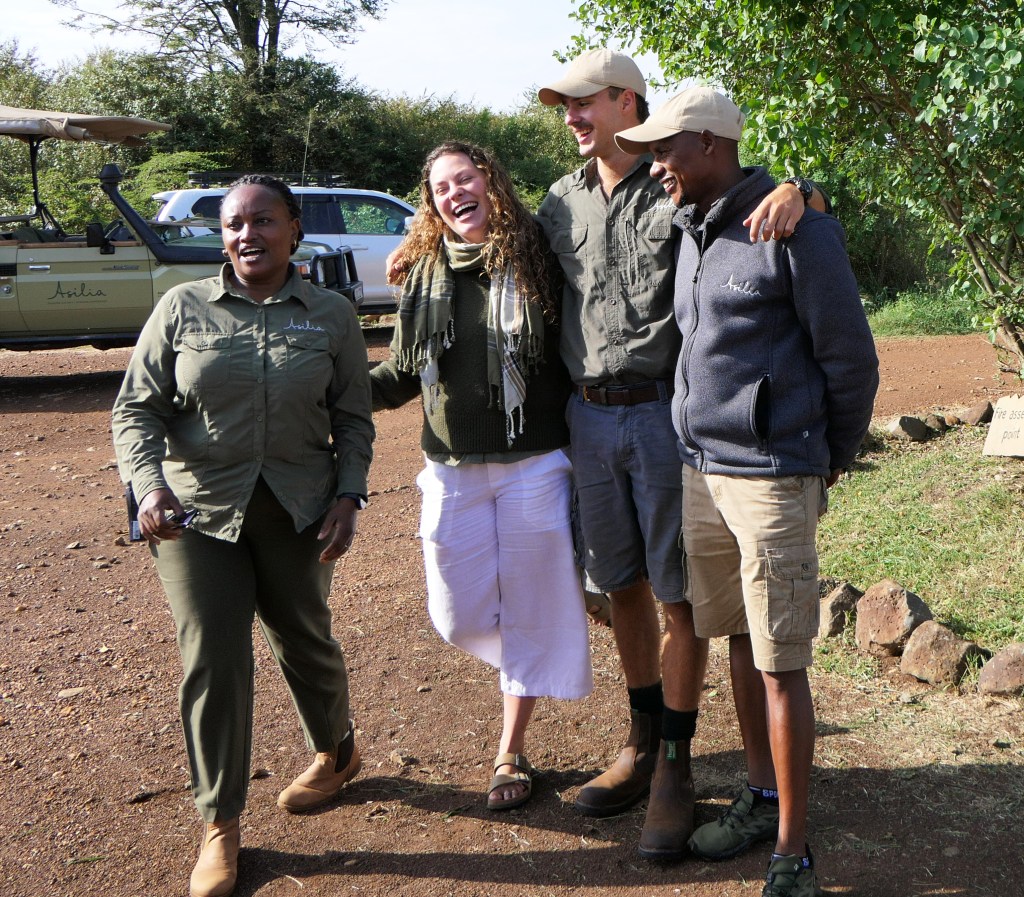
Departing from Naboisho we had a long drive to the air strip and then flew to another airport near the border of Kenya and Tanzania. There we were met by a driver to take us through immigration and across to Tanzania. Then another air strip and the flight to the Serengeti. It took most of the day. We were met on arrival by our guide for this camp, Nangida, and off we went.
When on safari, everyone talks about seeing “the big five.” These are Lions (check+++++), Elephants (check+++), Rhinos (check+++), Buffalo (check++), and Leopards 😦
Nangida told us he would find us one.
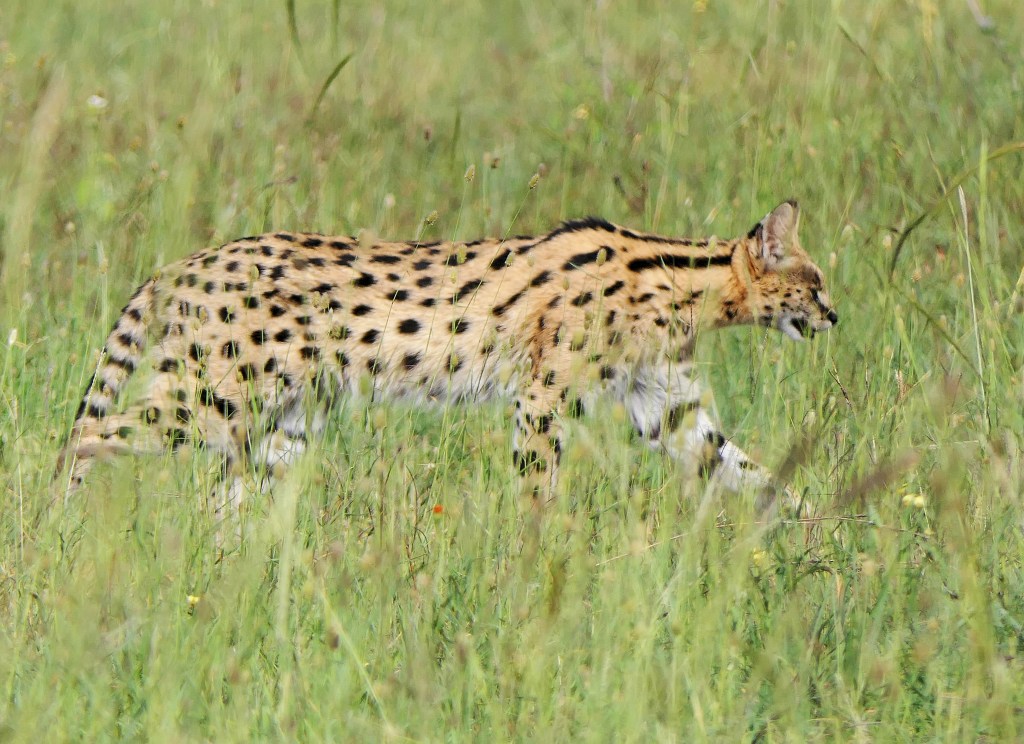
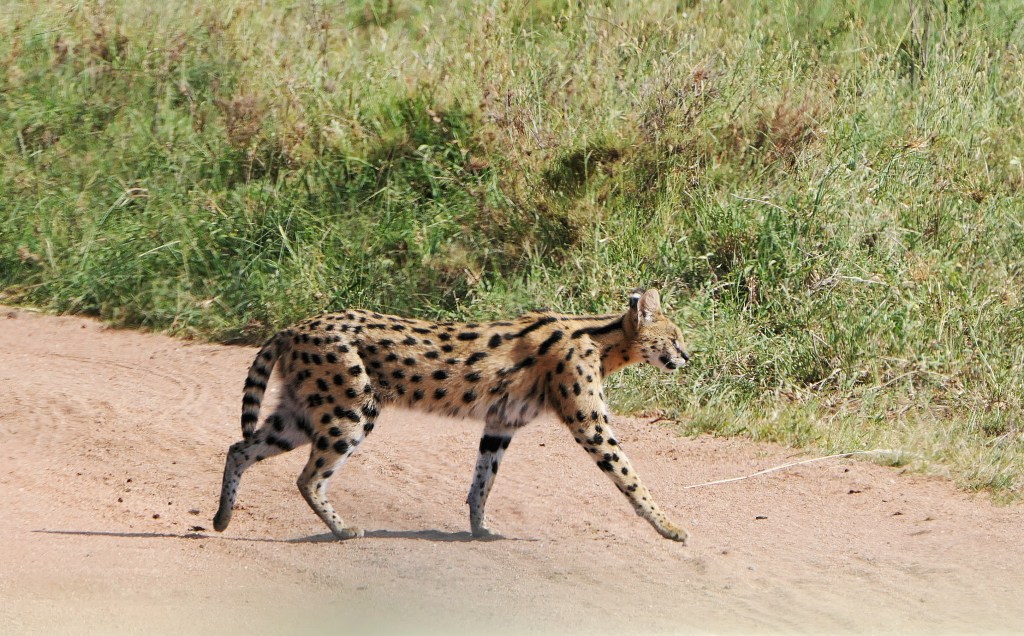
The first animal we saw on our way to camp wasn’t a leopard but close – a serval. It is a smaller cousin to leopards. He/she obligingly left the tall grass and crossed the road:)
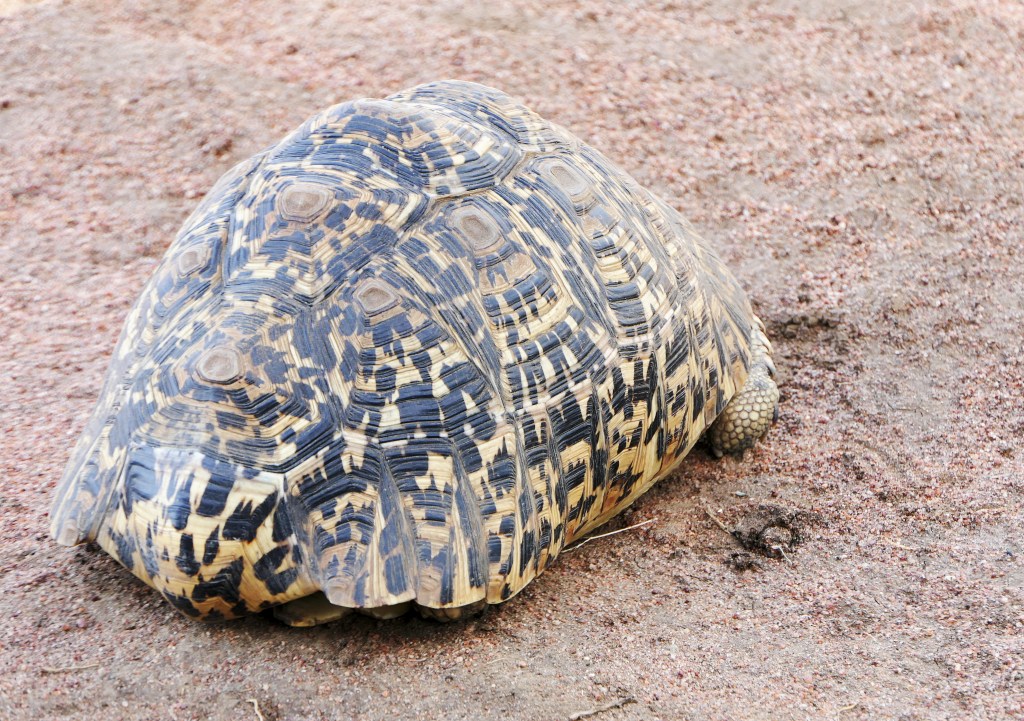
Next critter was a leopard tortoise lol. Nangari relocated it out of the road. Continuing the leopard theme…
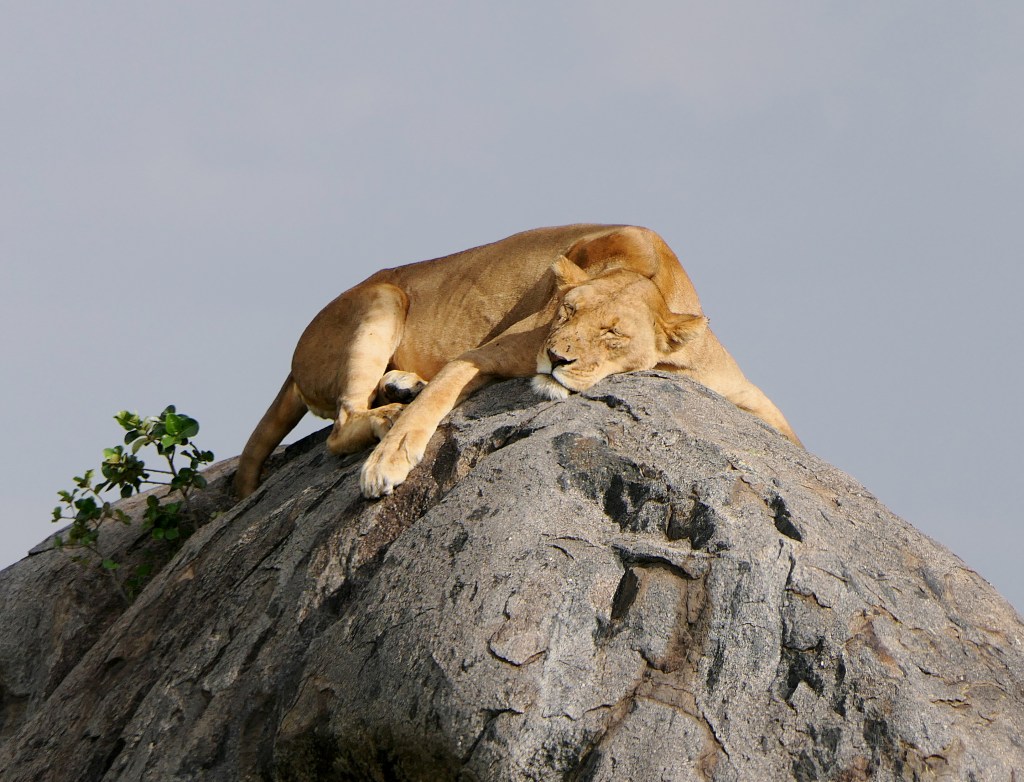
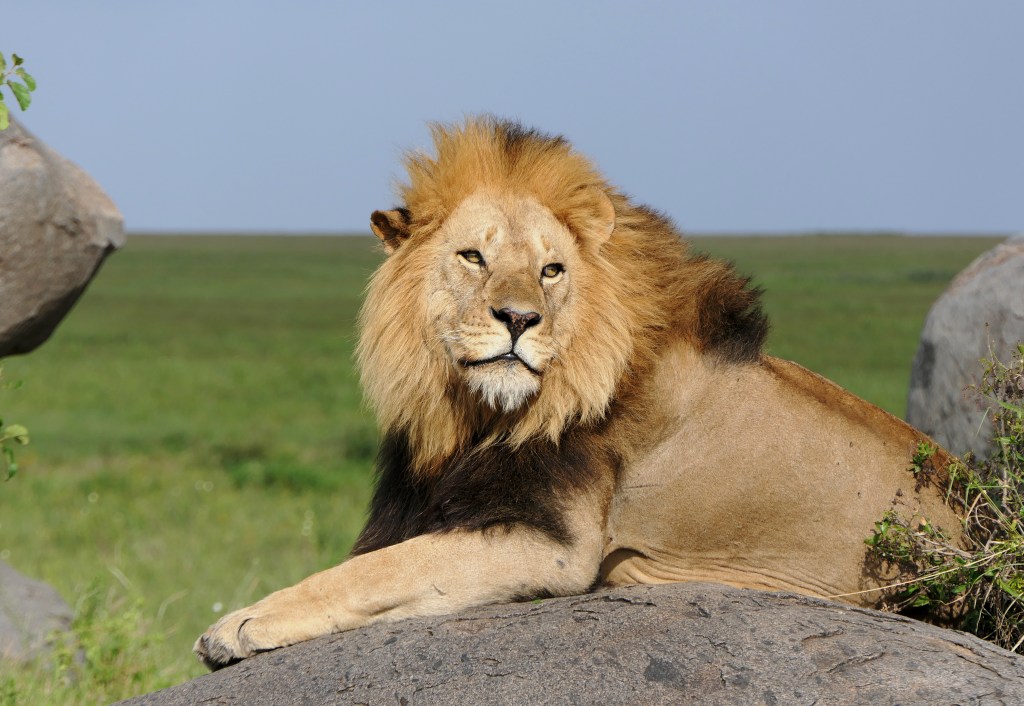
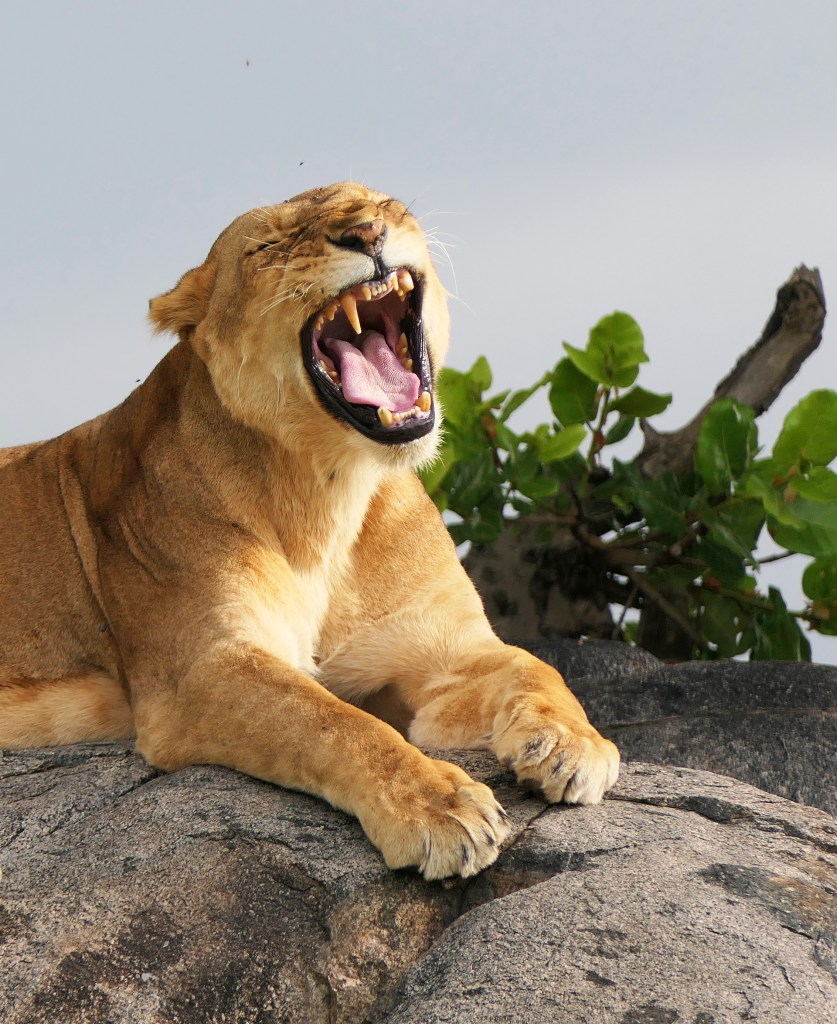
Next, lions in the late afternoon sun.
It was our first day here but I was getting a bit discouraged with all the leopard wanna be’s. Then, Nangida came through with the real thing! This boy was magnificent!!!
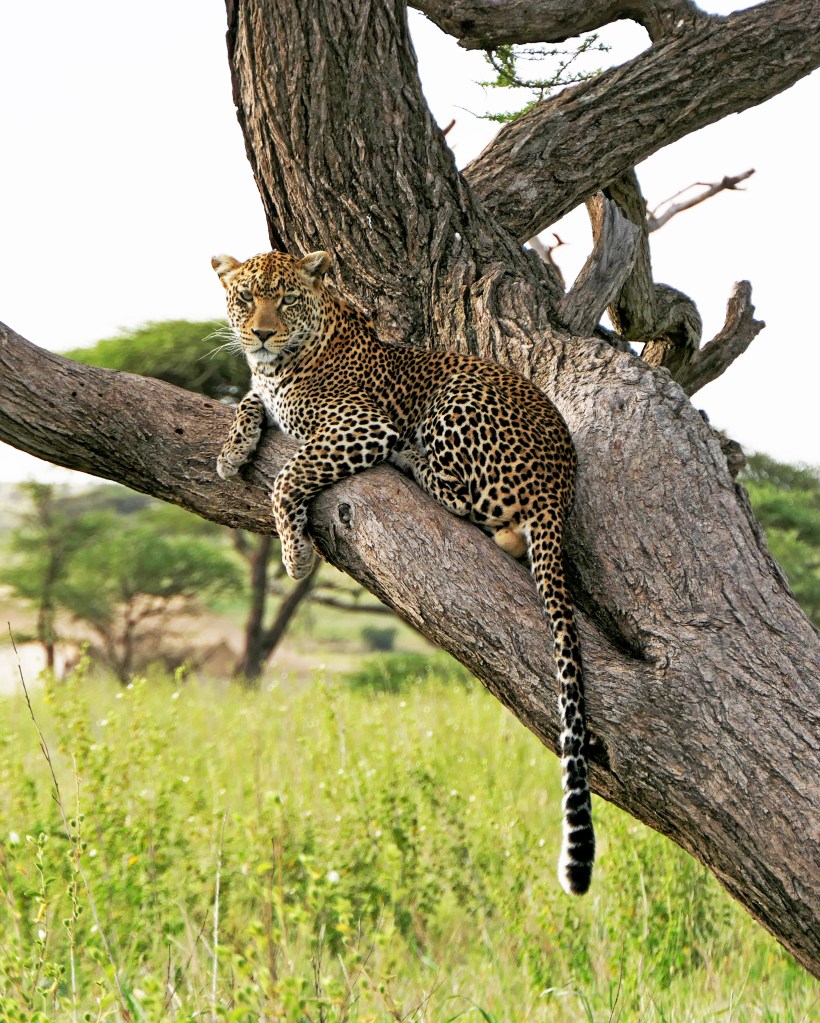
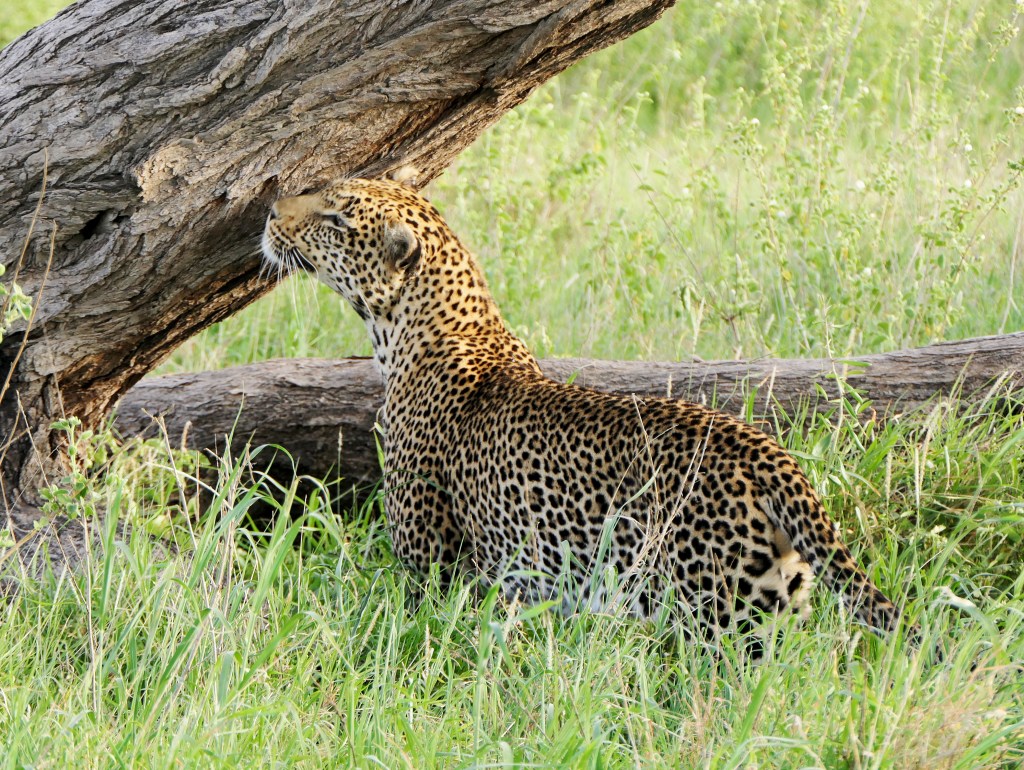
A gorgeous male leopard. I went a little overboard with the pictures, but couldn’t resist.
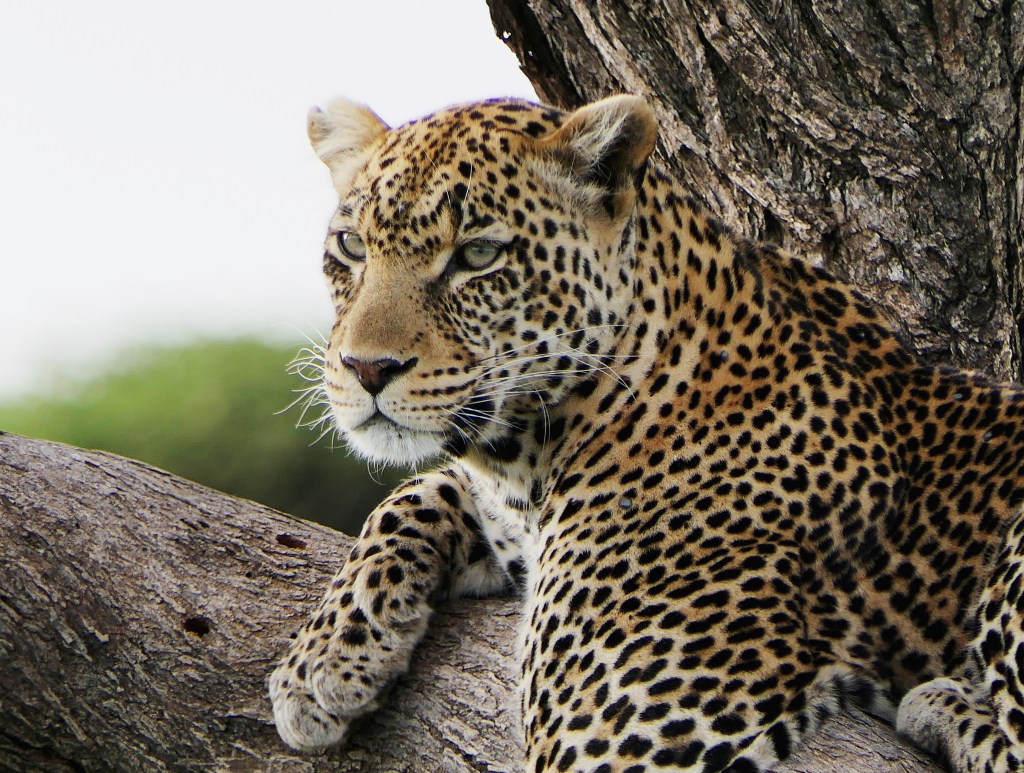
Getting a good scratch.
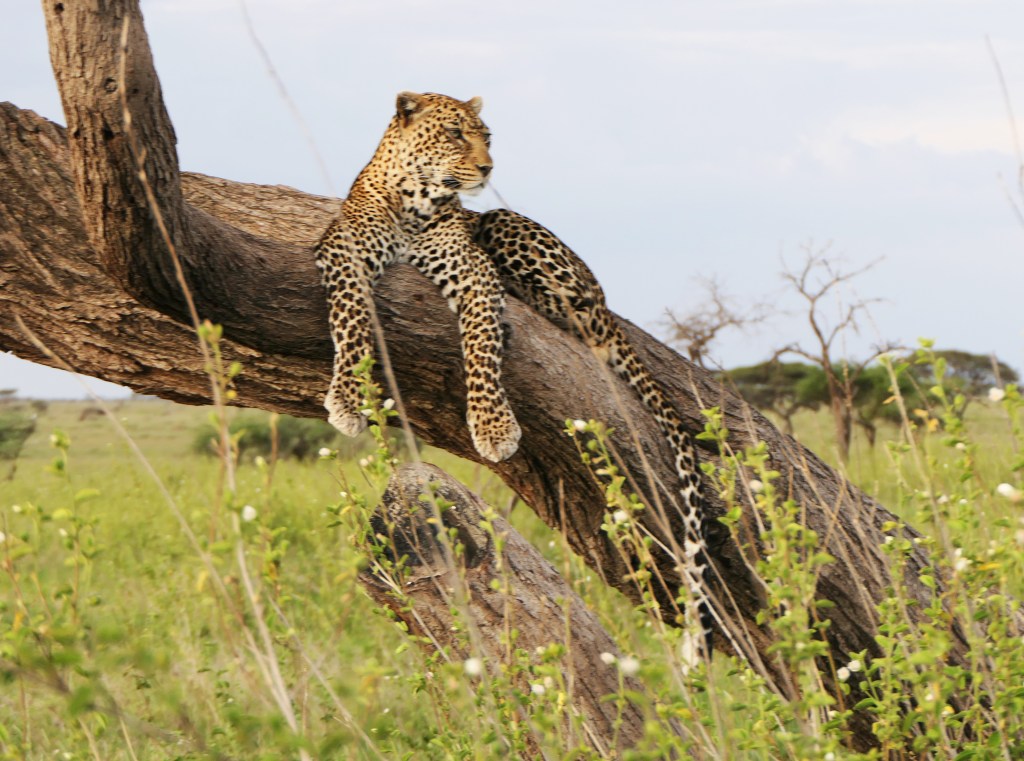
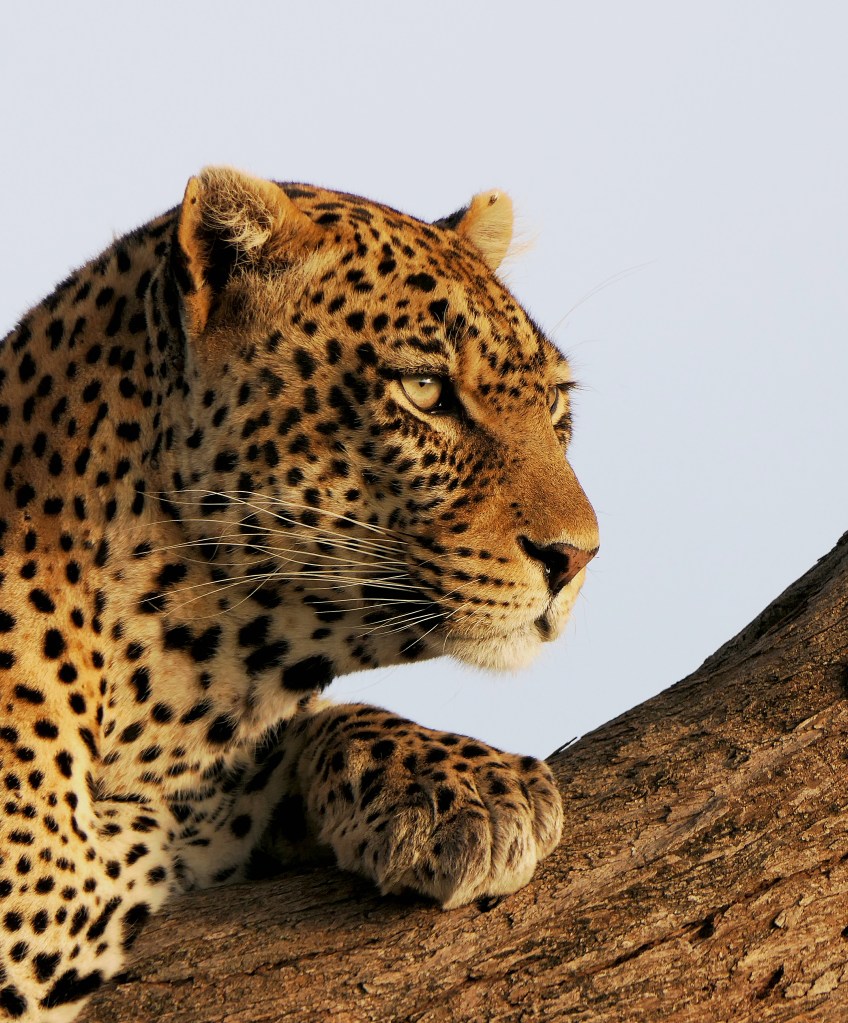
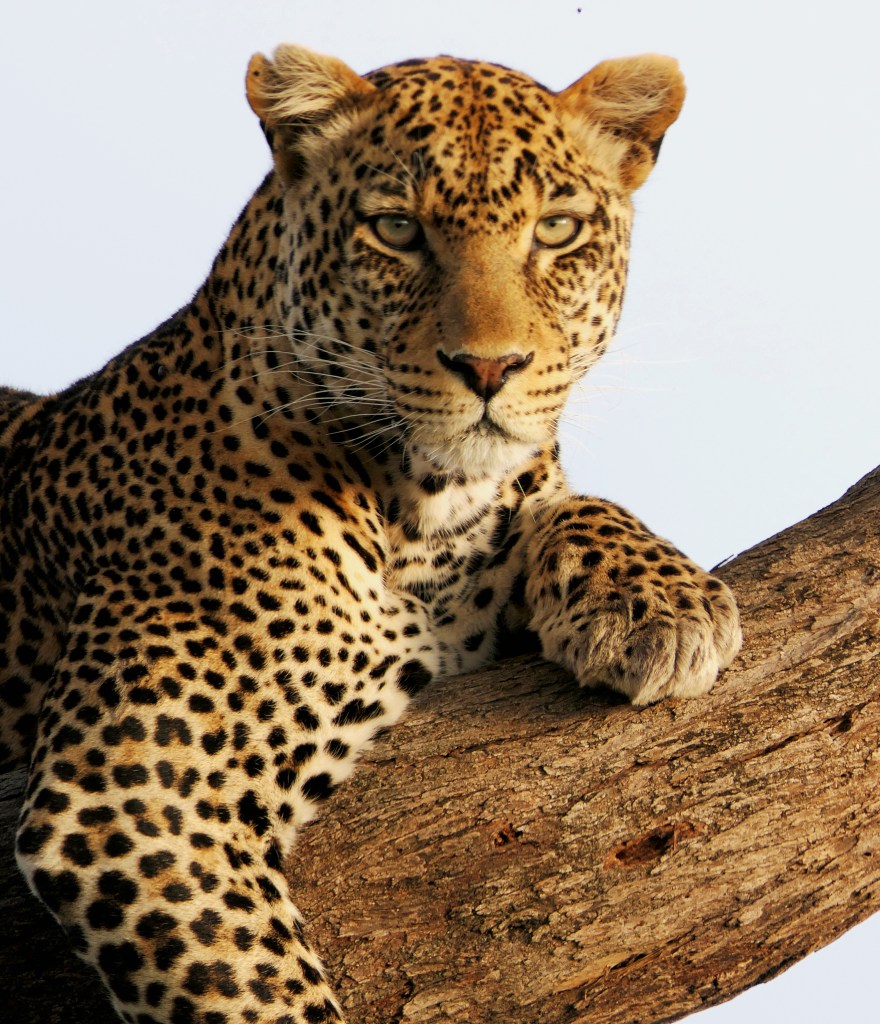
Don’t think I can top that!
Holding to the pattern, we closed out our drive with lions.
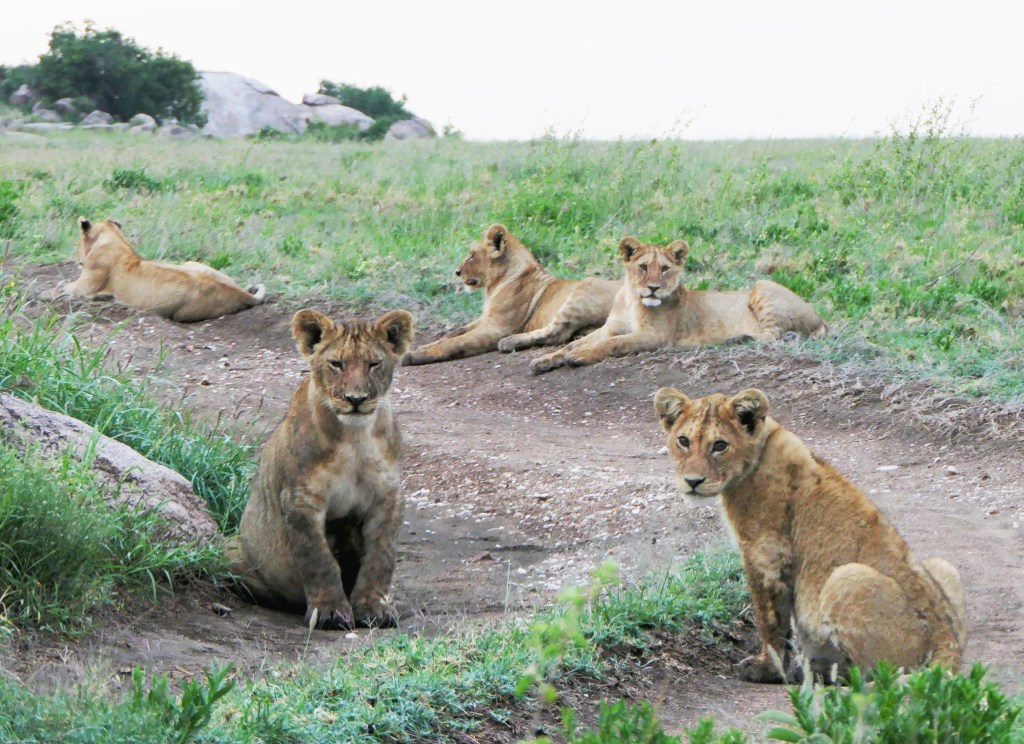
The expression on is guy reminds me of Beau when he’s bad rofl.
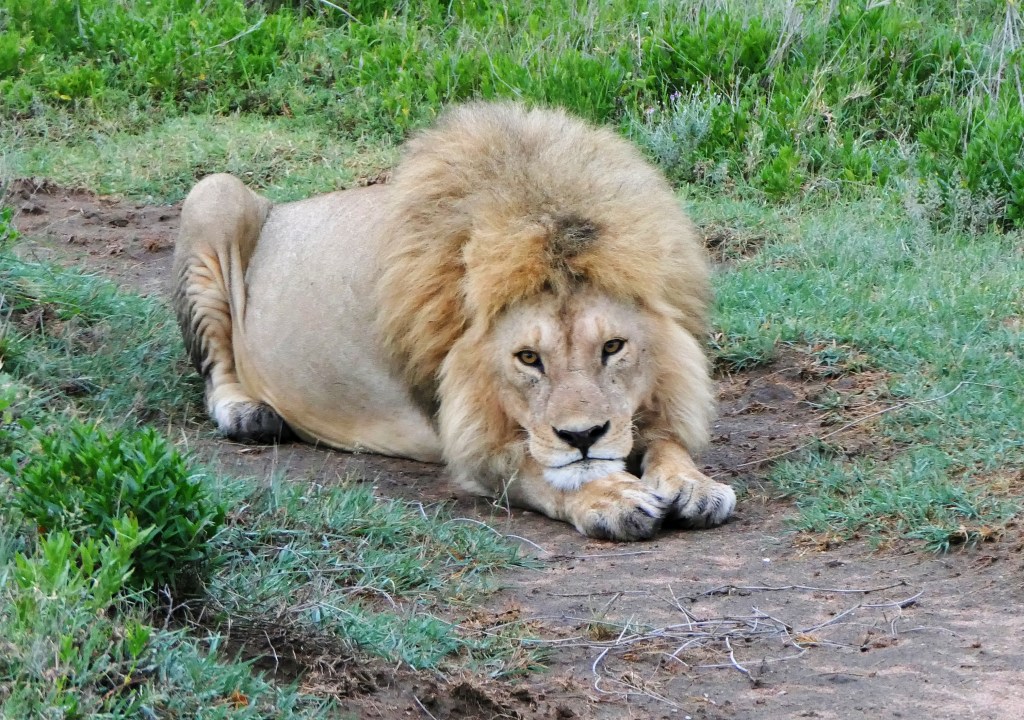
The next morning we started out at sunrise with – you guessed it – lions. These three are last year’s cubs.
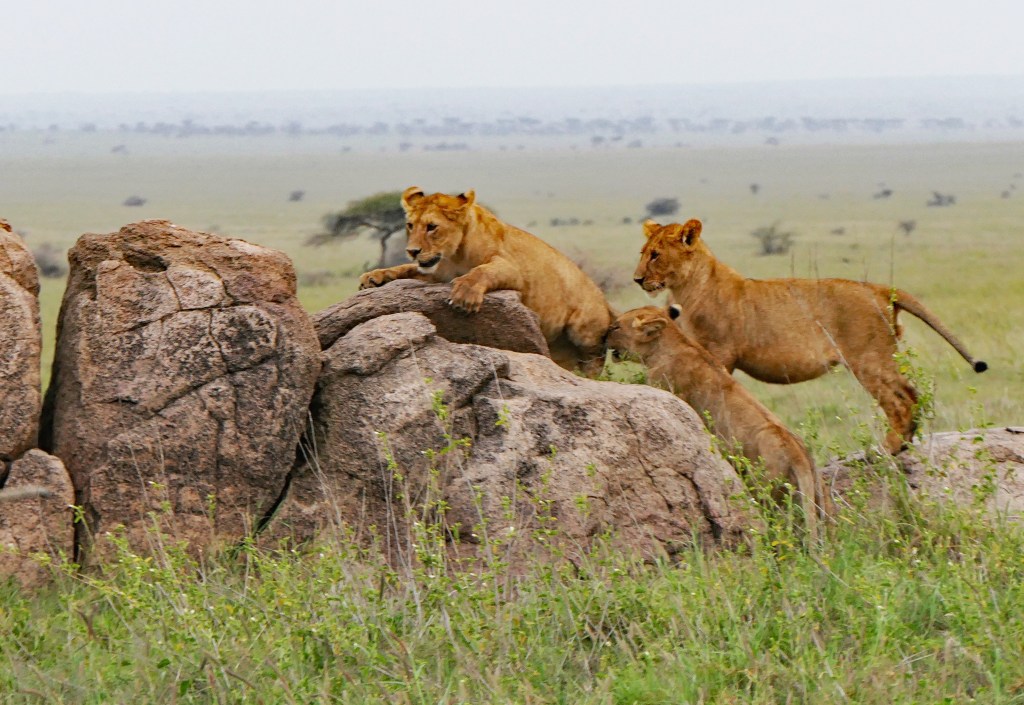
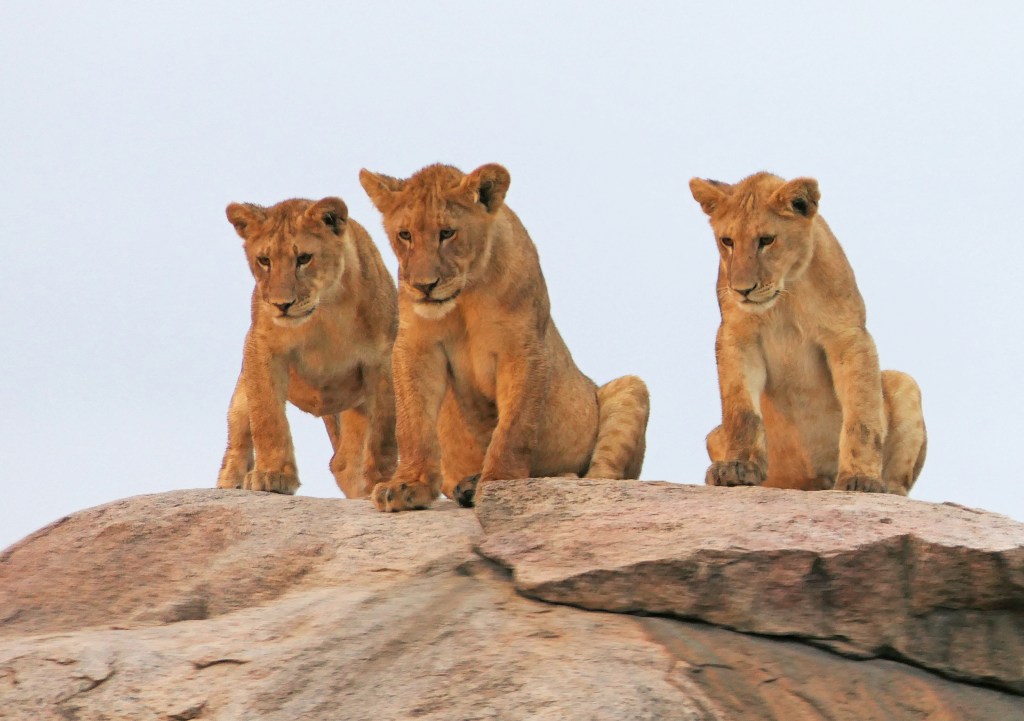
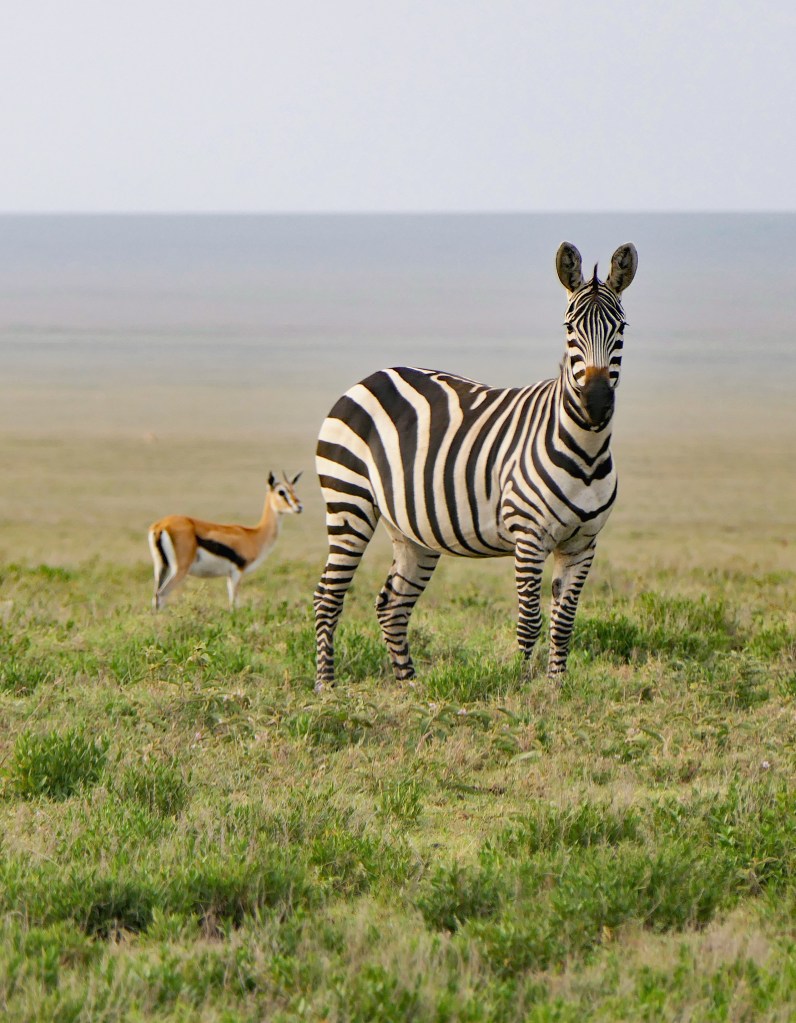
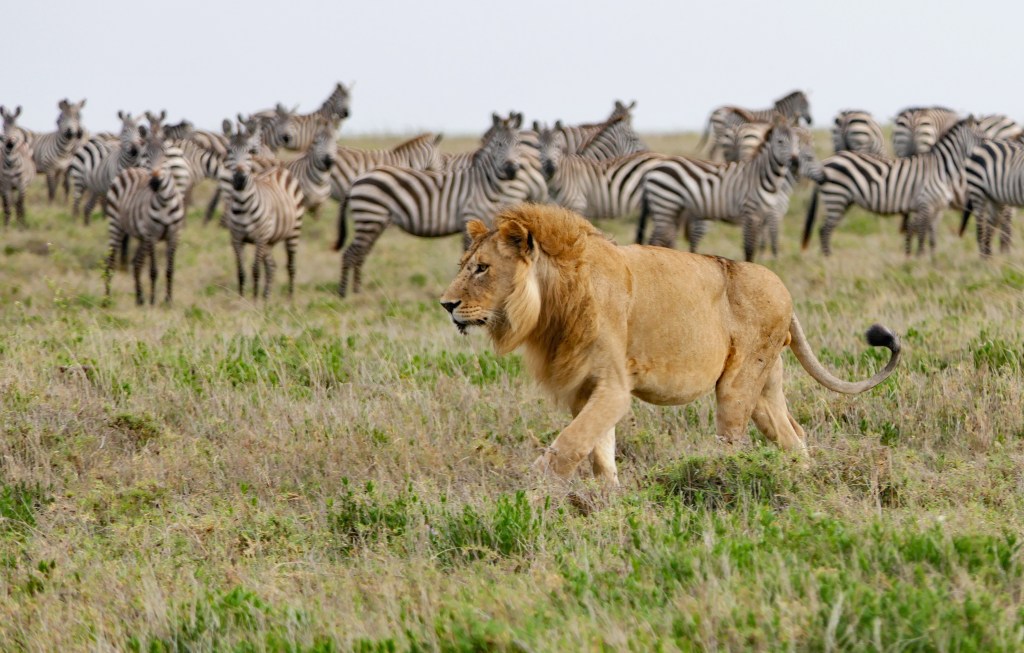
The zebras were keeping a watchful eye on the lions. If you look closely, the lions all have full bellies, they weren’t interested in the zebras right now.
We drove a little further, and this is probably why the lions were full. The hyenas were doing the final cleanup.
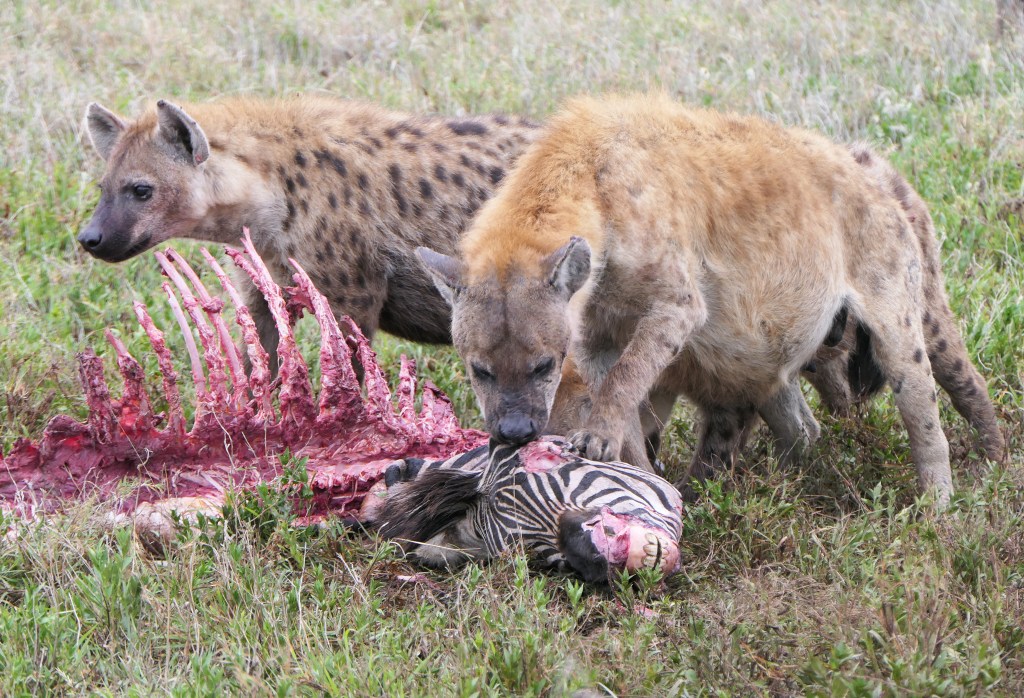
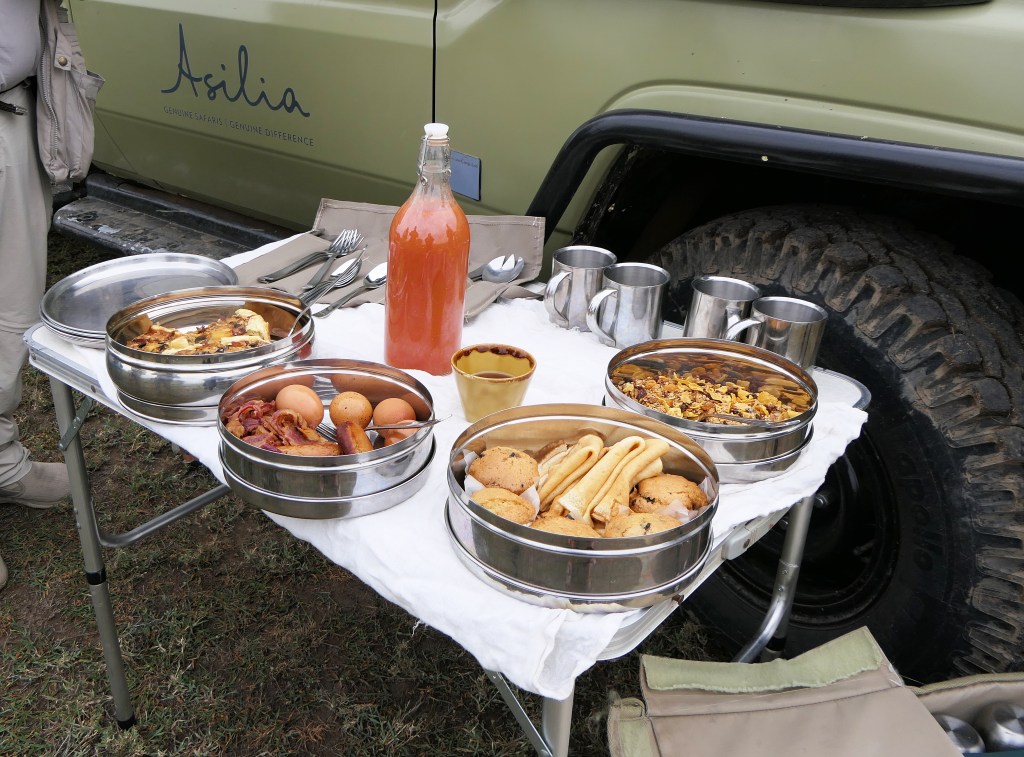
That didn’t do much for our appetites, but the next stop was our bush breakfast.
On our way back to camp we were fortunate to find another leopard and a cub.
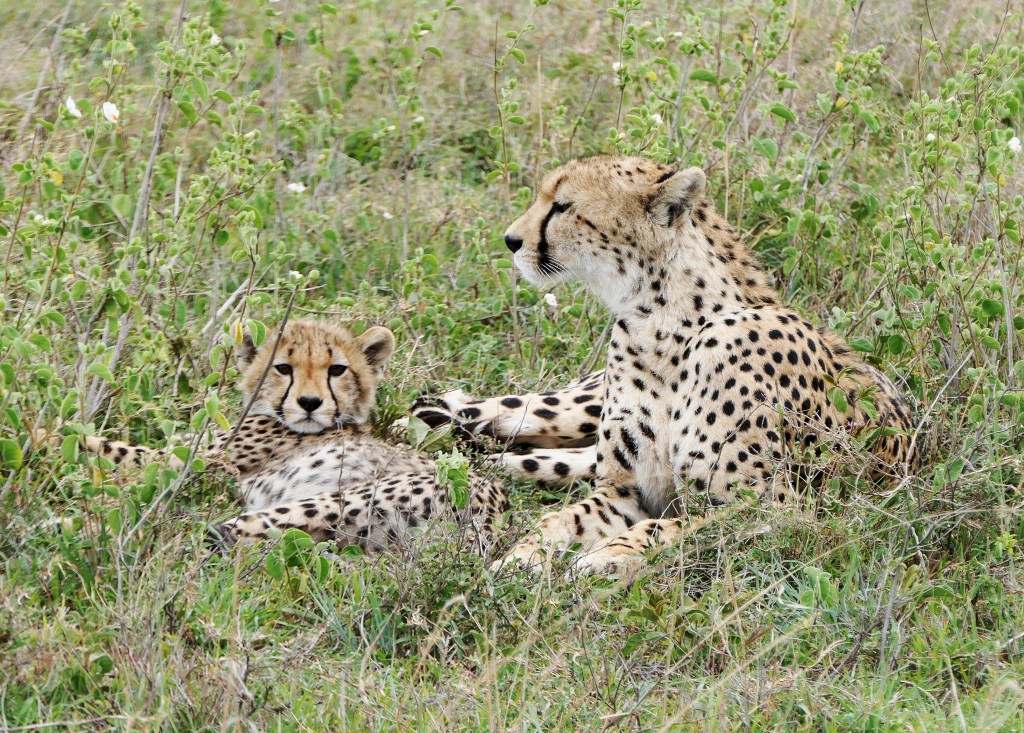
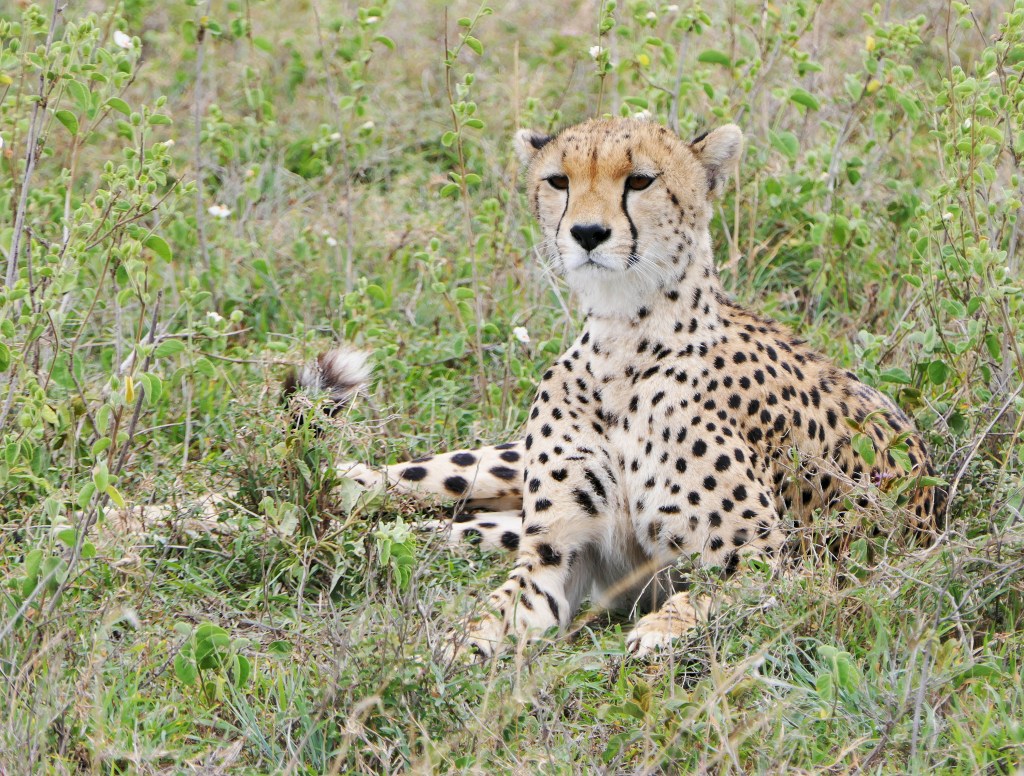
After watching them a bit, a second cub popped up from the grass.
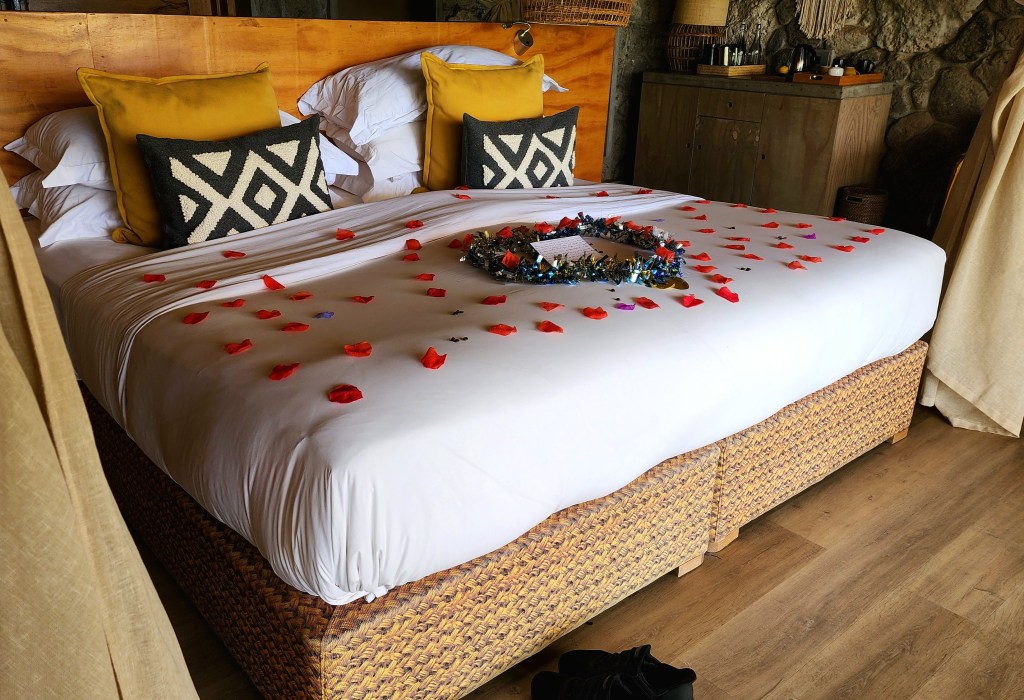
When we got back to camp, our room had been decorated.
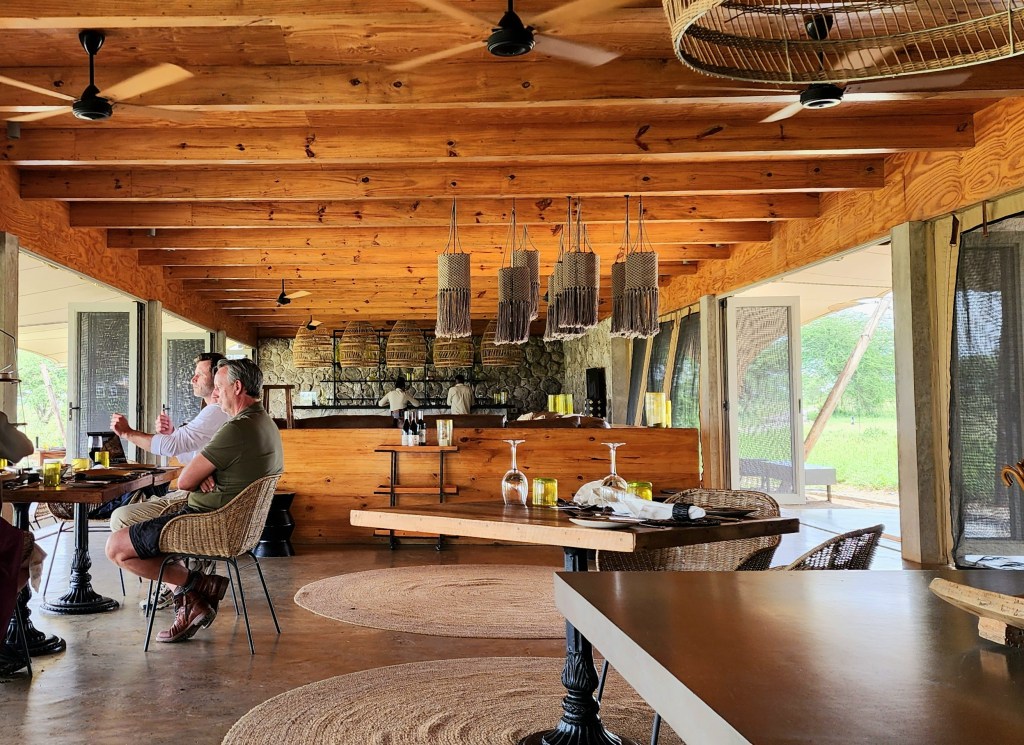
A view of the lounge area for a drink before lunch.
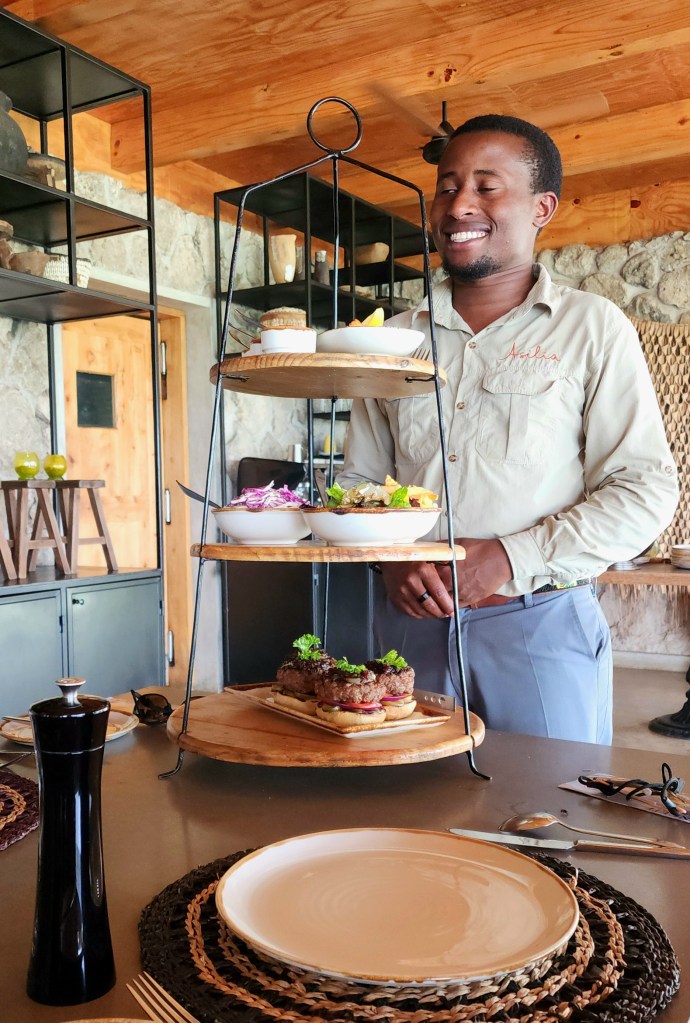
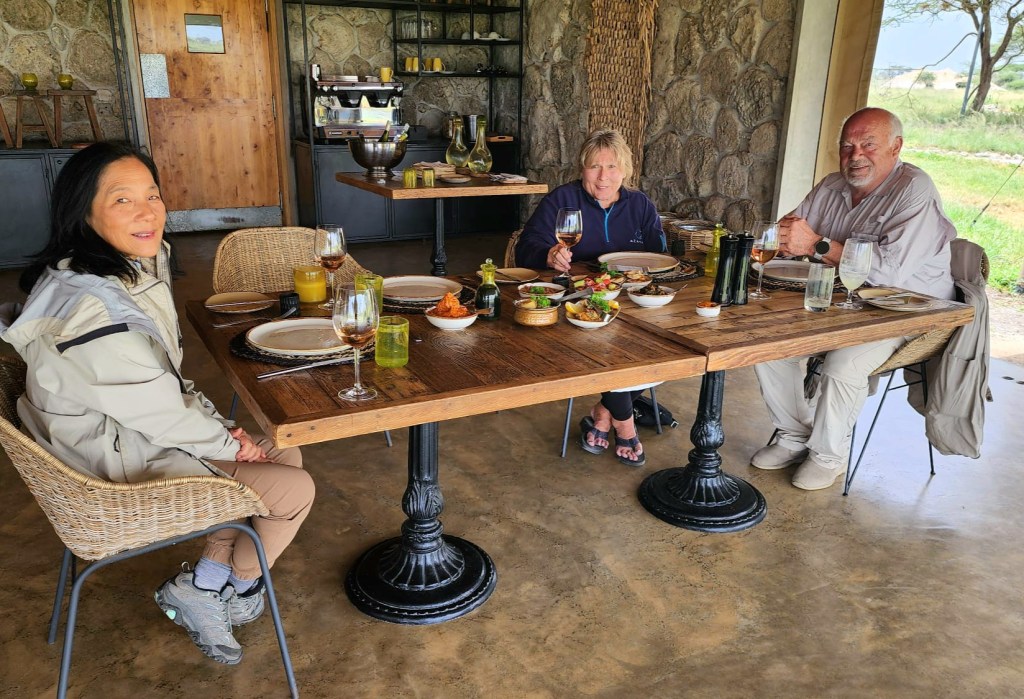
We had an amazing lunch of rare burgers and fixings. All the food was excellent and the local beef was delicious!
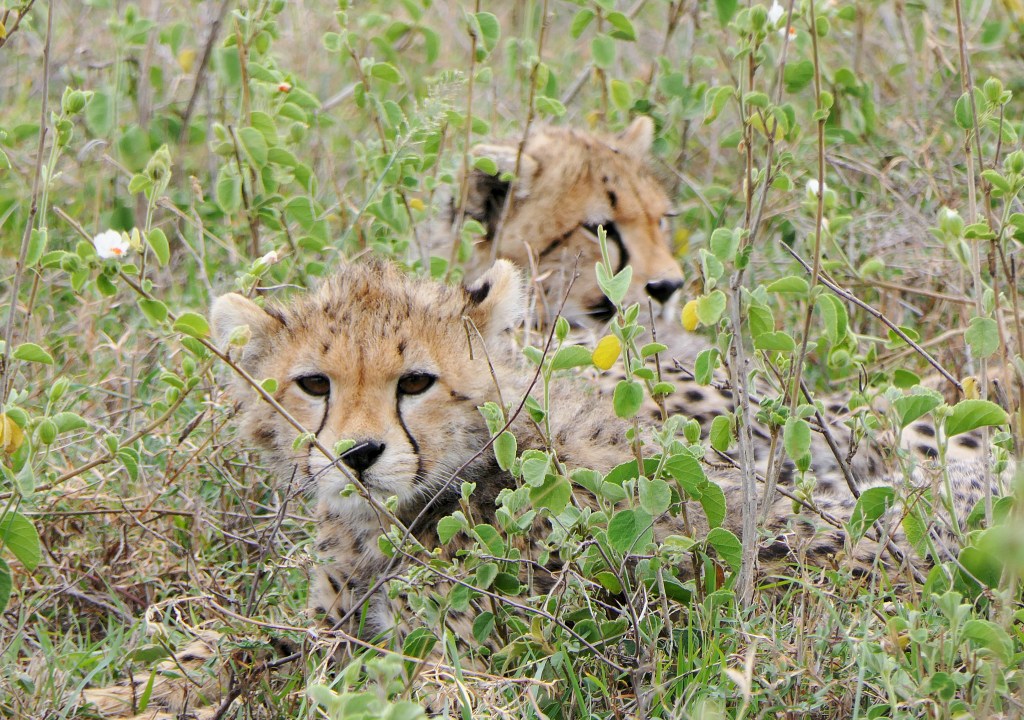
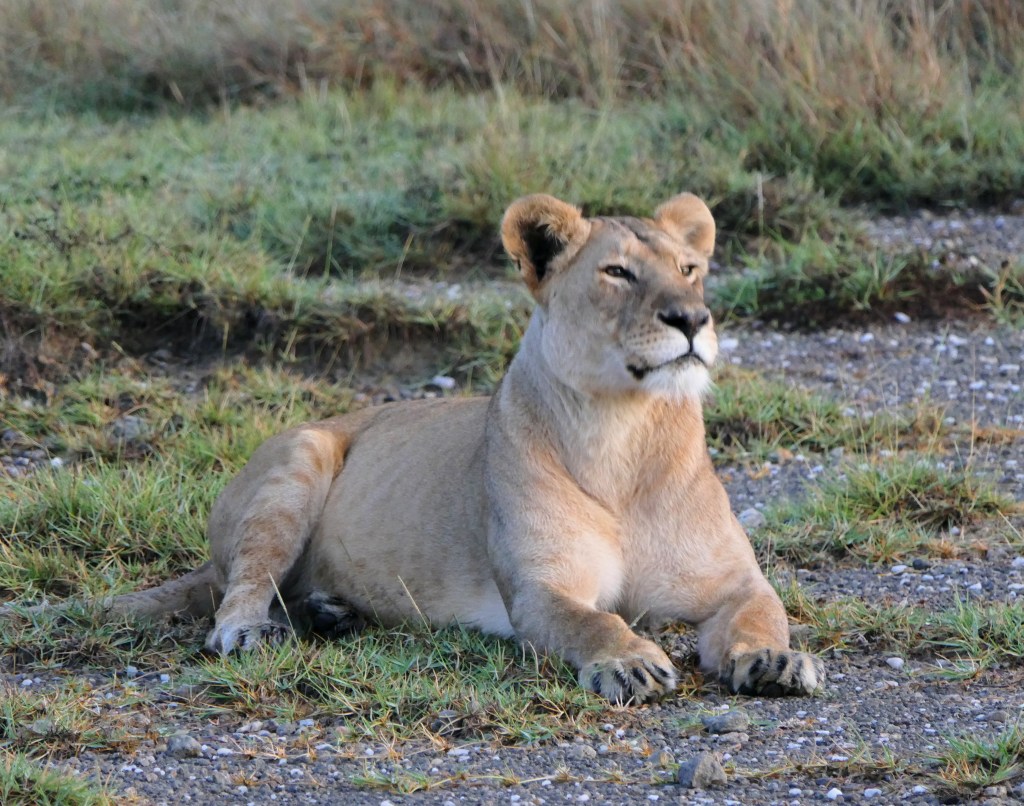
After lunch and another nap we went out on the evening game drive. And it ended as it began, with lions.
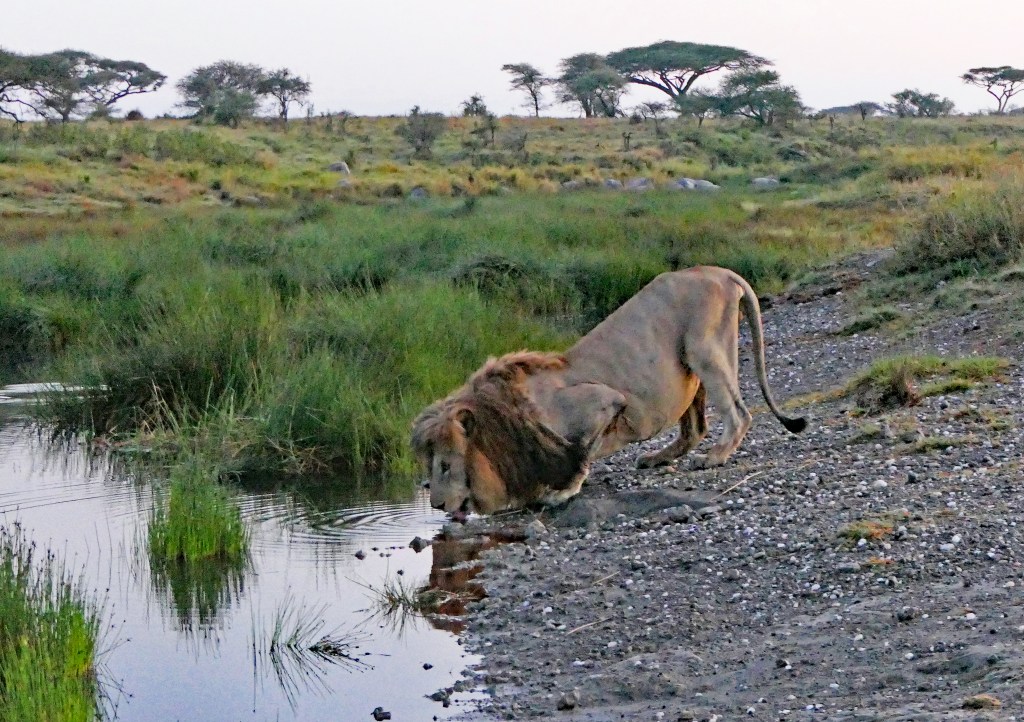
Christian captured this great video with his phone. if you look closely, at the beginning you’ll see the corner of the jeep to get an idea of how close we were.
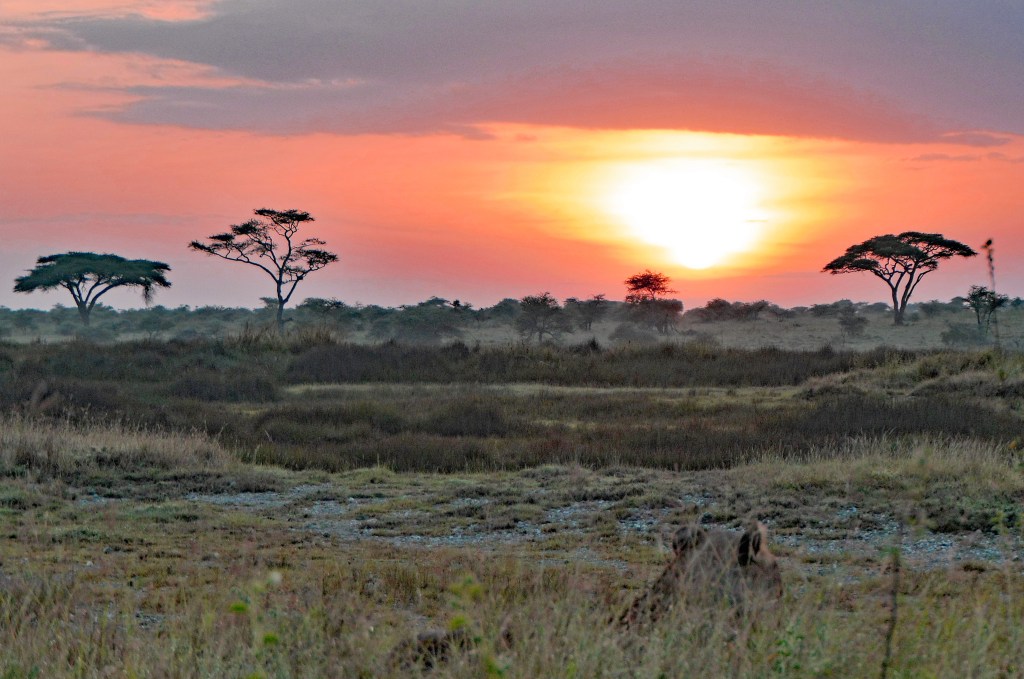
Our view with our evening sundowner.
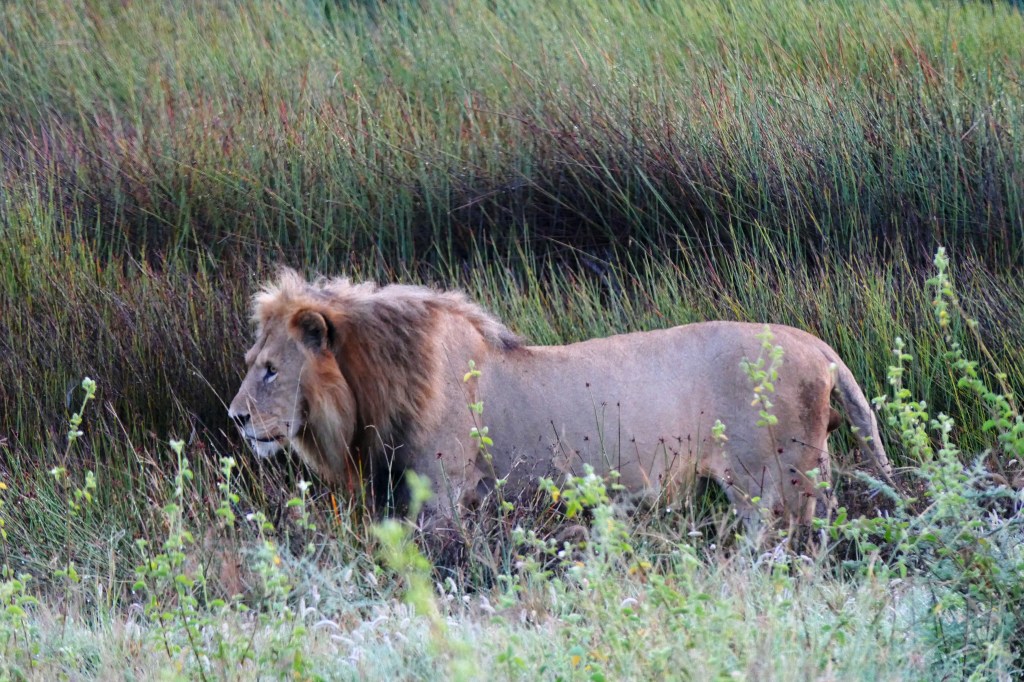
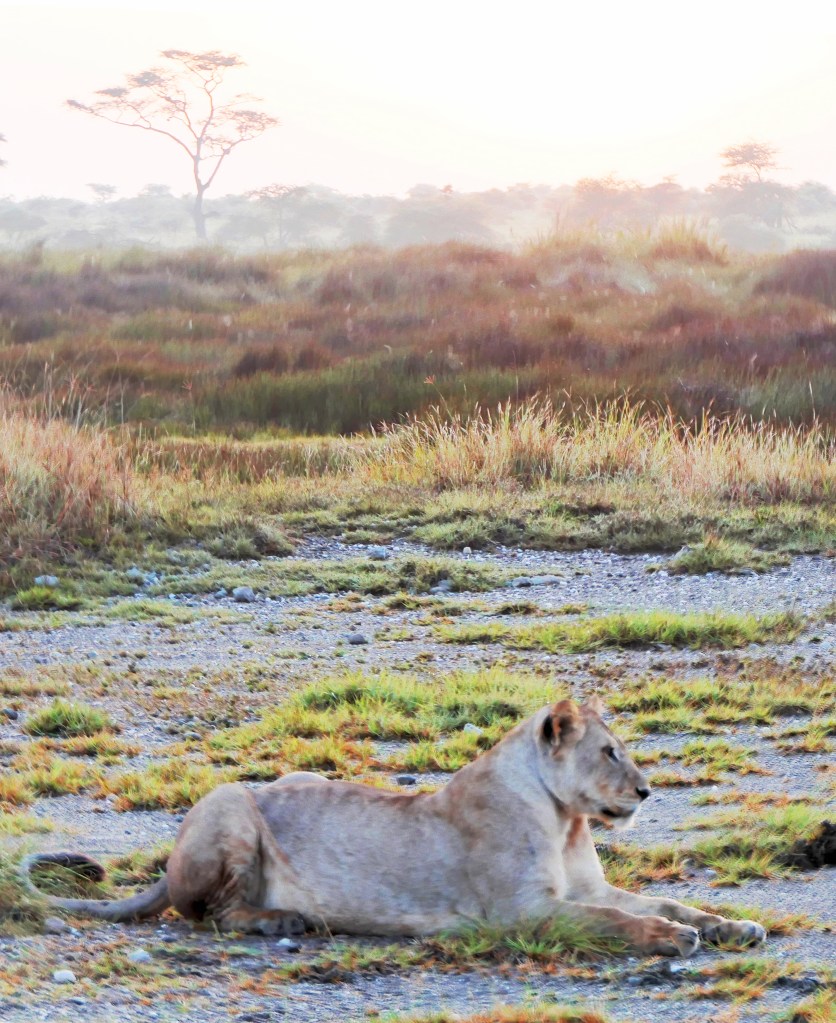
On our last full morning, the first thing we found were lions.
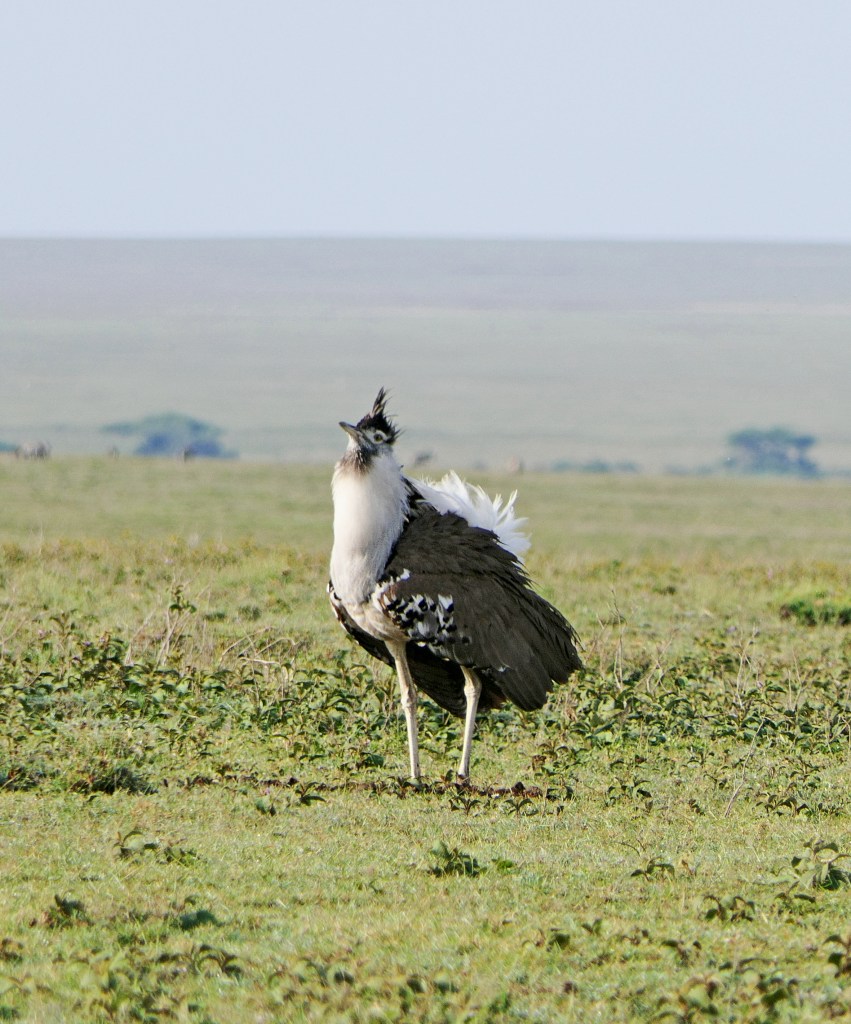
Then a Kori Bustard.
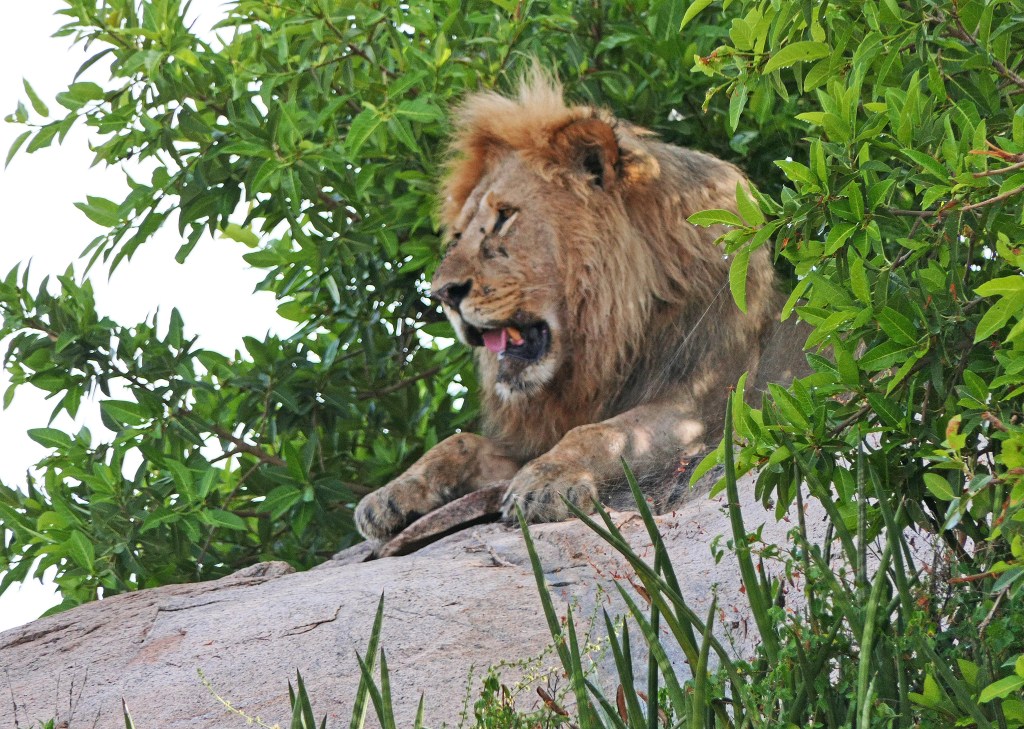
King of the hill watching over his girls.
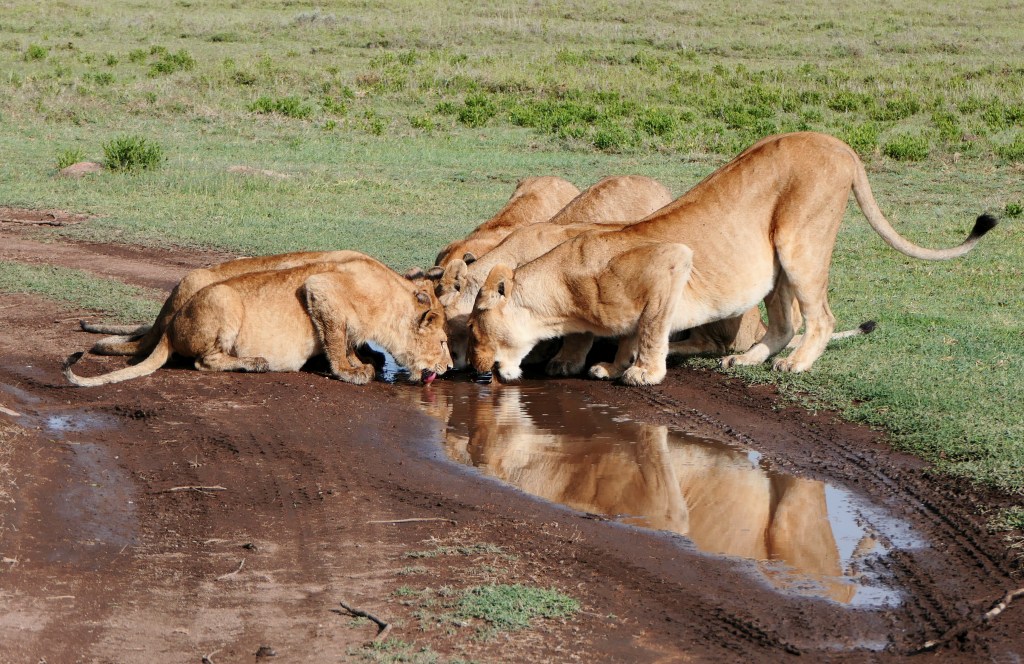
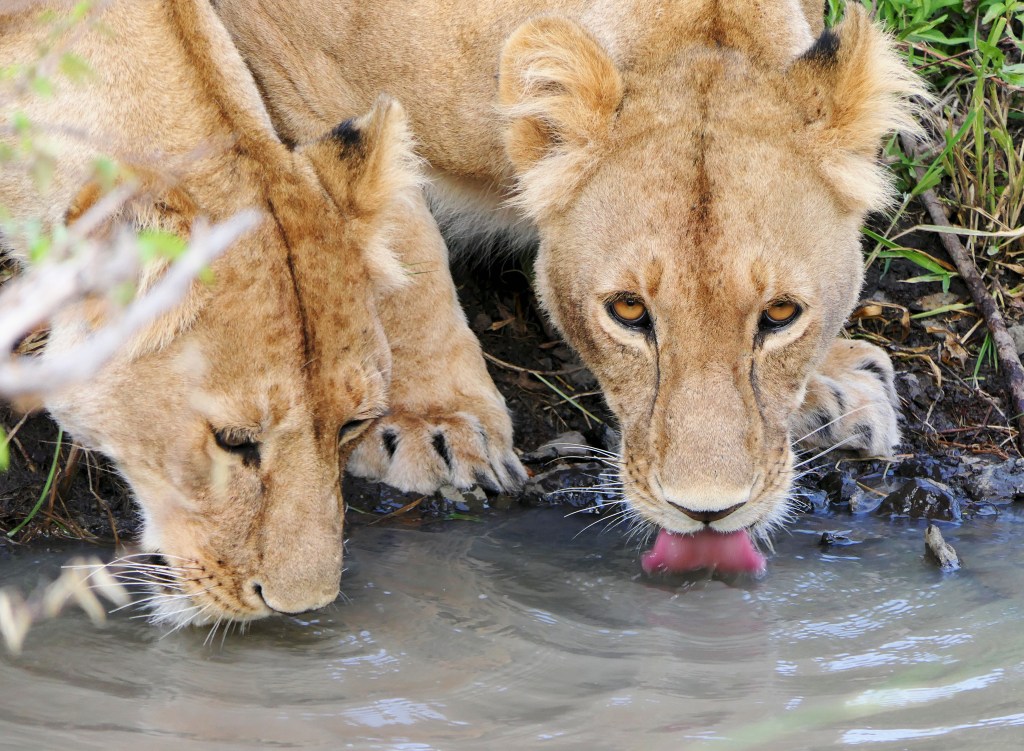
It rained hard during the night so lots of water everywhere. Seven lioness drinking.
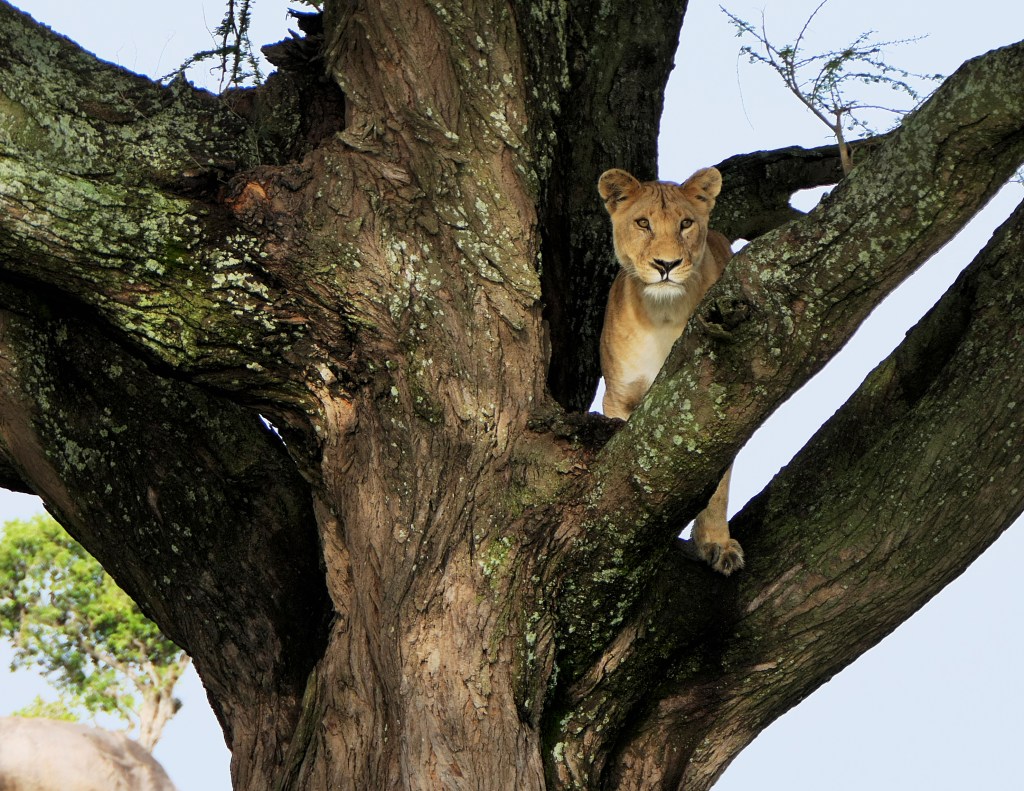
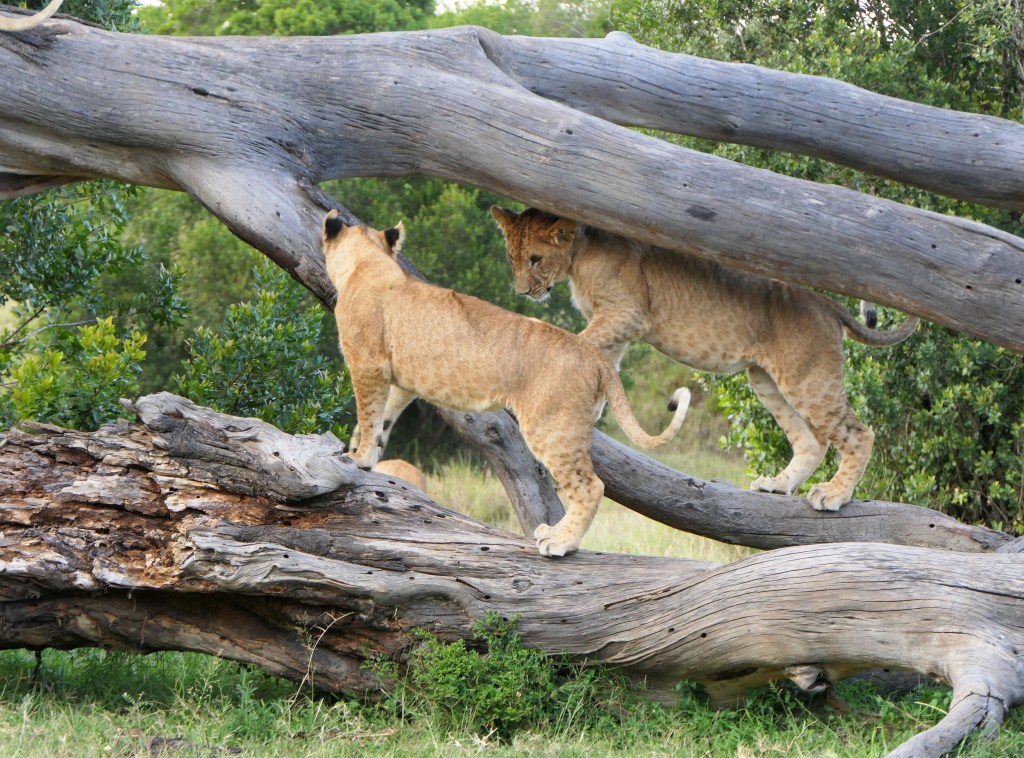
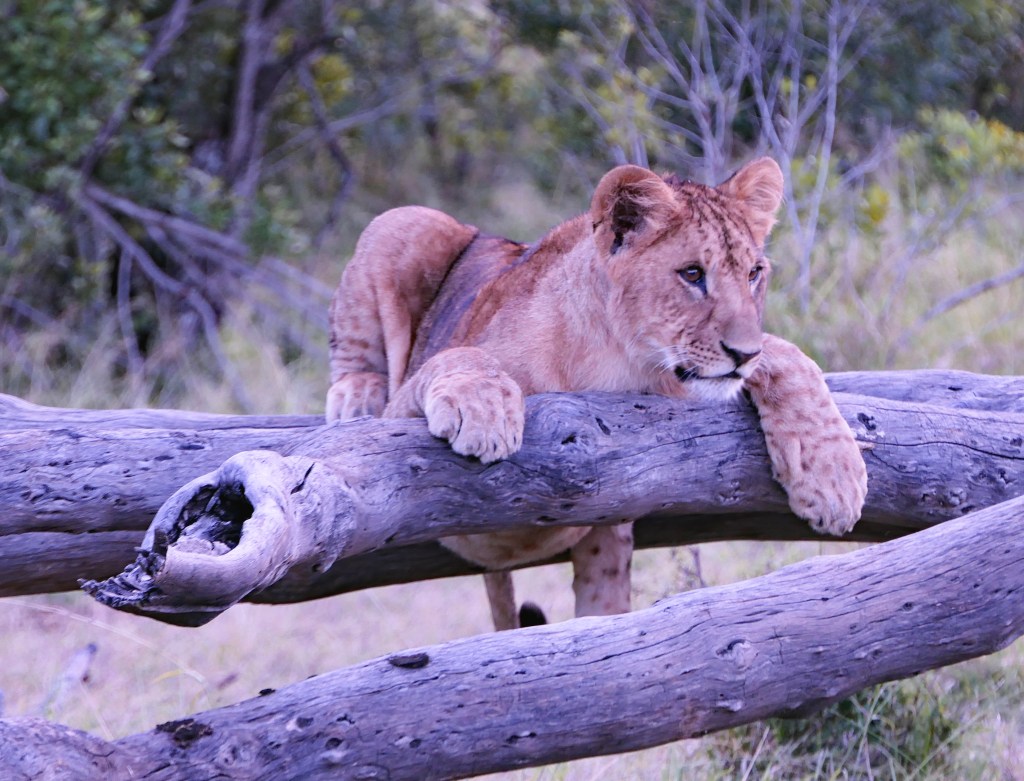
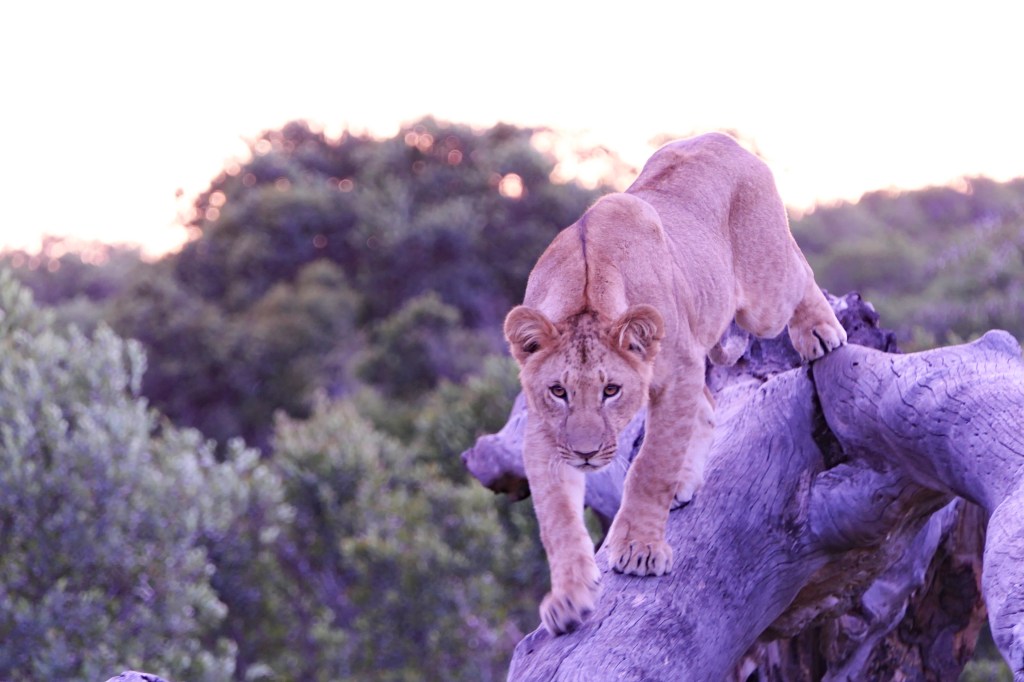
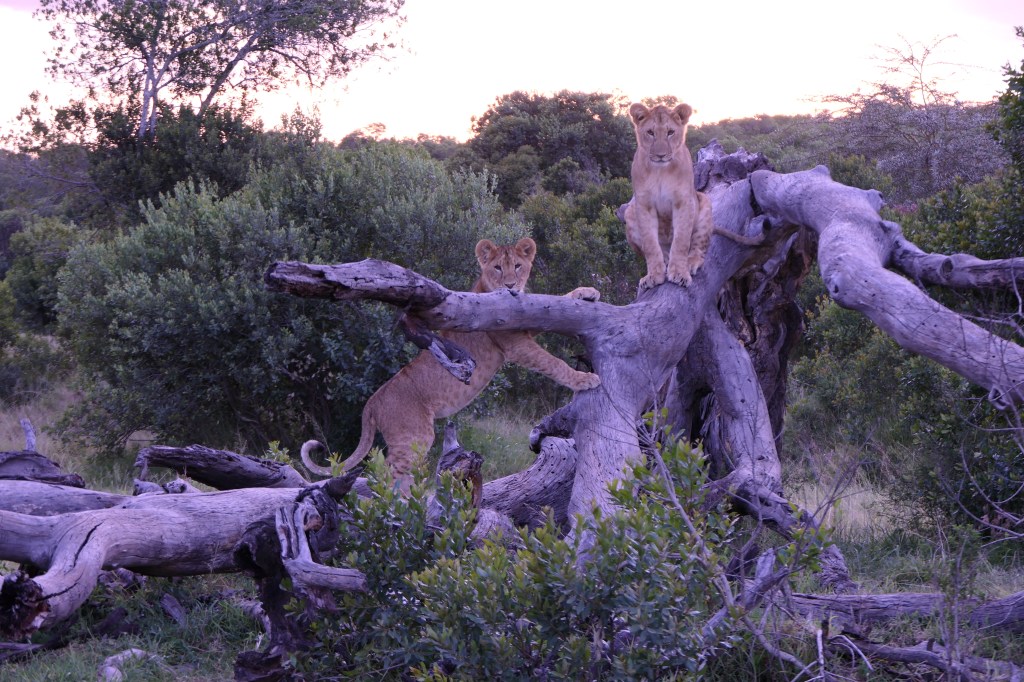
This was the only time we saw a lion in a tree.
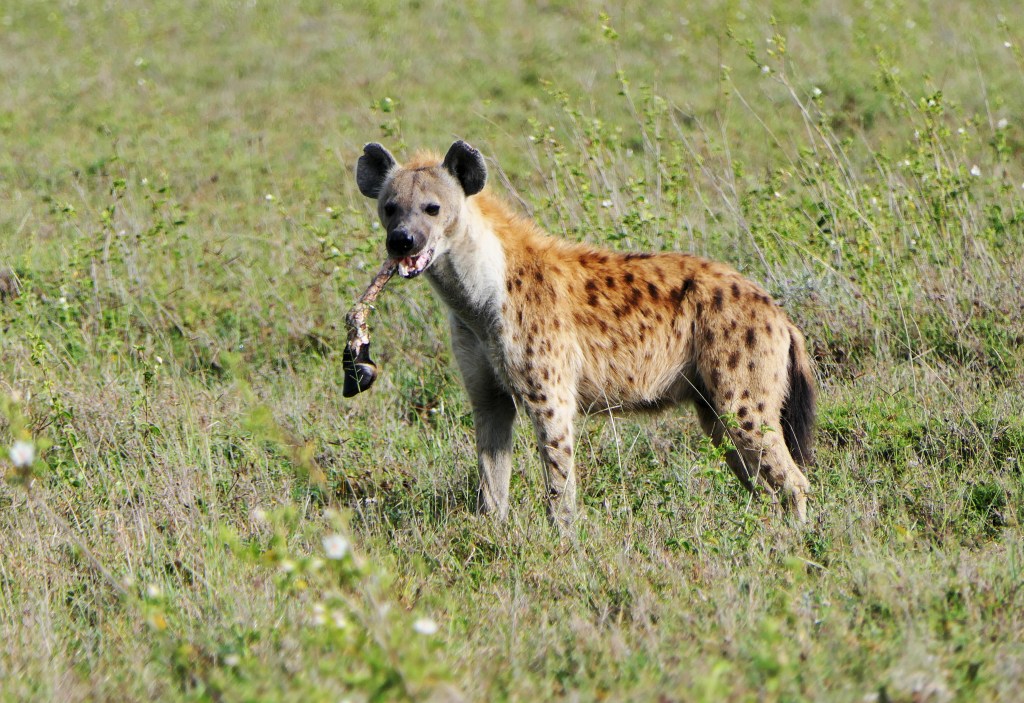
We’re in a different spot than the day before, a hyena doing more cleanup.
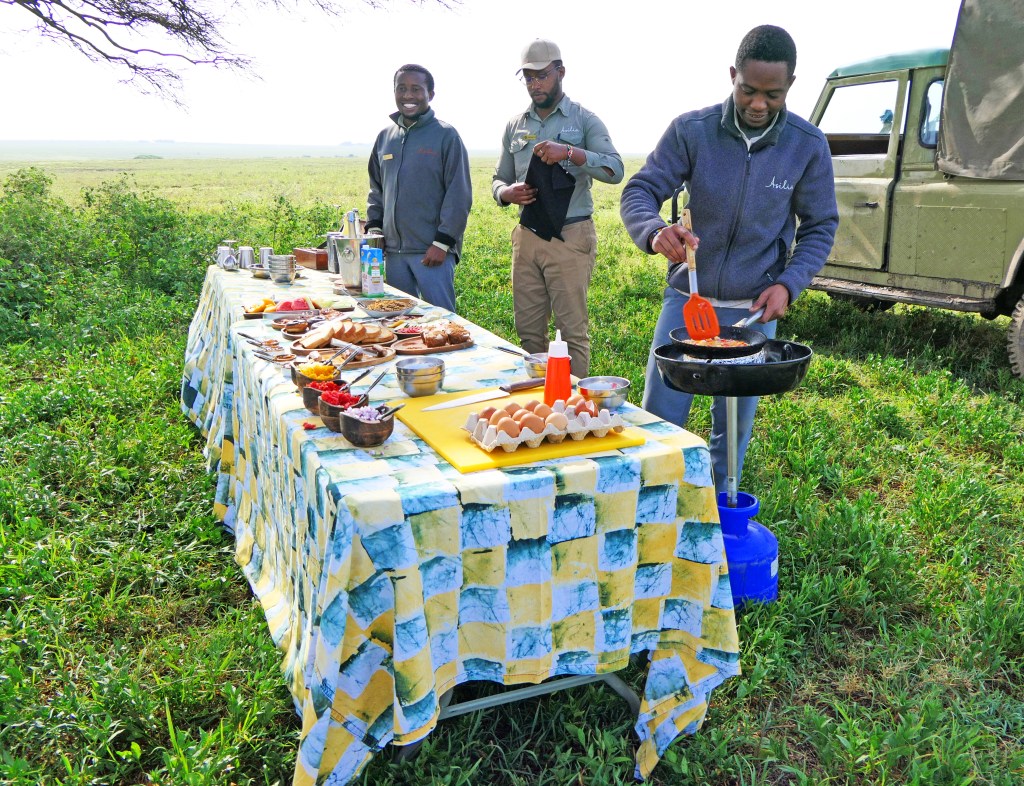
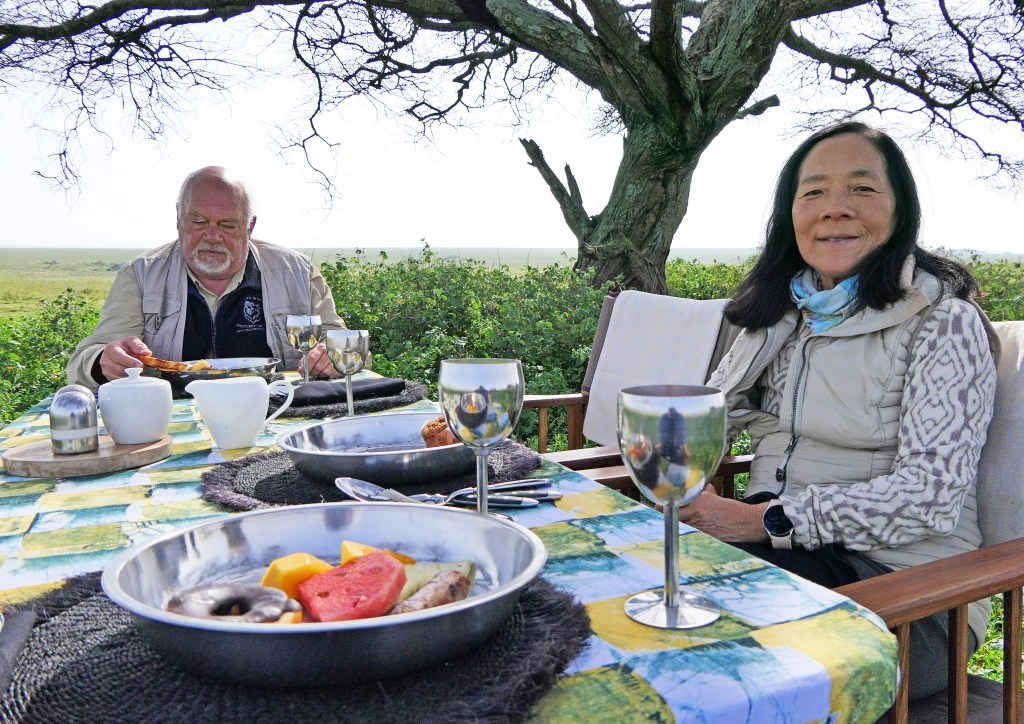
We seemed like we were wandering around, it turns out we were. The camp had planned a special surprise breakfast for us, and was going to set up where we just saw the lions on the rocks. So Nangida told them over the radio (in Swahili) that it probably wasn’t a good idea and they had to relocate so he was killing some time 🙂 Surprise!!!!
Champagne, cooked to order omelets – in the middle of the bush by our crew!
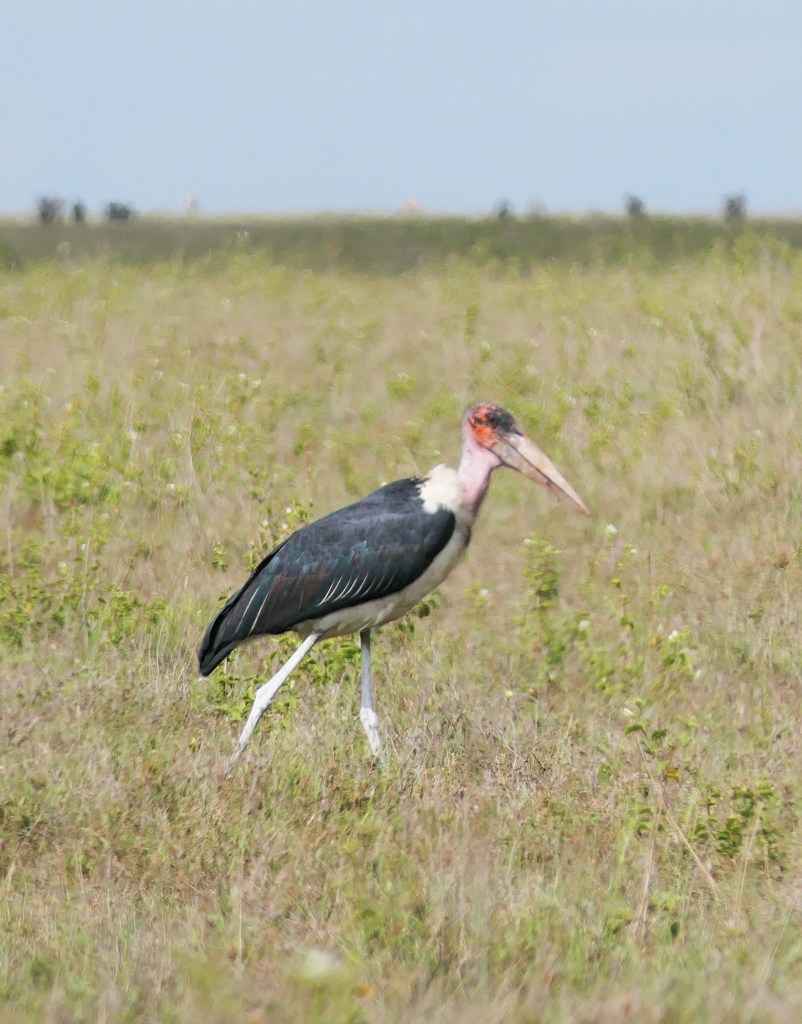
We made our way leisurely back towards camp. A Marabou Stork.
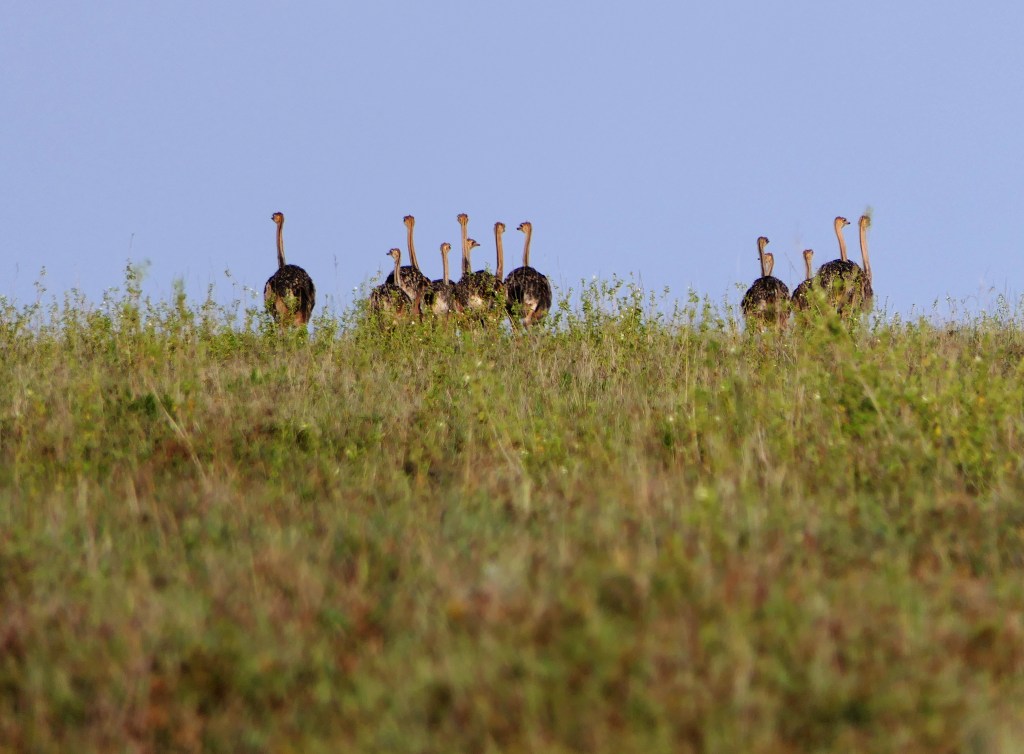
Harem of ostriches.
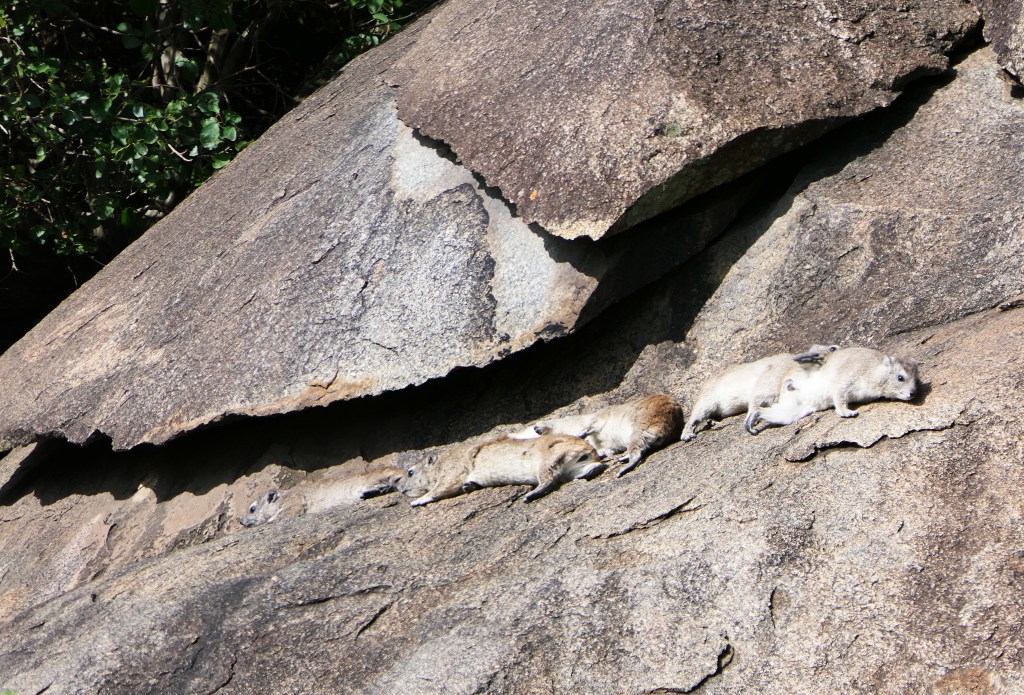
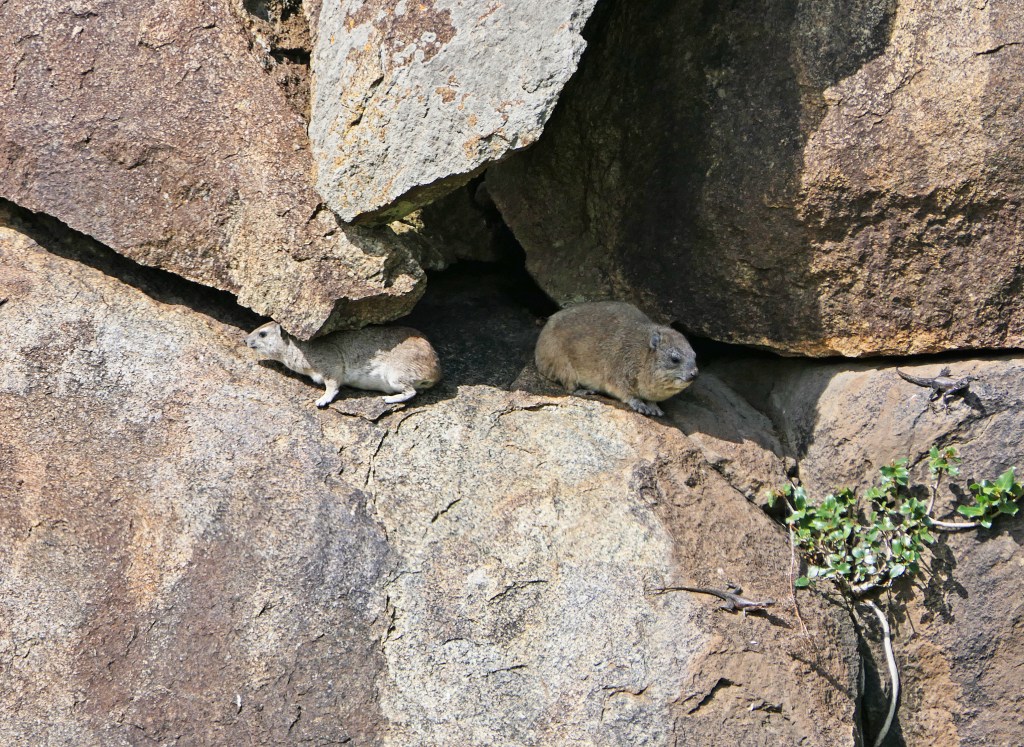
Rock hyraxes in the sun.
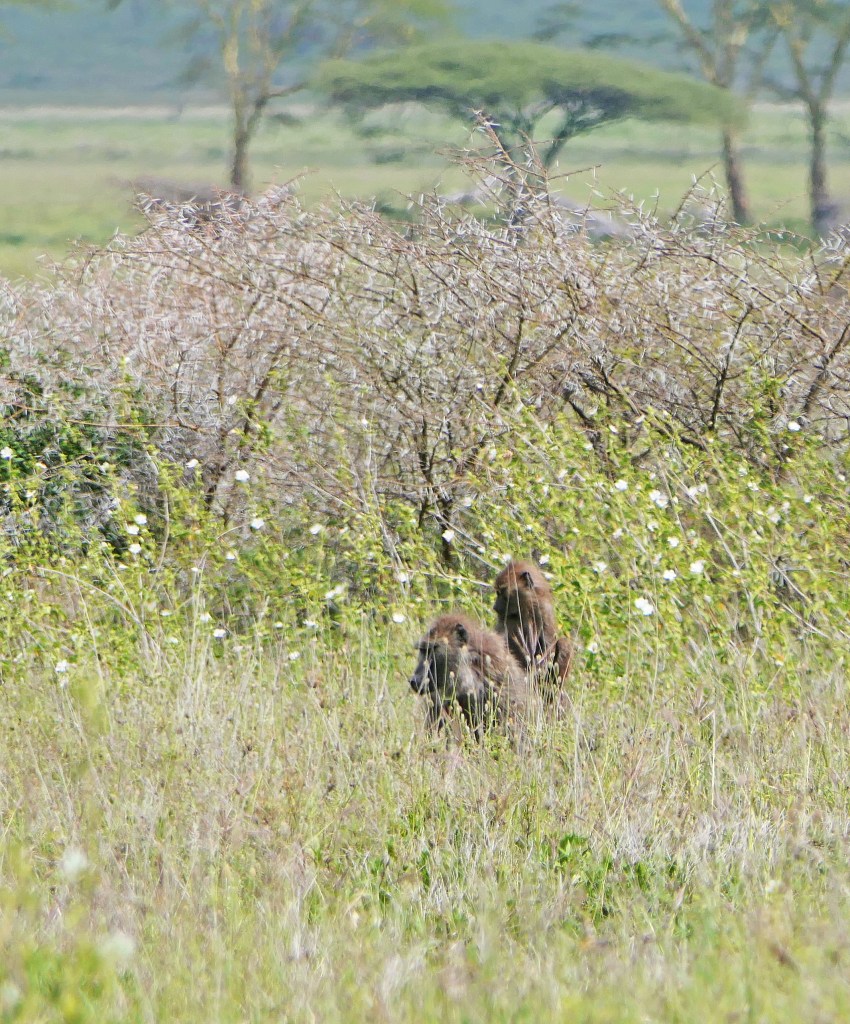
Baboon and baby.
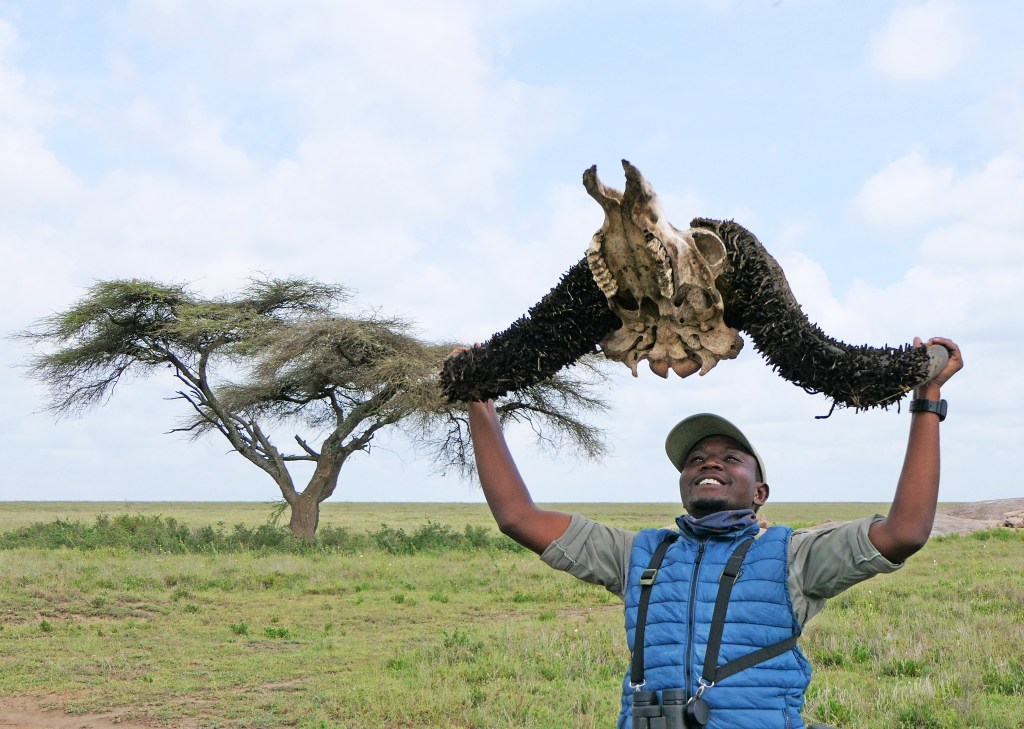
Nangira and a buffalo skull, show off:) The things that look like worms kind of are. They are bugs that build cases (the wormy things) to consume the keratin horn of the buffalo. Yuck!
I took the afternoon off to rest my back before the trip back to Nairobi the next day.
At dinner that night the staff wished Christian a happy early birthday with song and a cake. The staff was awesome!
Our warm sendoff in the morning. These guys were the best!
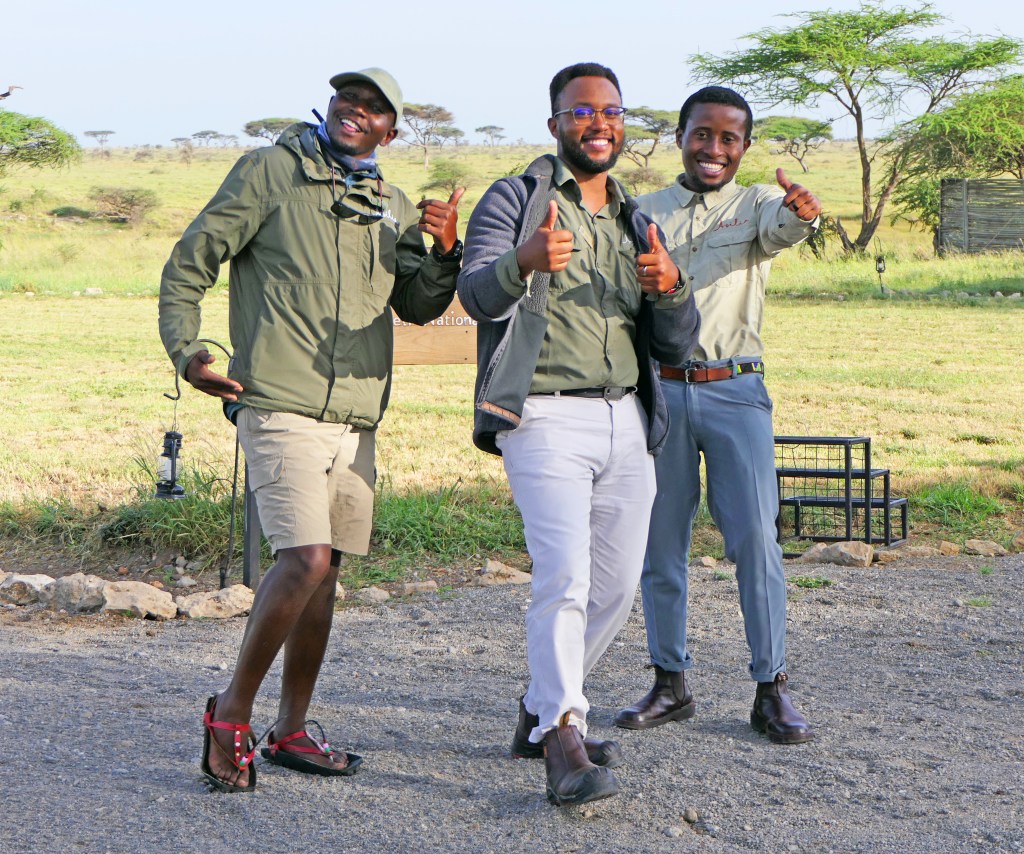
In closing, it was a trip of a lifetime and we would (and will) go back in a heartbeat. Our outfitter, Asilia, couldn’t have delivered more. Every one of our guides and staff were outstanding and a real pleasure to get to know. If you would like more information this is the website https://www.asiliaafrica.com/
That’s it for this trip. Next up, Christian and Beau are already on their way to Arizona in the Beast. I’ll be flying out to join them in a couple of days in Albuquerque. So more to come then!
Naboisho Conservancy – Part 2
Our morning started out cloudy and damp. Because of my back pain, I was riding in the front with Jakob and he kindly brought me a hot water bottle to cushion my back.
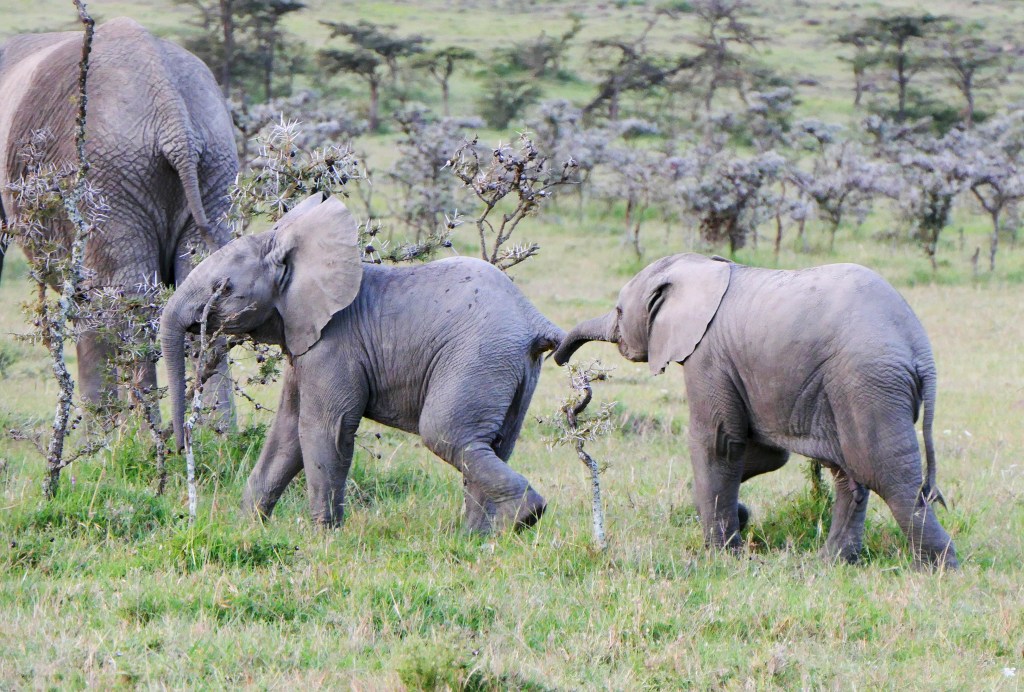
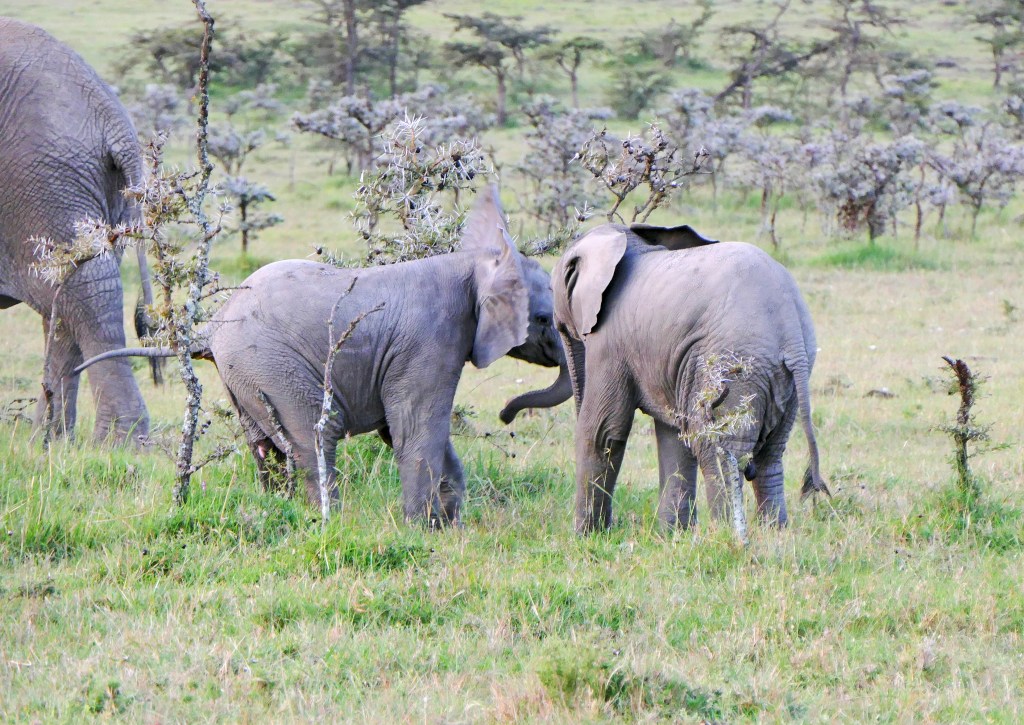
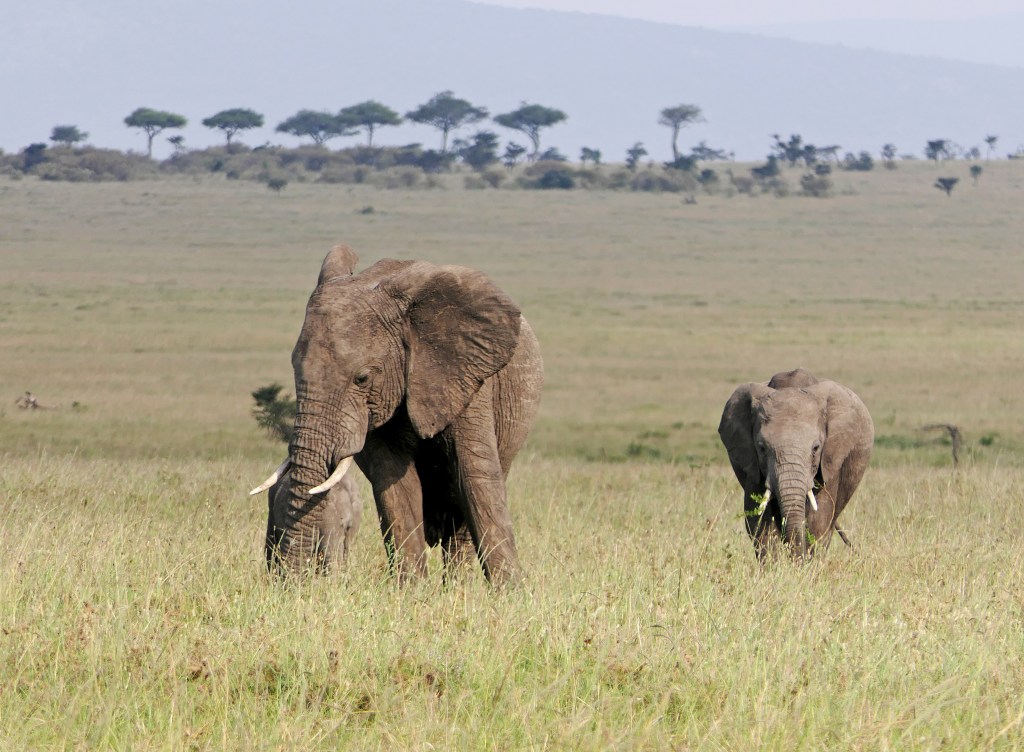
This small herd of elephants had two babies that were playing. It was an auspicious start, because at lunch the elephant research project was going to come to speak with us and then spend the afternoon with us in the bush.
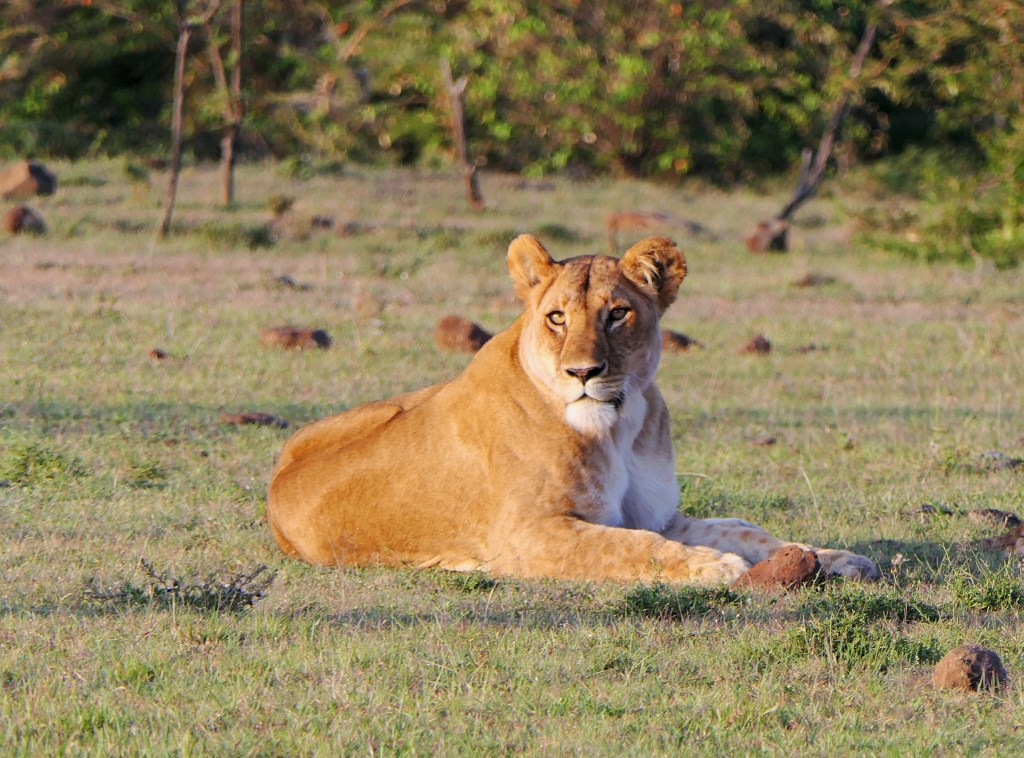
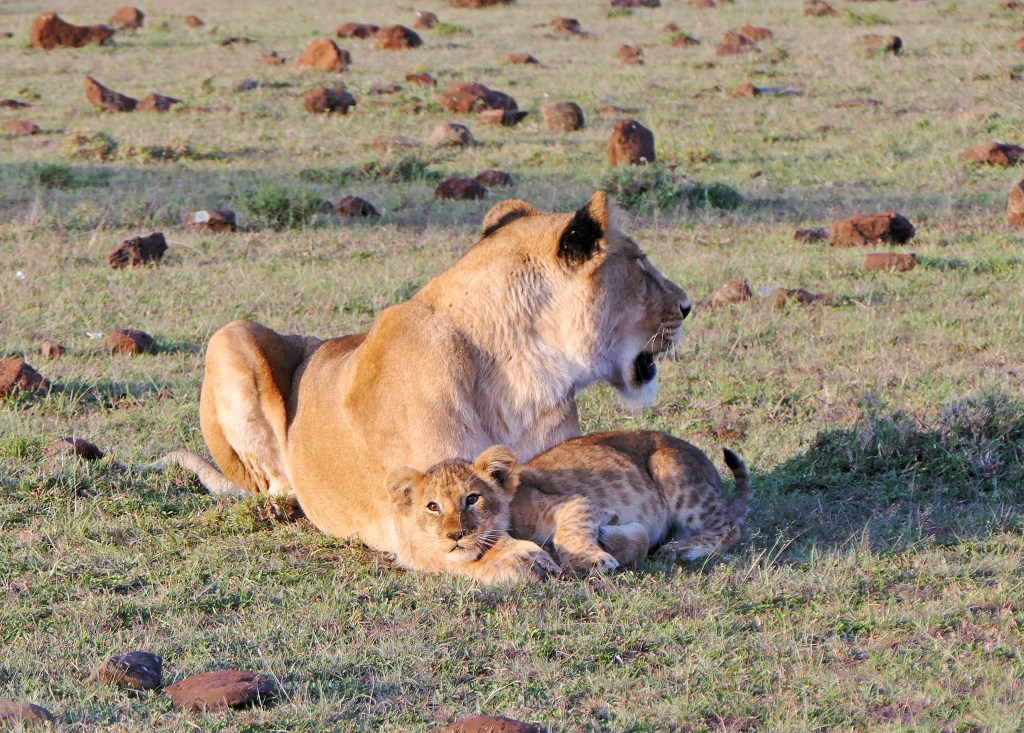
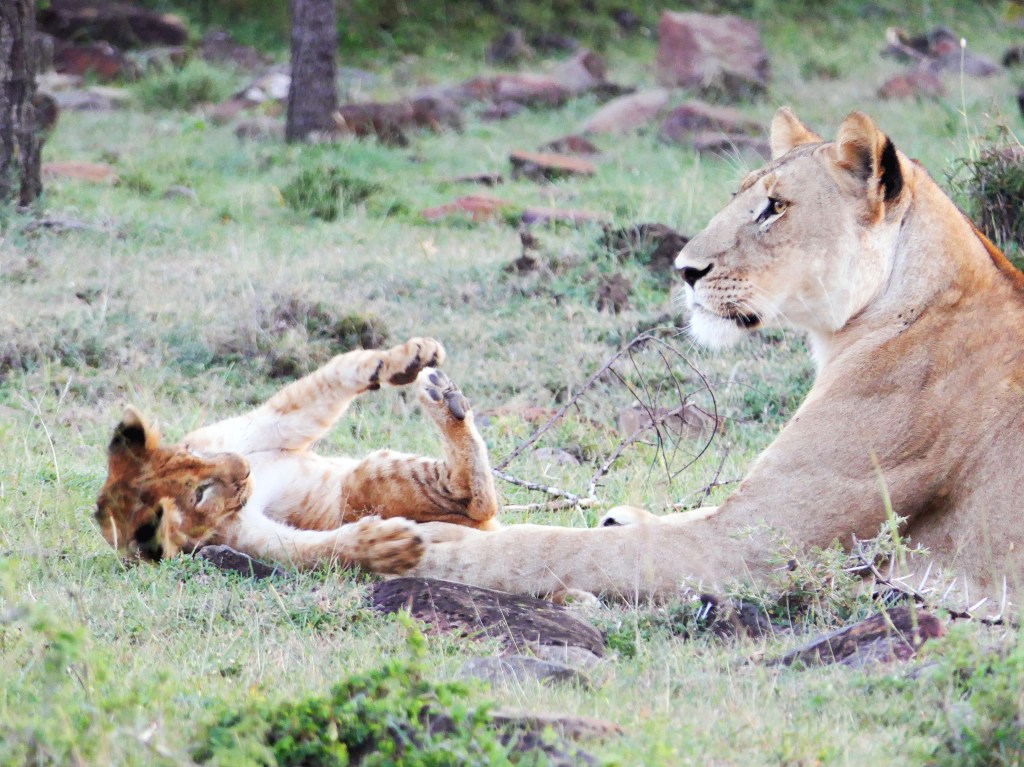
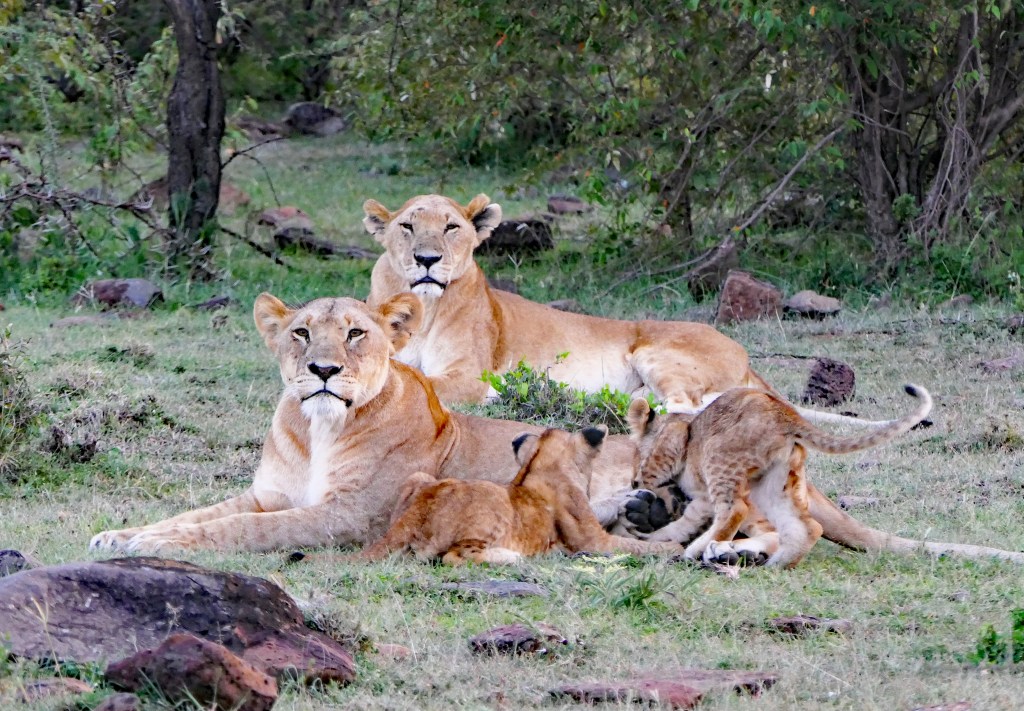
There was a break in the clouds and gorgeous light as we found another pride of lions, this time two females and two cubs. And just to clarify, all of our encounters here with lions have been with different groups.

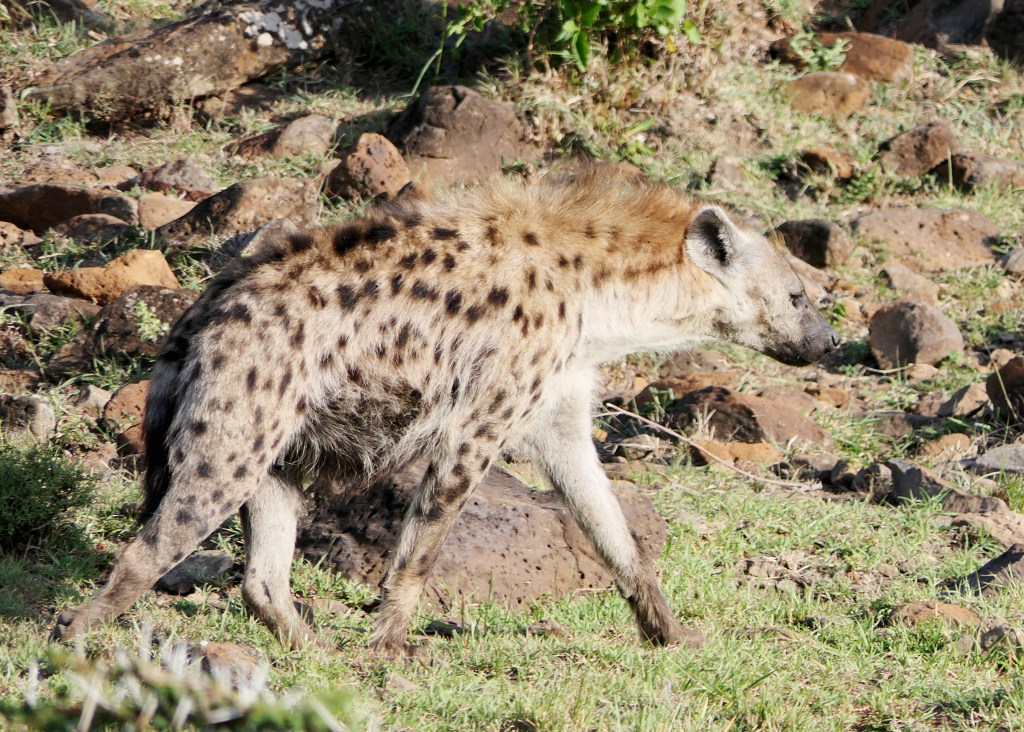
Then on our way to the next encounter, a spotted hyena – the garbage collectors of the plain. This picture shows how well camouflaged they are.
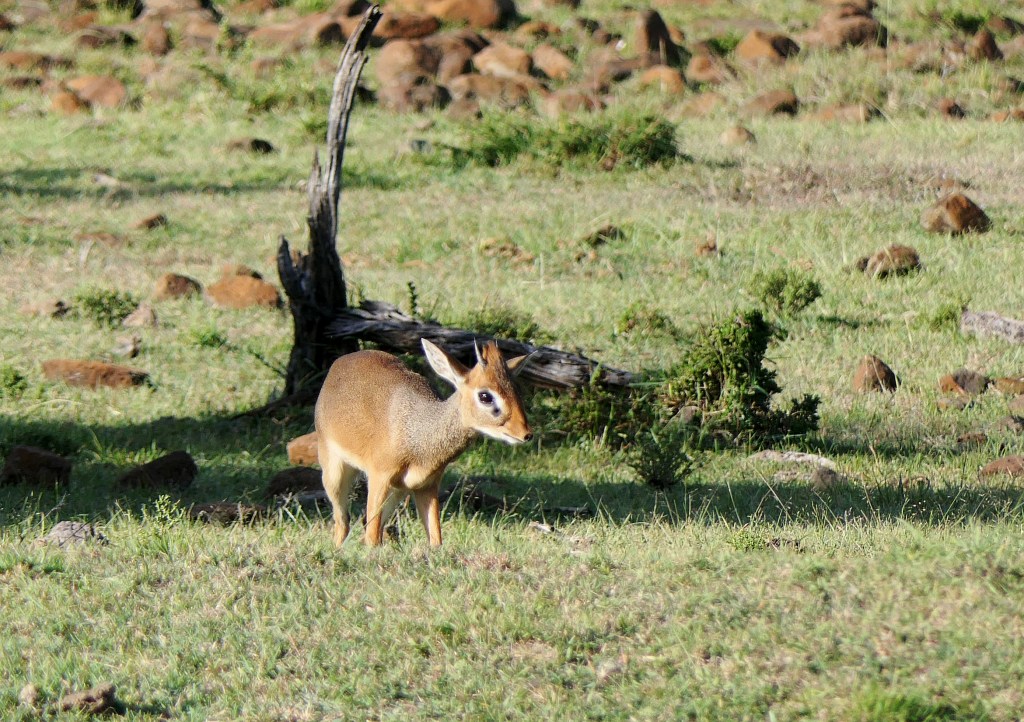
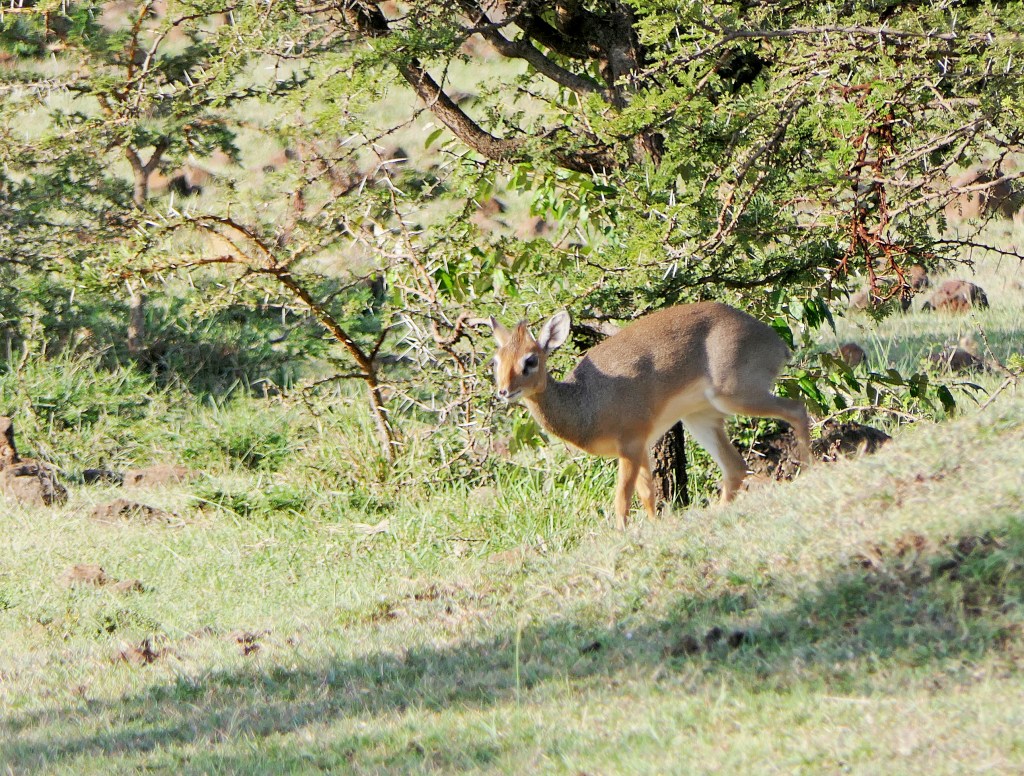
A male and female dikdik, one of the smallest antelopes. The male has very small horns.
Baboons.

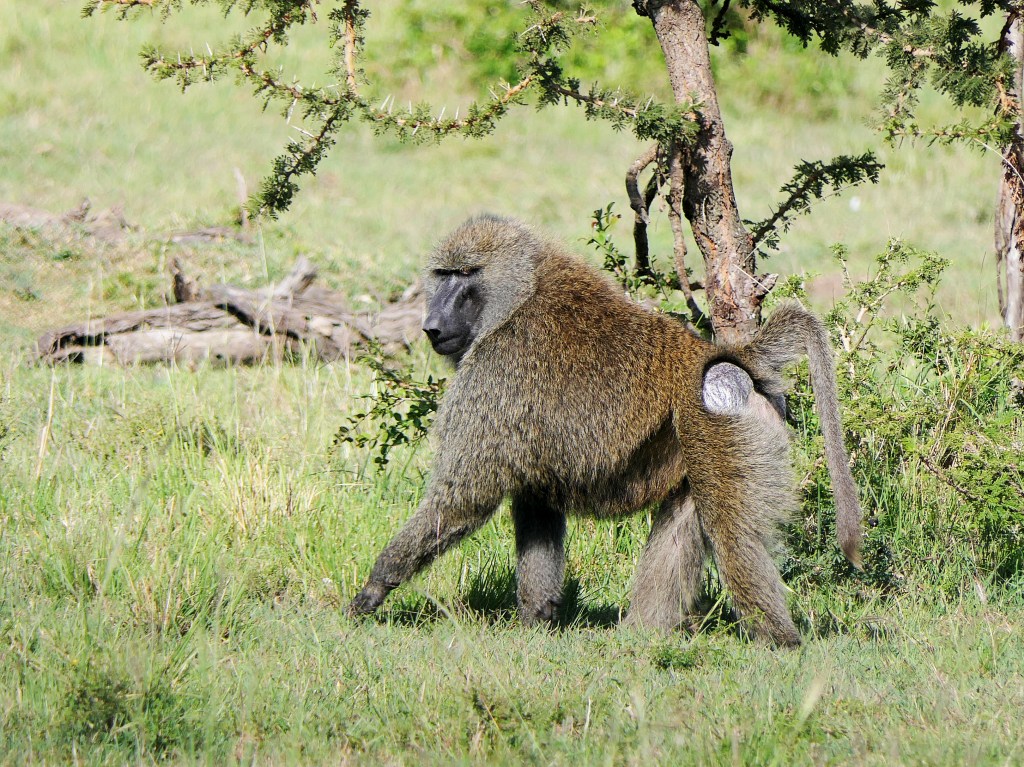
We went in search of leopards again, didn’t find any but the scenery was beautiful.


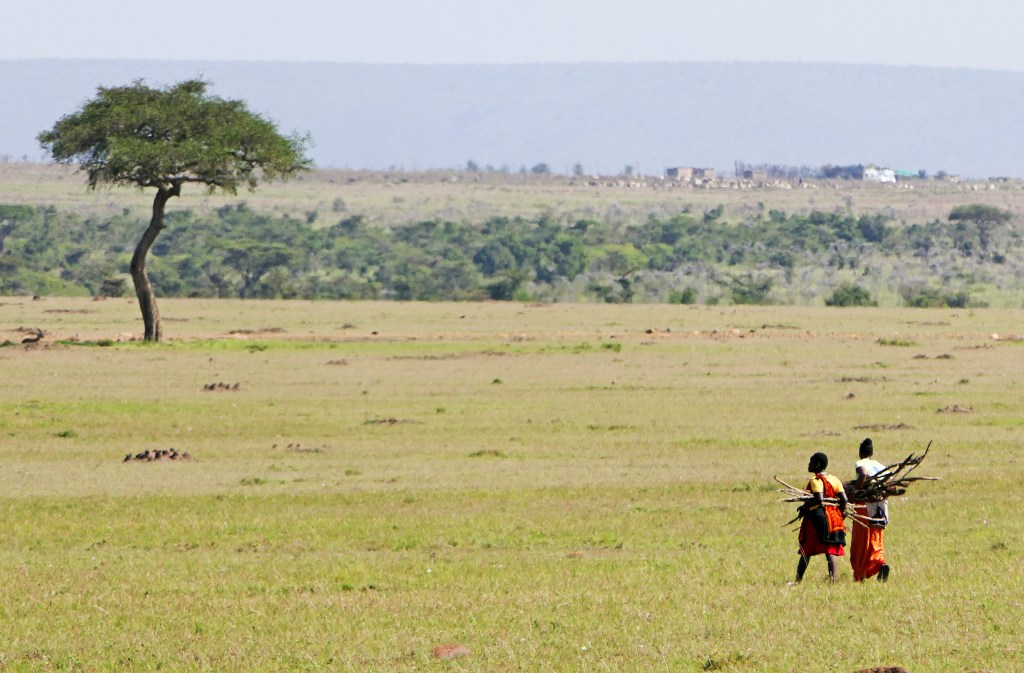
Maasai women gathering firewood.
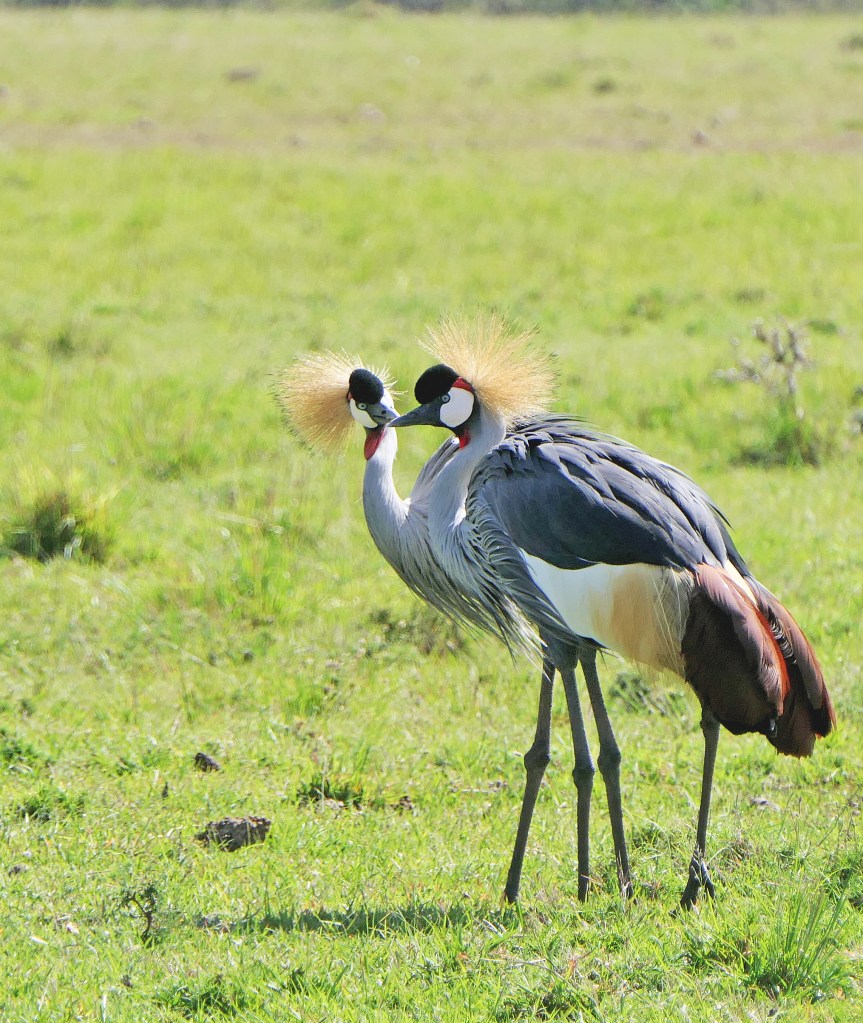
Headed back to camp to meet the elephant research team and lunch, a pair of crowned cranes.
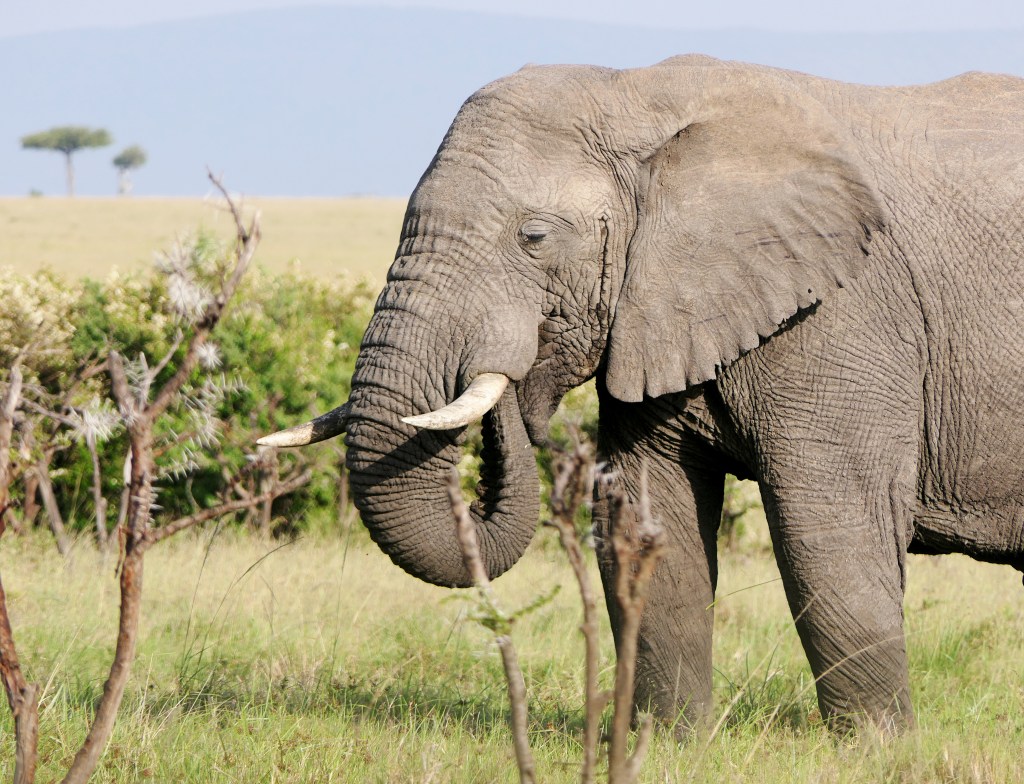
After a wonderful time learning from the researcher and three interns about their work to identify elephants and to reduce elephant/human conflicts we went out in the field with them. As you can see, we didn’t have to go far from the camp to find a herd.
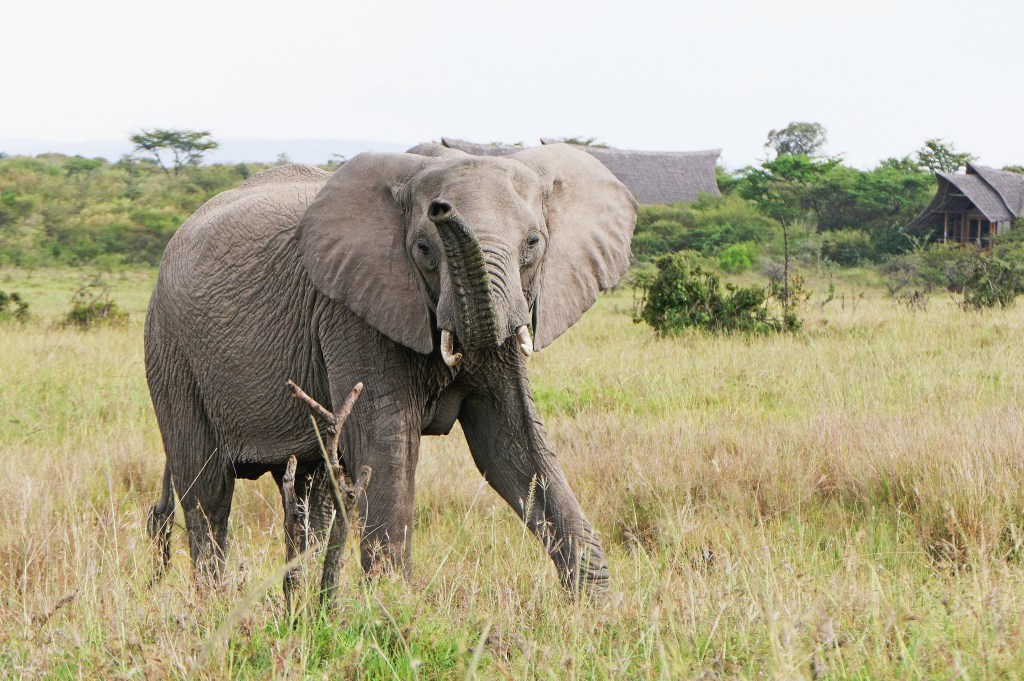
The researchers were able to use their photo-matching software to identify this guy. They look at the shapes of the tears in the ears and other markings.
The researchers left us then because they had a long drive back to their camp.
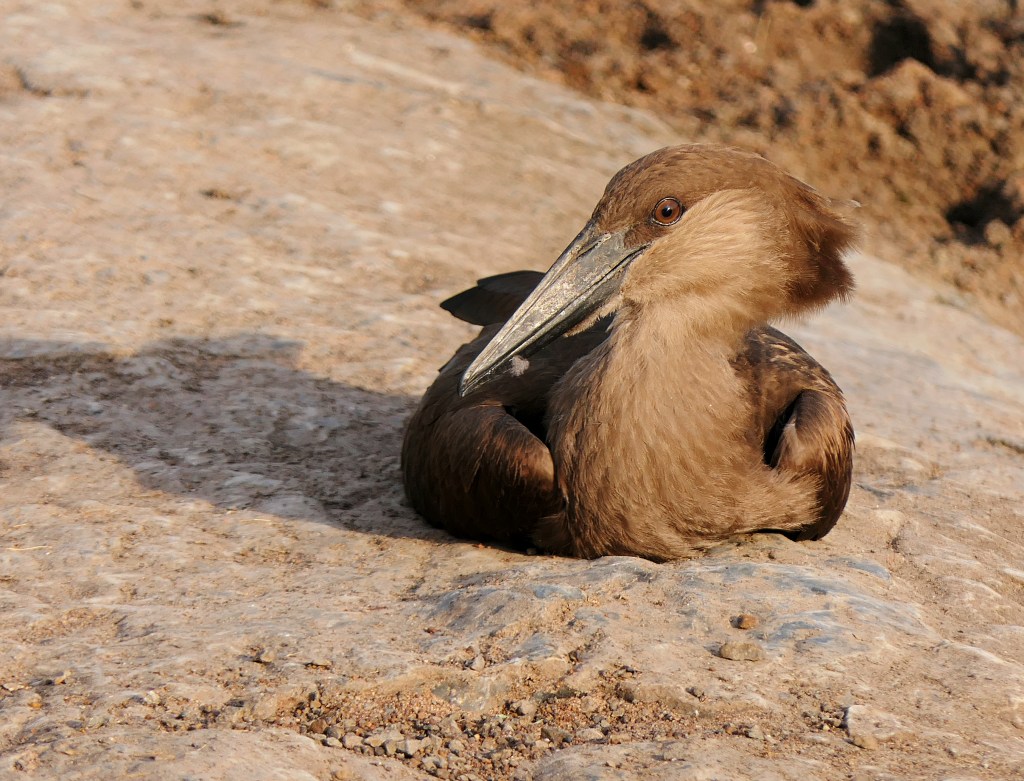
We continued on our search for other critters. Here is a Hammerkop.
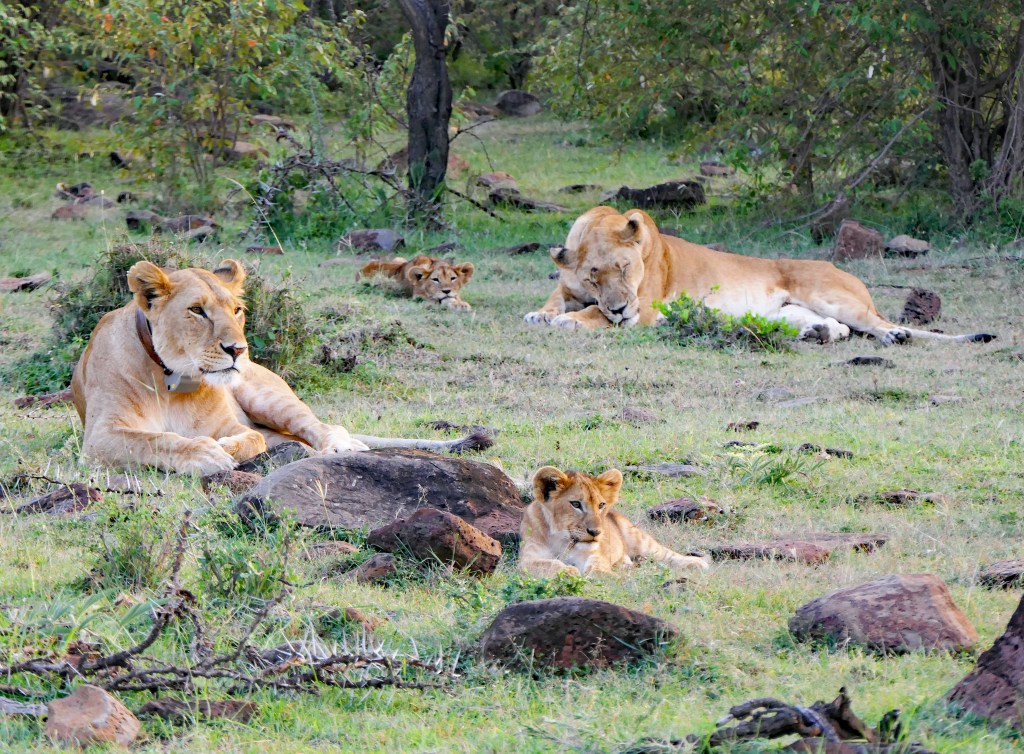
And what would an evening be without seeing lions? This was a large group of females and cubs in the late-day light.
Tomorrow, travel to the airstrip and our last stop in Tanzania.
Safari Stop #2 – Naboisho Conservancy
While we had to get up early to go to the airstrip, thank god it wasn’t as early as the game drives! Our trip to the strip would take about an hour but we left with time to stop if we saw anything of interest.
On our way out we came across a young bull elephant and stopped for a minute for pictures, but he had different ideas. Slowly but surely he strolled over to the jeep where my friend Naomi was taking a video. Everyone held it together pretty well!
After that it was uneventful drive to the strip. This flight was a bit longer headed south to Naboisho. This Conservancy is know for its cat population.
About to land among the Acacia trees.
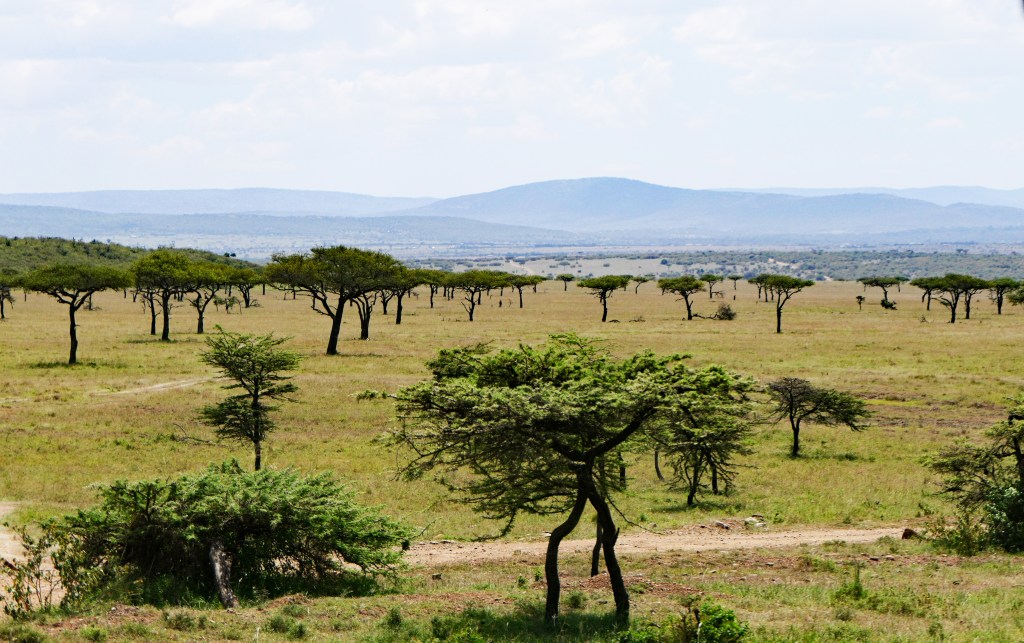
Our next guide Jakob met us at the air strip. Almost immediately after leaving the strip we came upon a small group of wildebeest.
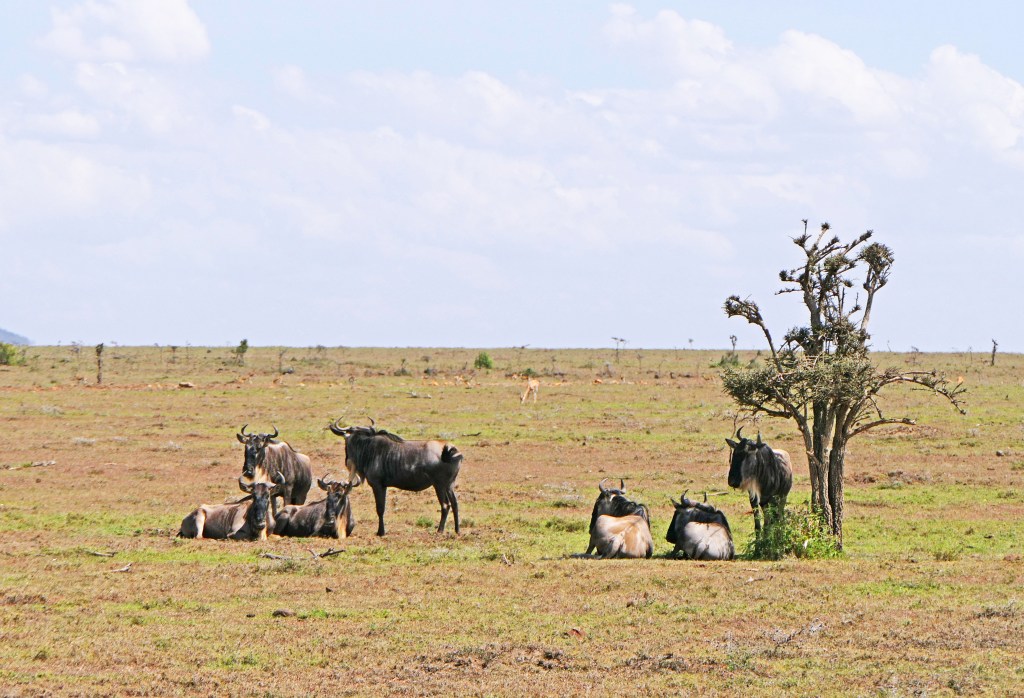
Jakob noticed that one was about to give birth. First she was laying down.
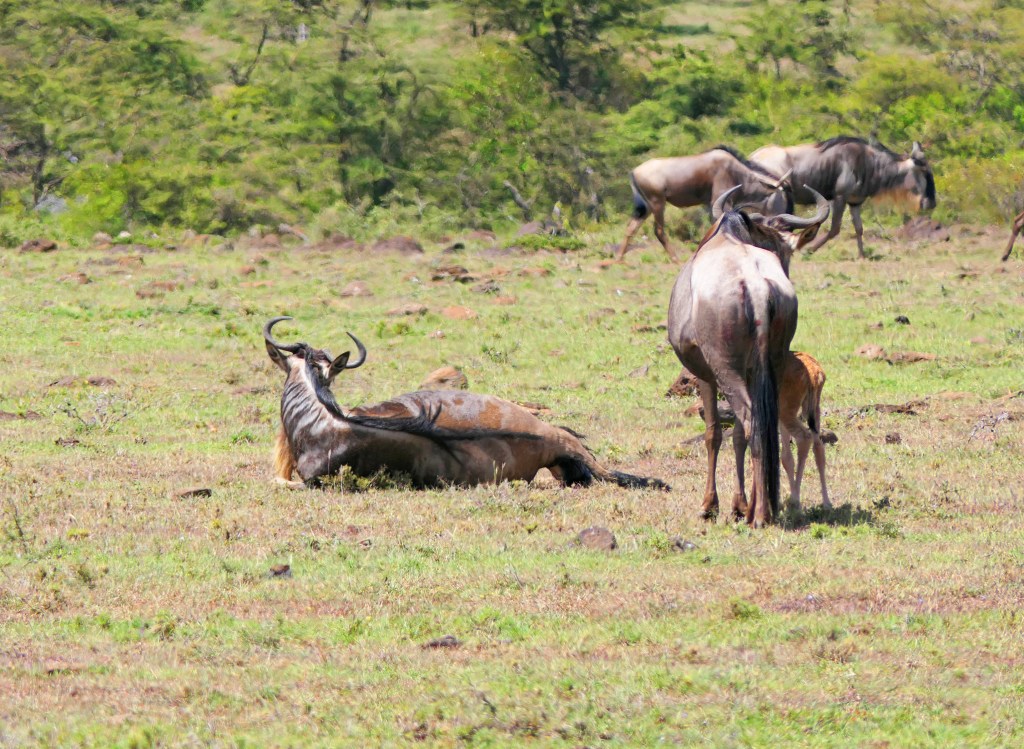
Then she got up and started to circle rapidly, essentially using the centrifugal force to get the baby out. In the picture below the baby is more than half way out.
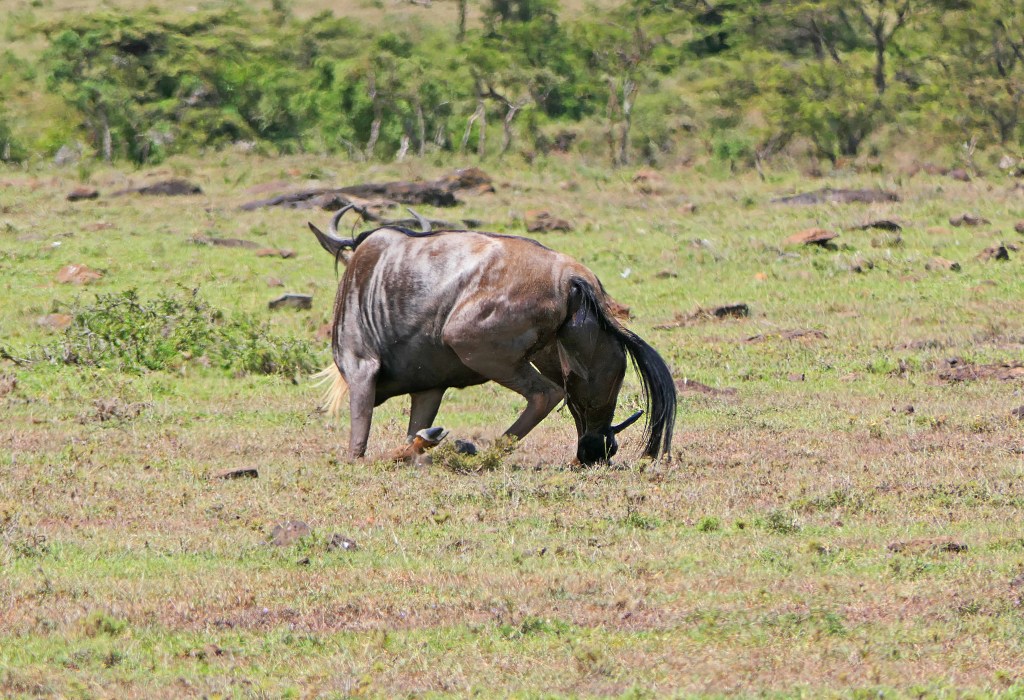
After the delivery she and the herd tended and protected the baby.
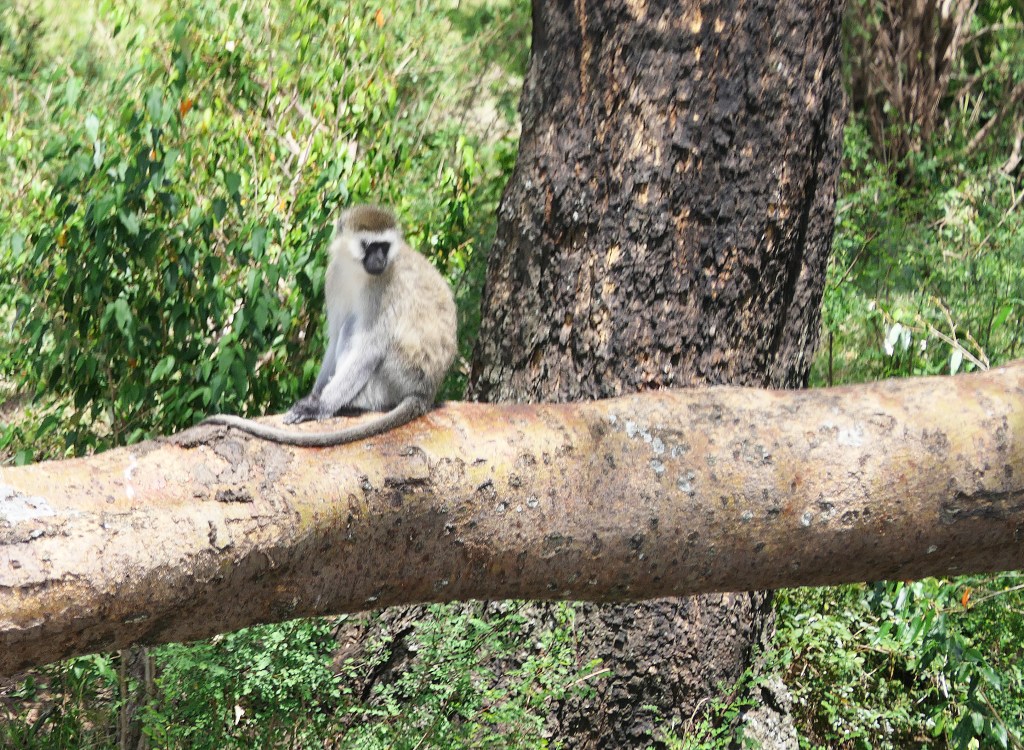
A vervet monkey.
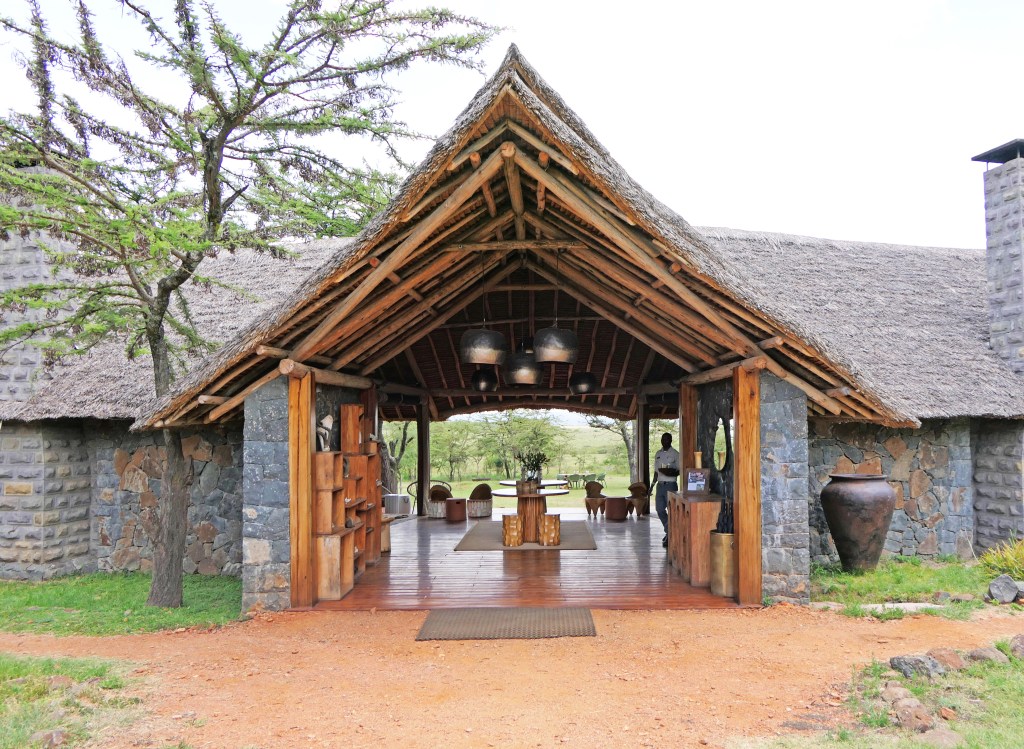
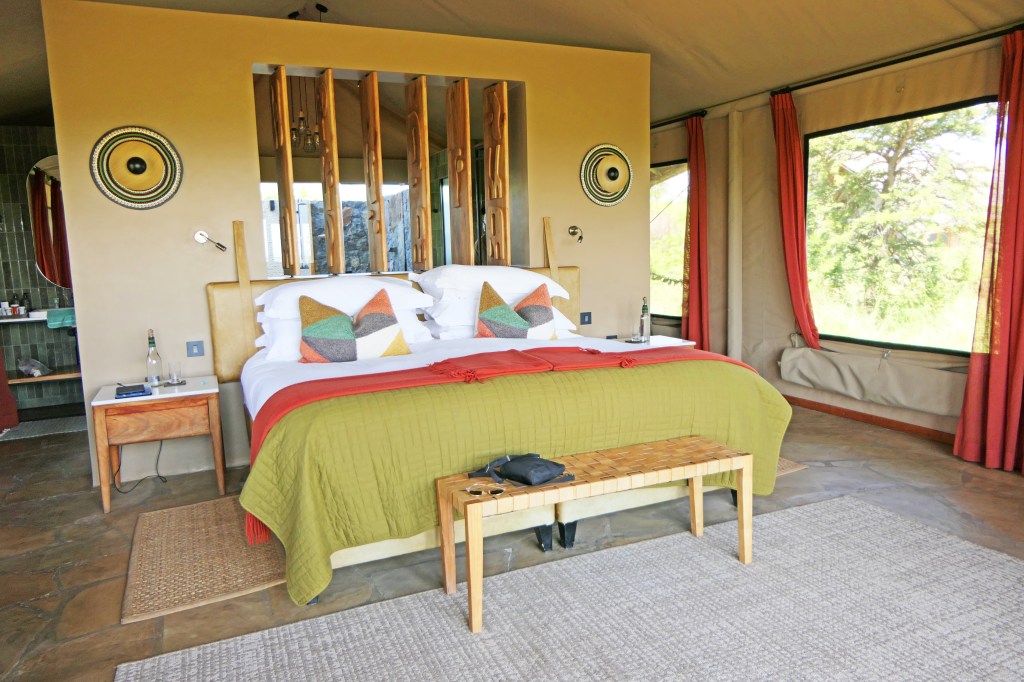
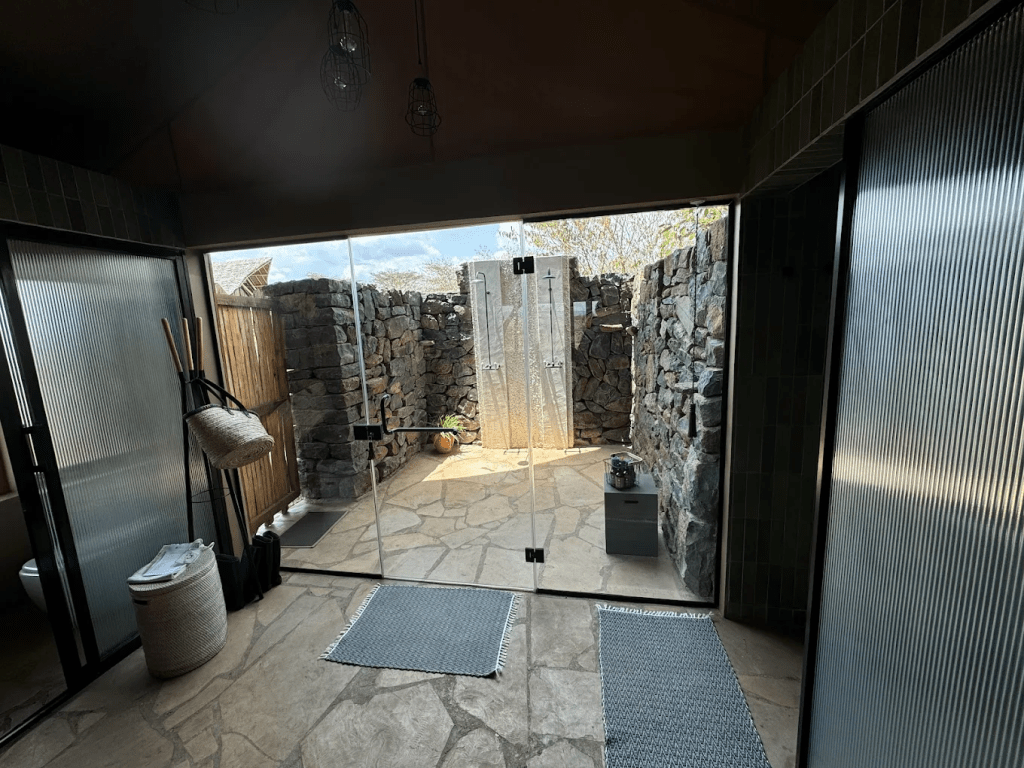
We once again had a warm greeting from the staff at Naboisho, this time with a rhythmic accompaniment.
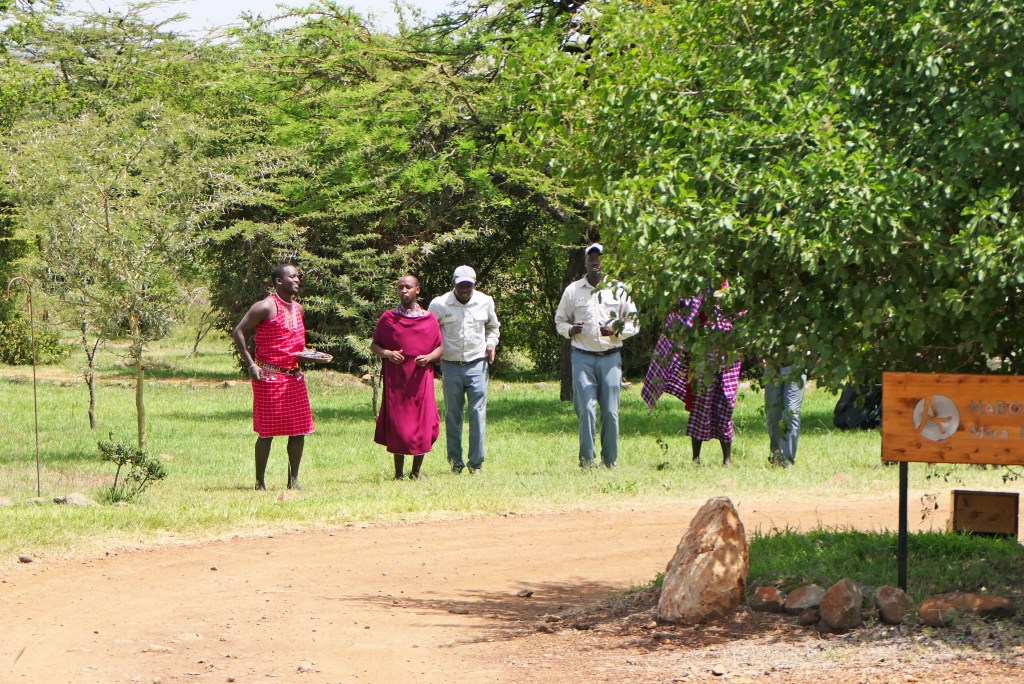
This camp is located in the Masai Mara, a location known for the “Great Migration” of 15,000 wildebeest from July through October. It is also known as the home to the Maasai people, historically cattle herdsmen (as well as goats and sheep), recognizable by the red “shukas” and intricate beadwork that they wear. Many of the men have had their lower front teeth removed. Our guides were all Maasai.
Unfortunately when we were all doing the meet and greet I took a step backwards onto a rock and took a very bad fall. Turned out I fractured a vertebrae which I didn’t realize until I got home. But for now all I knew is that it hurt like hell!
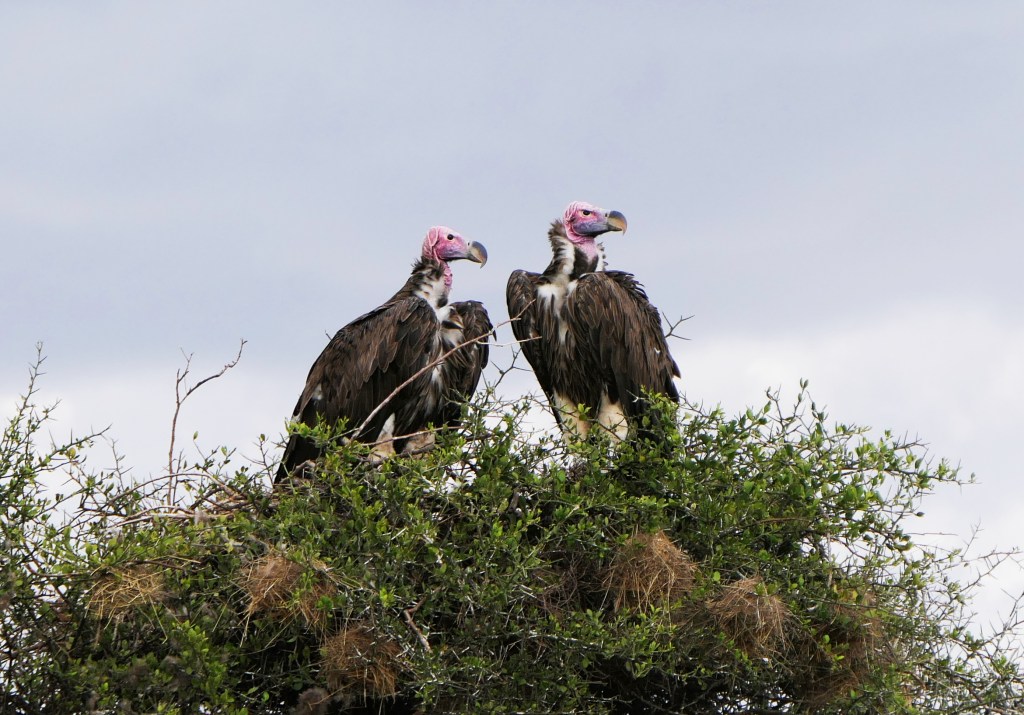
After lunch, 800 mg of ibuprofen, and another nap we went out for the afternoon game drive. The first thing we saw were these Lappet-faced Vultures in the tree top.
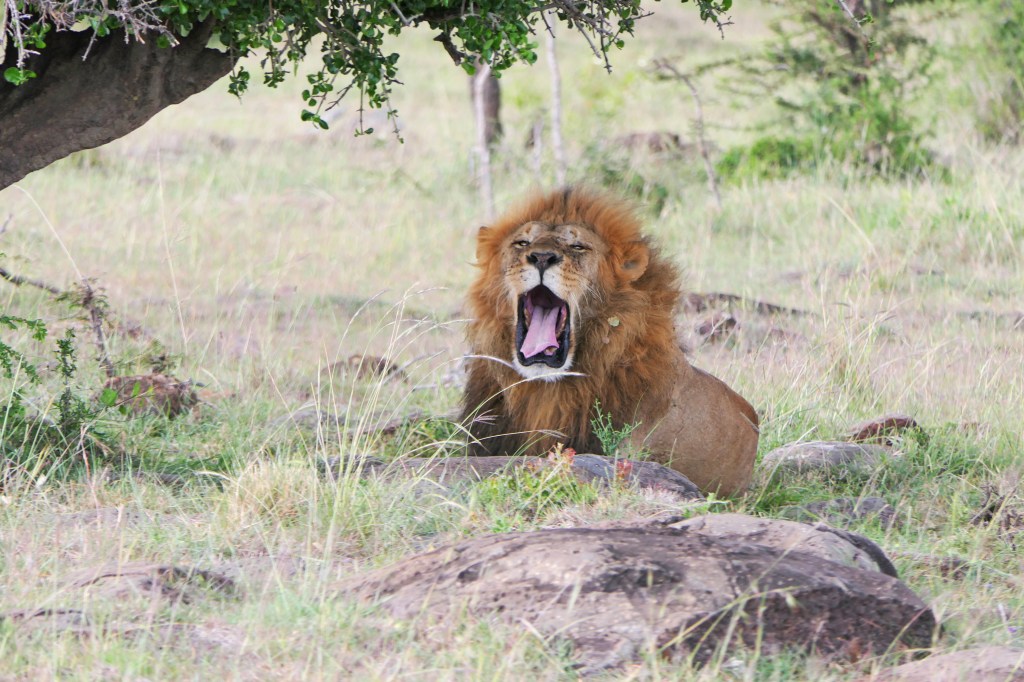
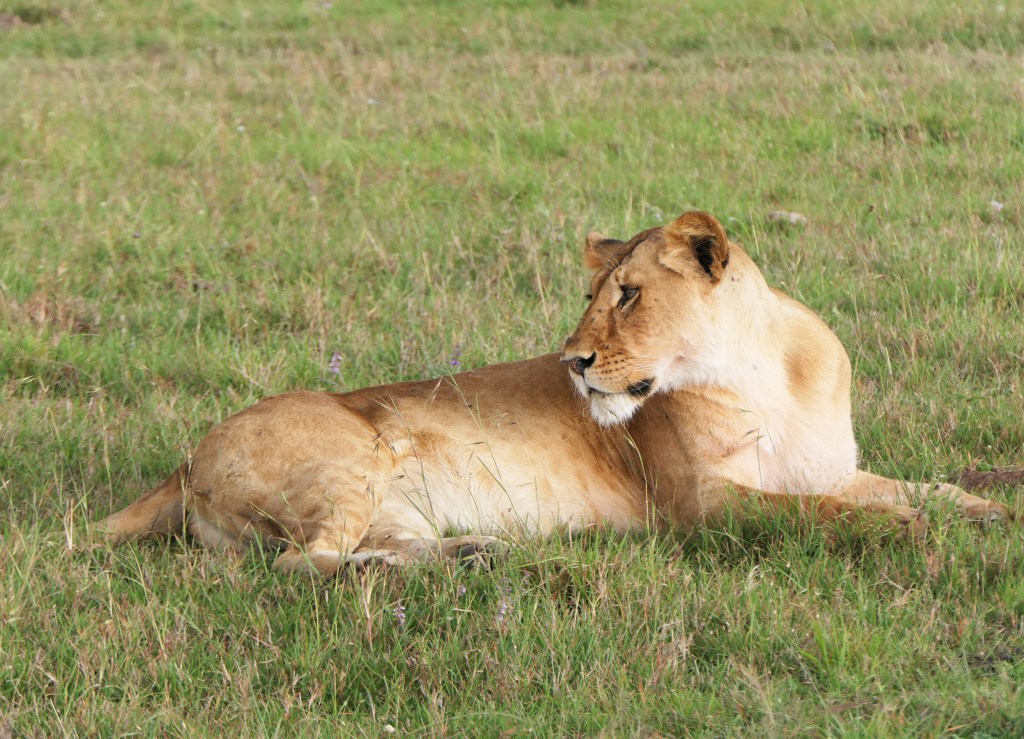
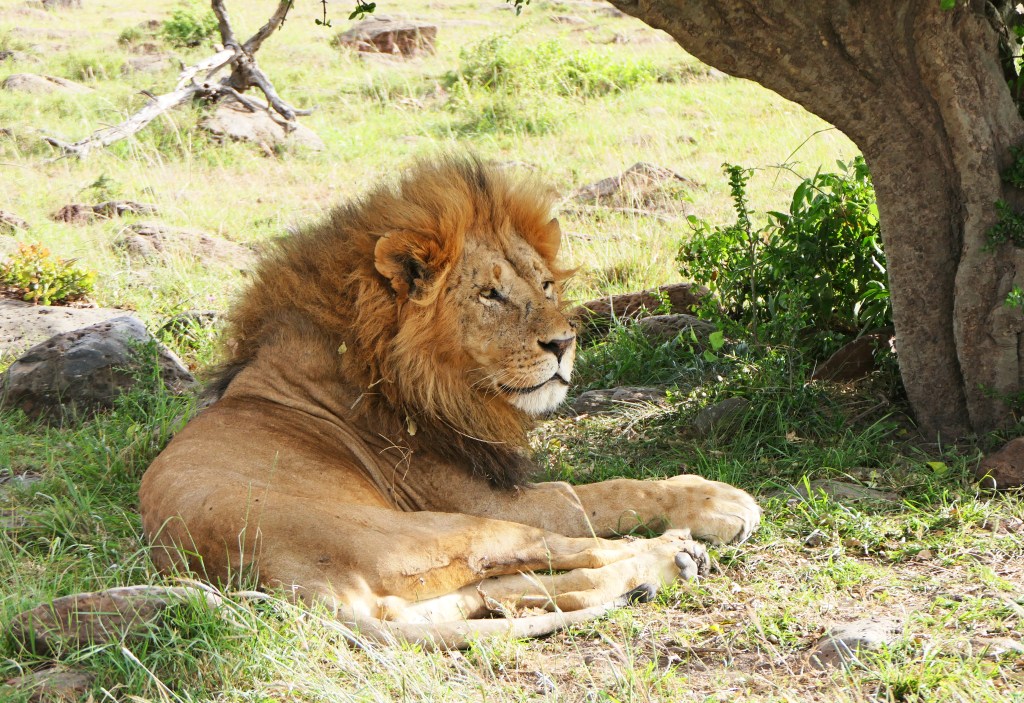
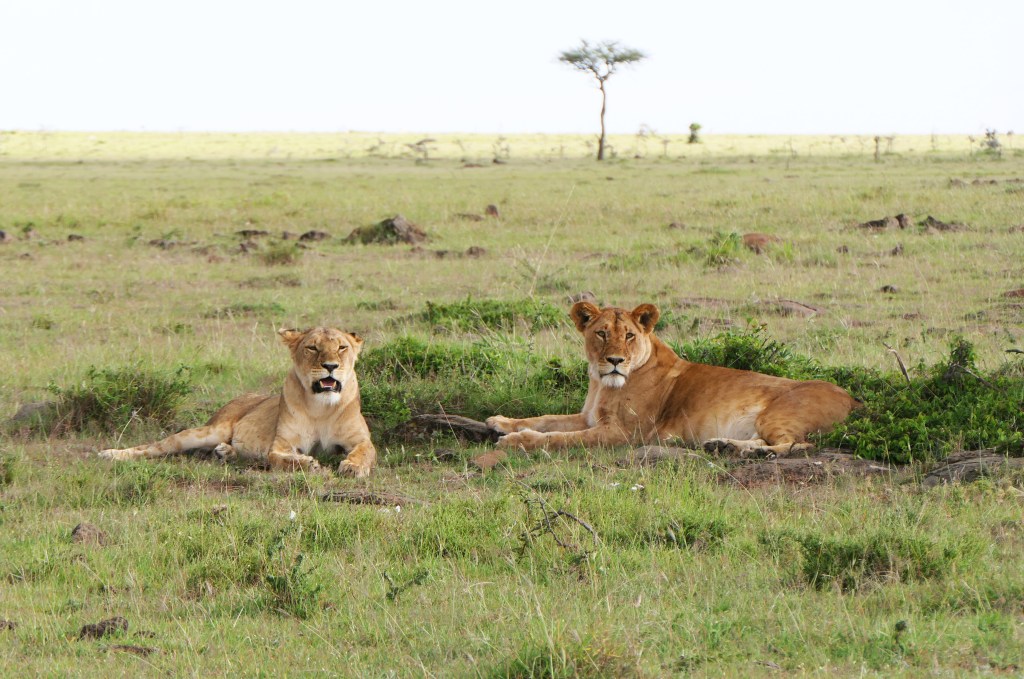
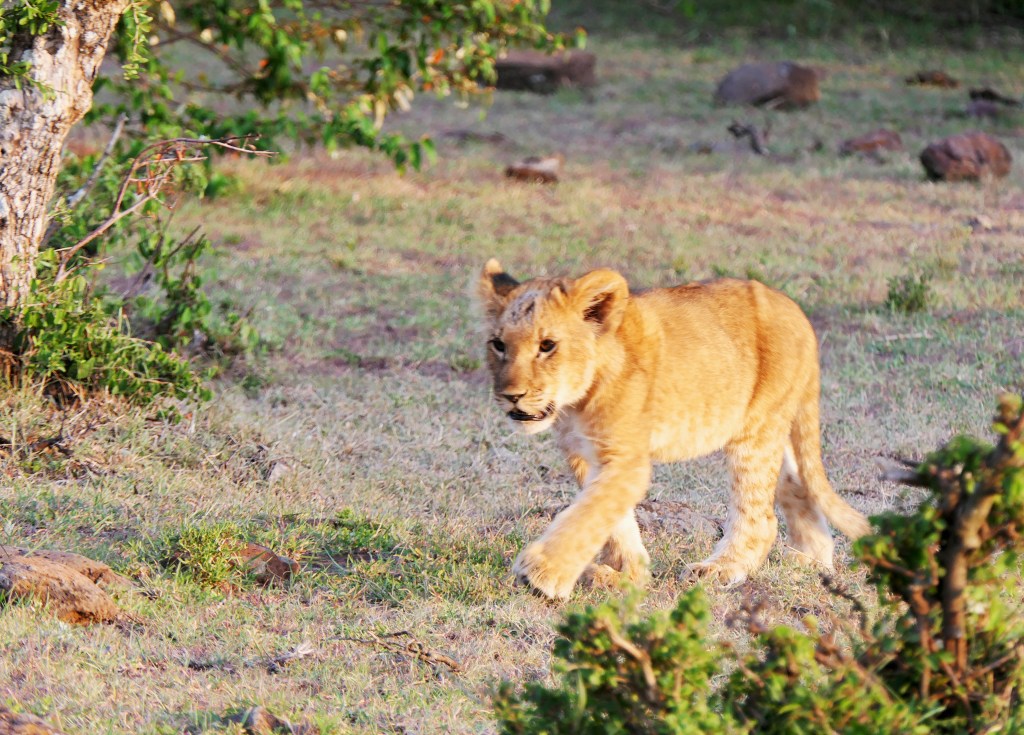
Then our first lions here in the Masa. You may notice a pattern. When we found lions in the late afternoon, they are all waking up from their afternoon siesta:)
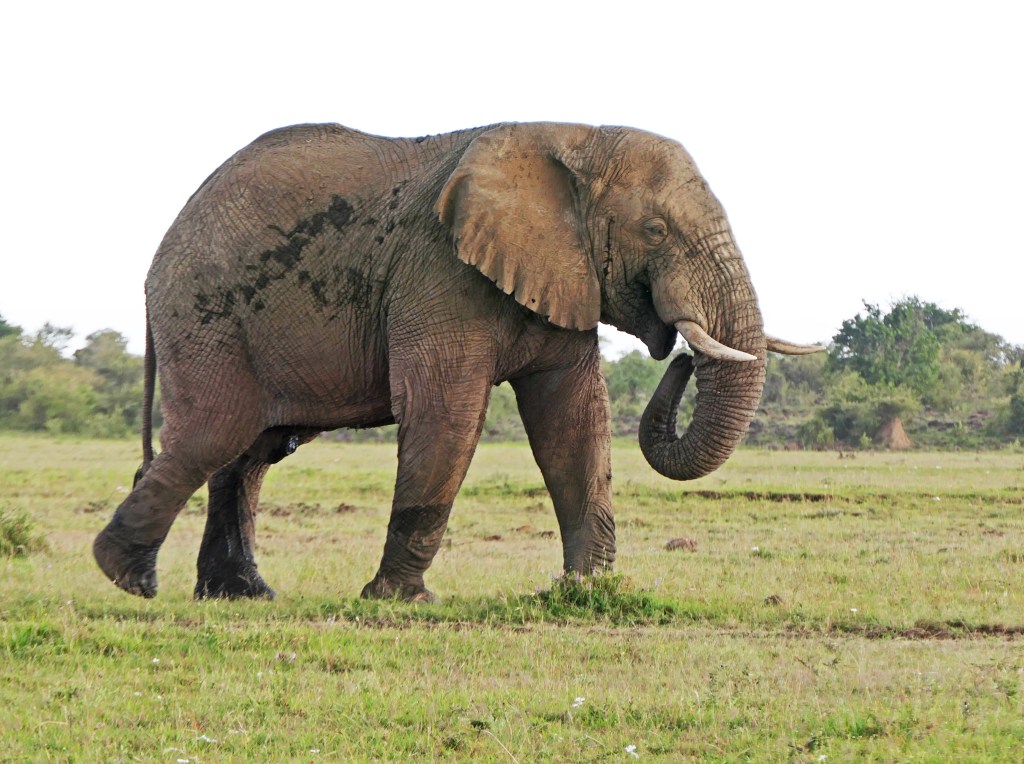
A bull elephant.
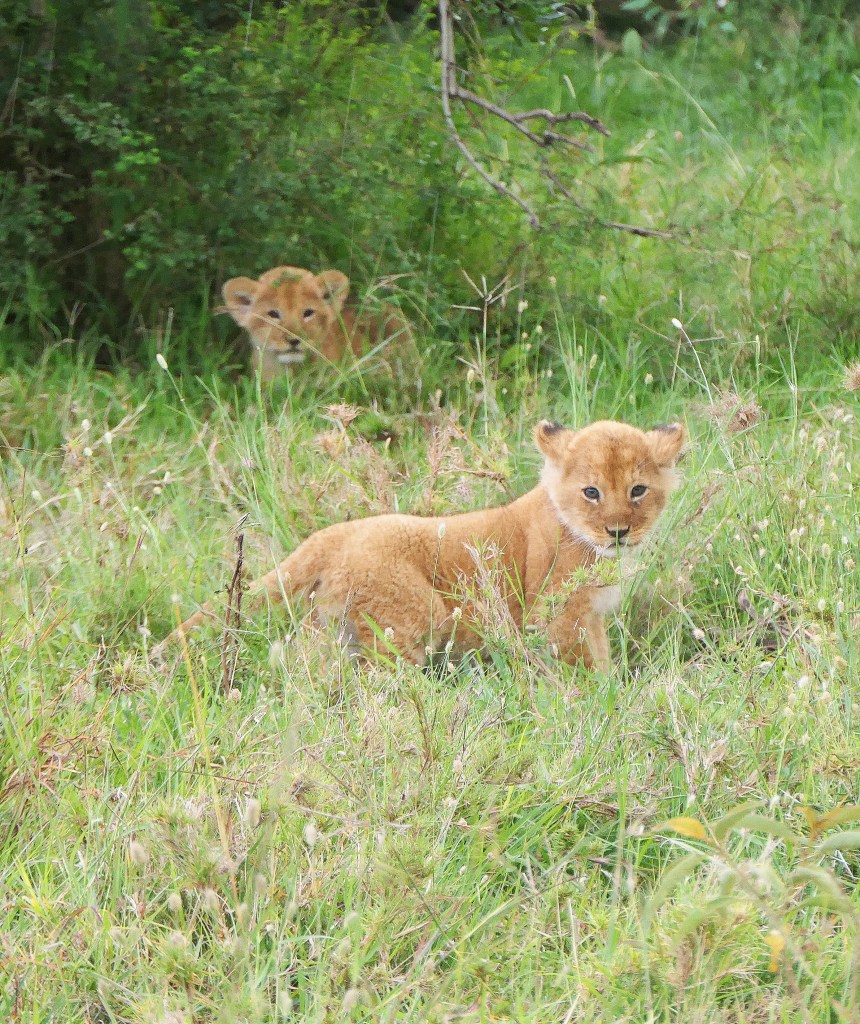
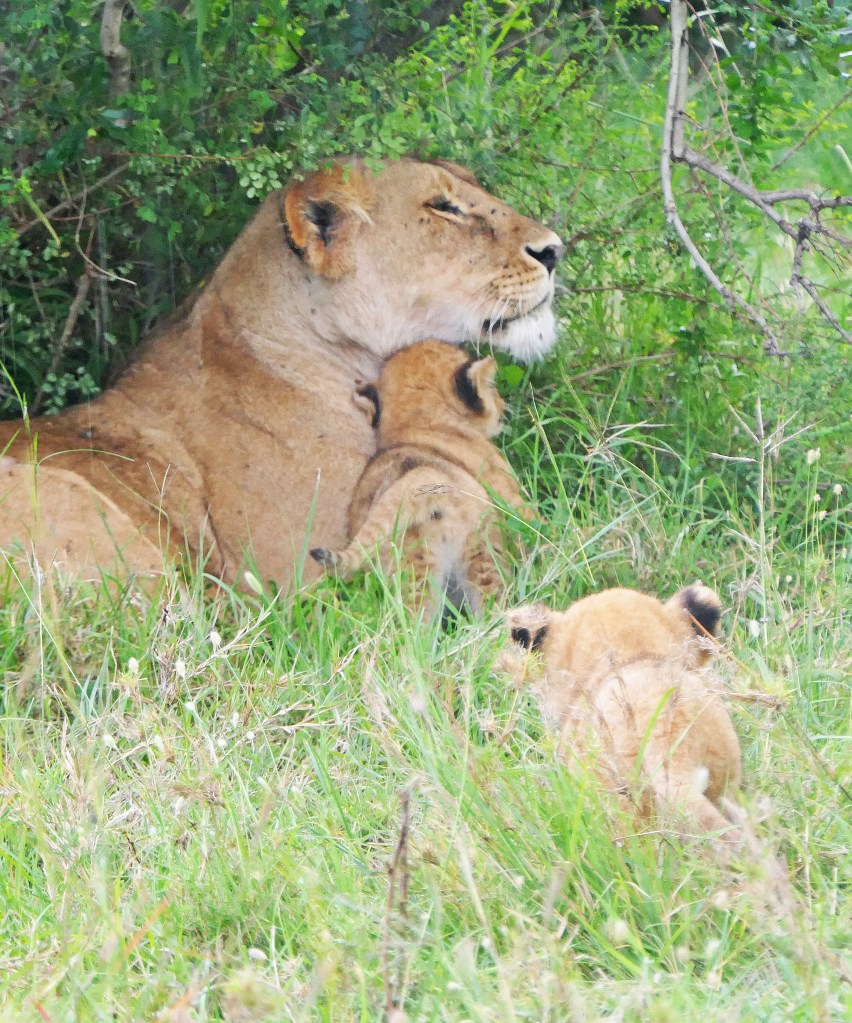
As sunset approached, guess what we found? More lions 🙂 This time it was females and cubs.
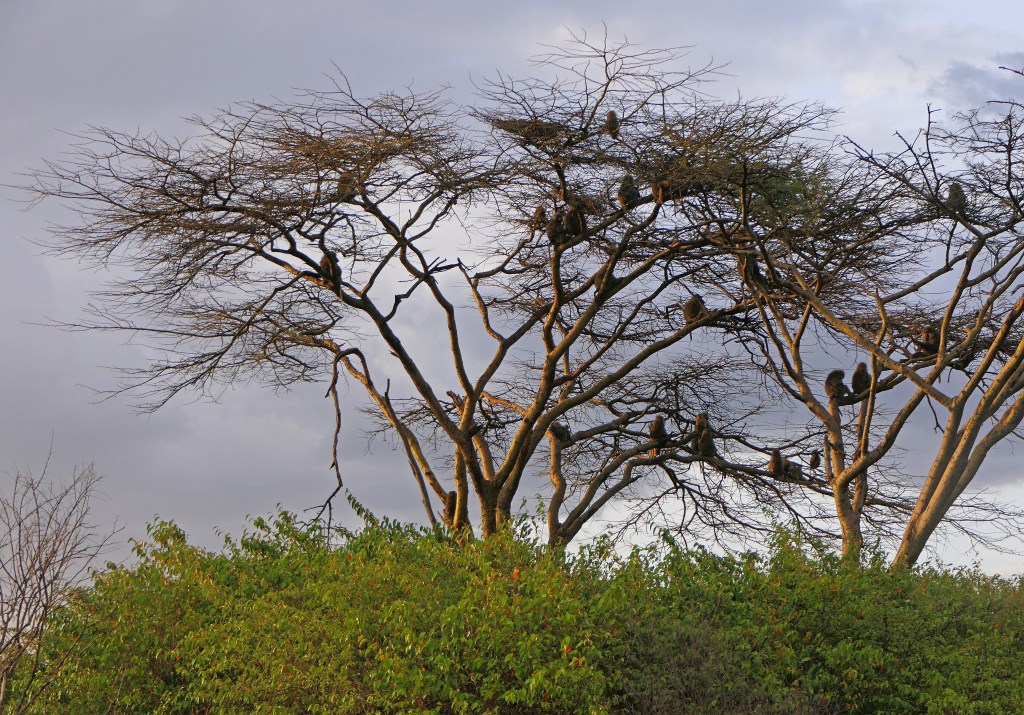
A troop of baboons taking refuge in a tree to stay safe from the lions.
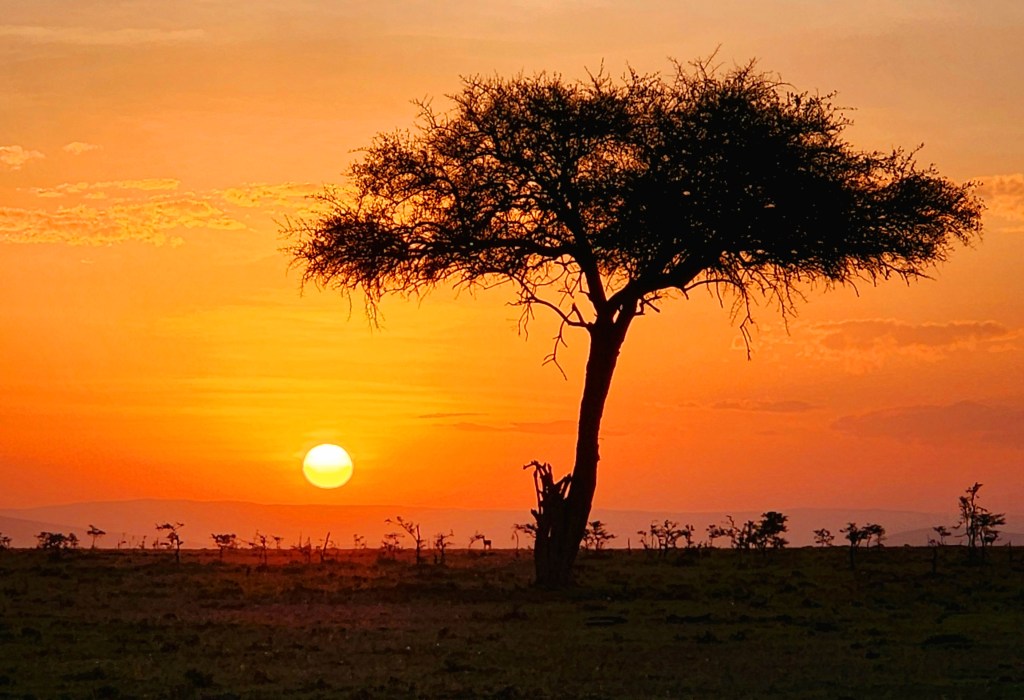
And this evening’s sunset with our sundowners.
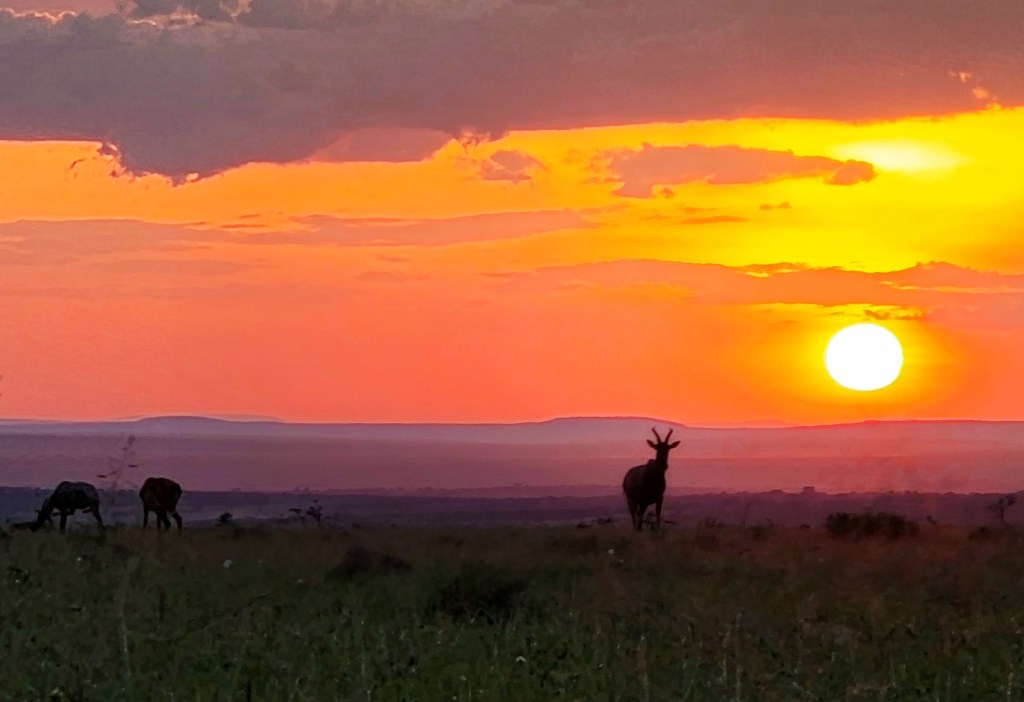
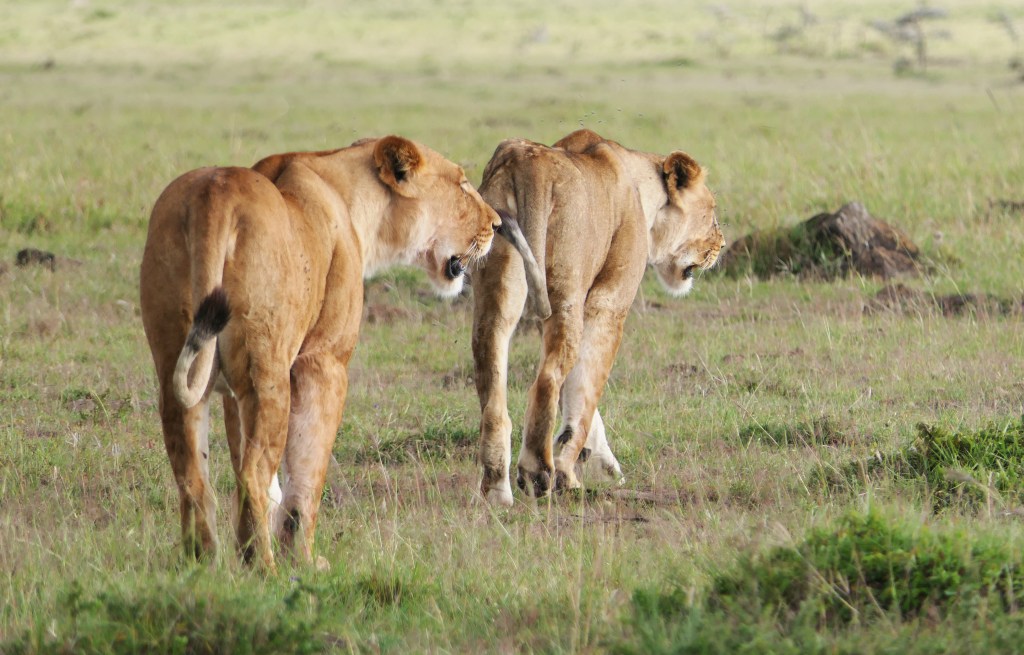
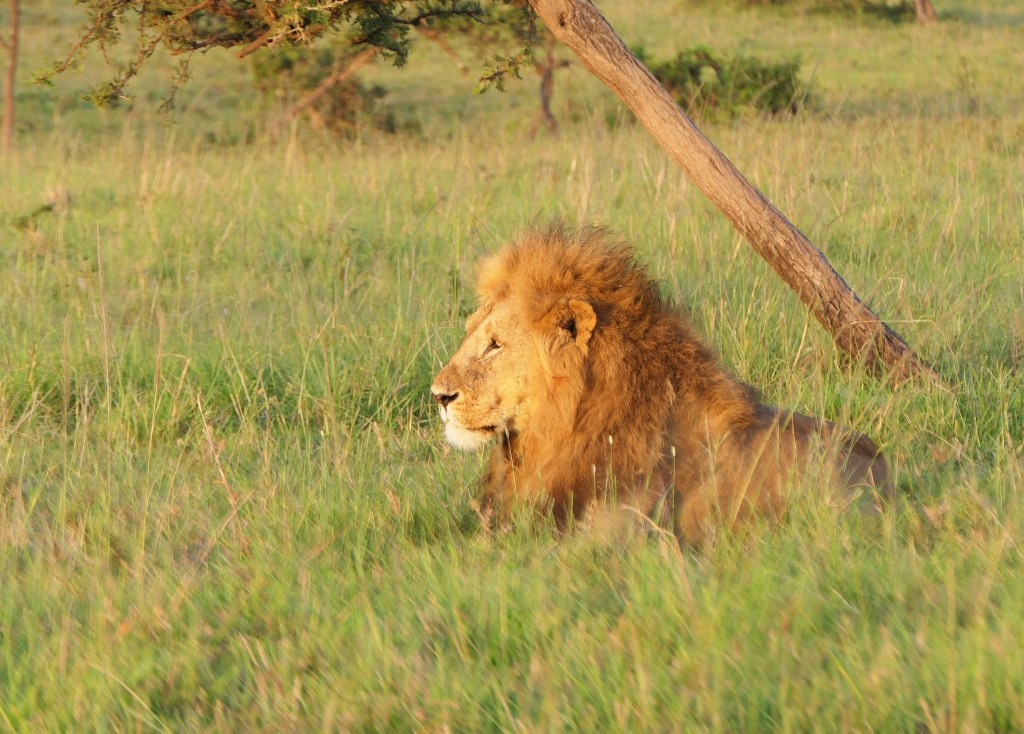
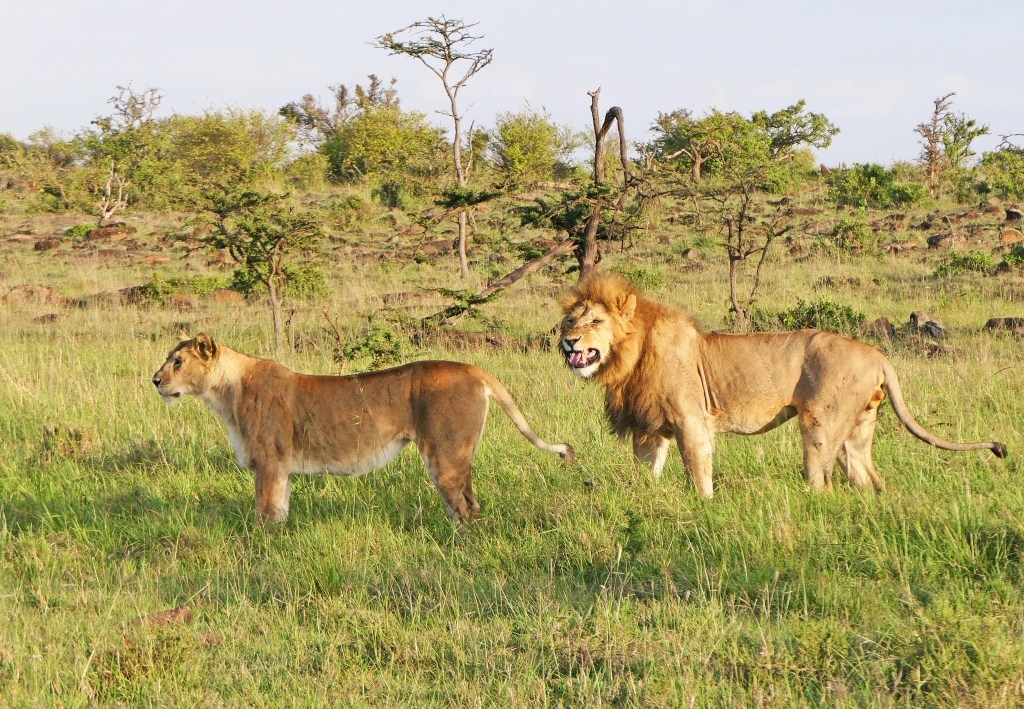
Once again we were up before the sun and off for the morning drive. And the first thing we found was … lions 🙂 This time two males and two females.
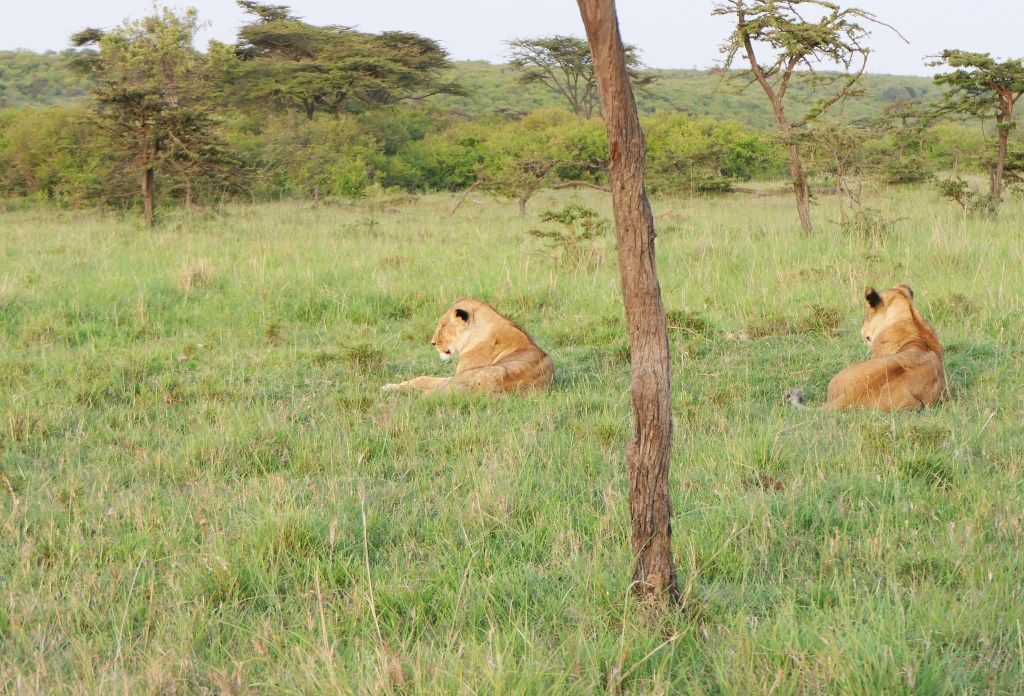
A couple of fascinating things occurred in this encounter. The first was that it appeared that at least one of the females was in heat.
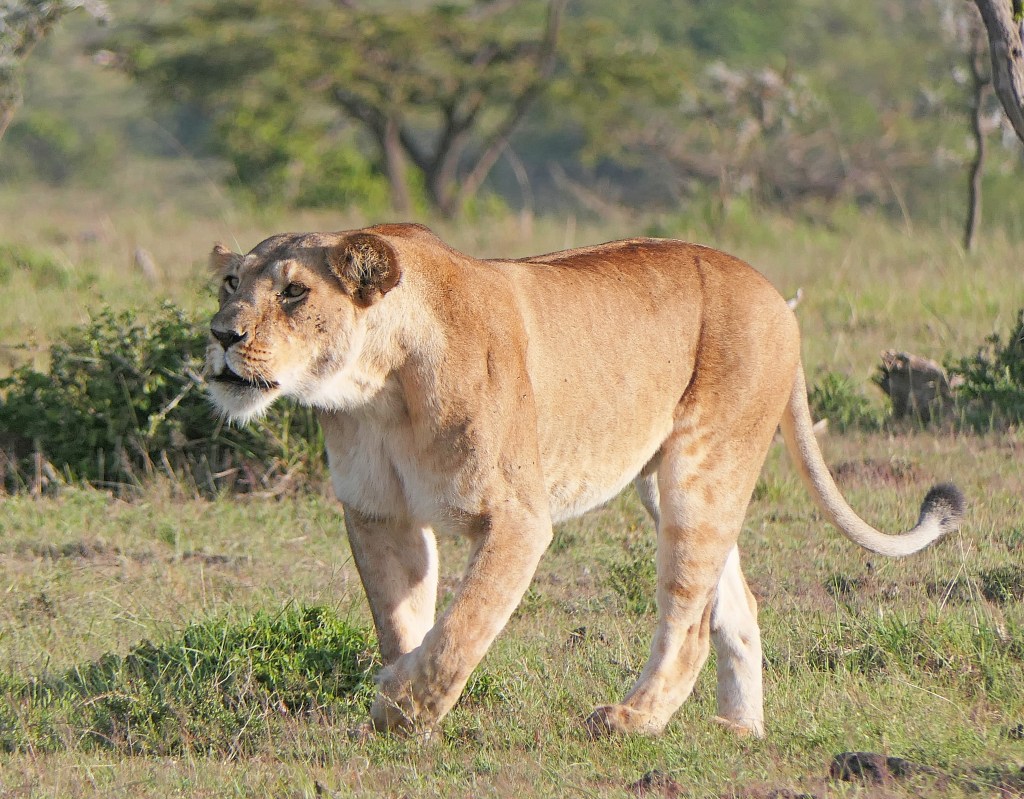
The second was, after we had been there a few minutes, a third lioness appeared at the top of the hill.
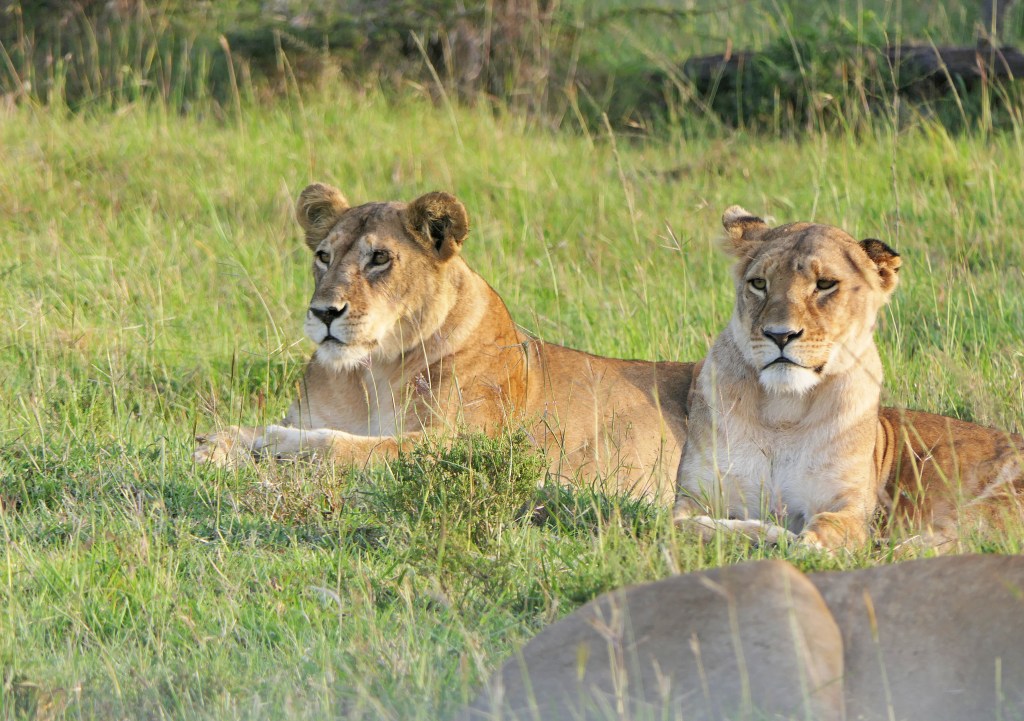
It soon became obvious that she was not a member of this pride. The two females we were watching took great exception to her approach and began to stalk towards here, roaring every few steps. The second male emerged from the brush to see what the commotion was about. Then the other male followed behind. They walked only feet from our jeep.
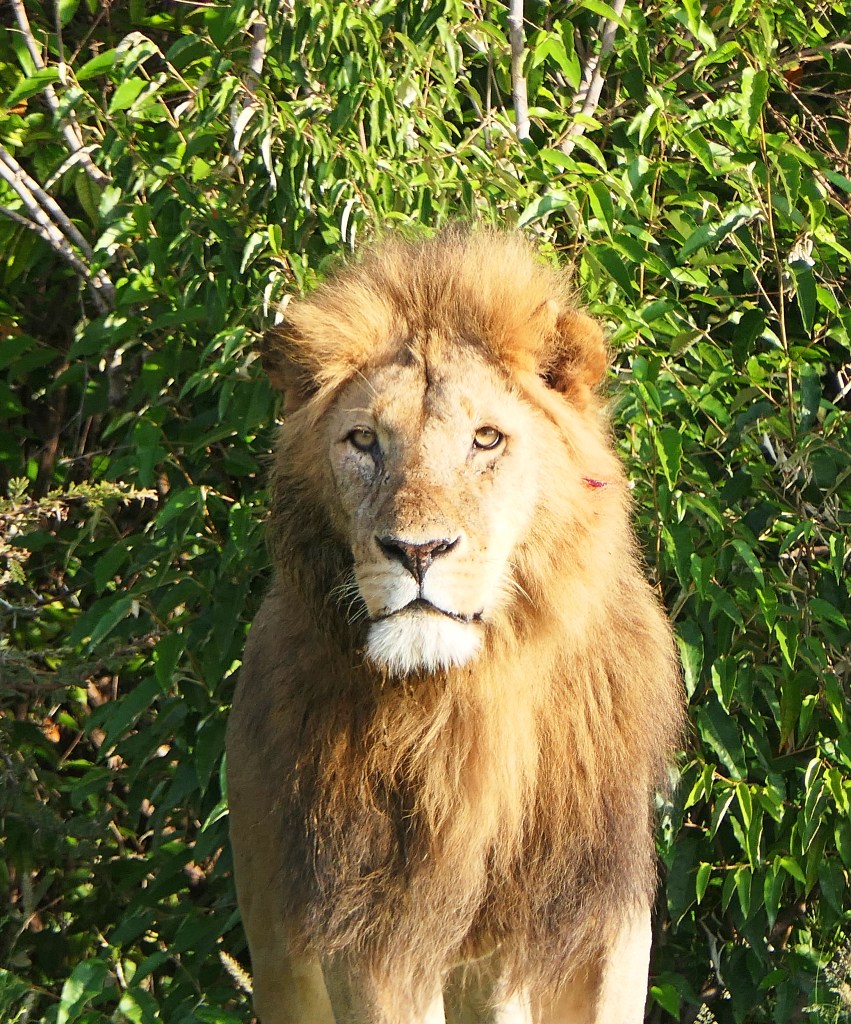
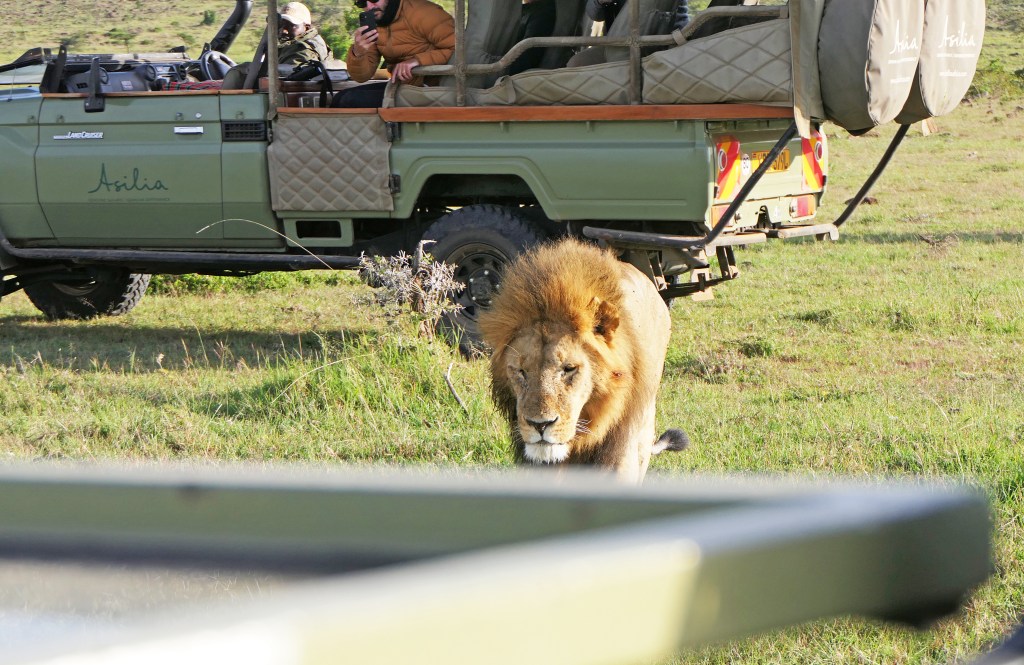
The two females continued to the top of the hill and the third interloper retreated.
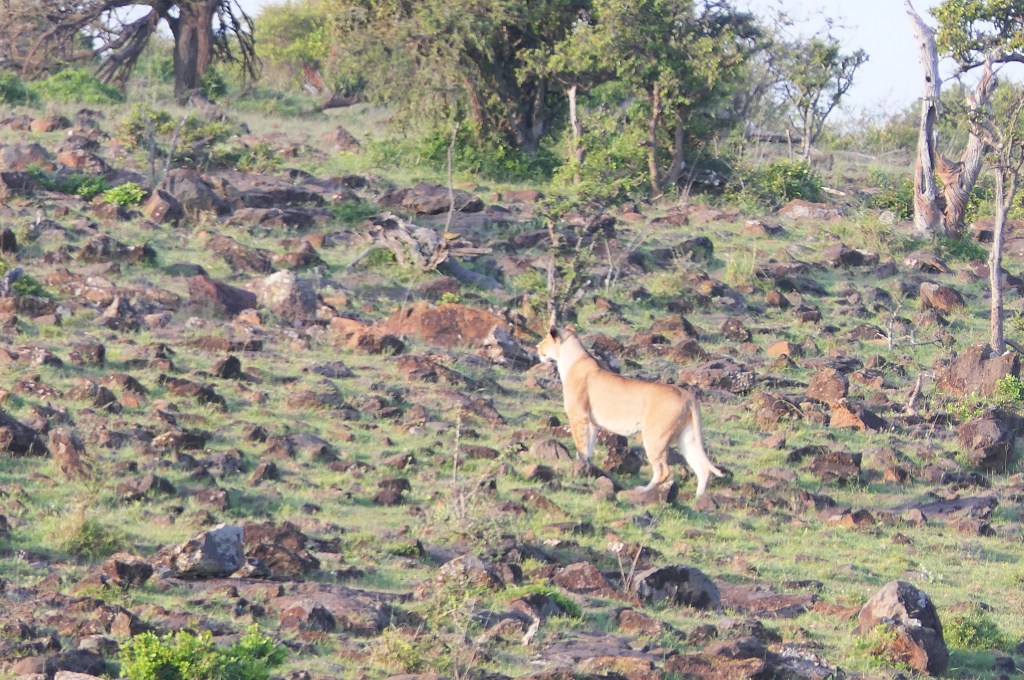
When they were convinced that she was gone, they headed back down to the males.
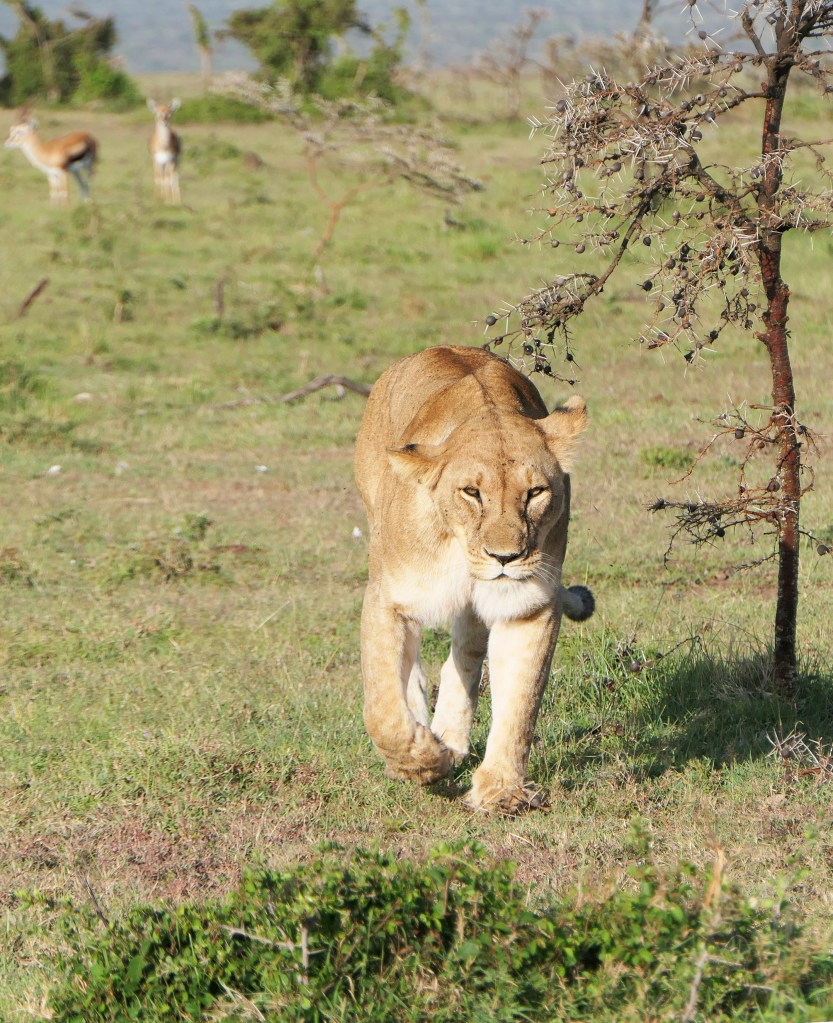
We left them to their nap.
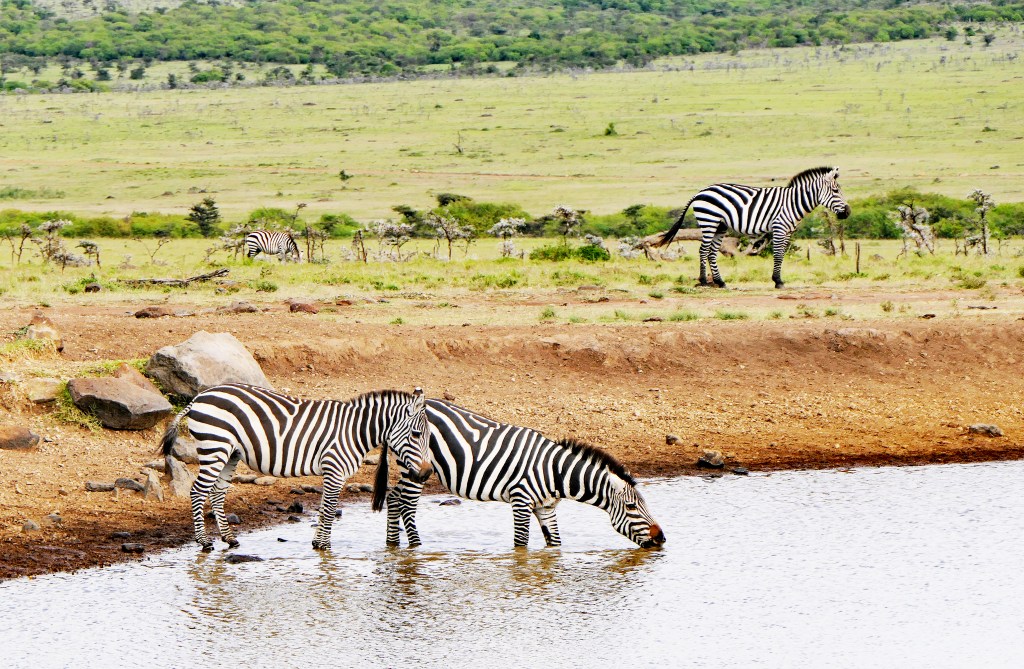
Next up, a herd of zebras at a watering hole.
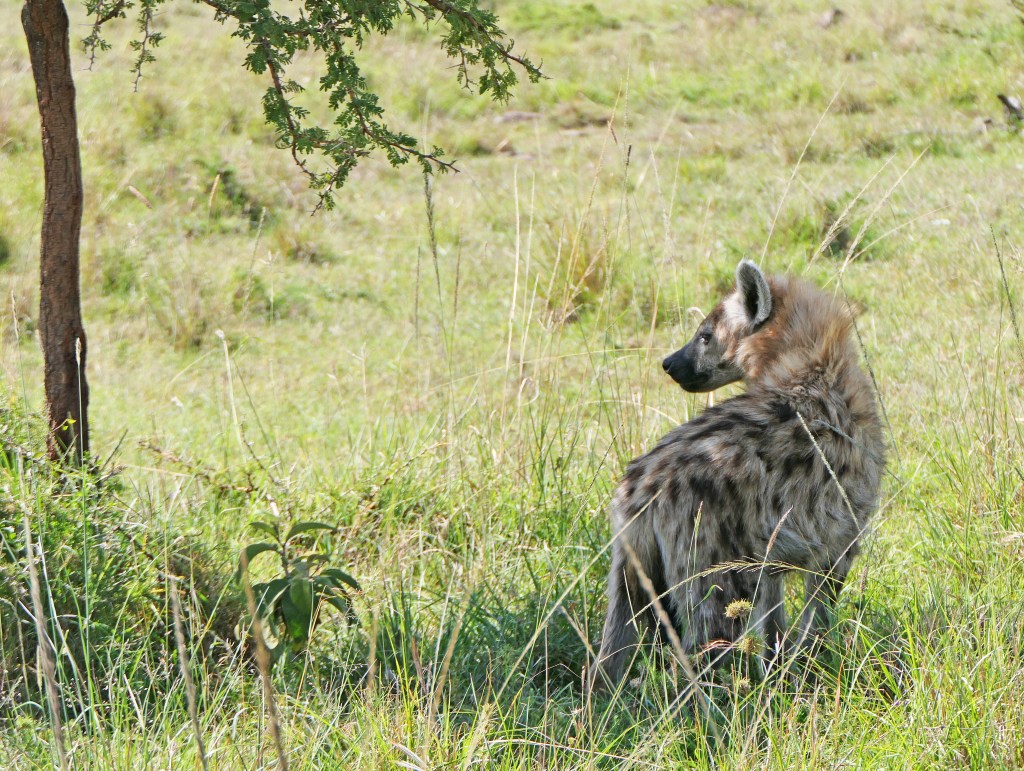
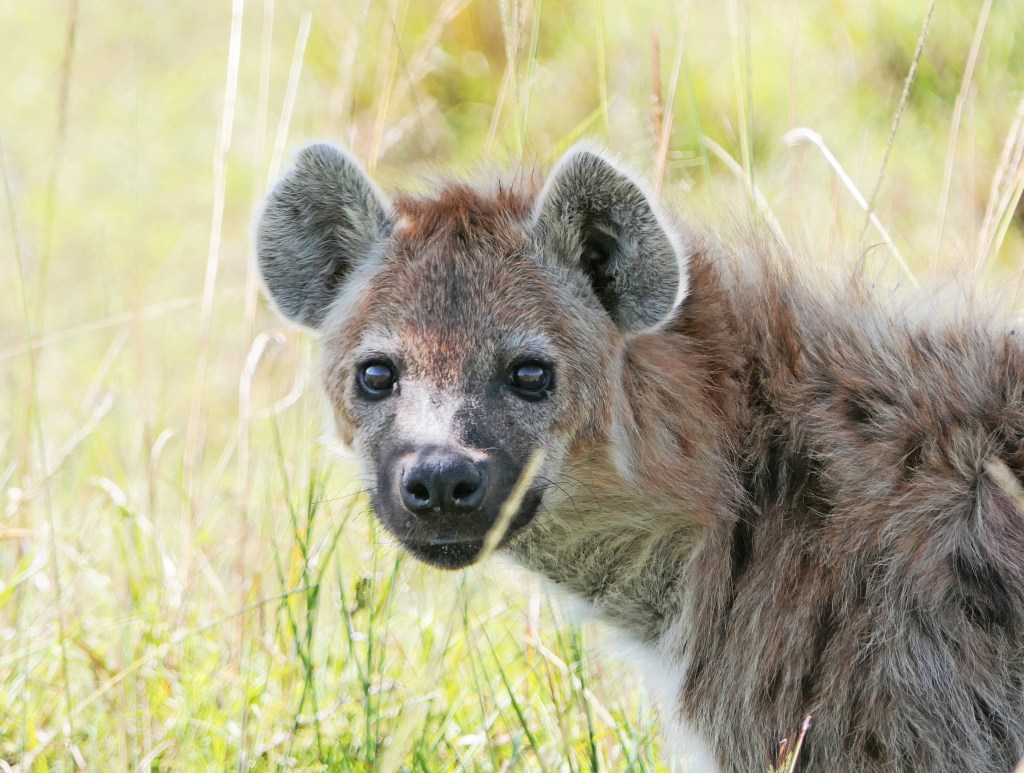
Then a spotted hyena.
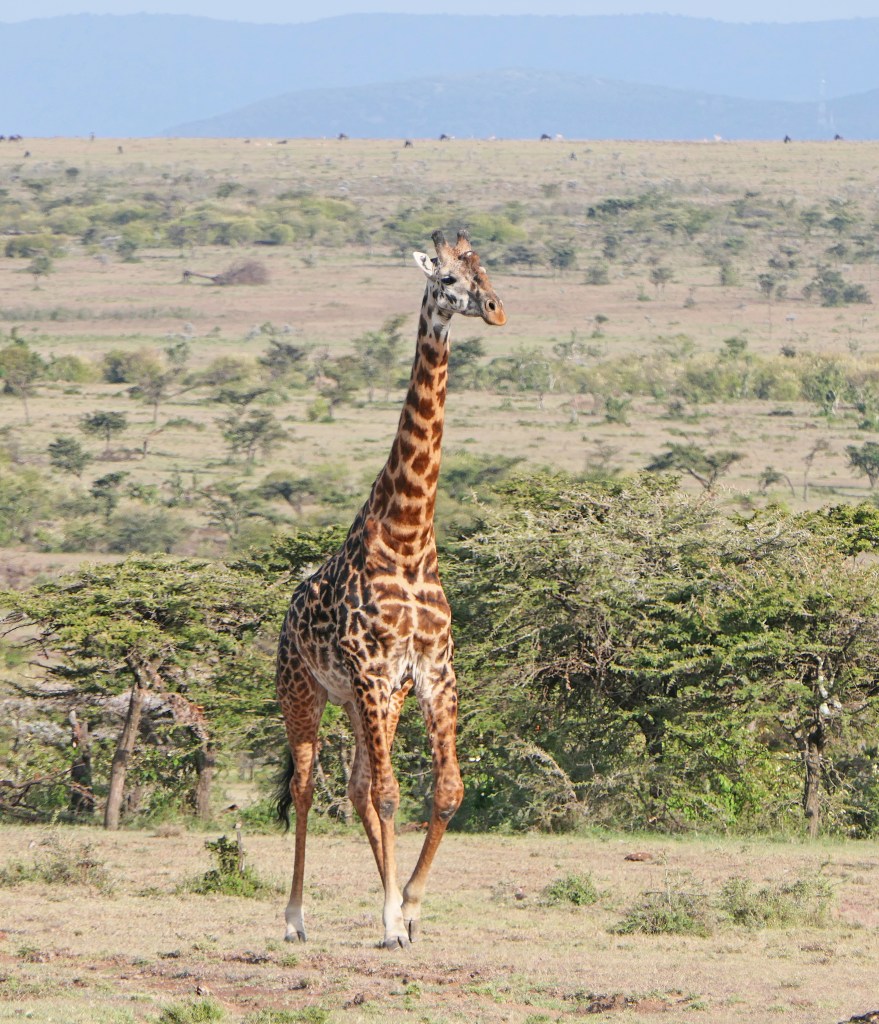
Giraffe.
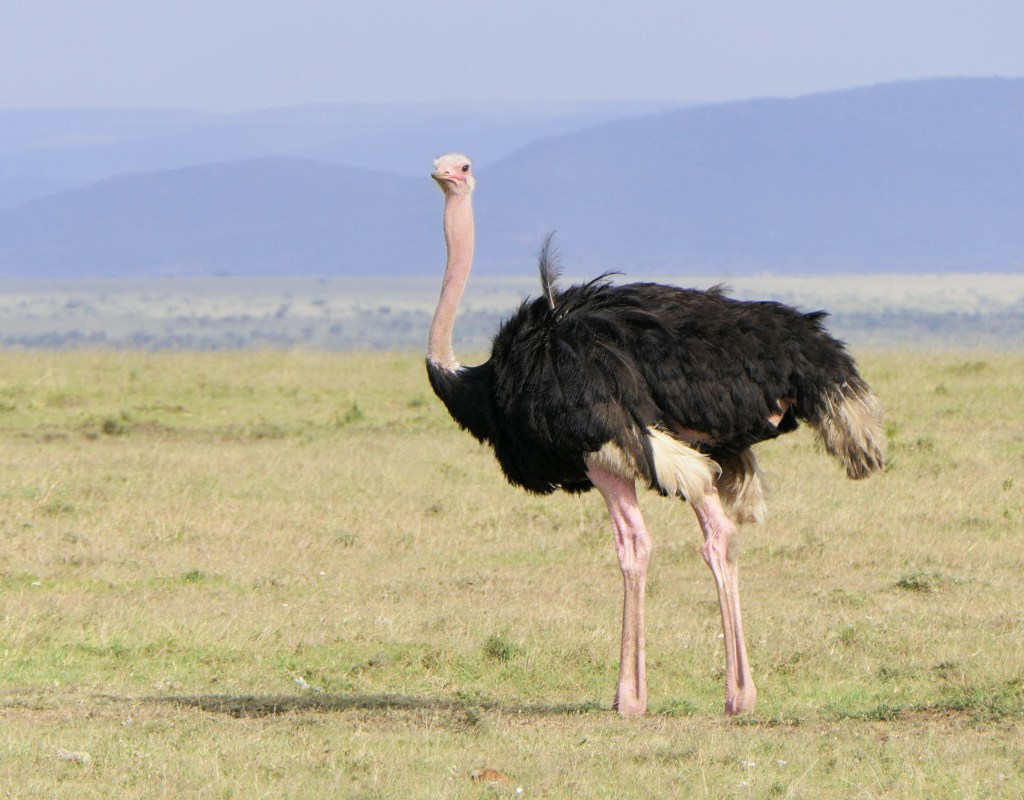
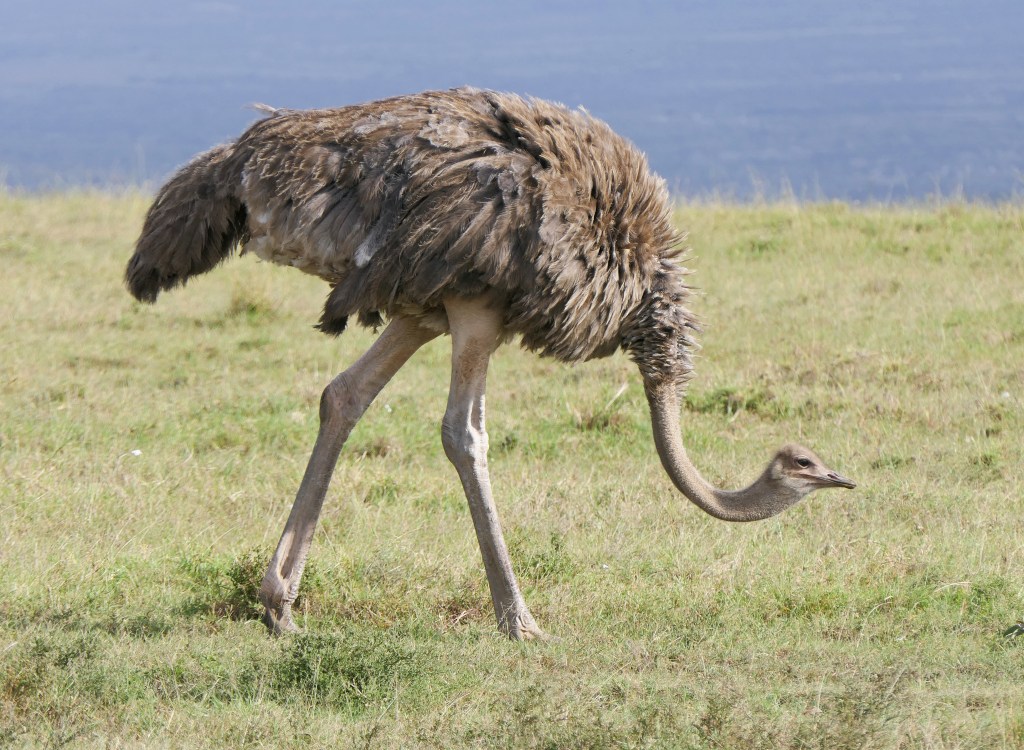
A pair of ostriches, the male is black and the female – gray.
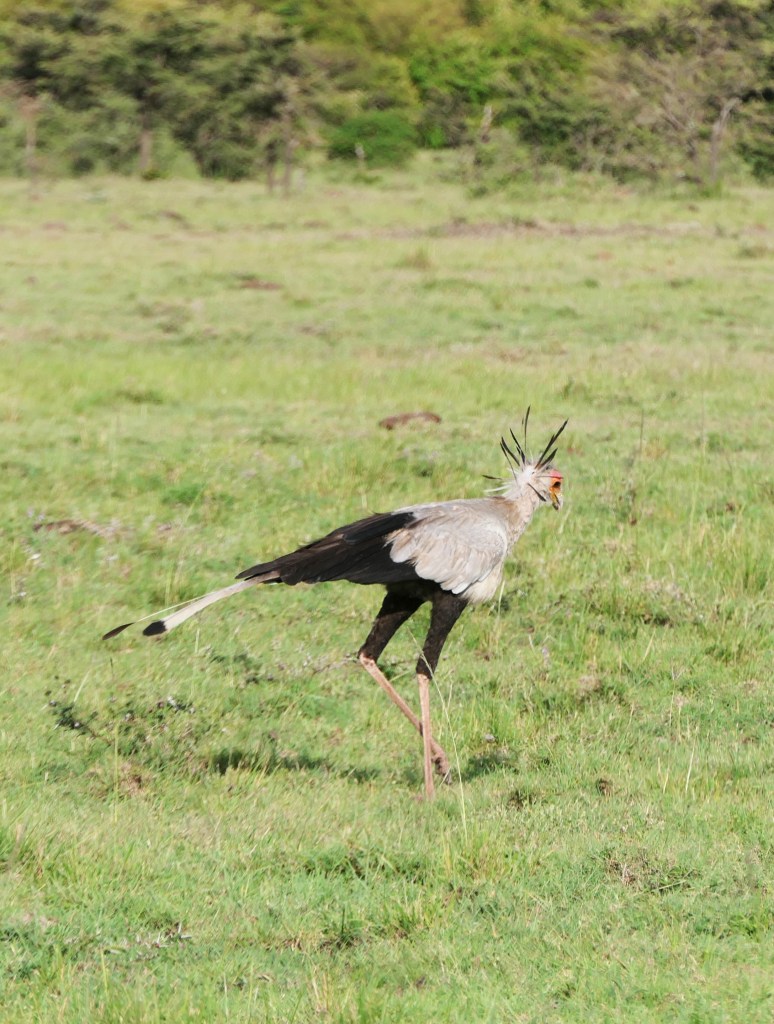
Secretary Bird.
And back to camp for lunch, more ibuprofen, and a nap. We were taking our cue from the lions 🙂
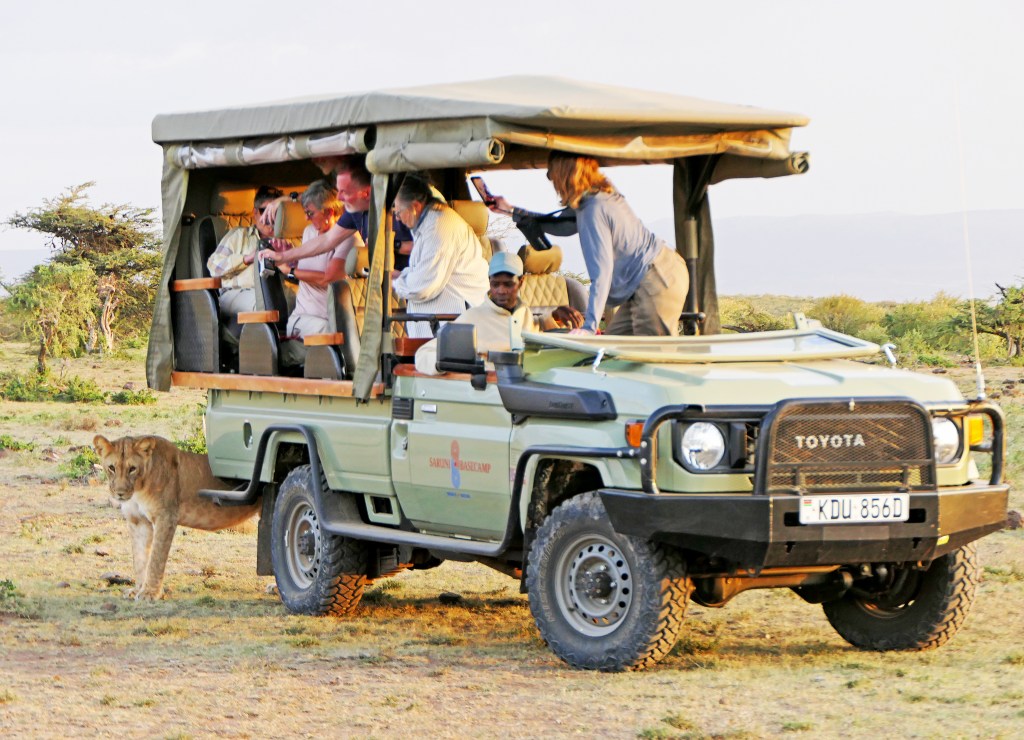
After tea, off again with Jakob. He heard over the radio of a large pride of females and cubs in the bush, so we went cross-country to find them, crossing a deep creek and crashing through bushes.
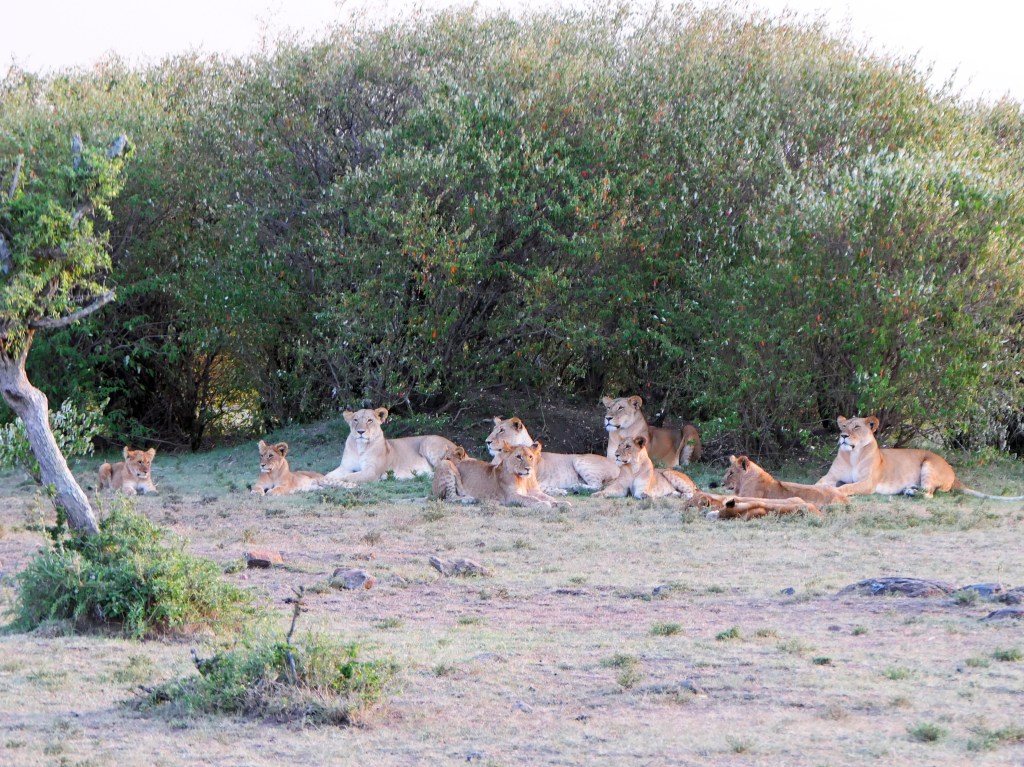
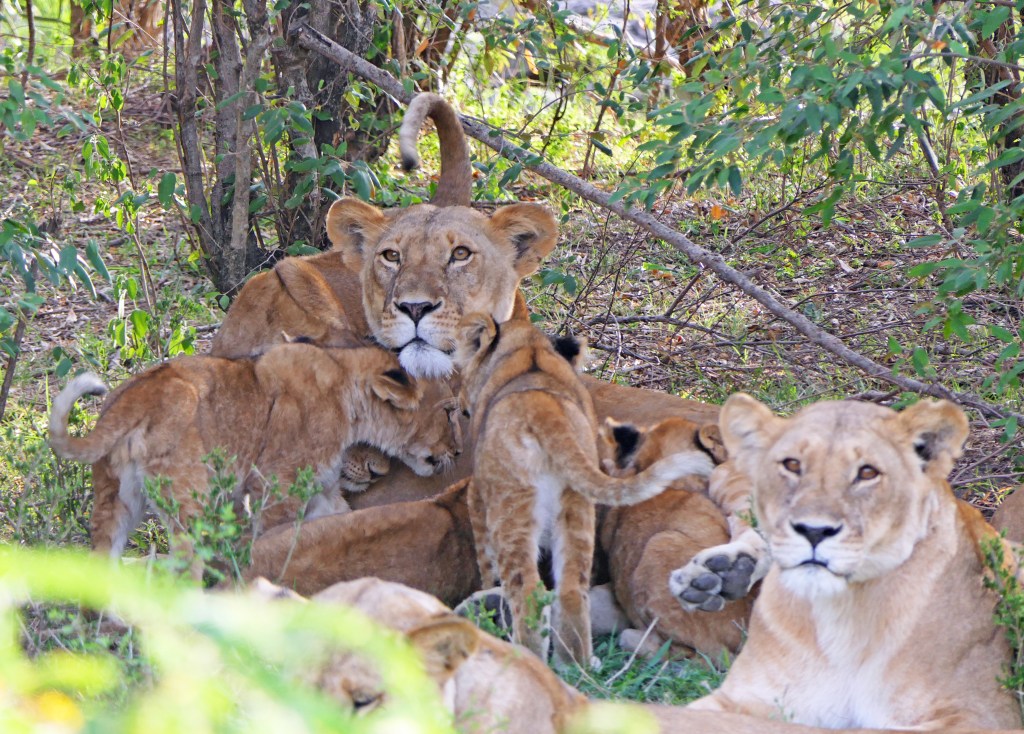
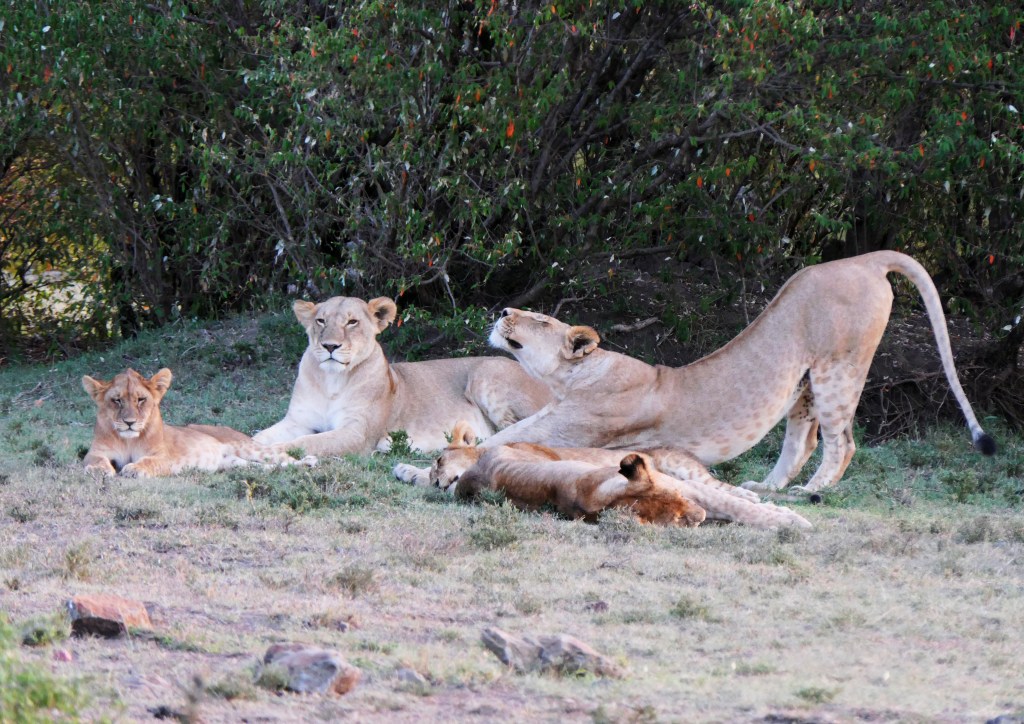
To give you an idea of how much the lions ignore the jeeps and people…
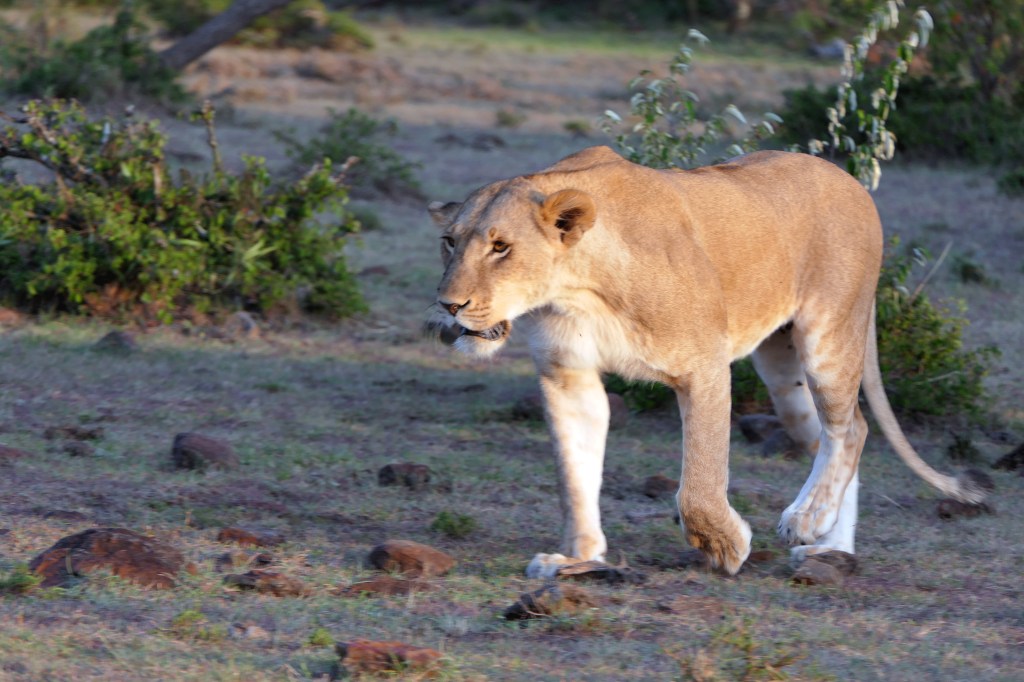
A cub determined to follow the lioness.
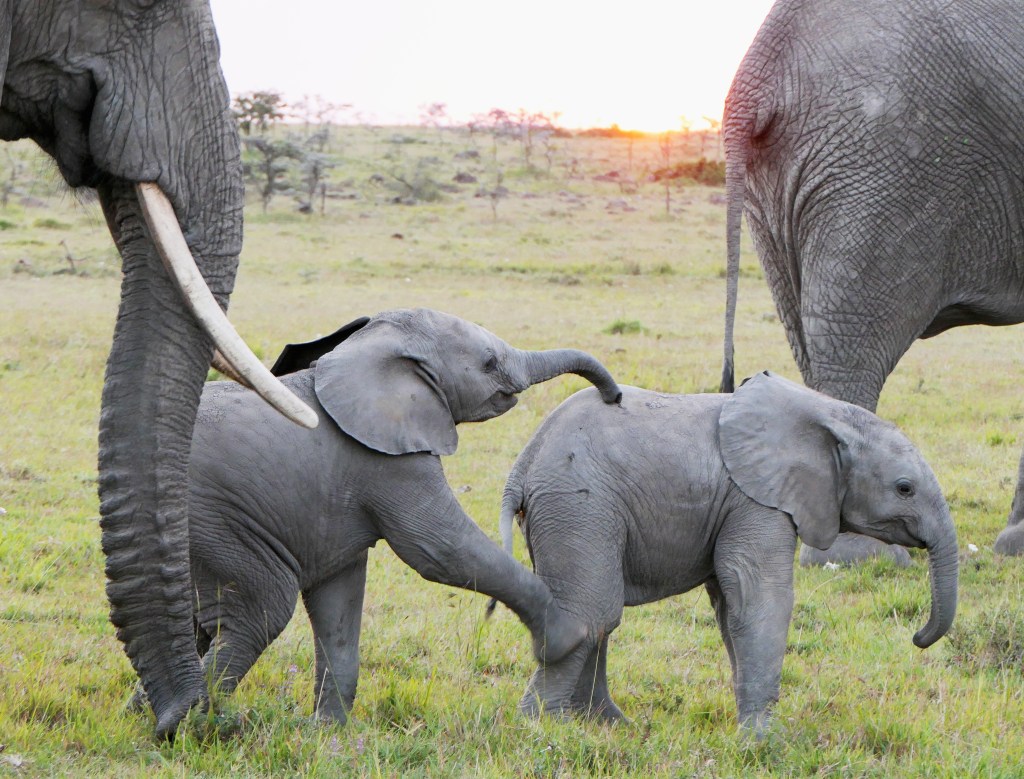
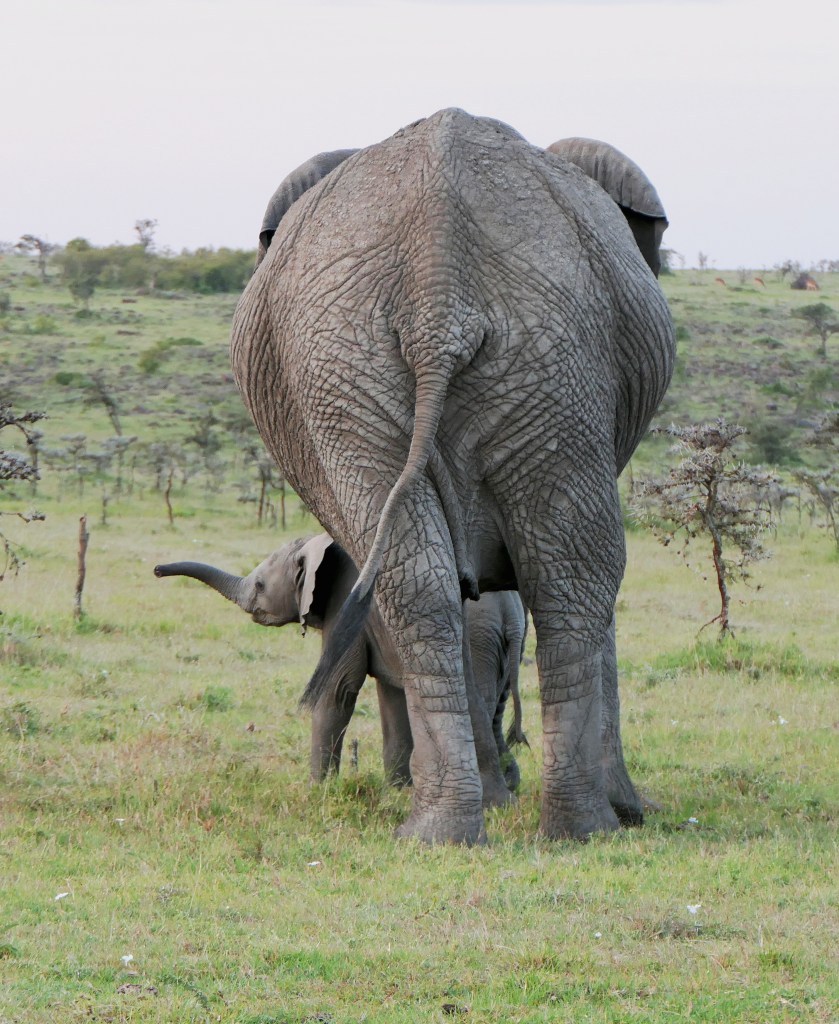
And lastly, on our way to our sundowner we came across some elephants. These two babies were having a dominance battle. Once it was done, returned to mom.
That night at dinner we were treated to the Maasai staff members Maasai performing a ceremonial jumping dance known as “adumu.”
Ol Pejeta Conservancy – Part 2
After lunch we went onward to see what else we could find.
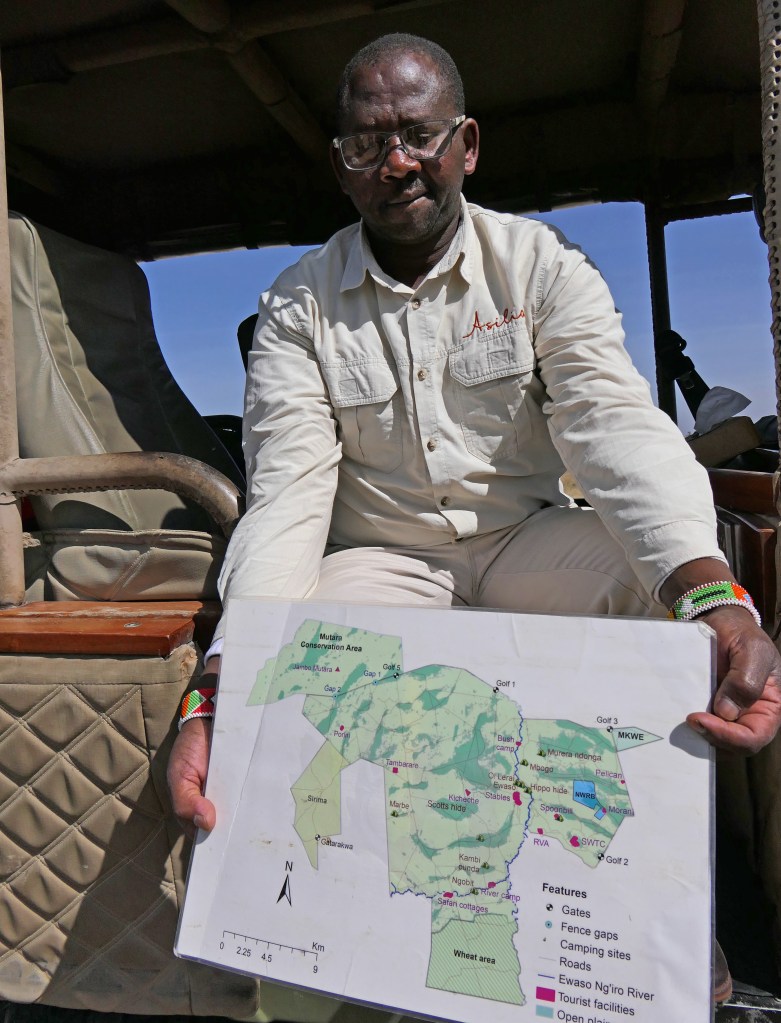
Our guide, Duma – explaining where we are.
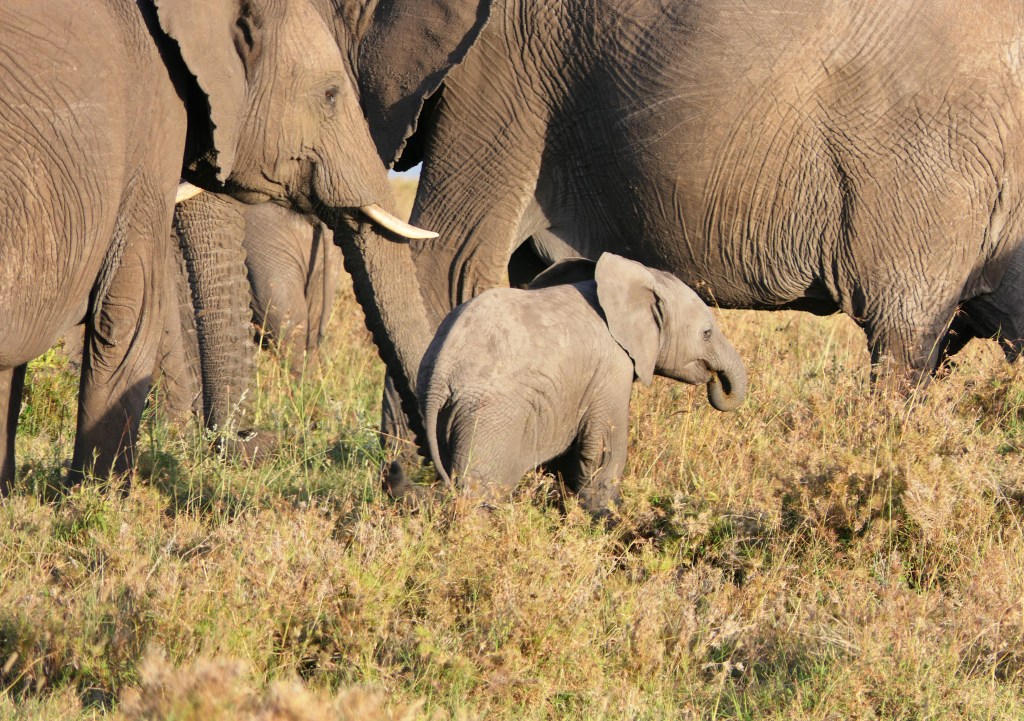
Another herd of elephants with a baby.
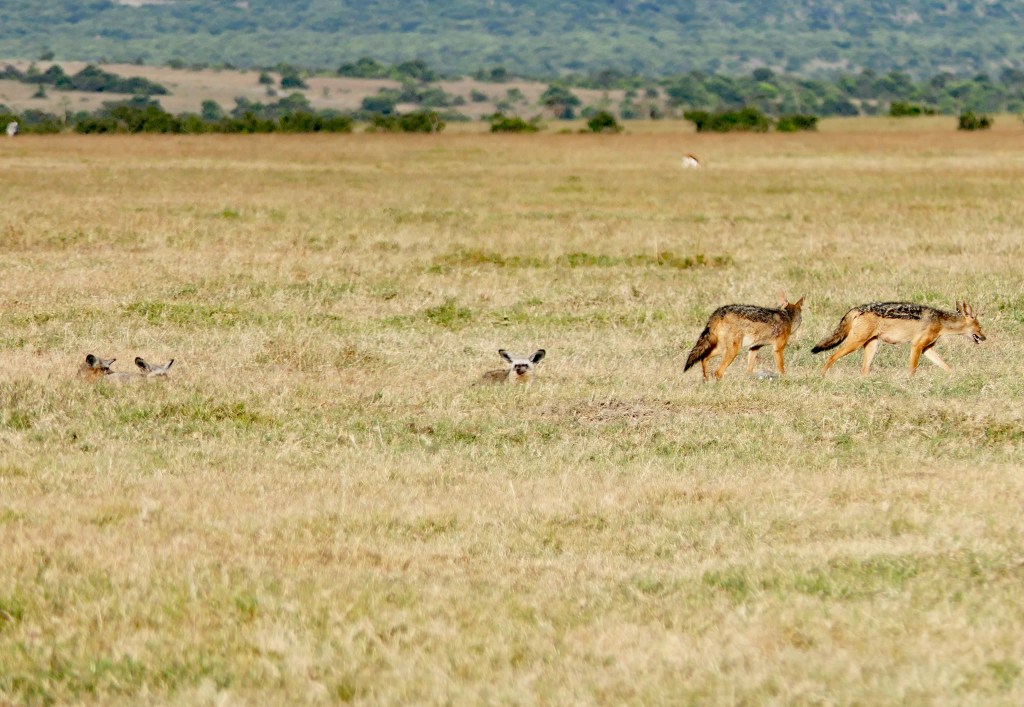
More jackals, this time with three pups. Jackals are monogamous and mate for life. They are opportunistic omnivores.
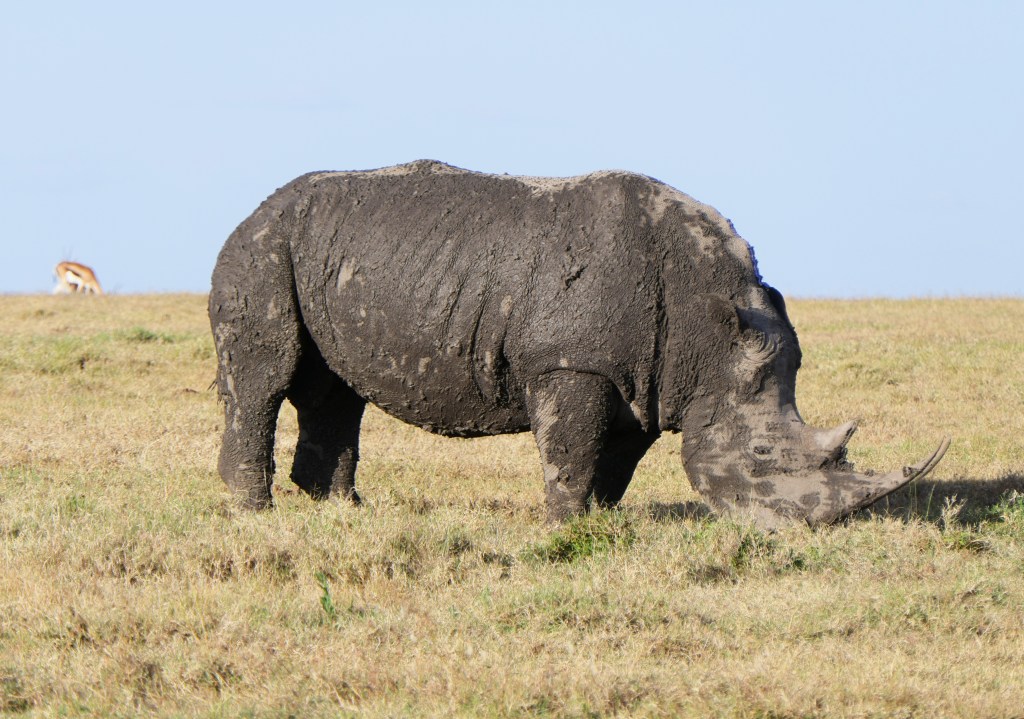
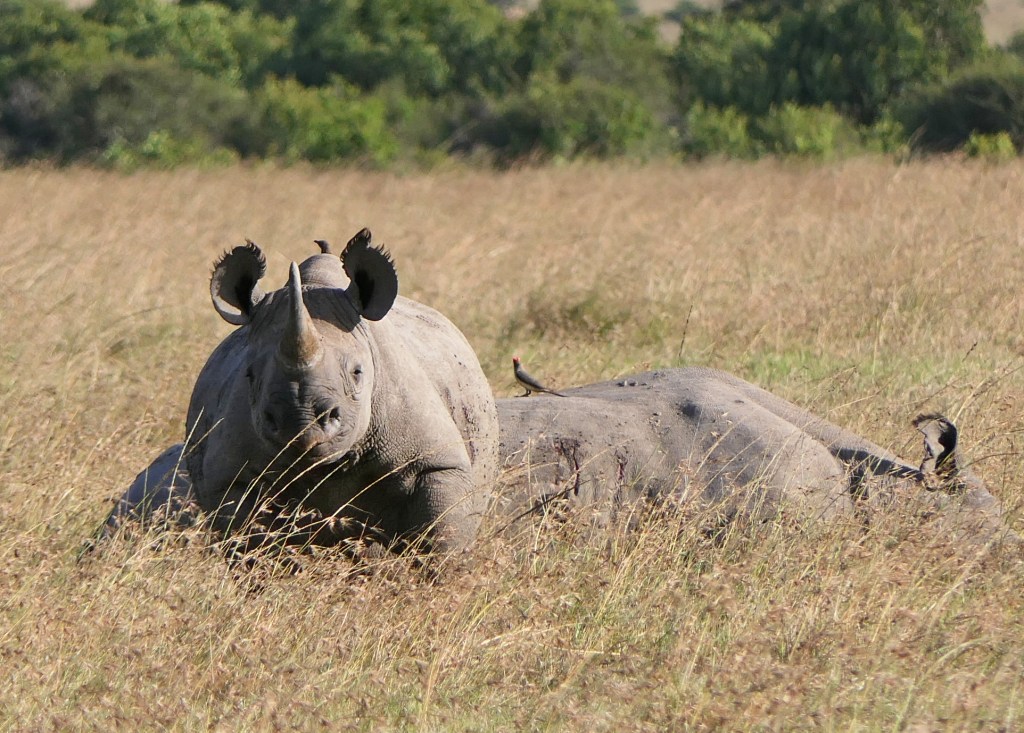
A very muddy rhino! Rhinos, hippos, warthogs, buffalo, and elephants use the mud wallows to cool themselves, and to battle insects and parasites.
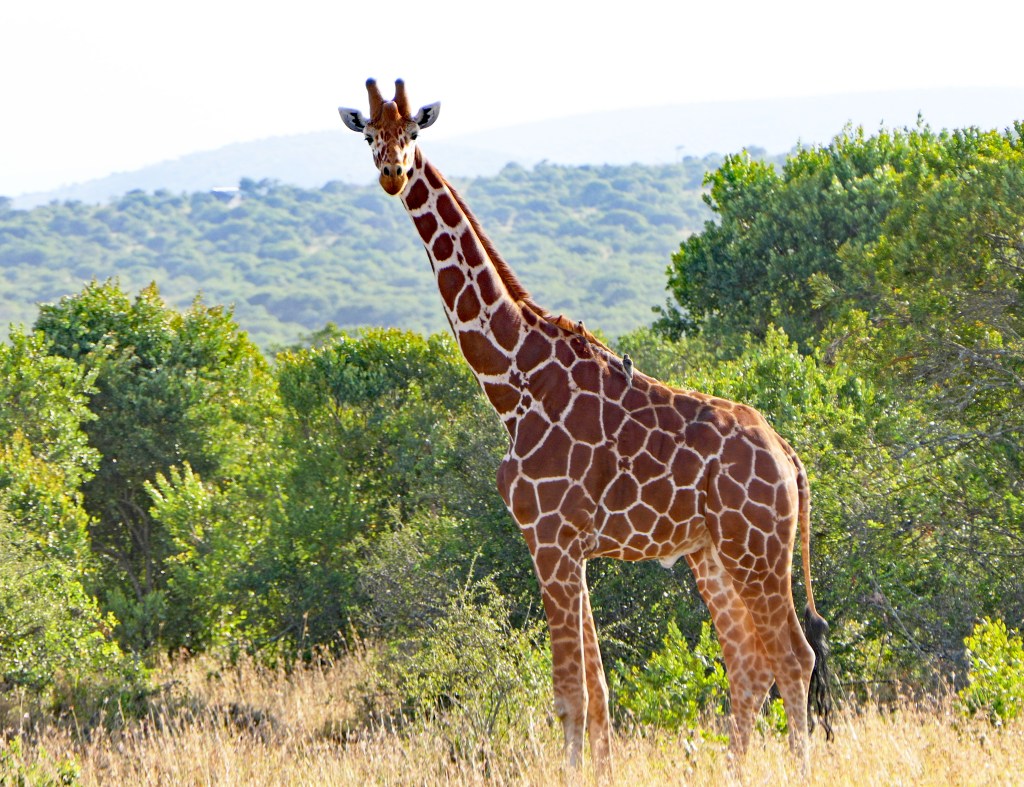
Giraffe.
Someone in the Conservancy has a sense of humor 🙂
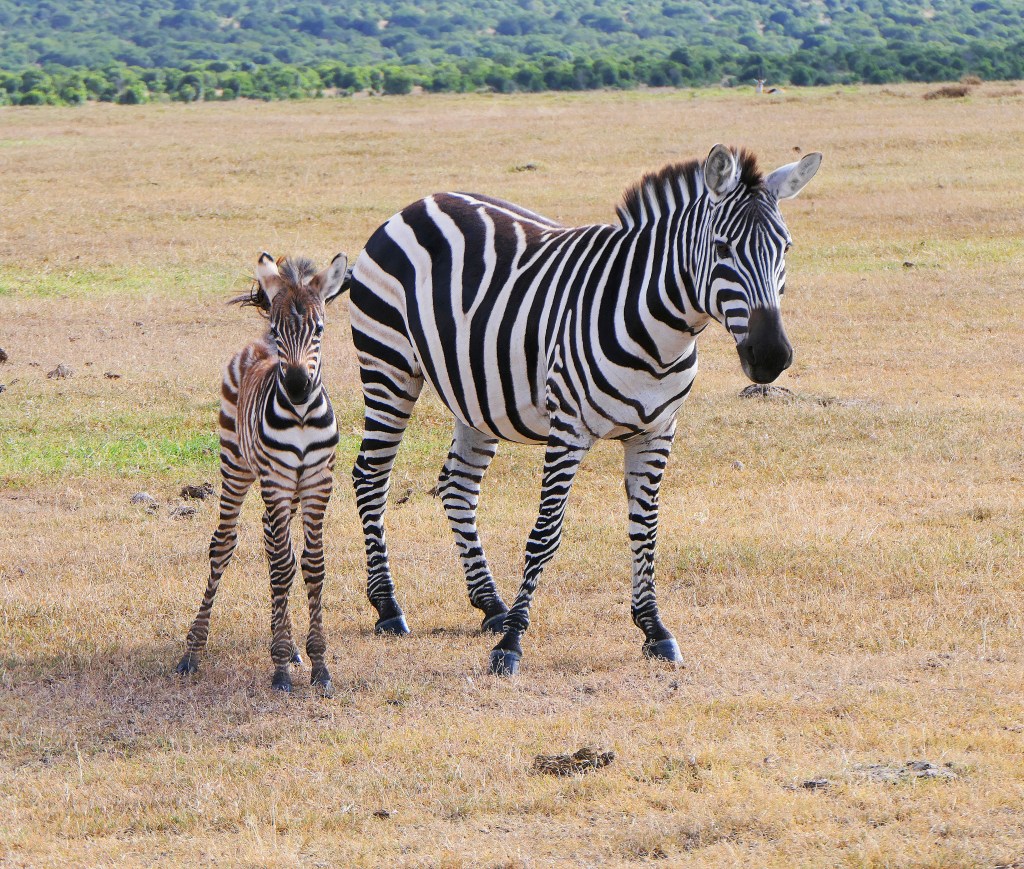
More zebras.
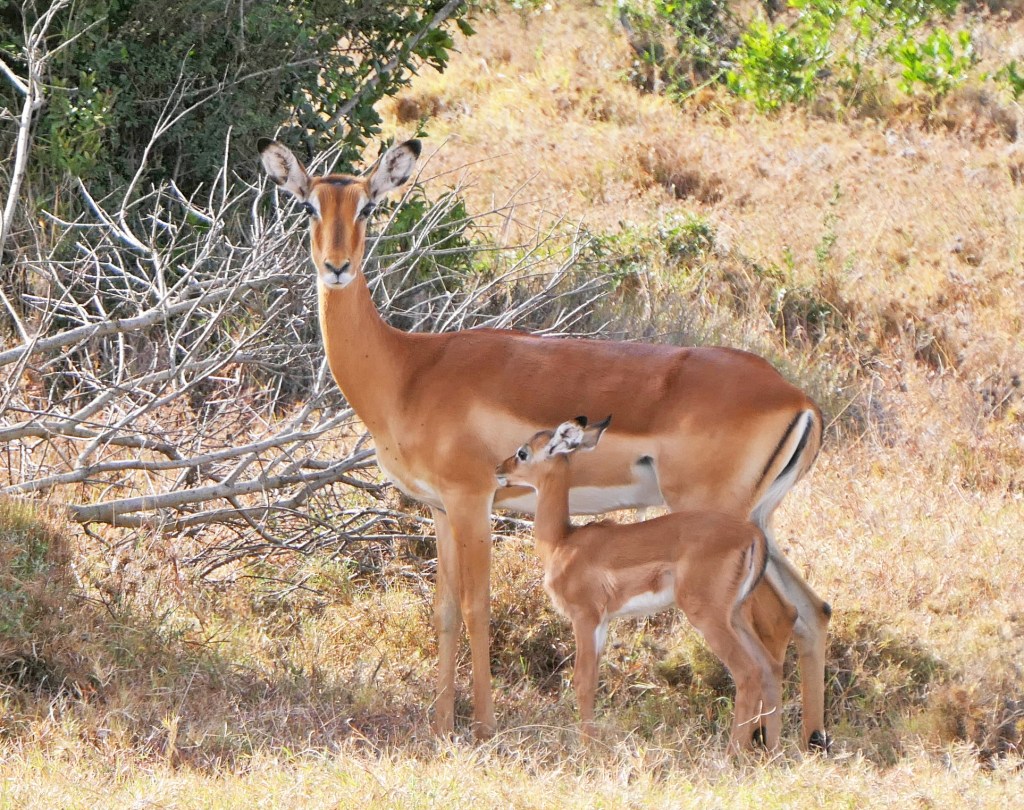
Impala mom and baby.
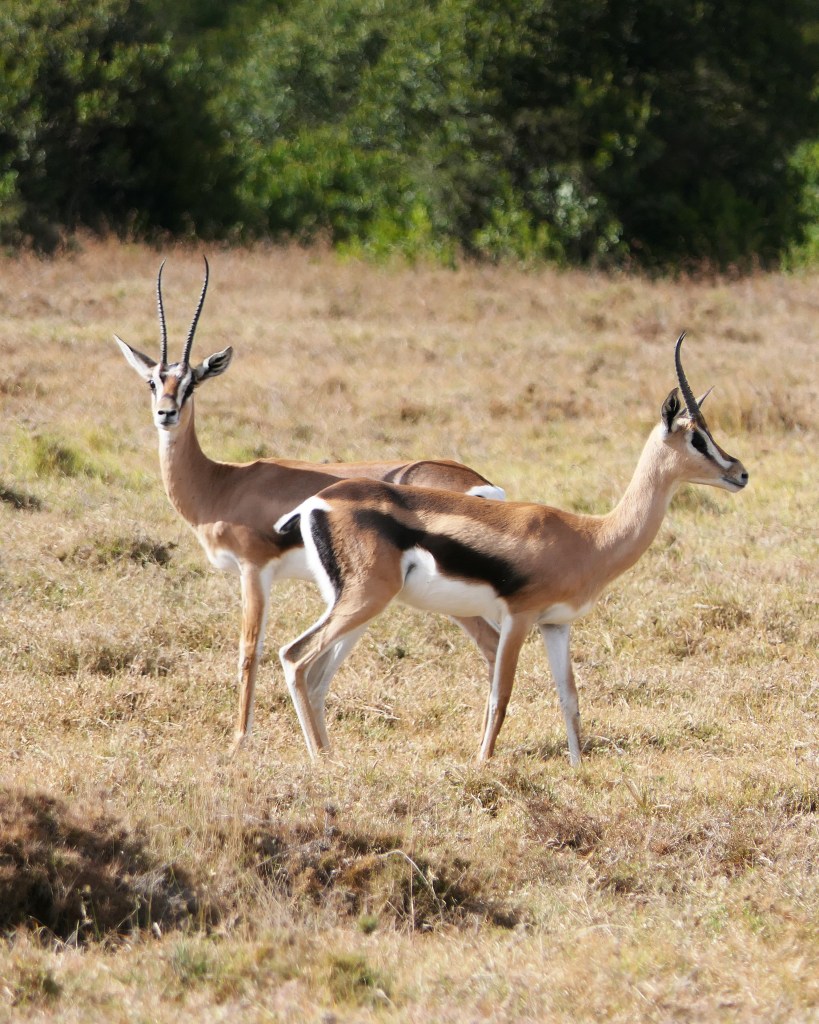
Grants Gazelles.
Looking for lions and leopards.
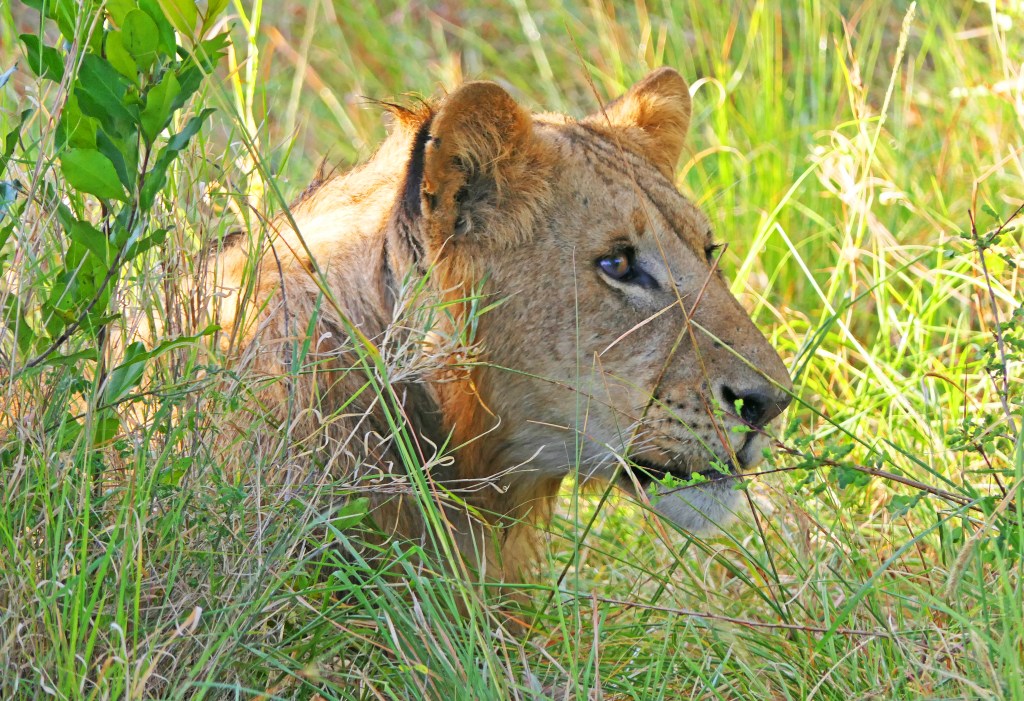
Found a pair of lioness.
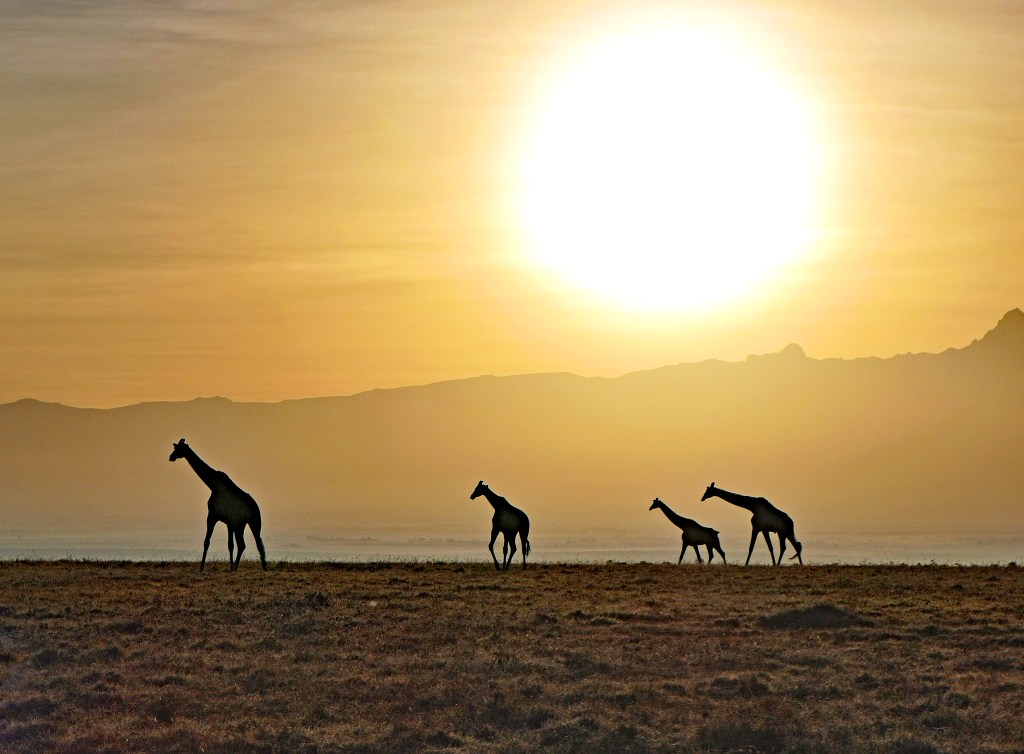
And our view while having our evening sundowner.
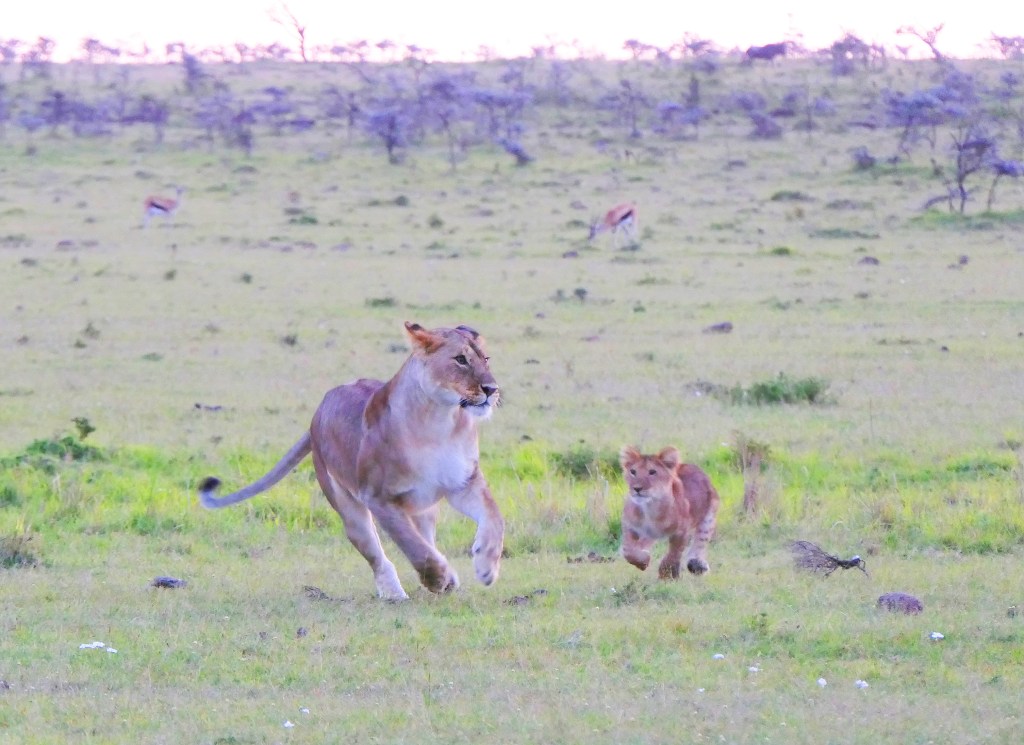
The next morning we once again headed out very early. As the sun was just coming up, we came upon a different group of two lioness and cubs. We watched for awhile because the adults were playing with the cubs.
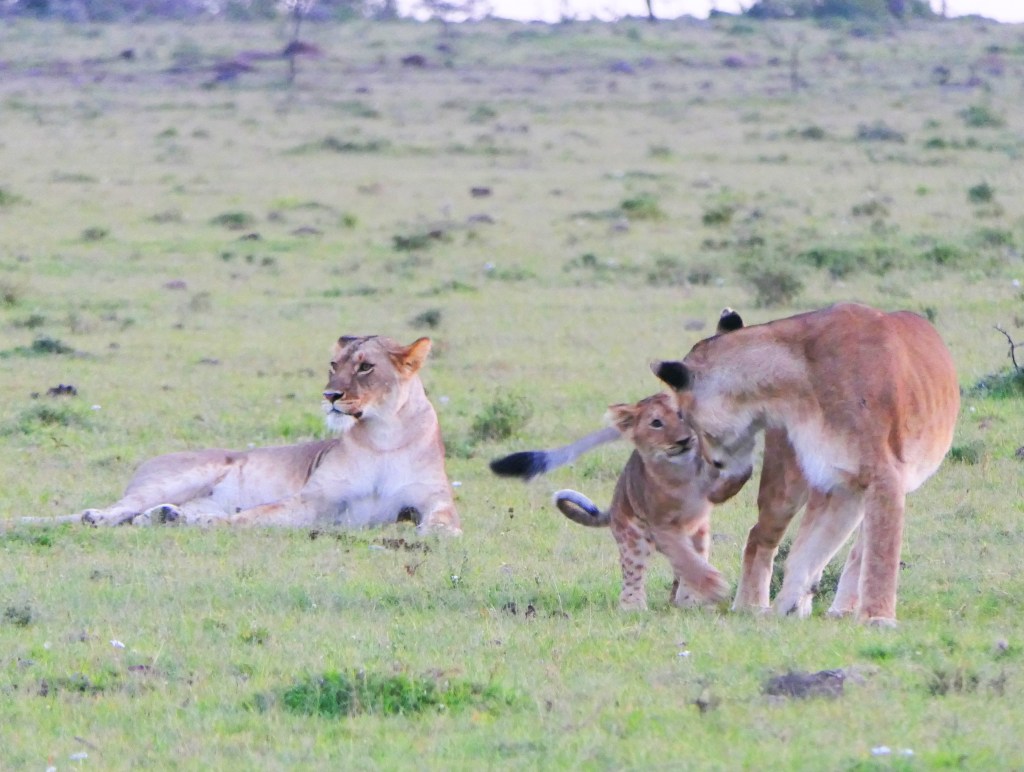
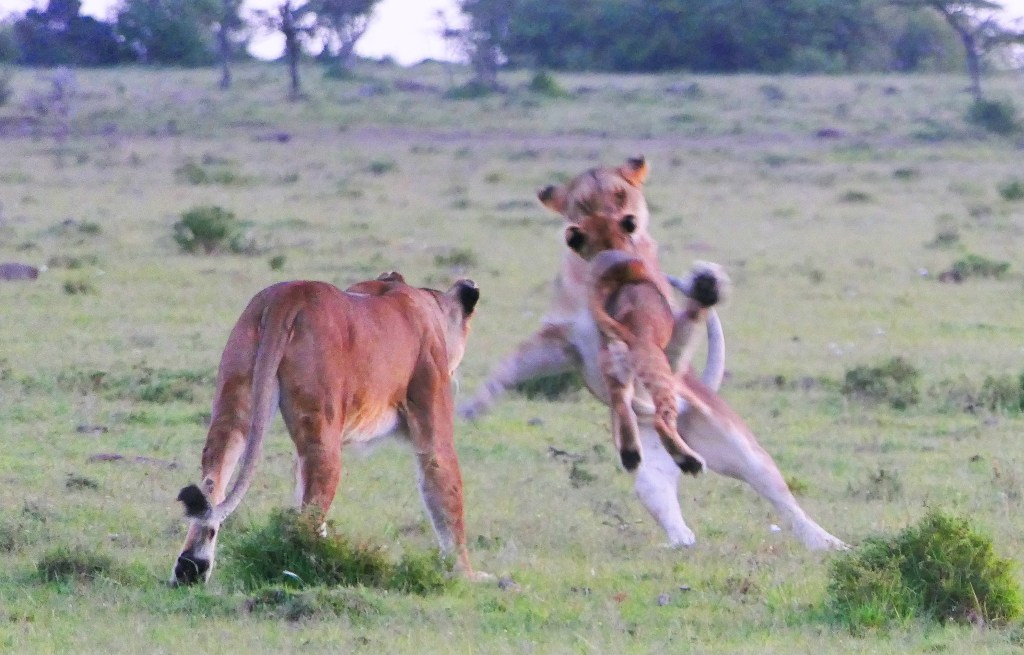
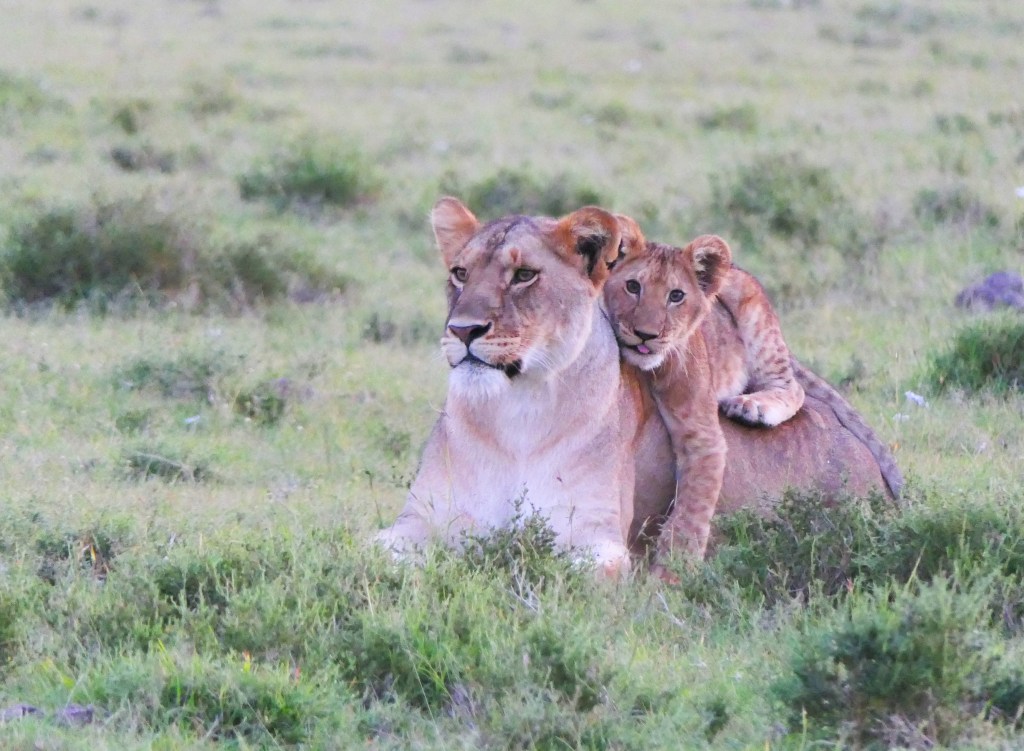
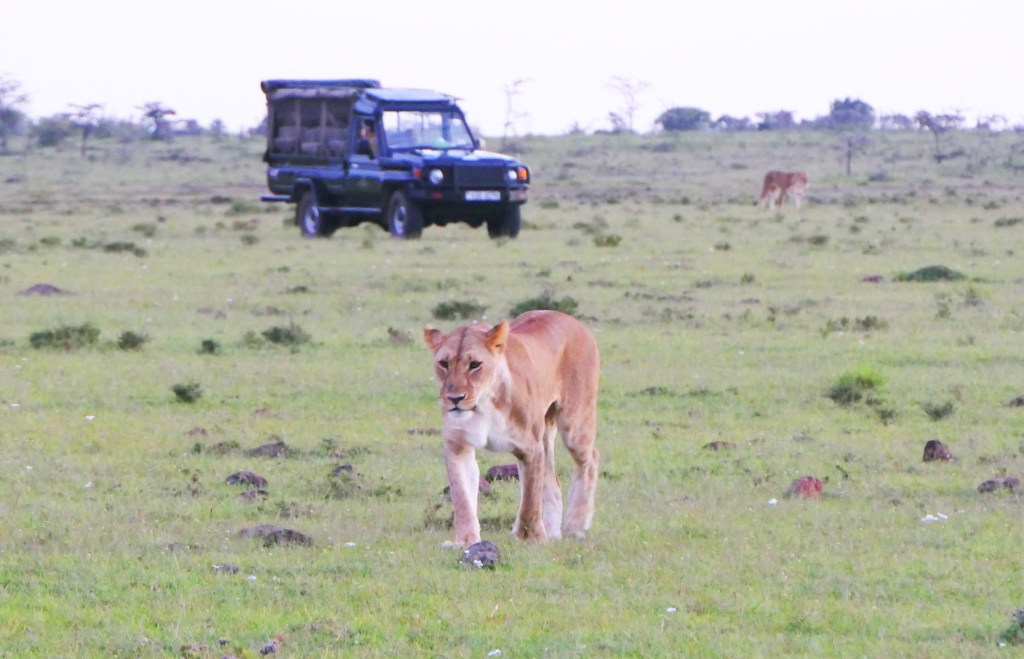
It ended up there was a male in the group.
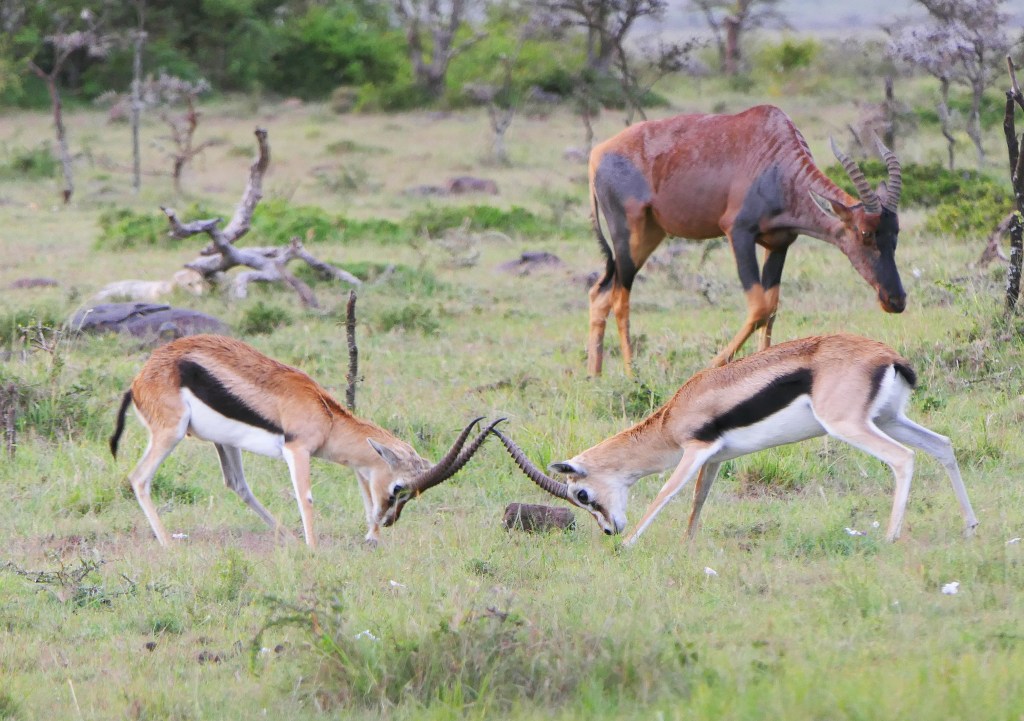
On our last afternoon in Ol Pejeta we came across two male Grant Gazelles resolving a dispute.
We spent the remainder of the afternoon looking for leopards, but none had been seen in recent days.
As the sun began to set we saw this handsome guy in the twilight.
Tomorrow, off to the airport to our next stop!
Safari! Ol Pejeta Conservancy
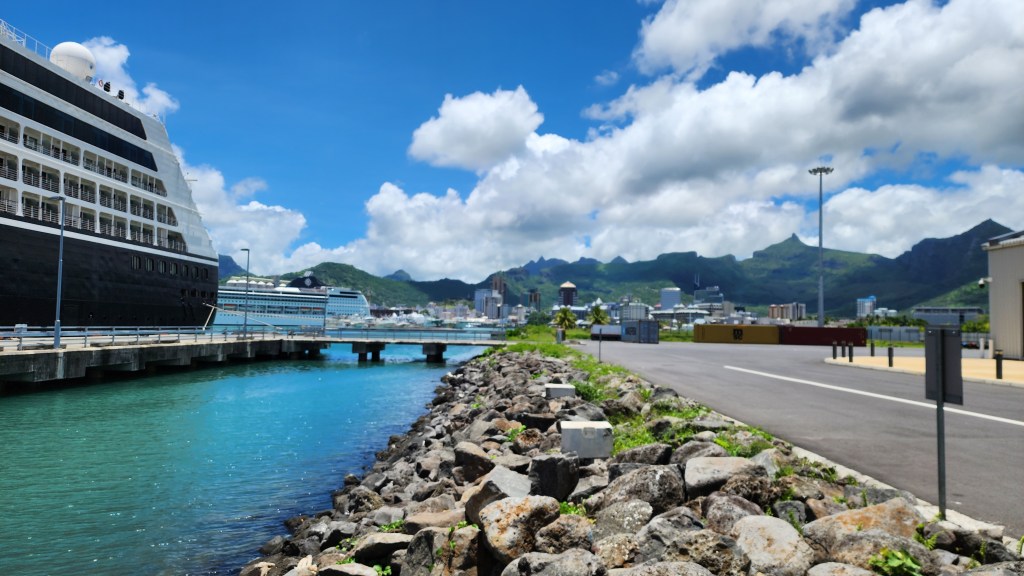
We left the our floating home in Mauritius with our friends David and Naomi on a four+ hour flight to Nairobi to start the safari.
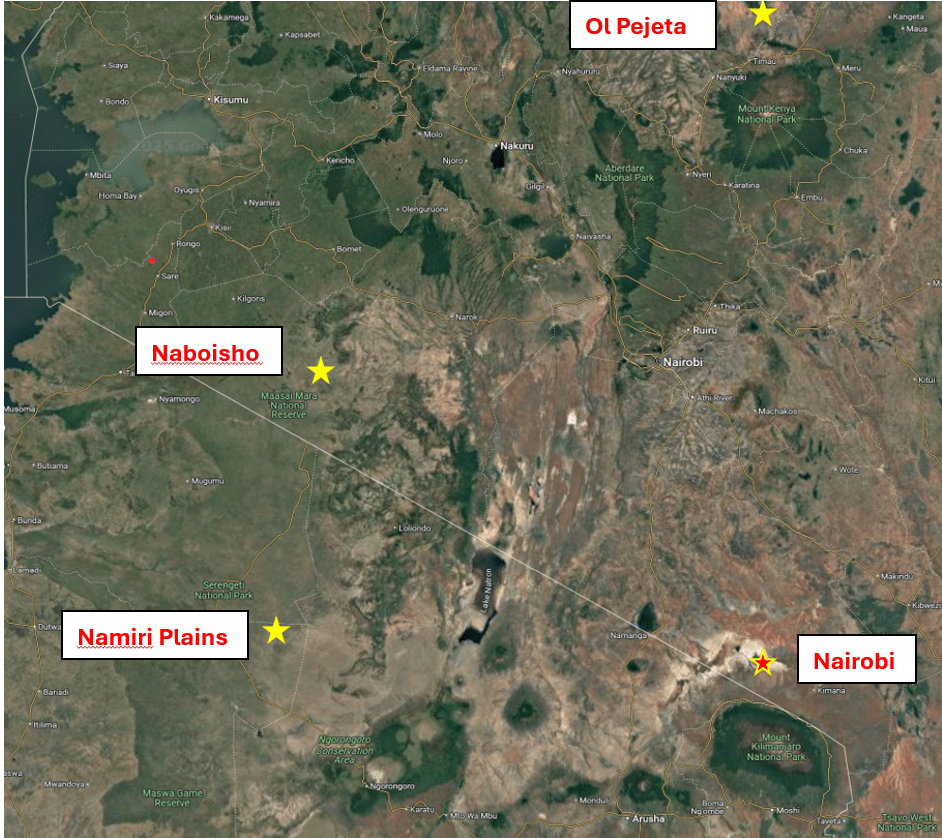
We were visiting three locations in Kenya and Tanzania, Ol Pejeta Conservancy in Kenya, Mara Naboisho Conservancy in Kenya, and Namiri Plains in the Serengeti, Tanzania. The three locations each offered different habitats and wildlife.
Our flight didn’t get into Nairobi until 11 pm and we faced the challenge of repacking our things because we were only allowed a 33 lb. duffel bag on the small planes we were taking between the camps. The rest of our luggage was stored by the company in Nairobi.
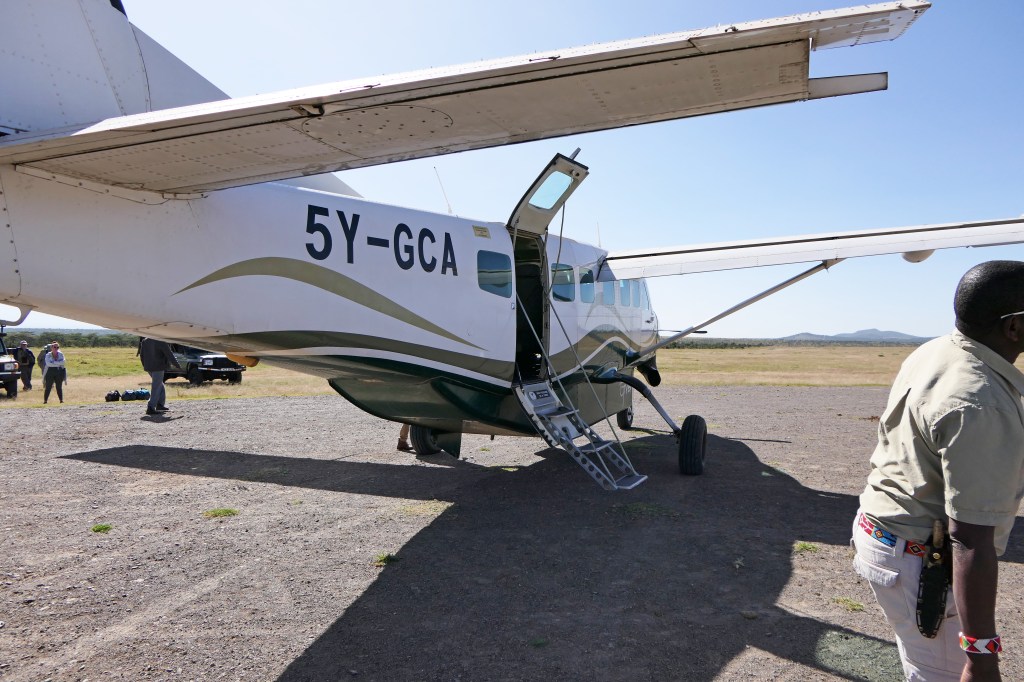
Bright and wayyy to early we left the hotel for our first flight to Ol Pejeta Conservancy. Our plane – this was typical for all the planes we took.
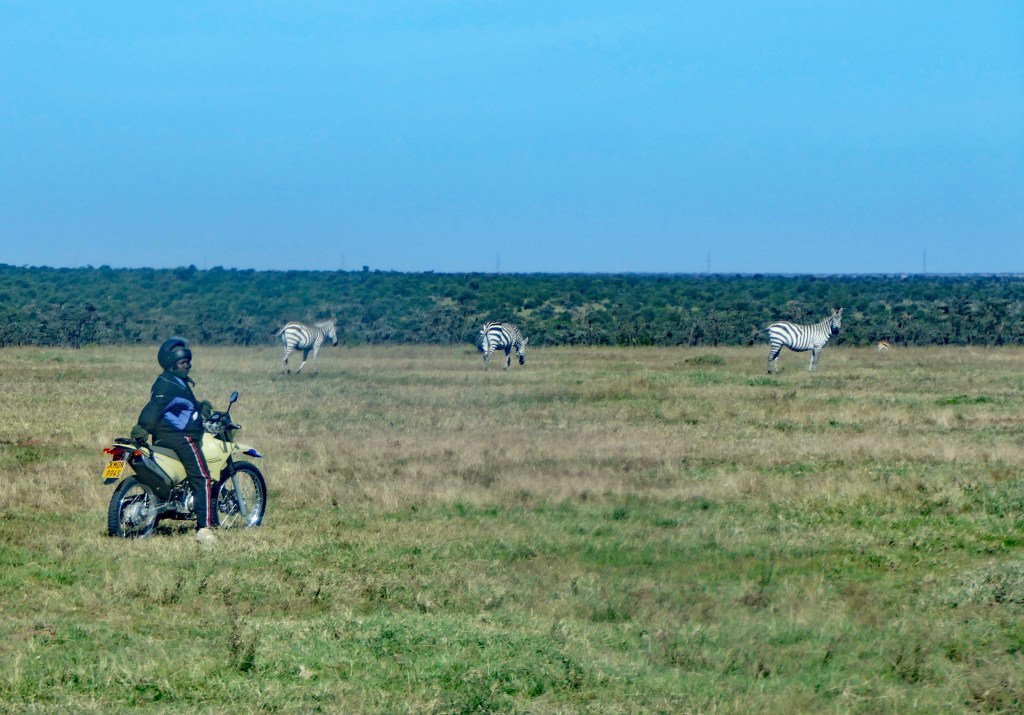
It was amazing seeing giraffes and elephants from the plane. The first surprise was upon landing. There were men on motorbikes that would go up and down the dirt runways to keep the wildlife off of them while the planes take off and land.
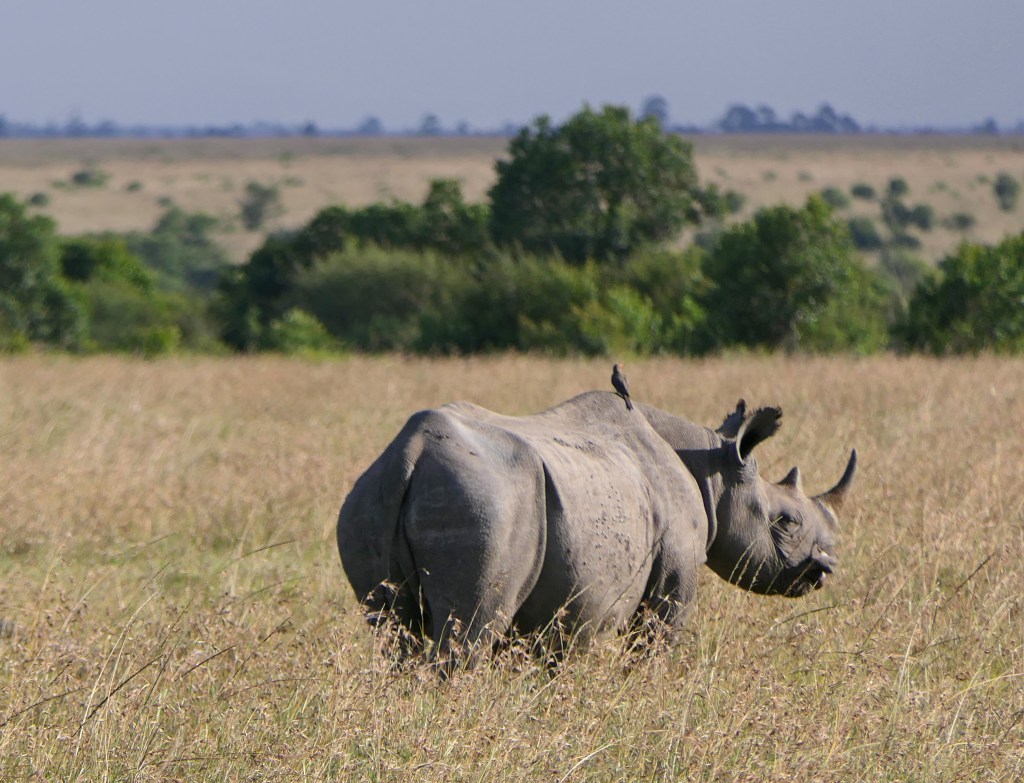
Ol Pejeta Conservancy (140 mi2) started out as a working cattle ranch in colonial Kenya, and was even owned at a time by the arms-dealer Adnan Khashoggi. Late in the 1960s Kenya was suffering with a serious poaching crisis. As wildlife populations and in particular elephants and rhinos faced a dramatic decline, the then owner recognized the problem, and in 1988 established a game reserve adjacent to the ranch and in 1992, the Chimpanzee sanctuary was built for chimpanzees rescued from the illegal wildlife trade. The Conservancy is now known for being the home of the last two Northern White Rhinos on the planet. Cattle are still raised there and freely roam amongst the wildlife while being tended by Masai tribesmen.
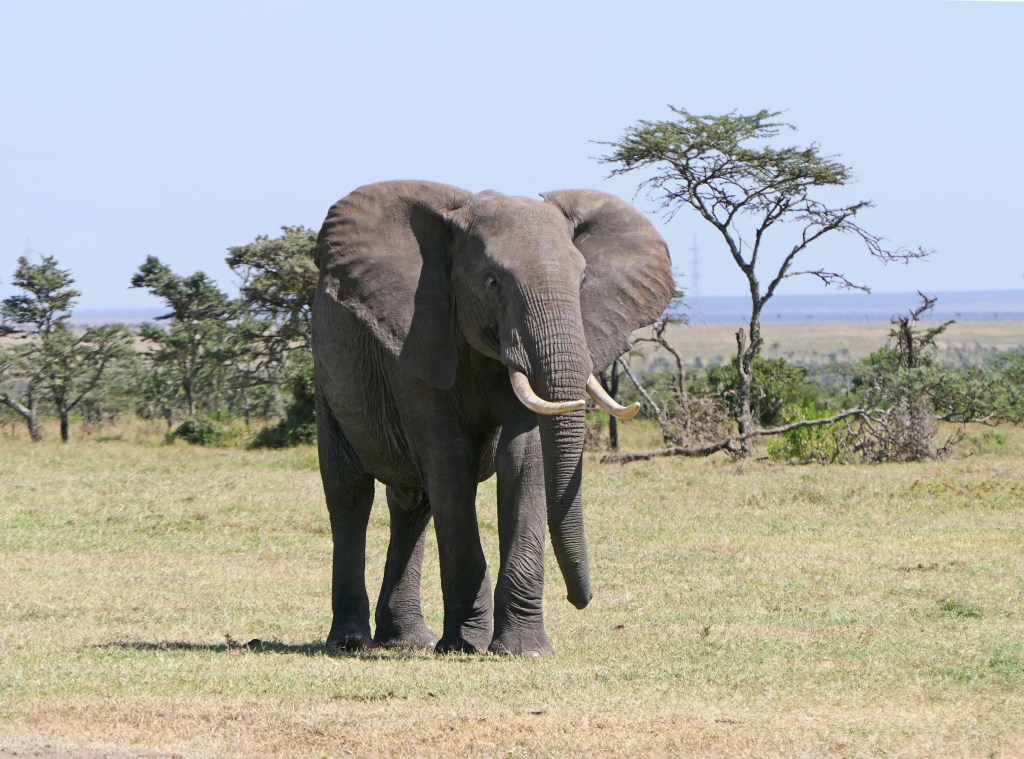
Our guide for our time here, Duma, was there at the airport to pick us up and take us to camp. The drive time was about an hour, but there was wildlife to be seen on the way so it took a lot longer. We were amazed at how close we were able to get to the wildlife. They have become so used to vehicles that they pay little attention to them unless they are hunting or have babies.
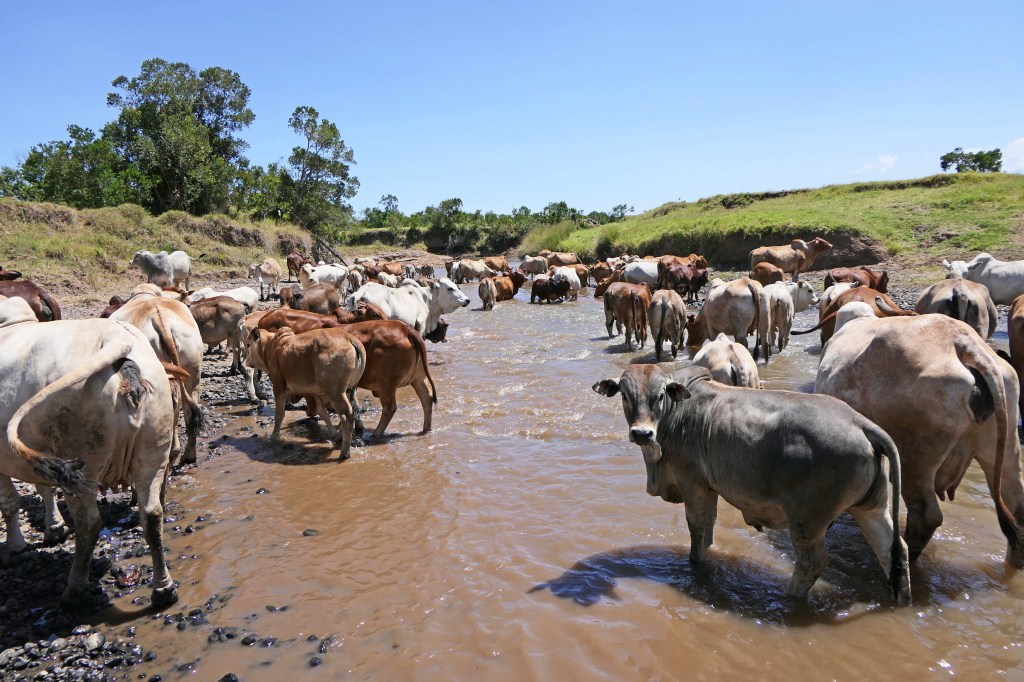
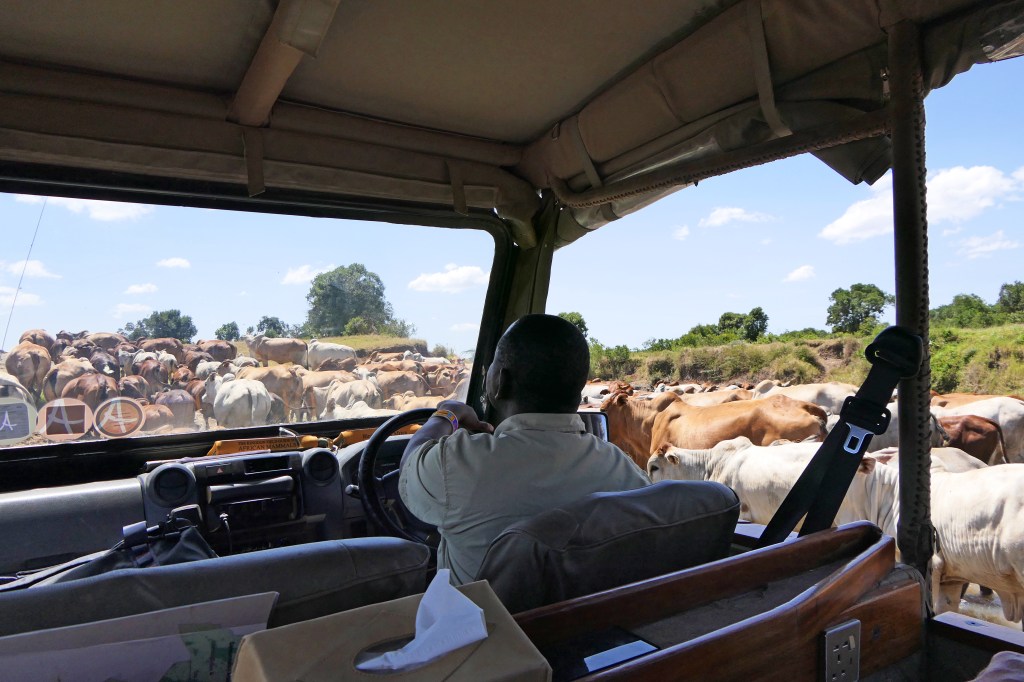
We had to ford a river and there was a roadblock.
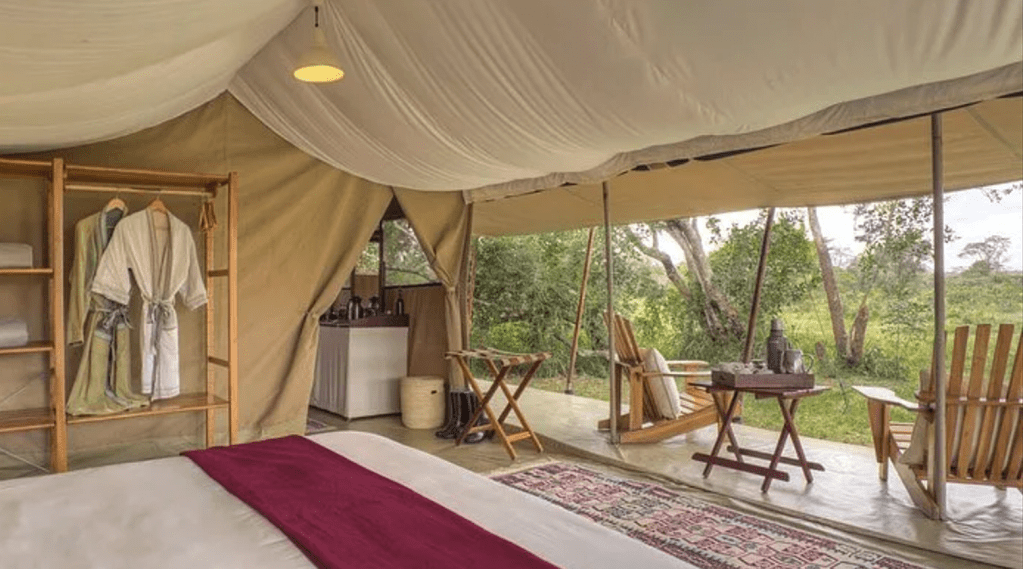
We arrived at camp to a warm greeting from the staff. Our “tent” was pretty luxurious:)
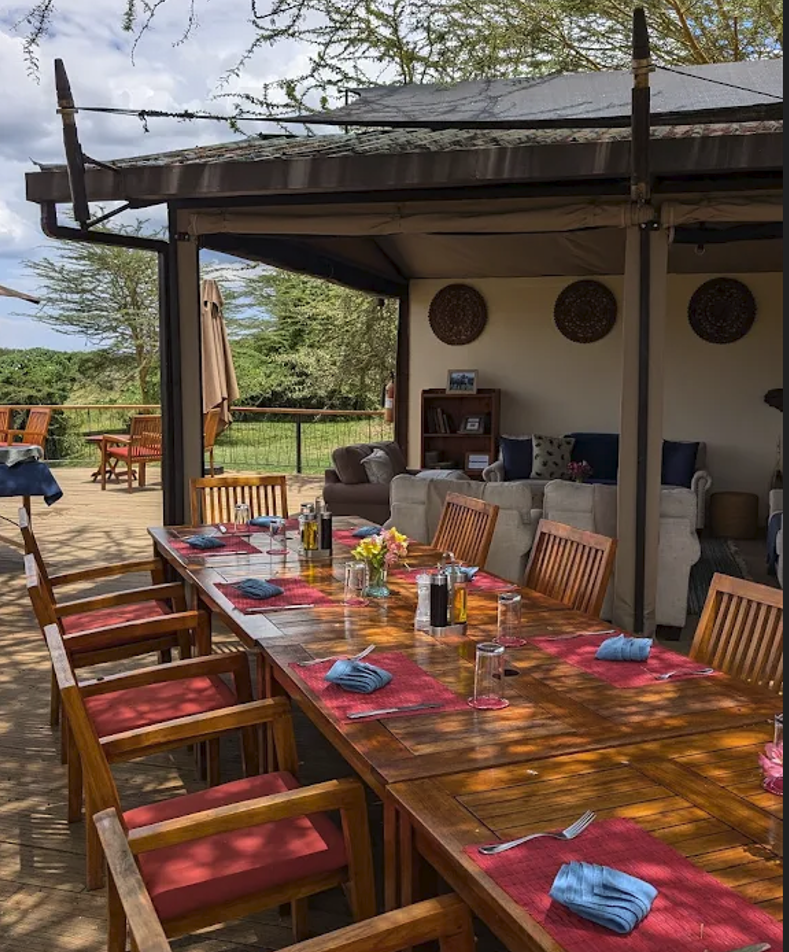
Our lunch spot in camp.
While at lunch we were treated to elephants wandering in the grass across the river.
We unpacked, had a brief nap, and then were off at 3:30 for our afternoon game drive. Ol Pejeta is known for the numerous rhinoceros throughout the conservancy.
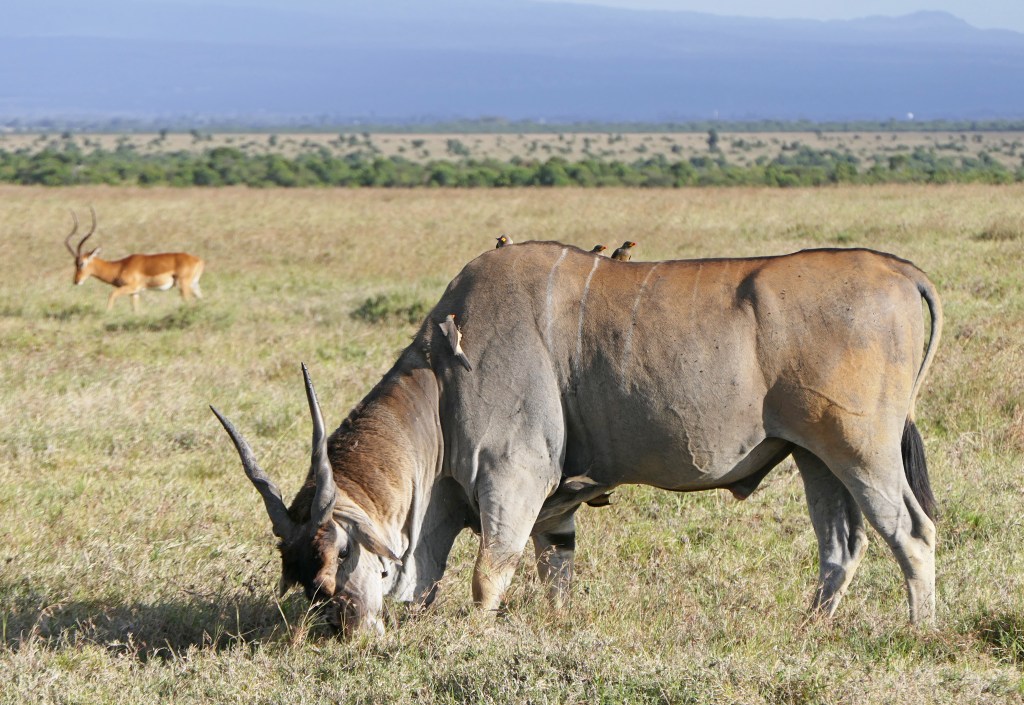
But there was plenty of other wildlife as well. A topi.
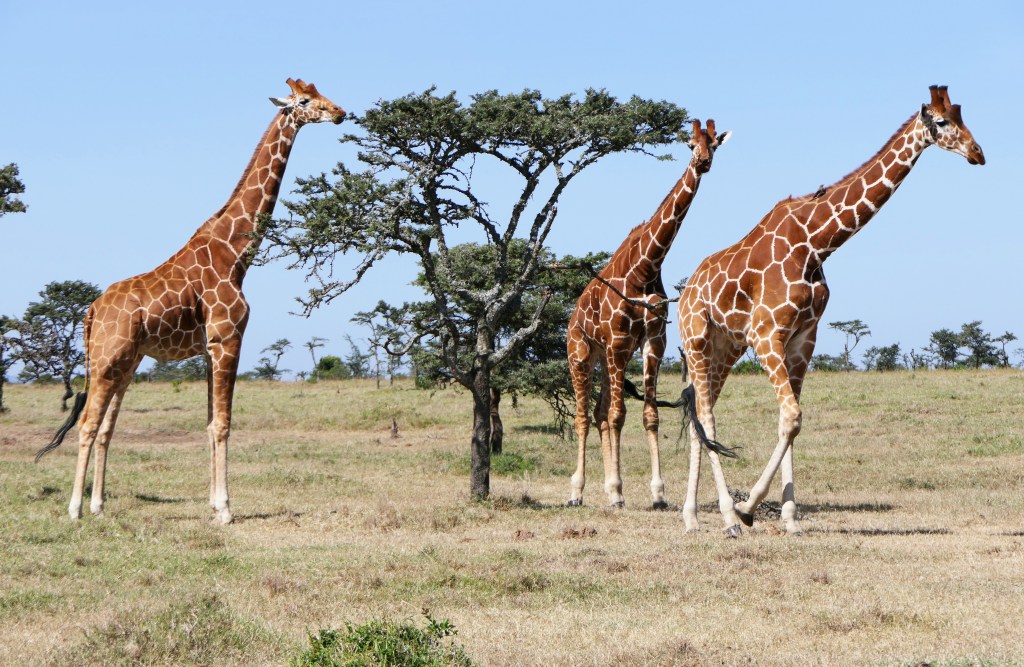
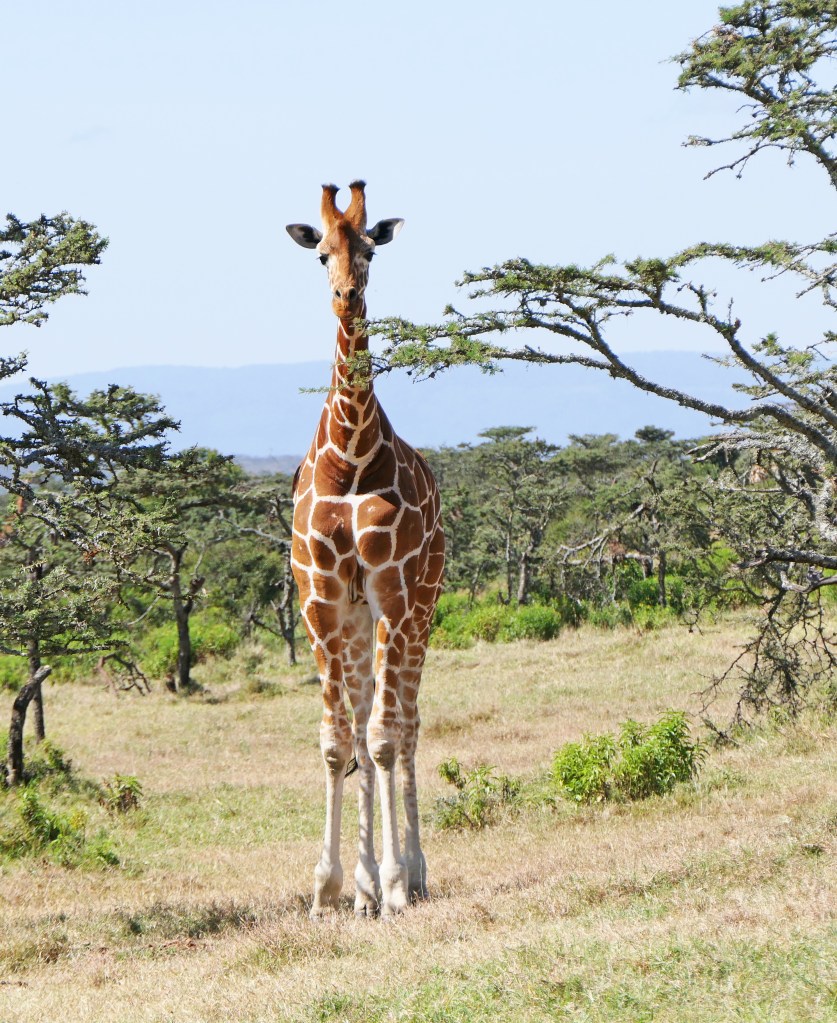
Giraffes.
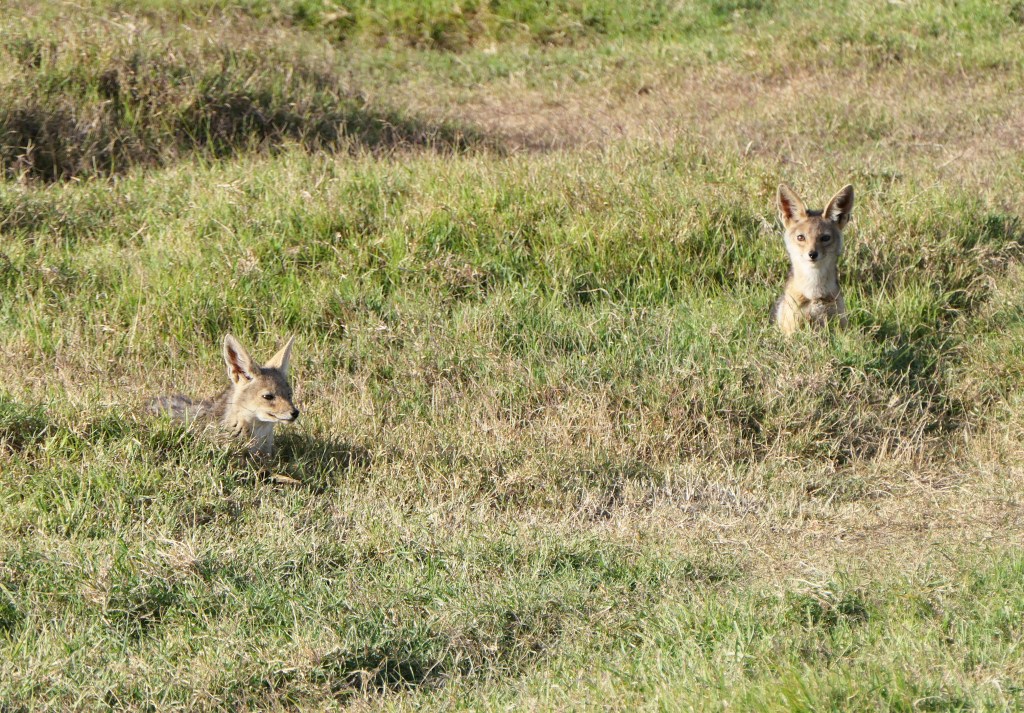
Jackals.
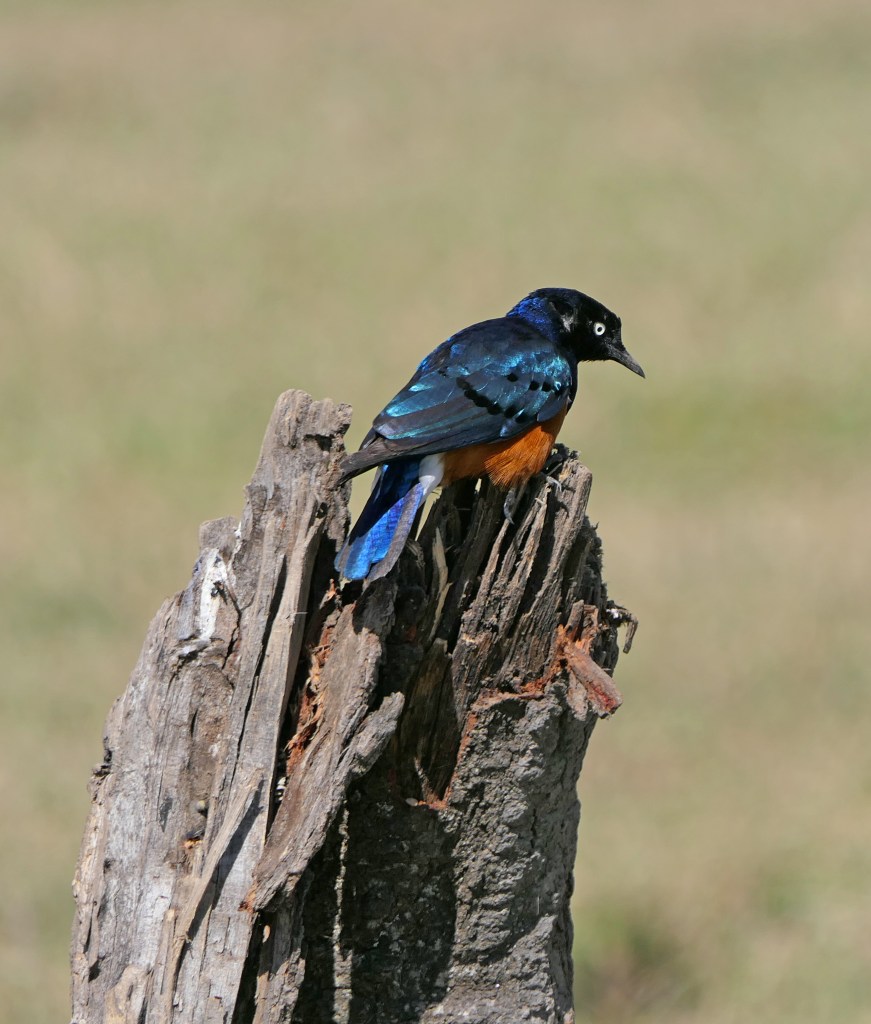
Splendid starling.
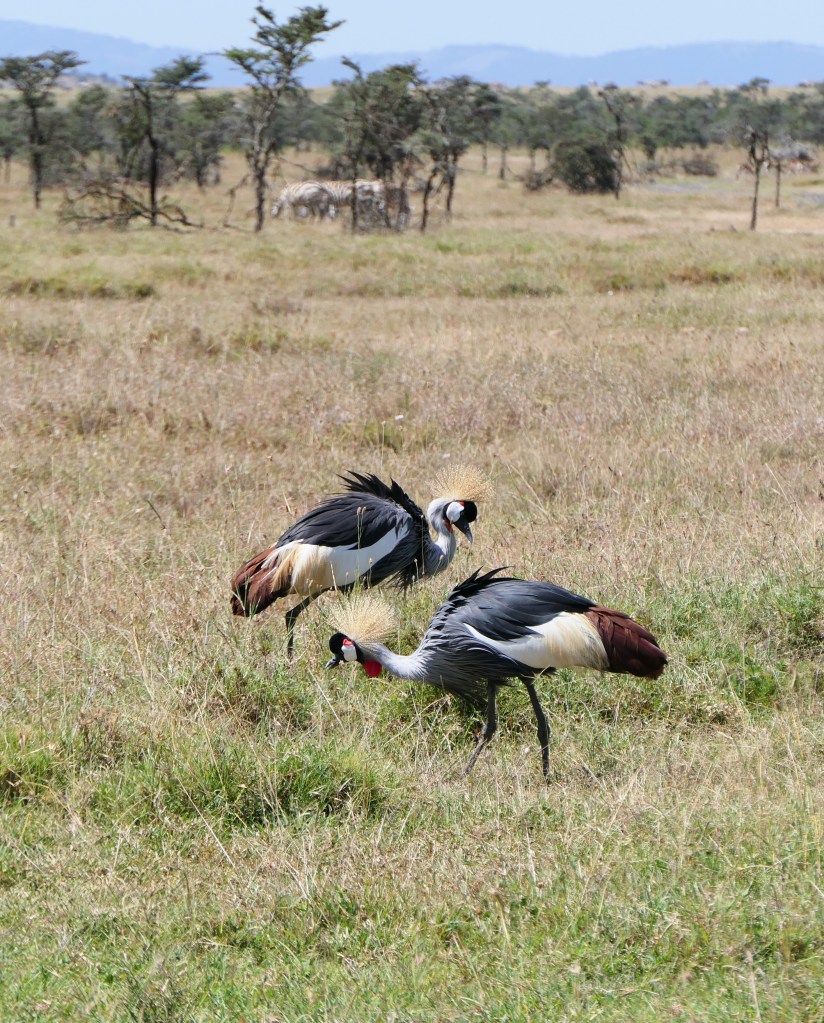
A pair of Crowned Cranes.
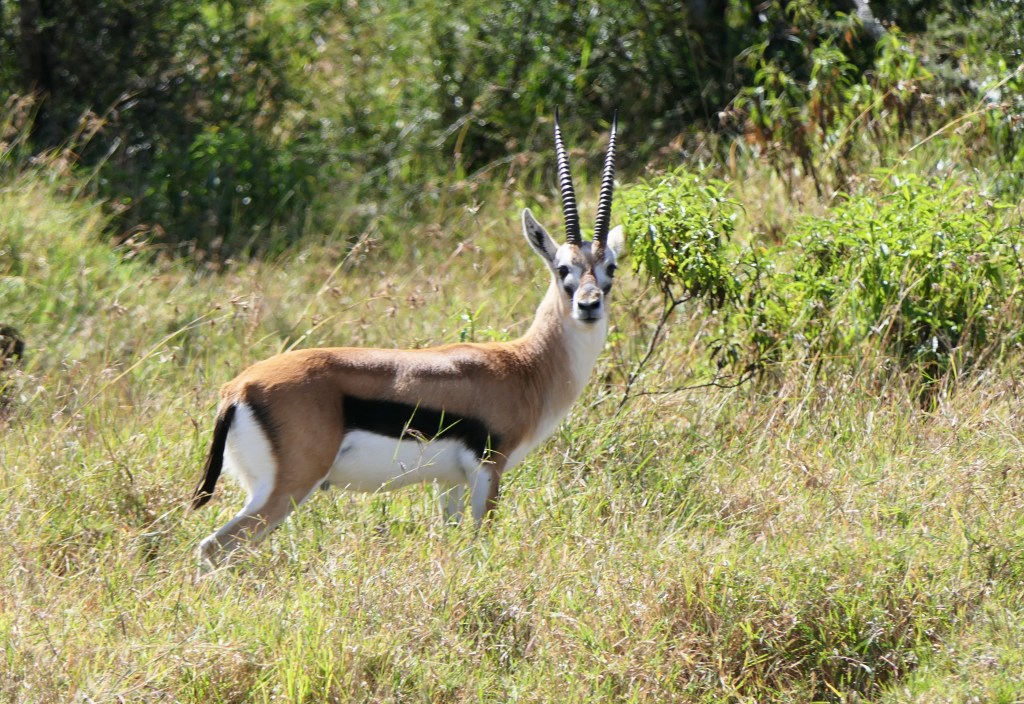
Thompson’s Gazelle.
As sunset was approaching, Duma heard that a pride of lions was sighted so off we went to scour the bush looking for them. I caught a movement under a tree and there they were, waking up from their afternoon nap. There were four females and cubs and subadults, 12 in all. The cubs were getting rambunctious, playing with each other and the adults.
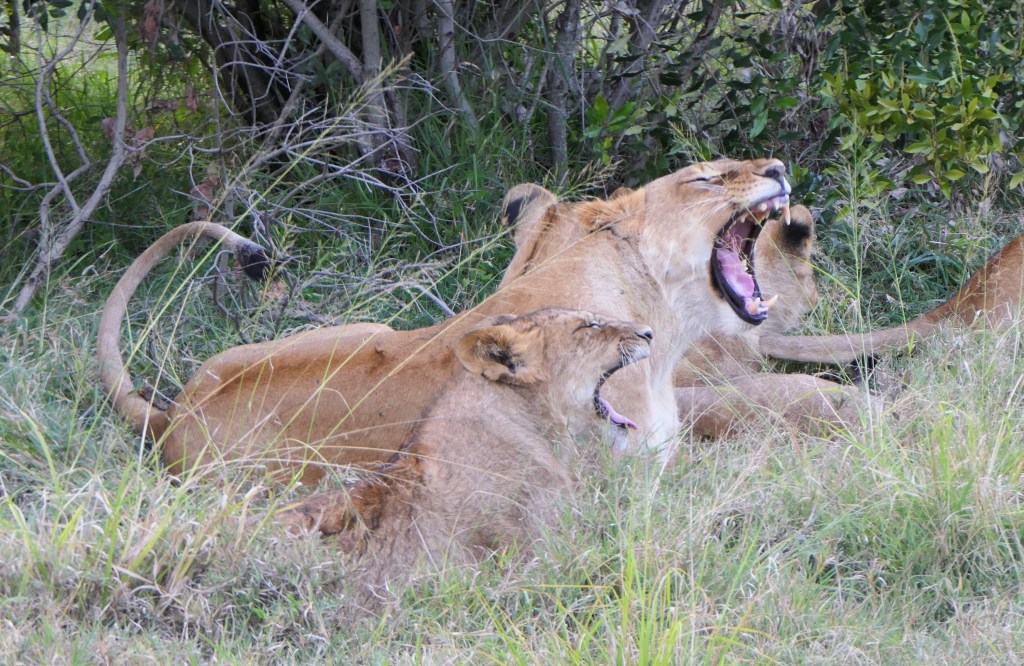
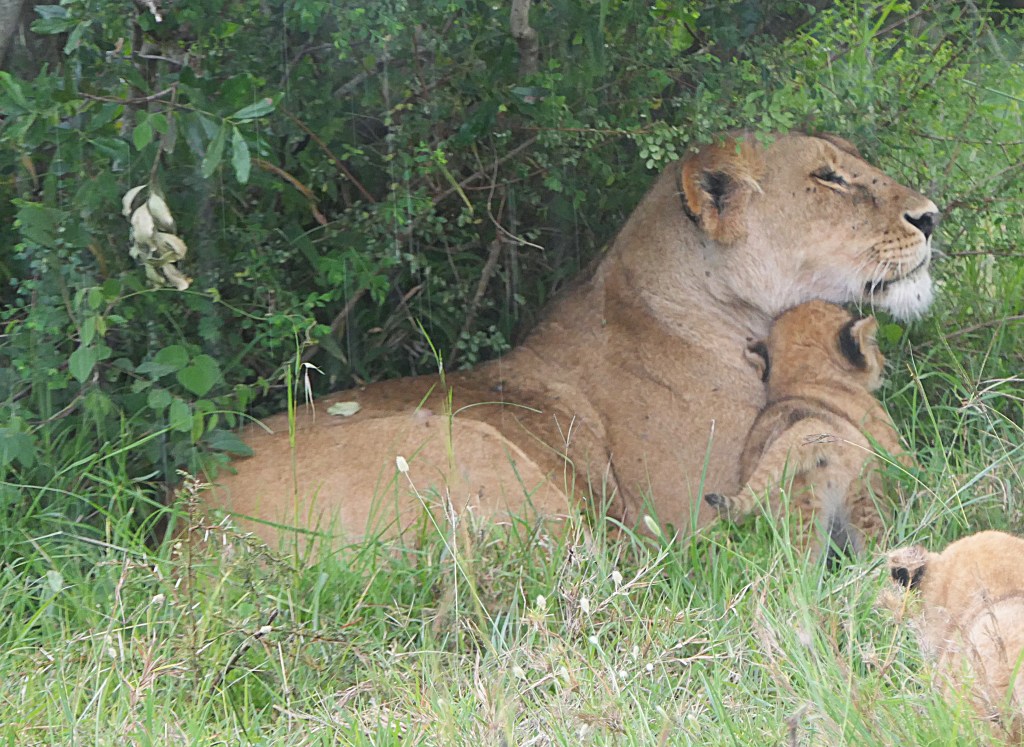
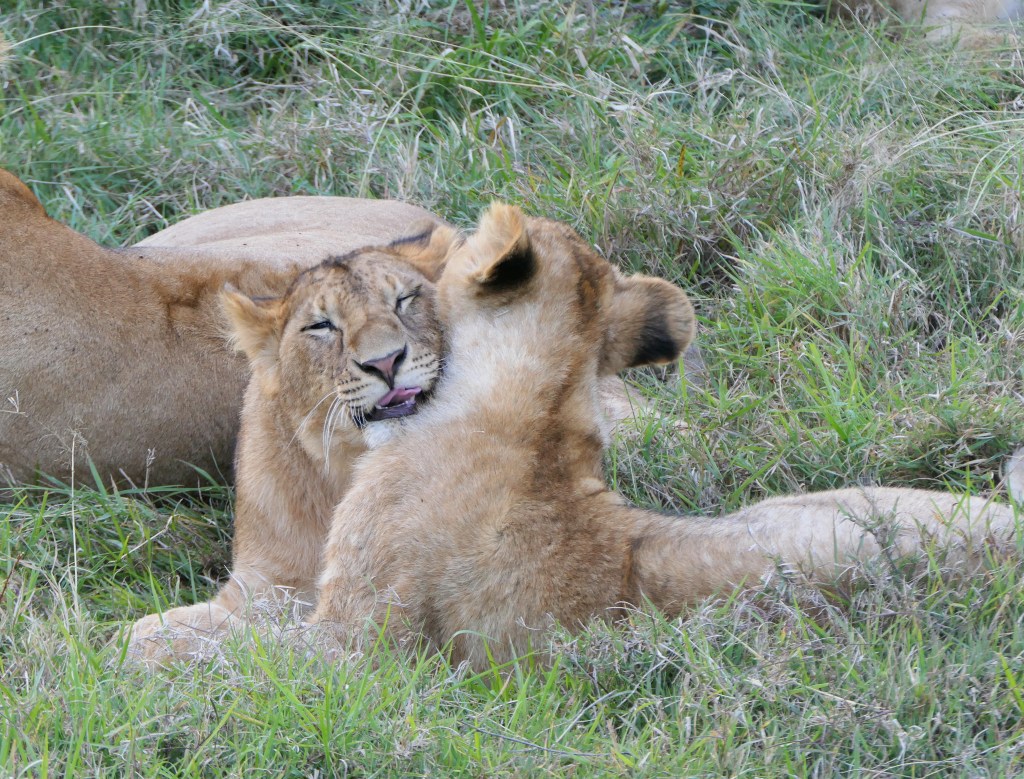
As the sun sunk began to set the pride went off to start their evening activities. This female had a radio collar.
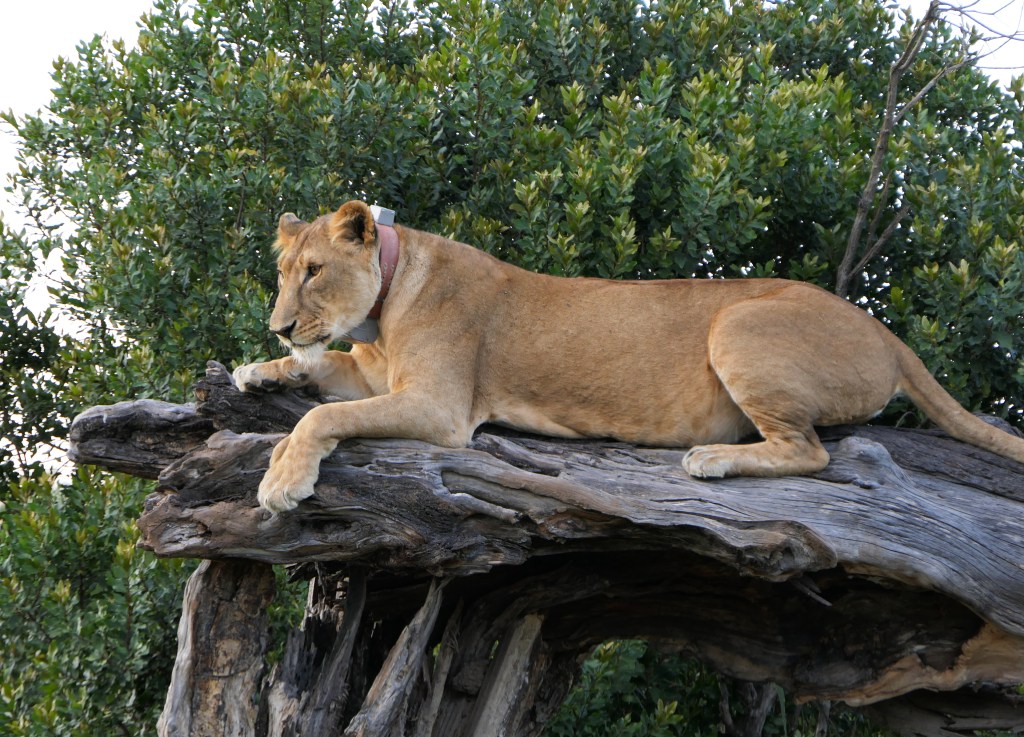
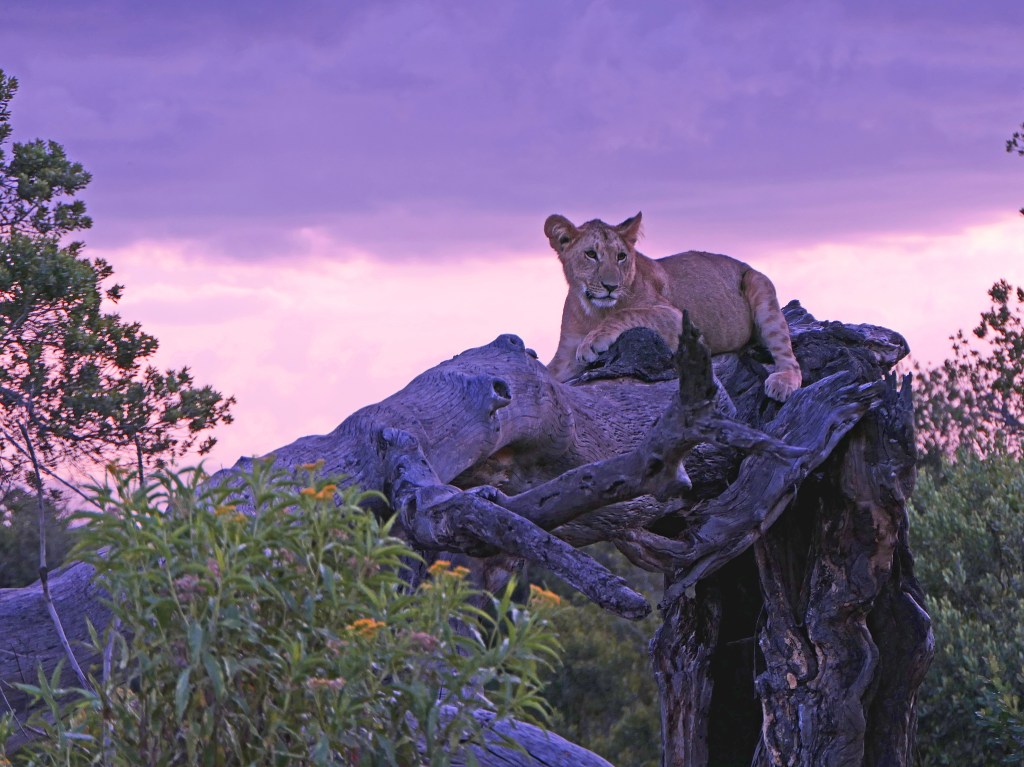
Then it was time to leave them and find a spot to have our “sundowners” -cocktails by the jeep, and watch the sunset before returning to camp for dinner.
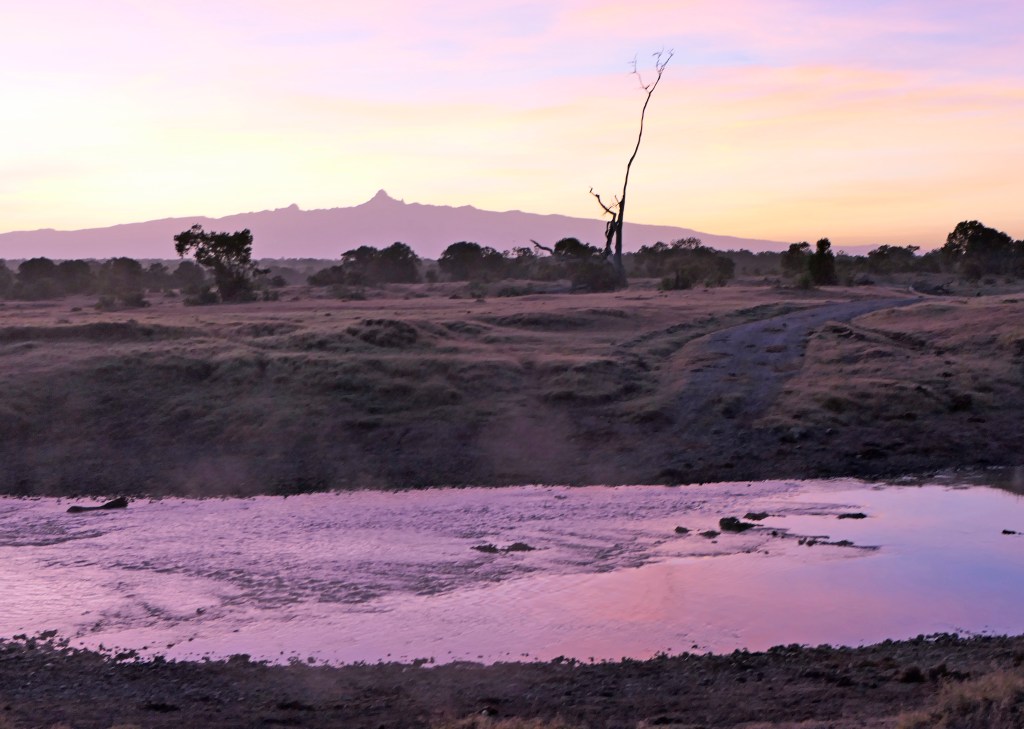
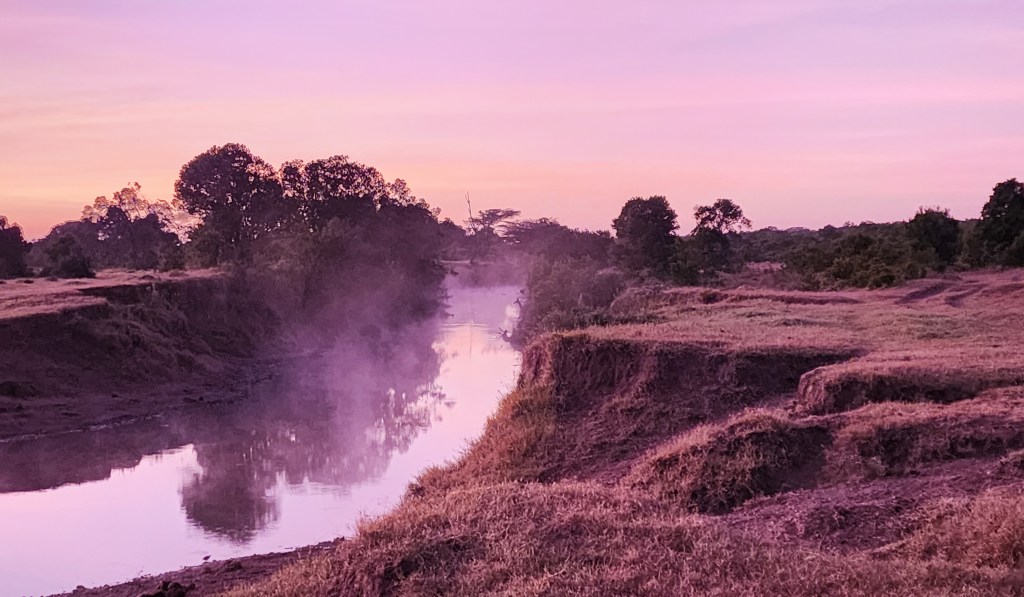
The next morning started bright and early at 6:15 am and COLD! After having coffee and juice delivered to our tent, our escort arrived to take us to the jeep. This camp has an electric fence, however wildlife are still able to come and go so when it was dark we always had a guide. We piled into our jeep with Duma who brought us fleece-lined ponchos to stay warm. And off we went to see what we could see.
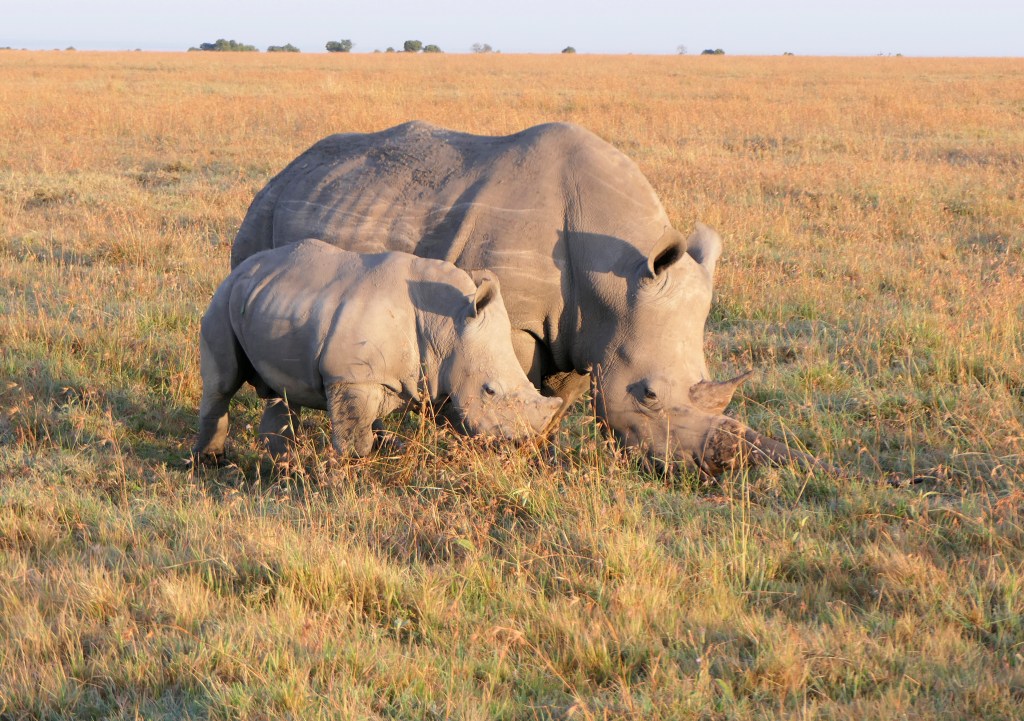
Mom and baby Southern white rhinos. Rhinos are the second largest land mammal; only the elephant is larger and heavier.
An impala.
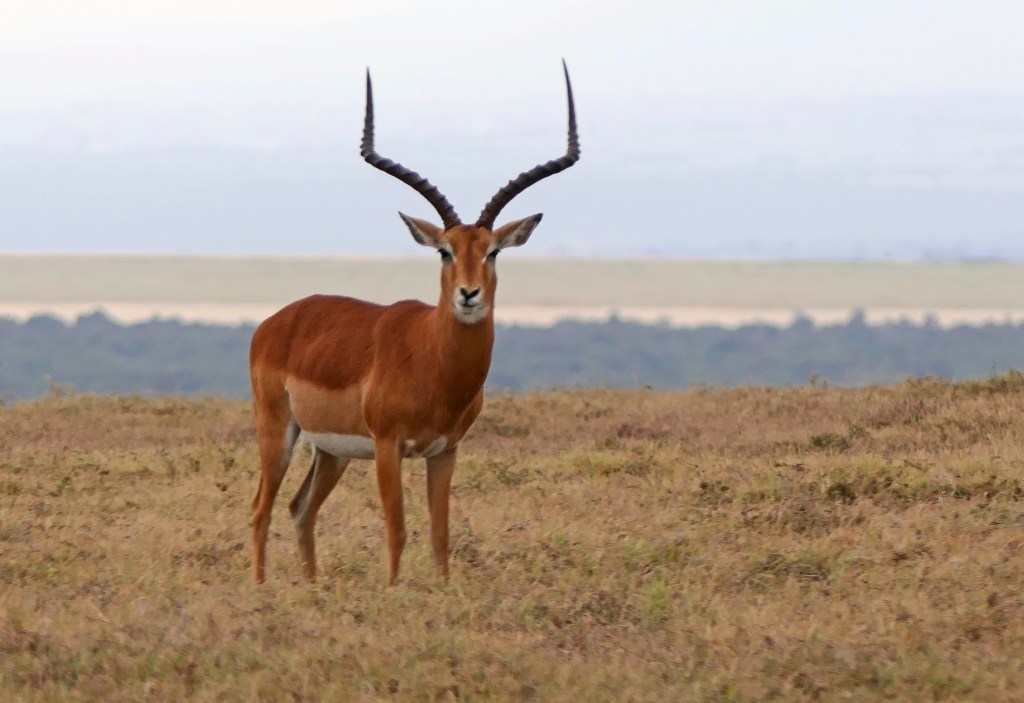
Another topi.
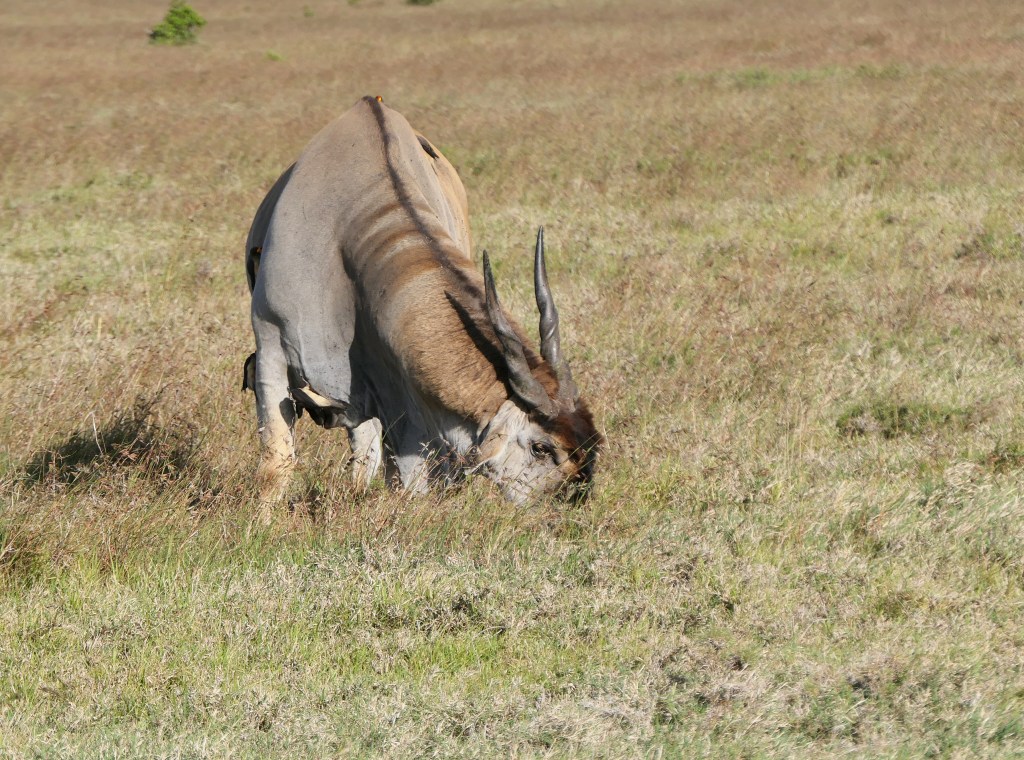
It was time to keep our appointment with the last two remaining Northern White rhinos in the world, Najin and Fatu, both of which are female. But first, a visit to the memorial and graveyard for the Northern White Rhinos that have died, both from poaching and natural causes.
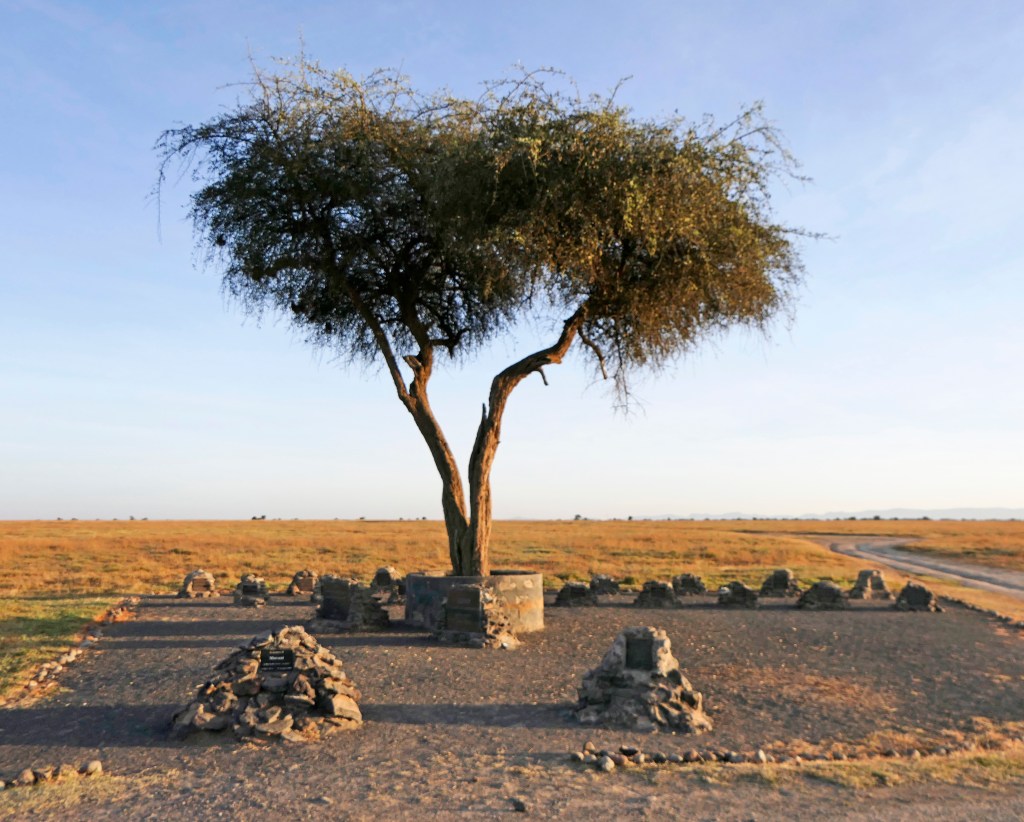
Najin, a female, was born in captivity in 1989. She is the mother of Fatu. Her mother was Nasima and her father was Sudan. Fatu was born in captivity in 2000. Her mother is Najin and her father was Saut.
They both belong to a zoo in the Czech Republic, but live here in the Conservancy. They arrived at the conservancy in December 2009, along with two male northern white rhinos from the zoo, Suni and Sudan. However, Suni, born at the zoo in 1980, died from natural causes at the Conservancy in 2014. Sudan, caught from the wild in 1975, died on 19 March 2018. They were and are under a 24-hour guard due to the poaching of rhinos for their horns.
Efforts to have them breed with each other and with Southern White Rhinos both failed and it was determined that neither female could bear young. However, eggs were harvested from both females and sperm had been frozen from the males prior to their death, and some eggs were fertilized successfully with the sperm. The embryos have been stored in liquid nitrogen since 2020. Their keeper told us that this year, as soon as some of the enclosed wild female Southern White Rhinos come into season, the embryos will be implanted in the surrogates with hopes of some baby Northern White Rhinos in the future. The two girls live with a female best friend, a Southern White Rhino.
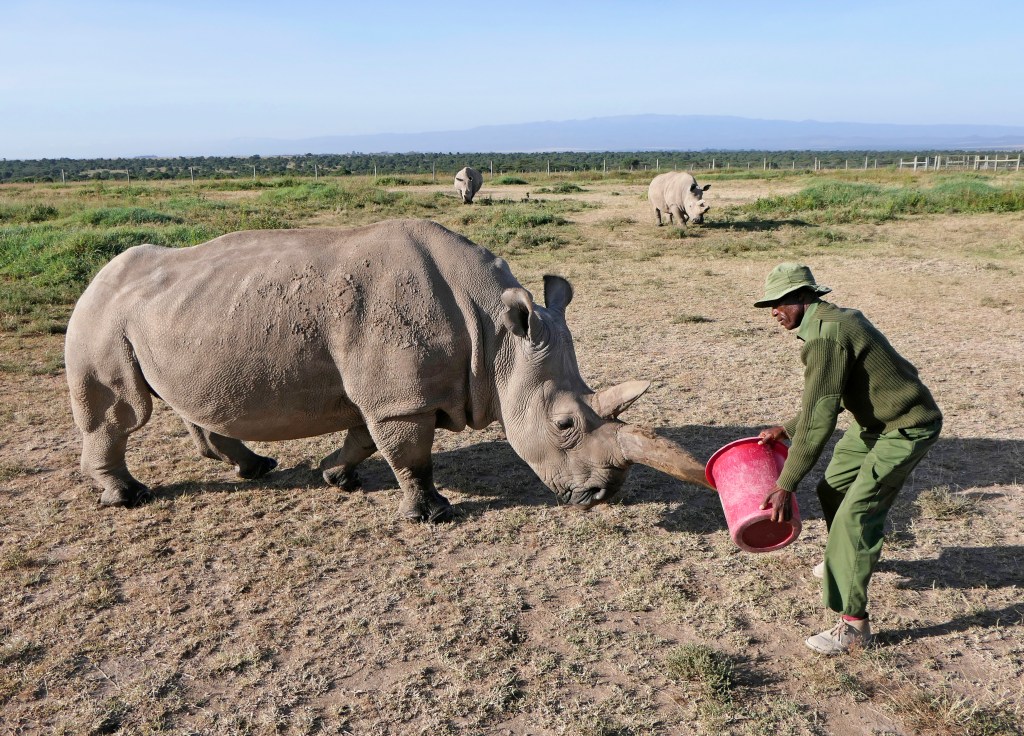
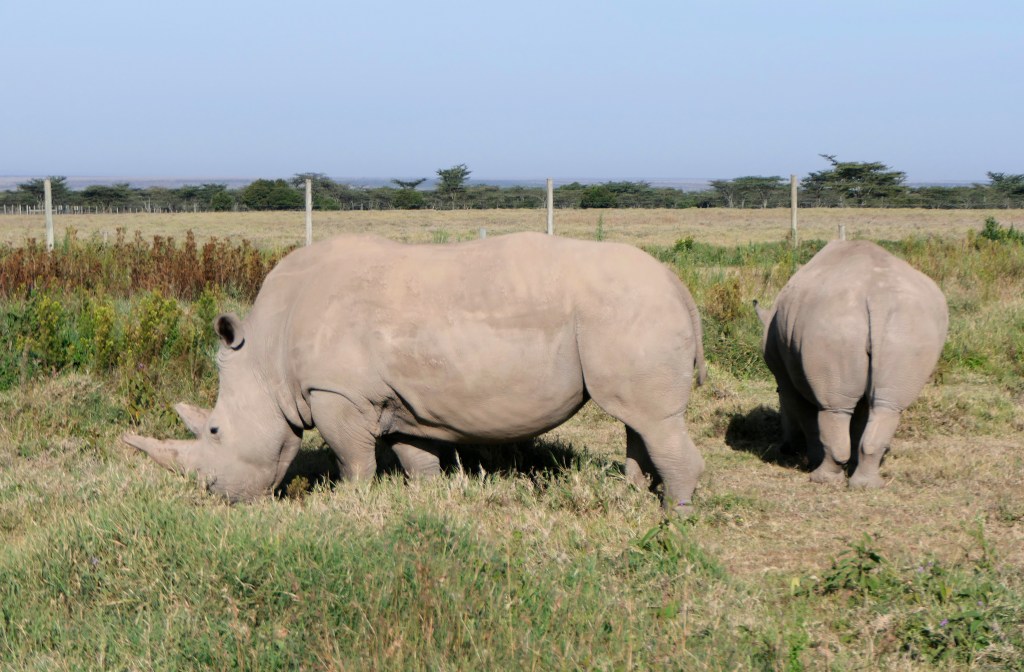
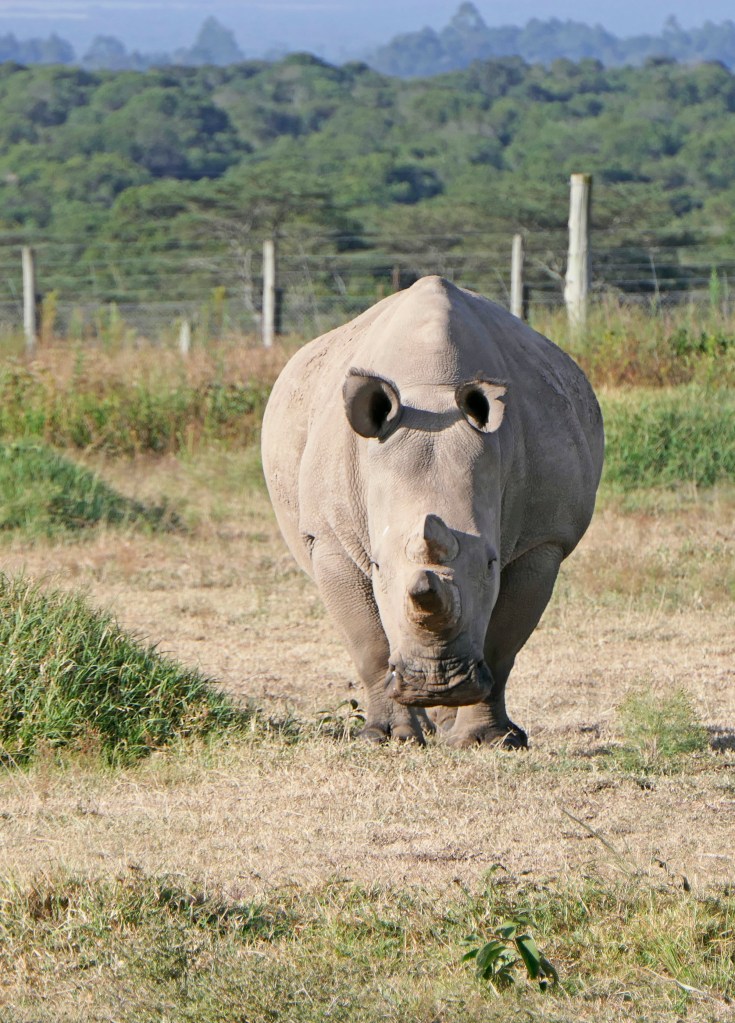
Then it was time to leave and continue our morning drive.
A zebra mom and baby.
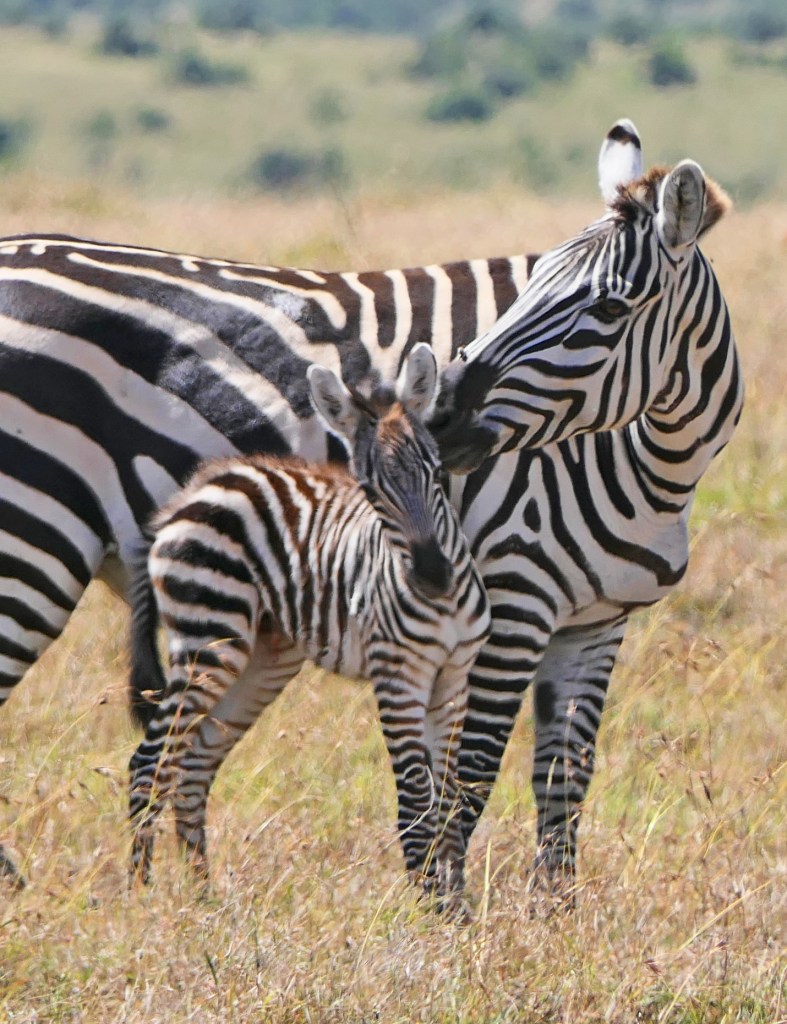
We came to a large wetland that had a number of inhabitants.
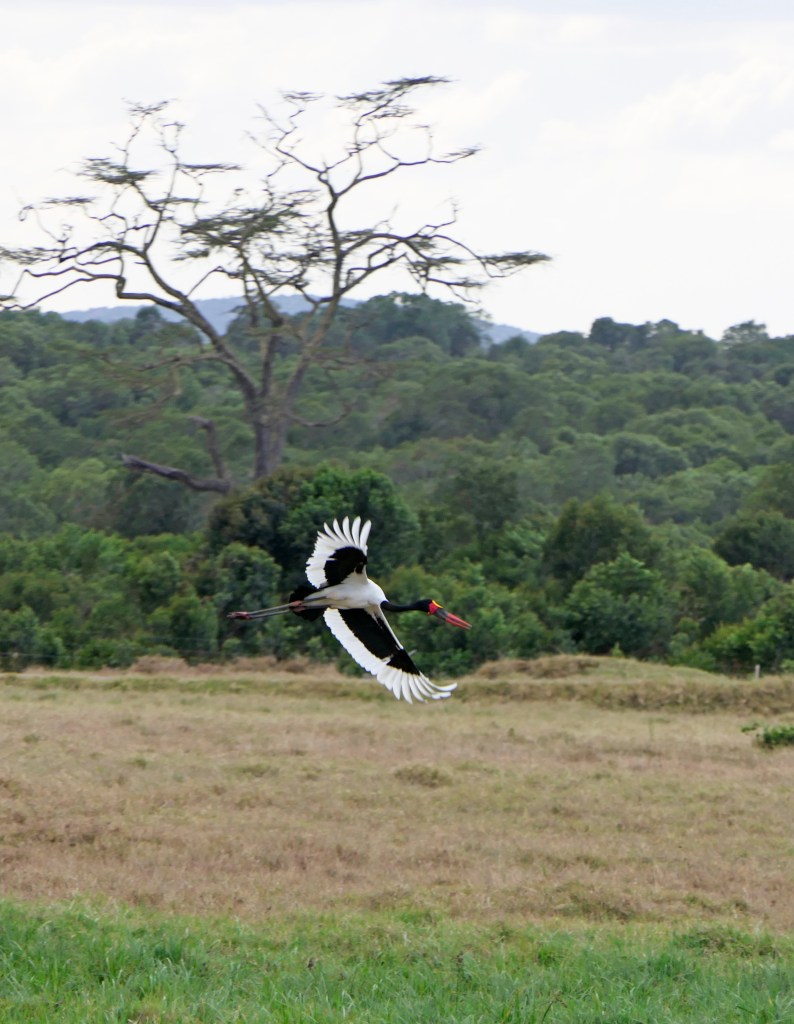
Saddle-billed Stork.
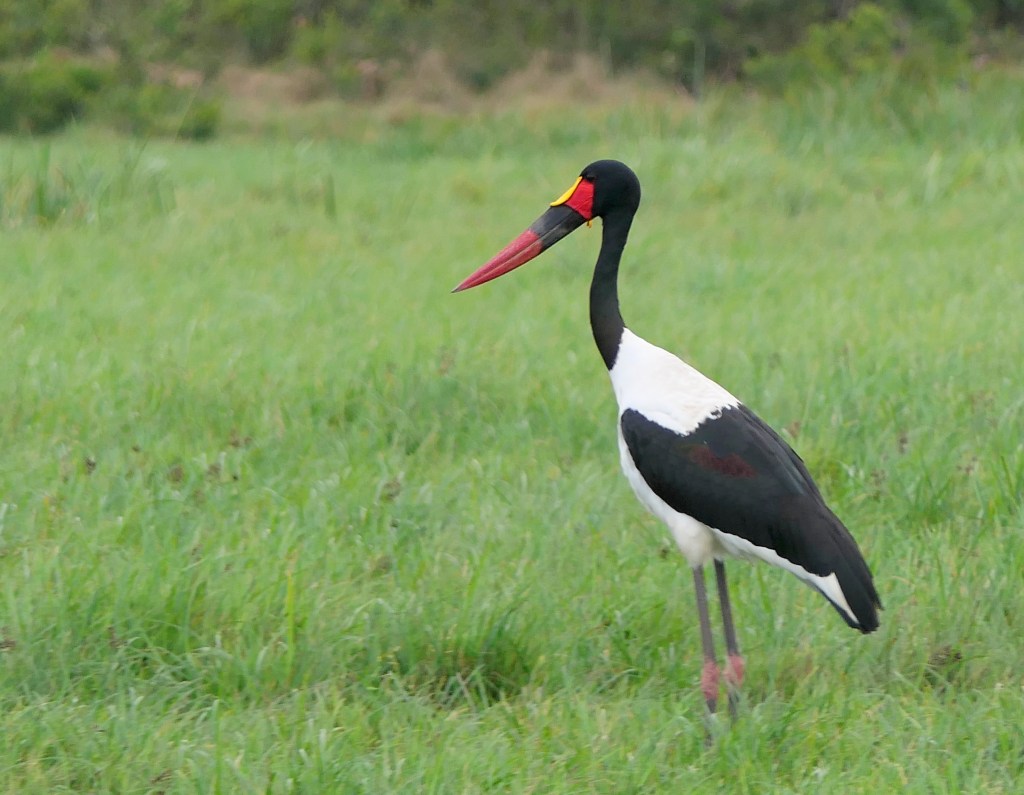
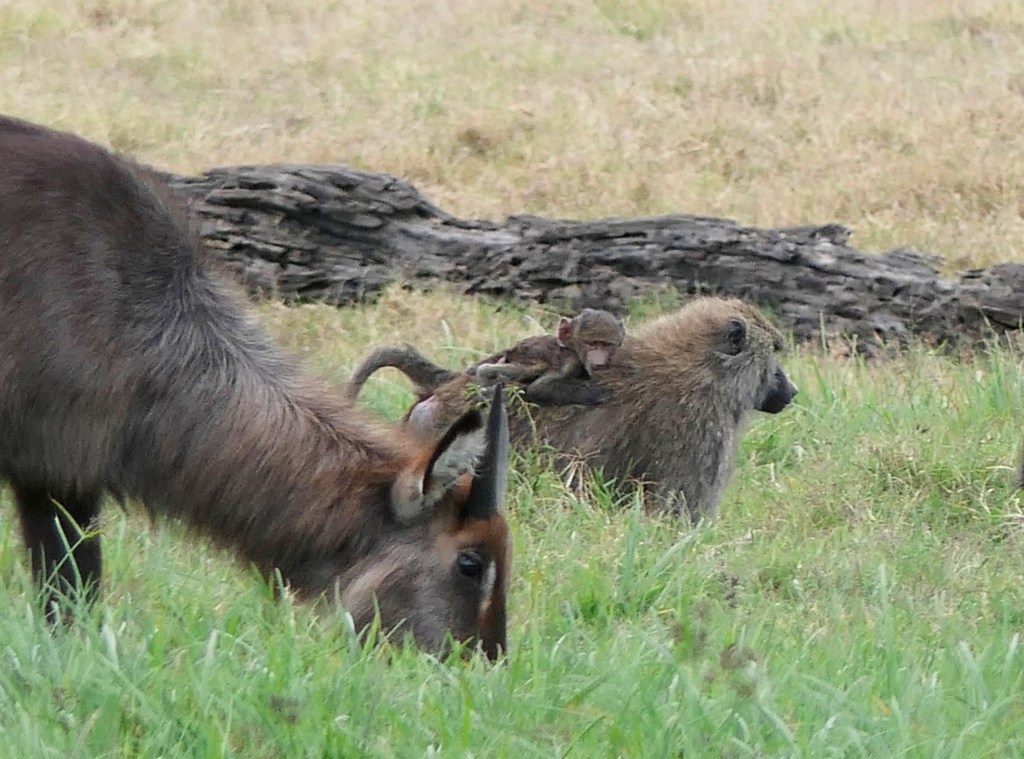
Olive Baboons. They carry their babies on their backs.
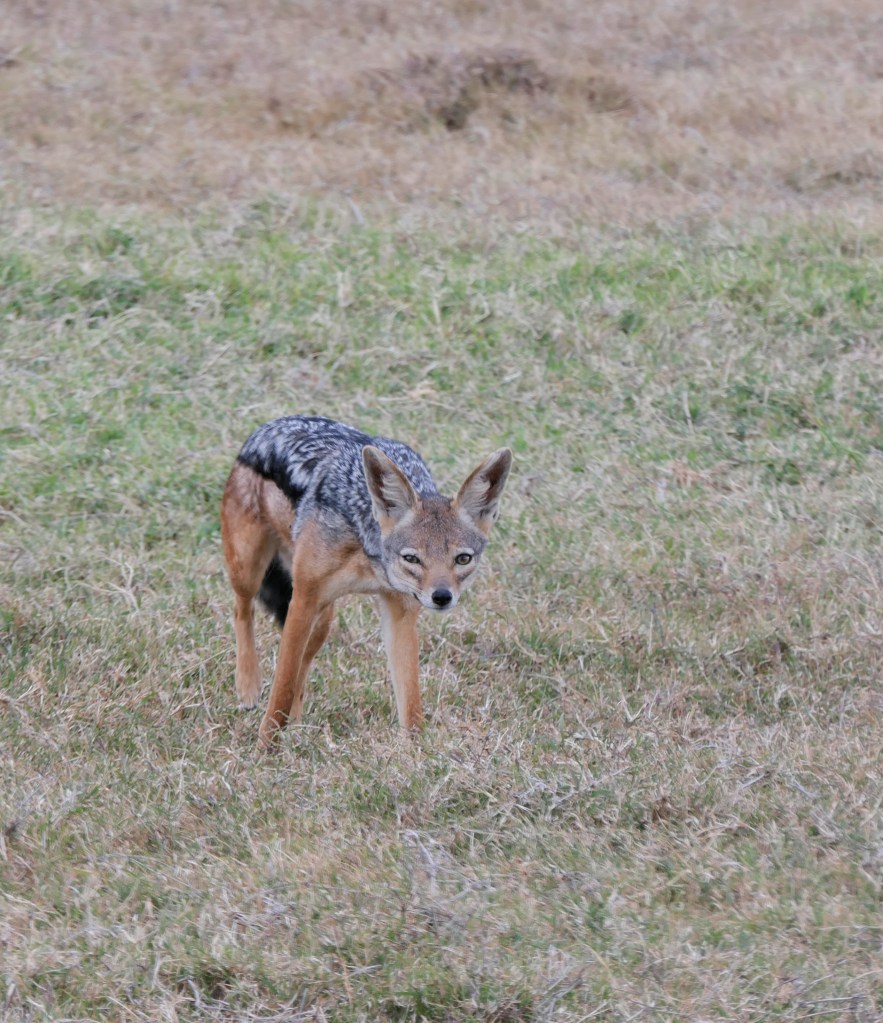
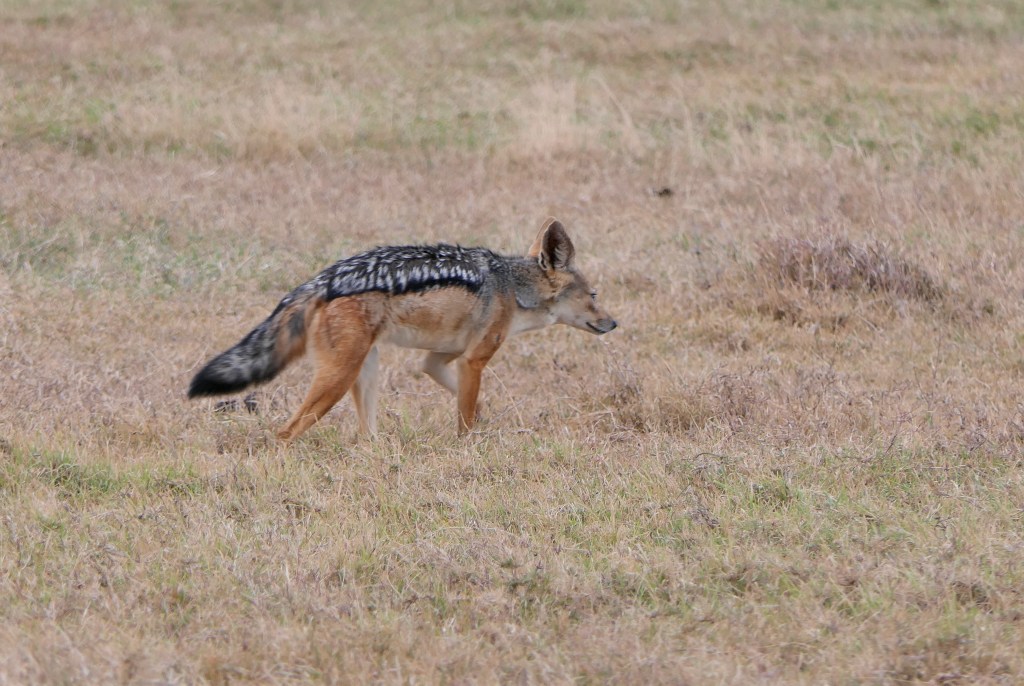
A jackal on the hunt.
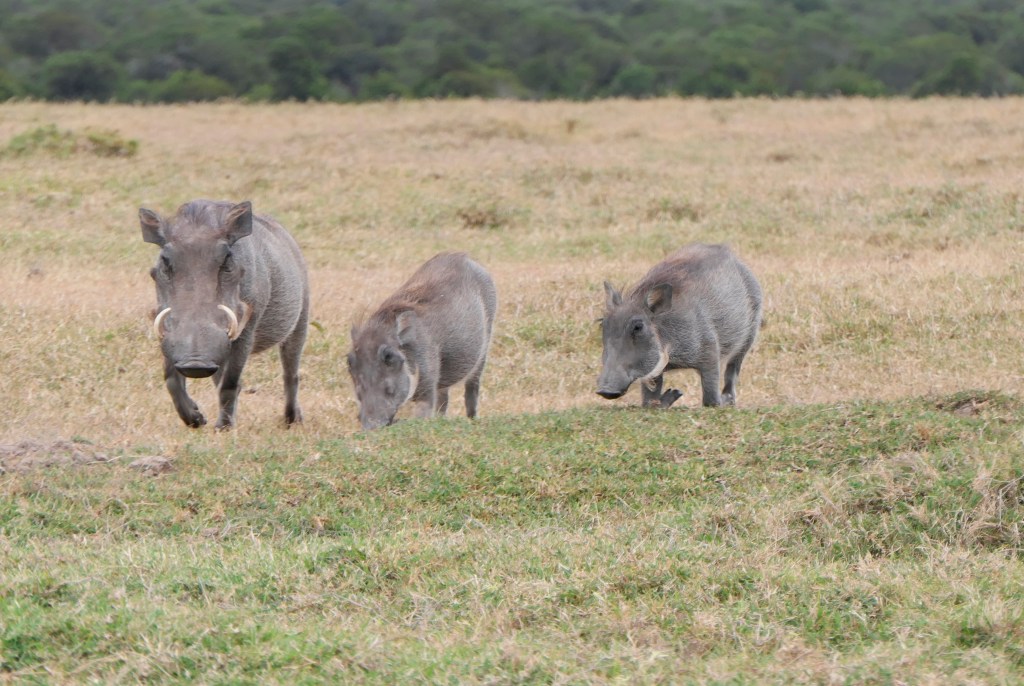
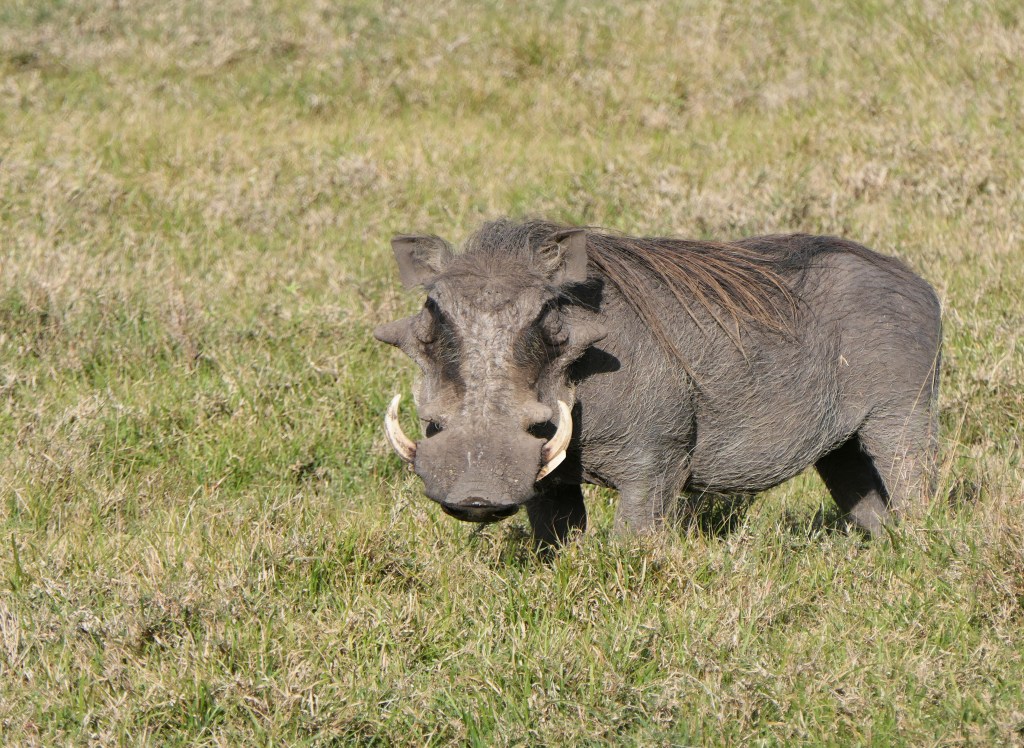
Duma moved us on to another area where we saw African warthogs, otherwise referred to as “pumbaas.” That is the word for idiot in Swahili, and if you remember The Lion King, it was the name of the warthog character. They are the comedians of the plains.
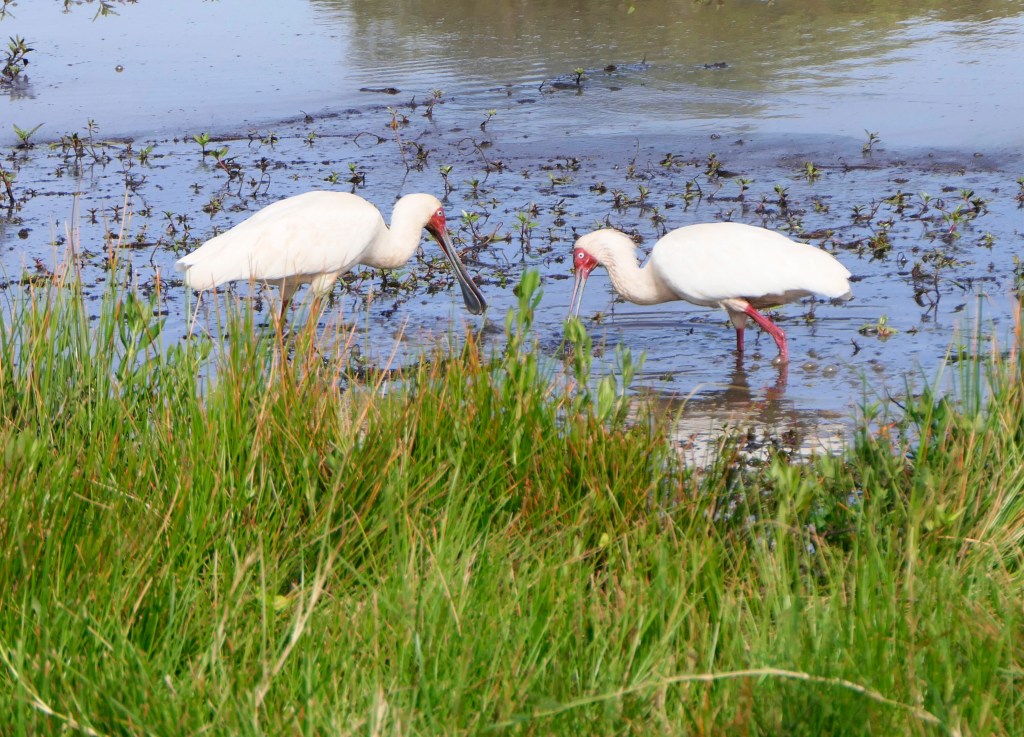
African Spoonbills.
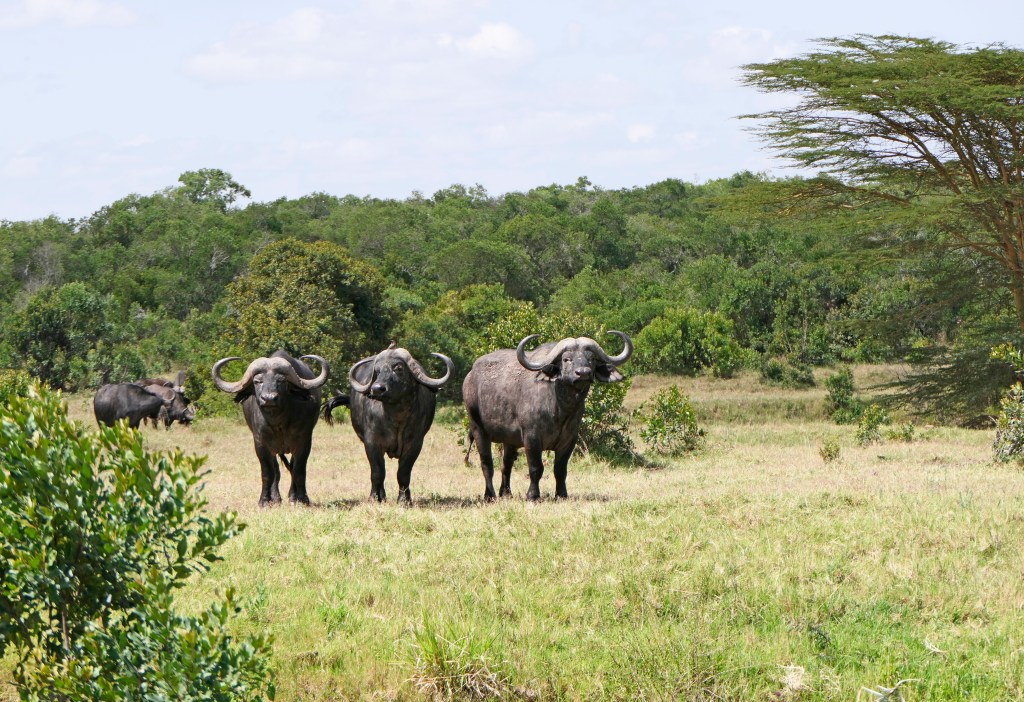
African Buffalo. We dubbed them the three stooges 🙂
We found another pride of lions, this time with two males.
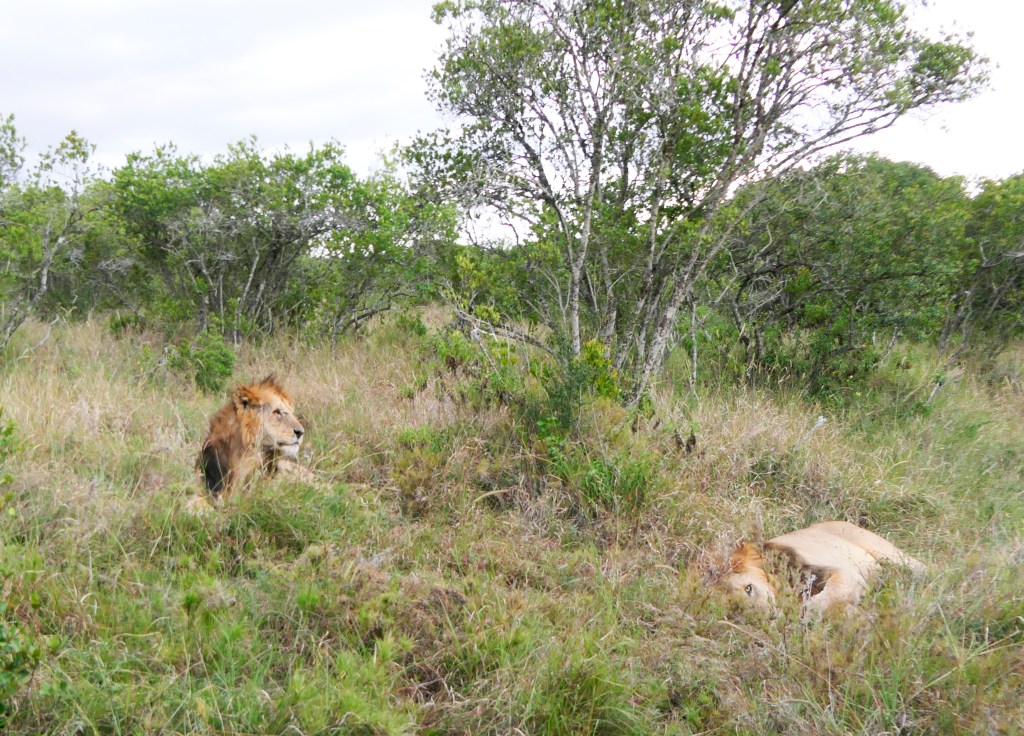
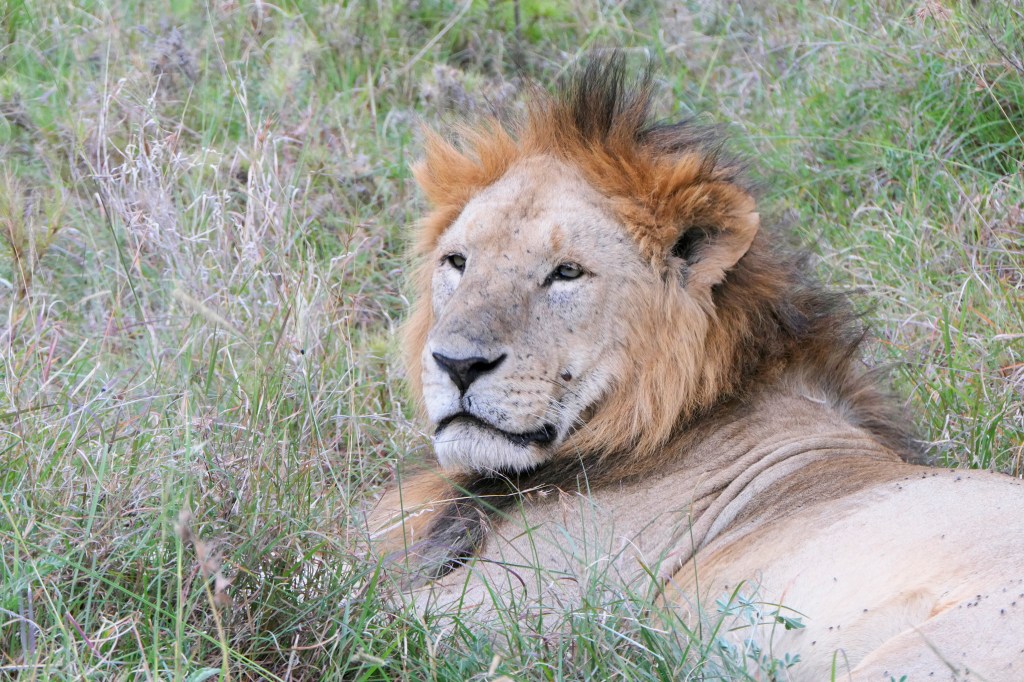
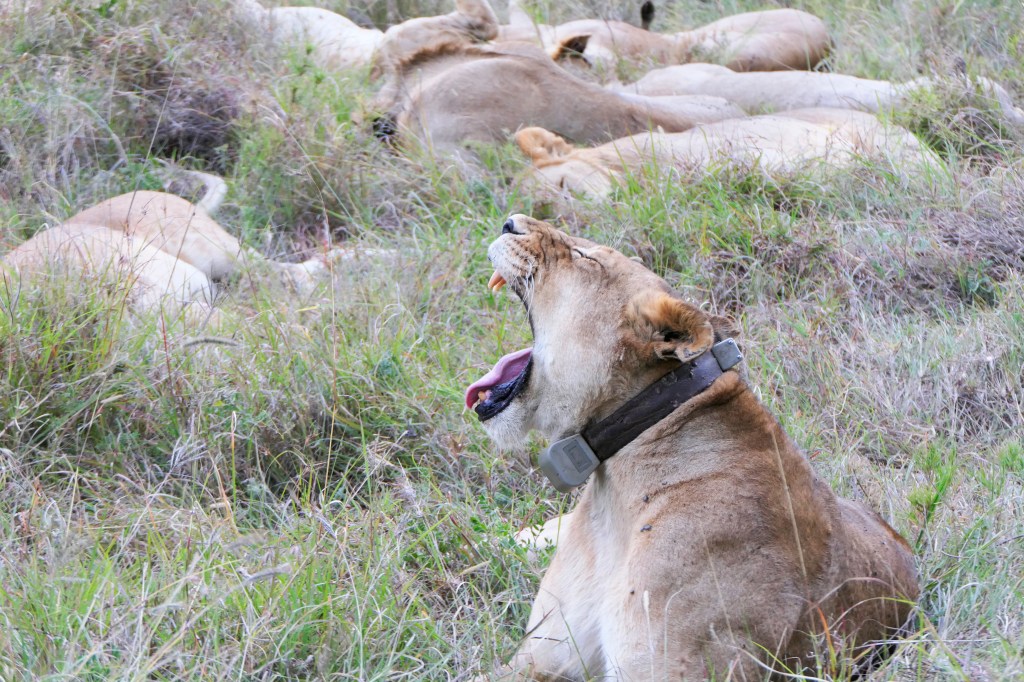
We came to find out that lions do a LOT of yawning.

This was a very large pride.
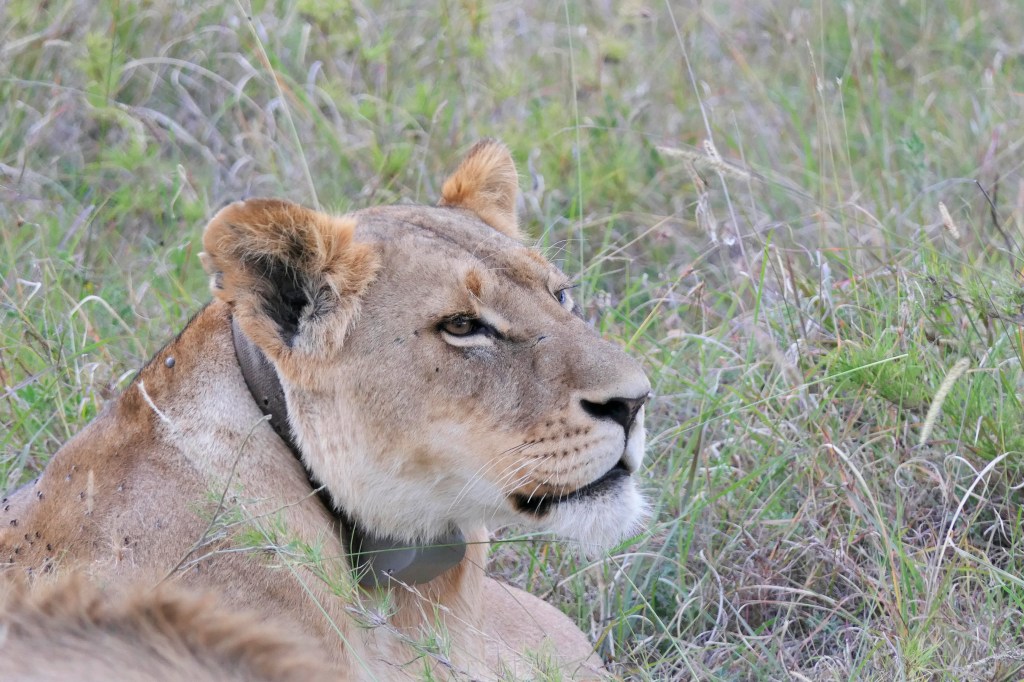
After watching them for awhile it was time to go and find a spot for our bush breakfast.
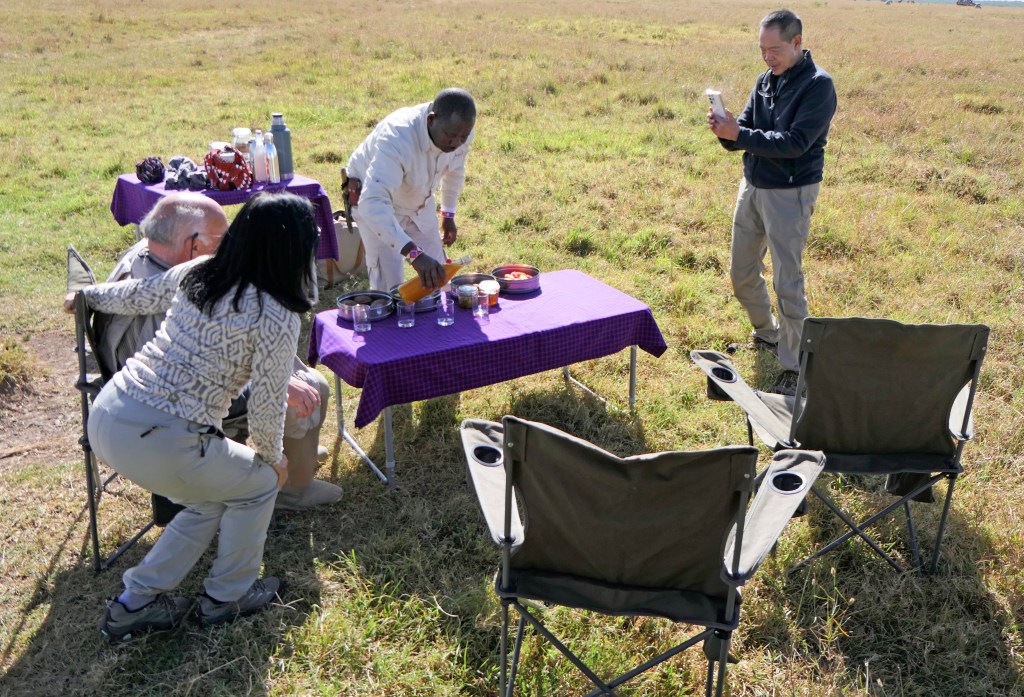
More to come!
Cruising the Indian Ocean
Sorry I’m posting this belatedly. I took too many photos!
After Madagascar we went to the small island of Mayotte and then on to Zanzibar, an island in Tanzania, know for the birthplace of Freddie Mercury. While the population on the mainland is largely Christian, the island is 99% Muslim with mosques on every corner.
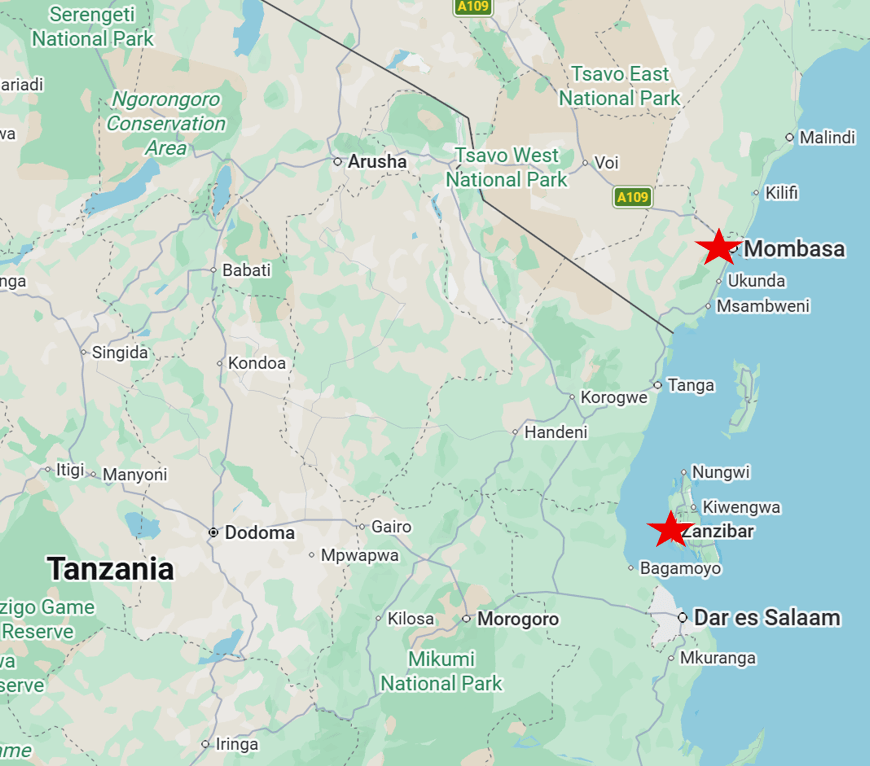
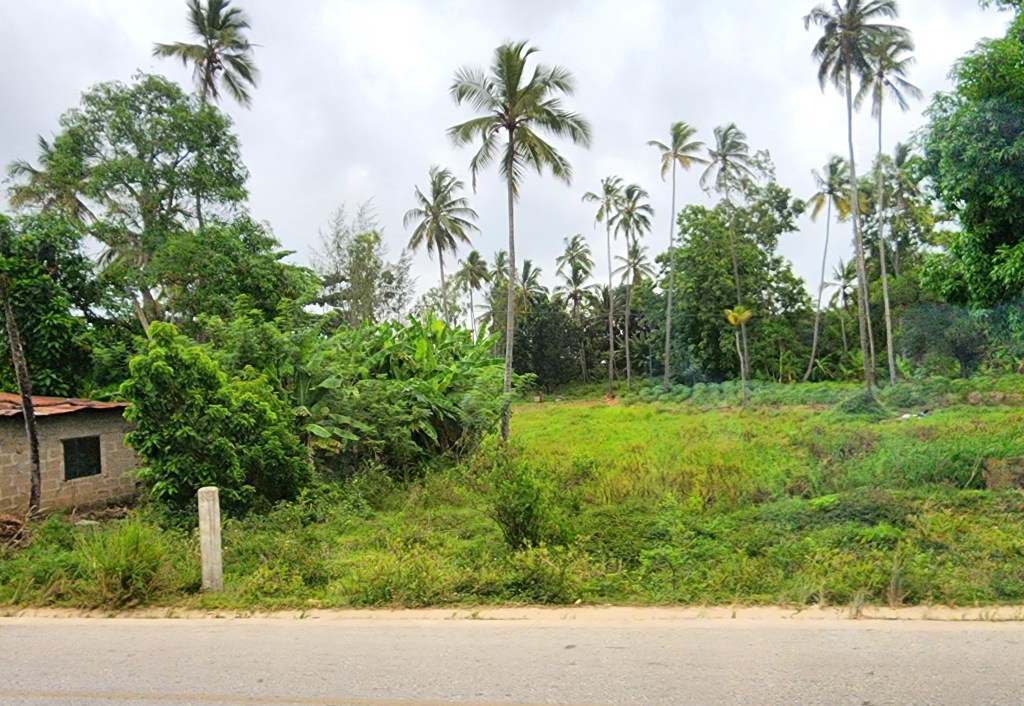
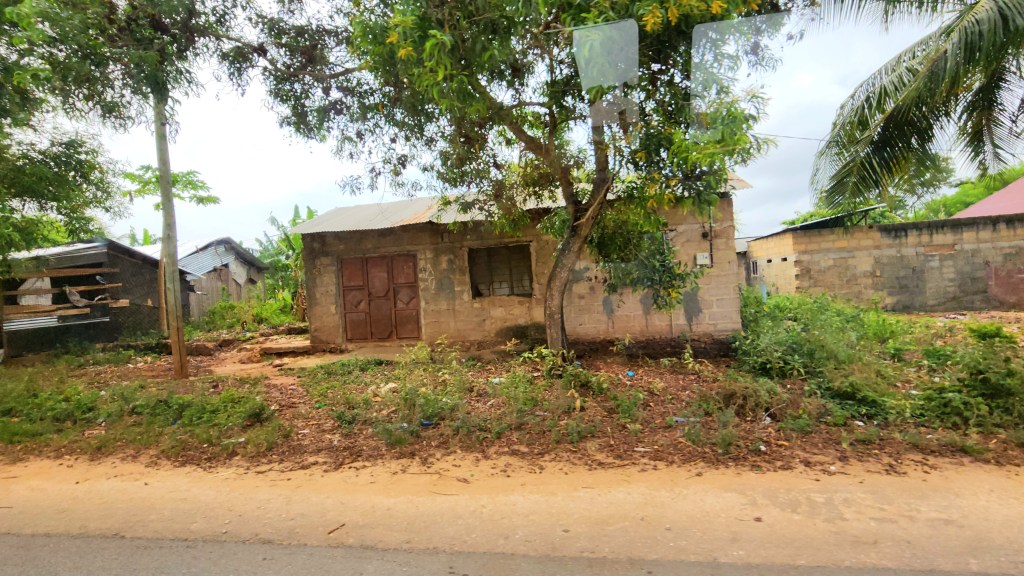
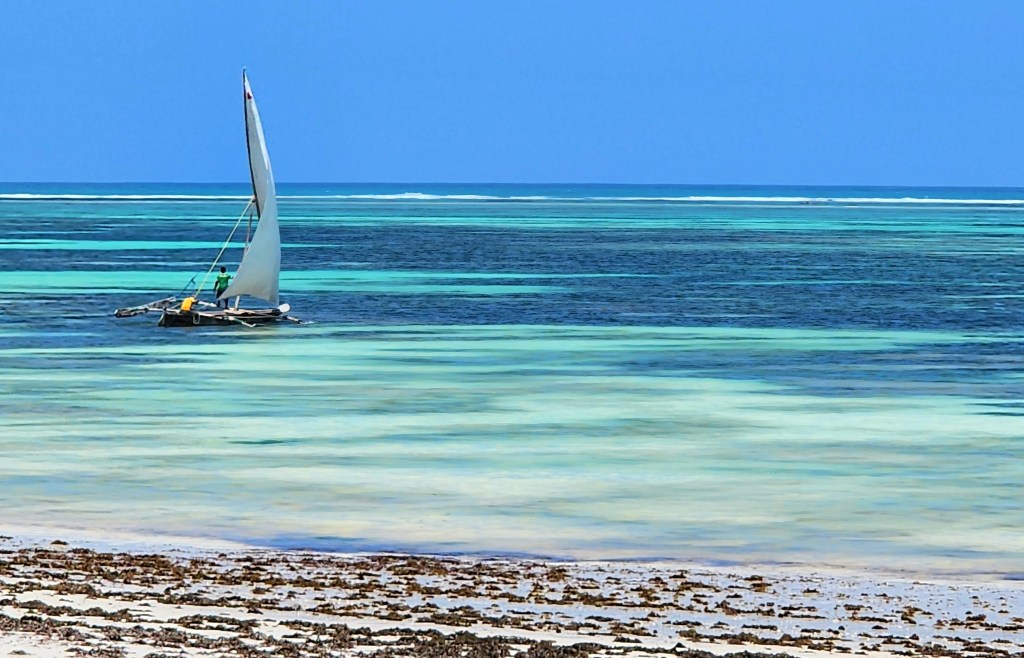
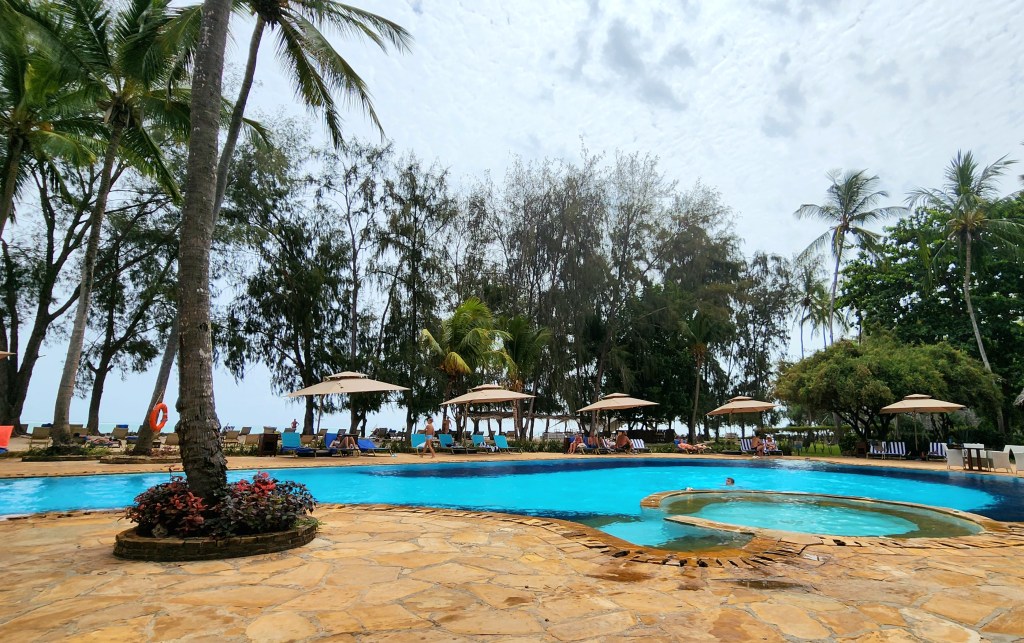
We took a excursion to the east coast of Zanzibar which has a spectacular reef.
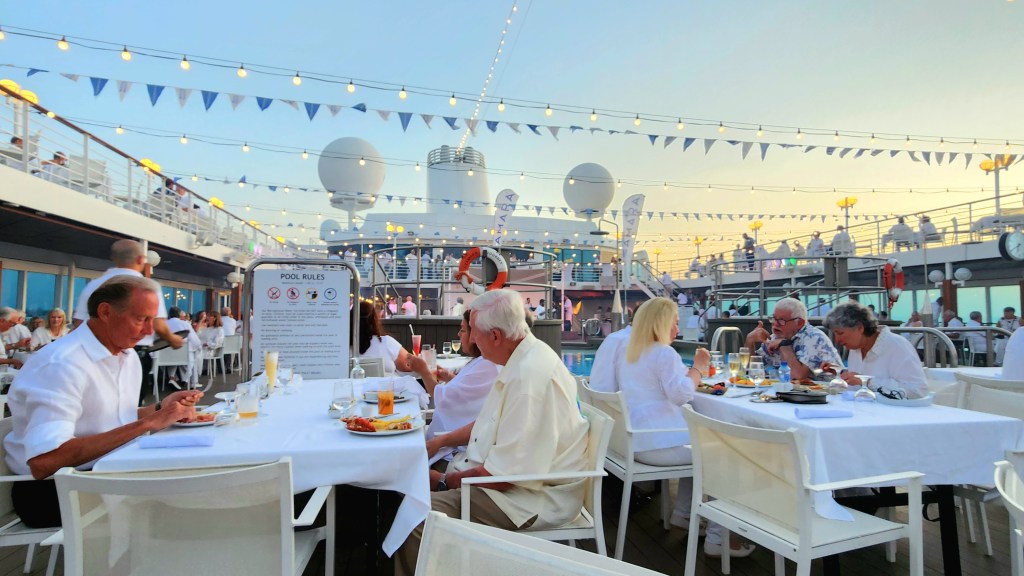
That night we had the White Night Party on the ship where everyone dresses all in white and the ship’s officers serve dinner on the deck followed by some great local entertainment.

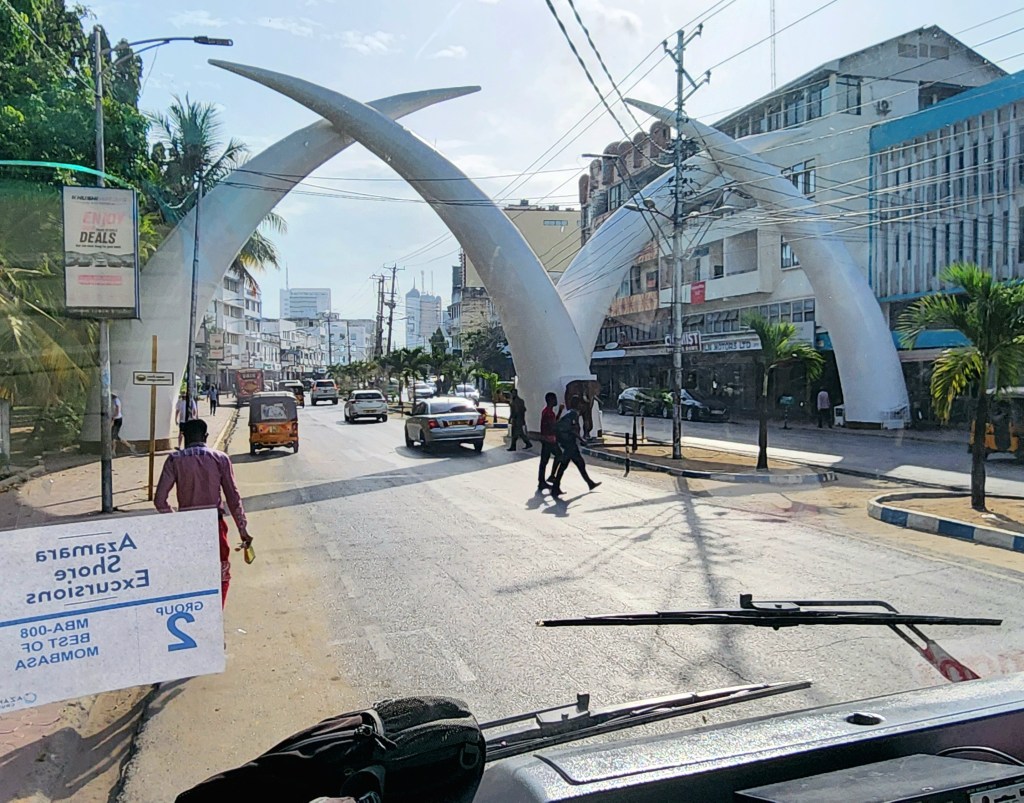
From Zanzibar we headed up the coast to Mombasa in Kenya. We did a great tour in Mombasa, starting with the famous tusk arches.
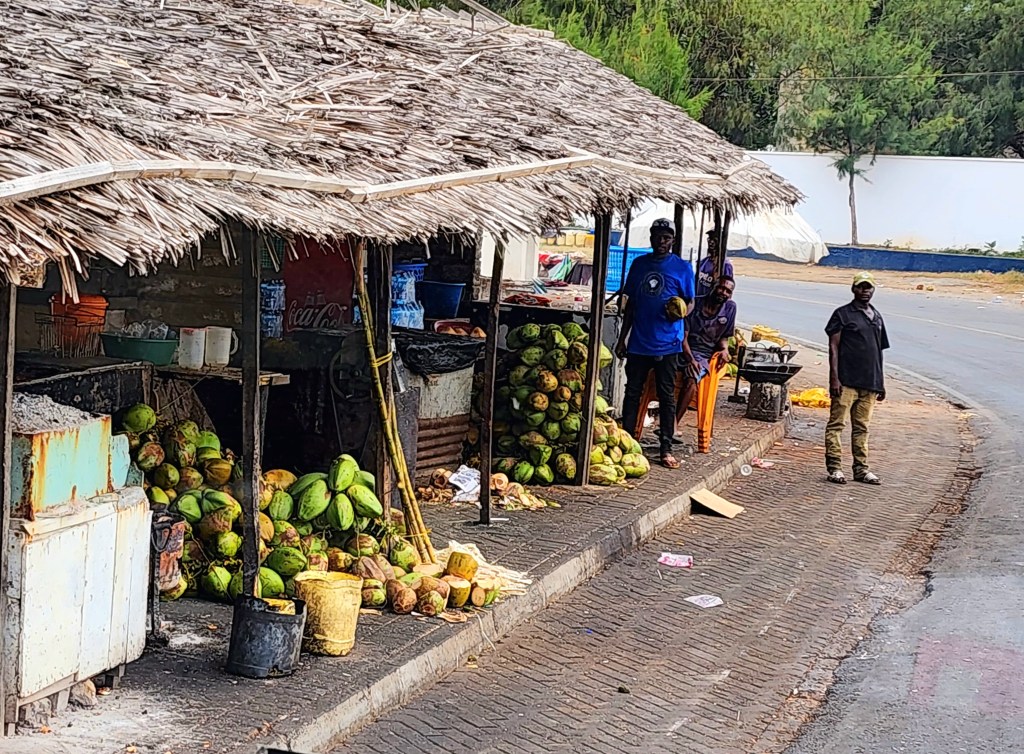
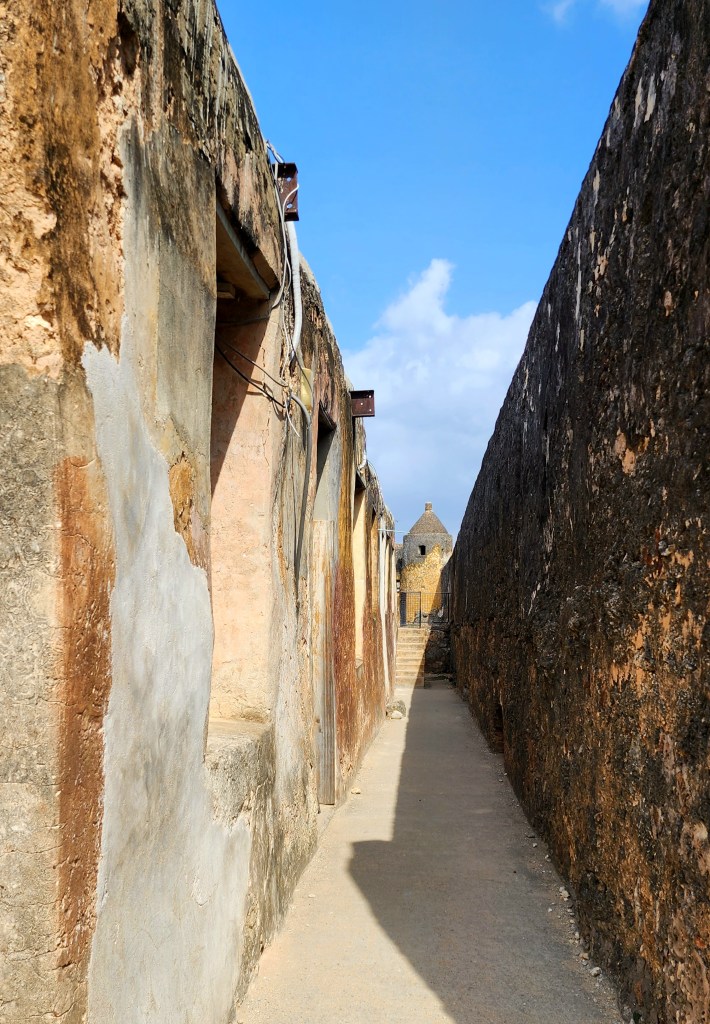
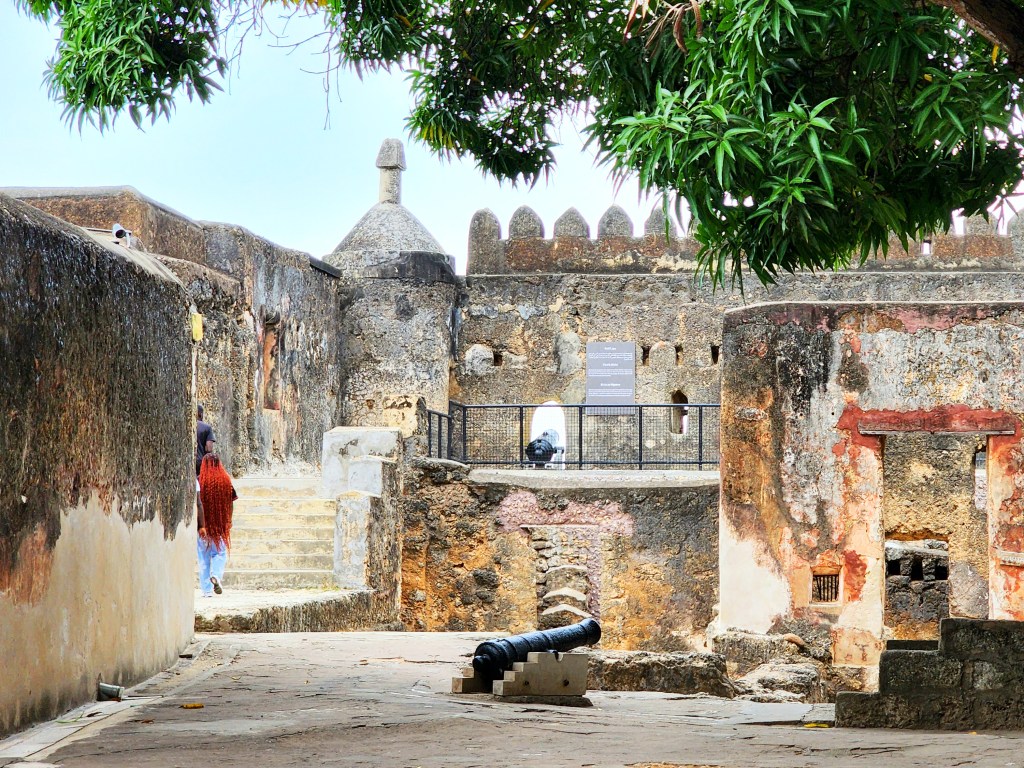
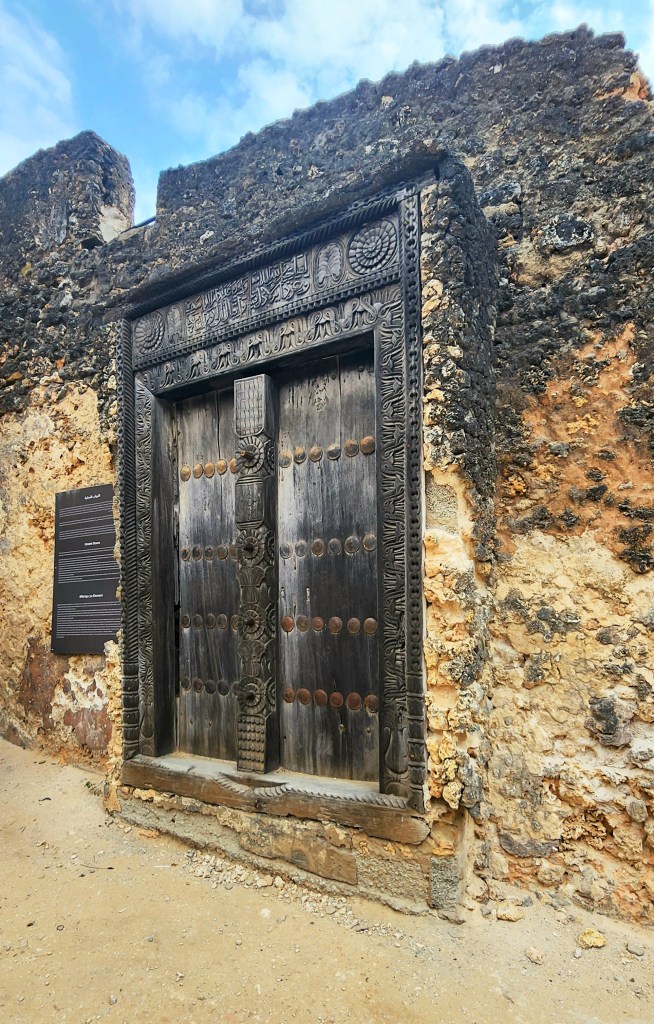
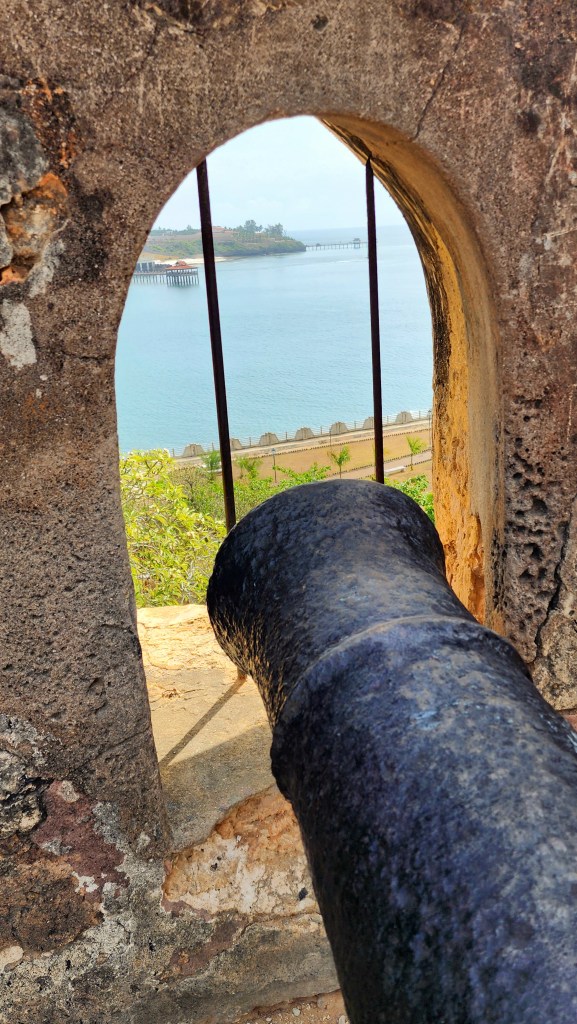
Then we had a tour of Fort Jesus. It was built between 1593 and 1596 by order of the Spanish king, who also reigned as king of Portugal and the Algarves, to guard the Old Port of Mombasa .
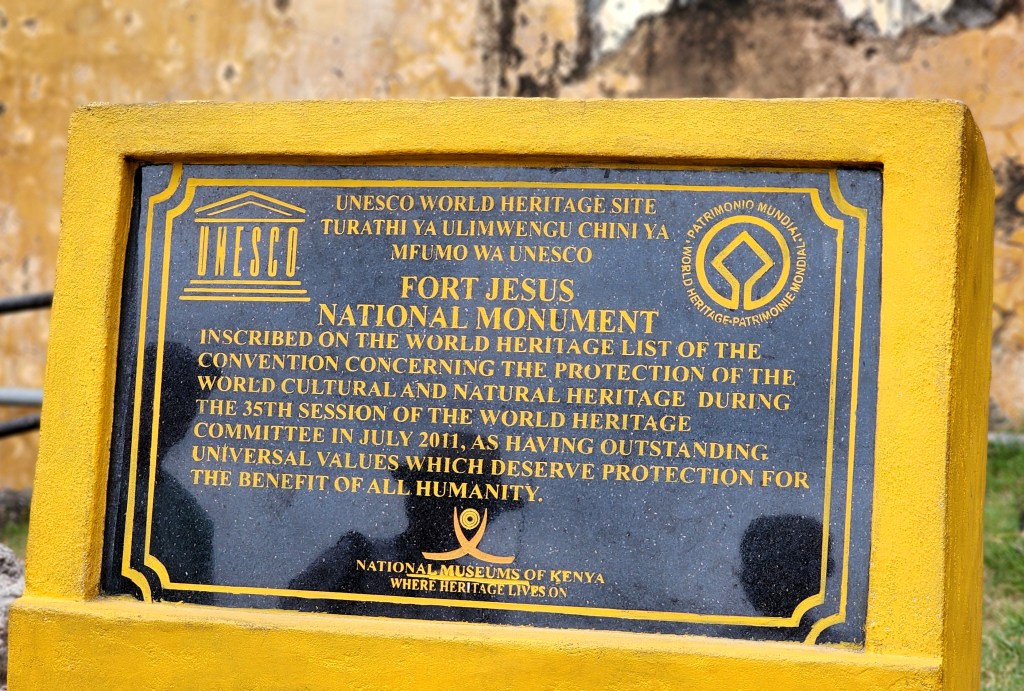
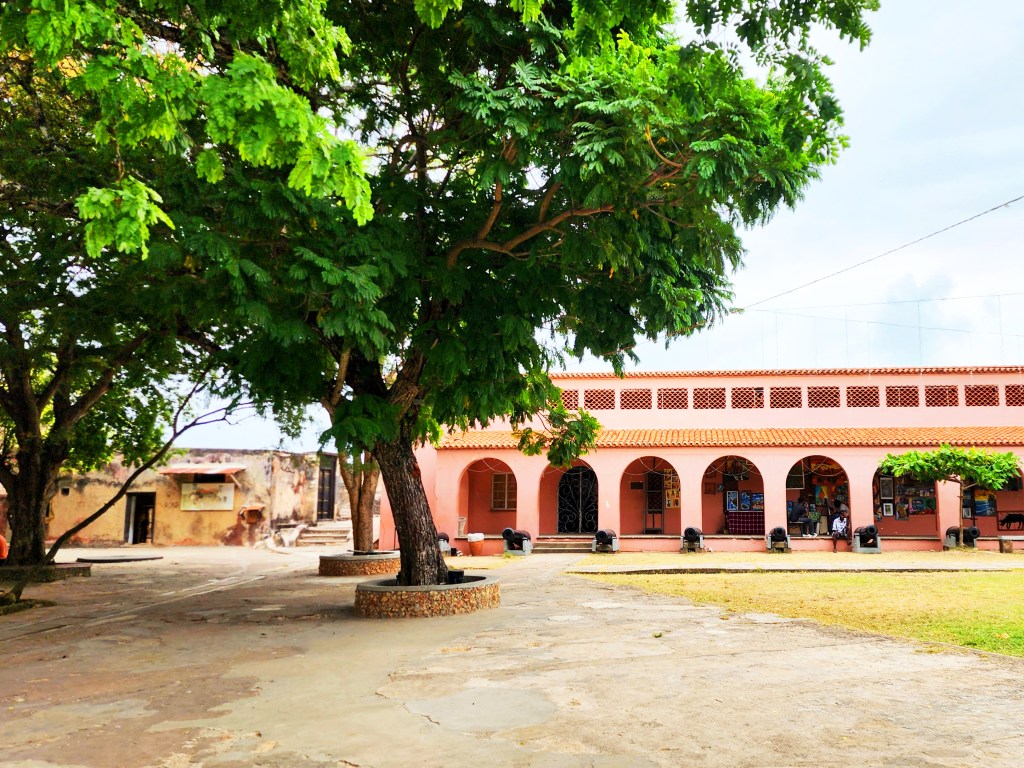
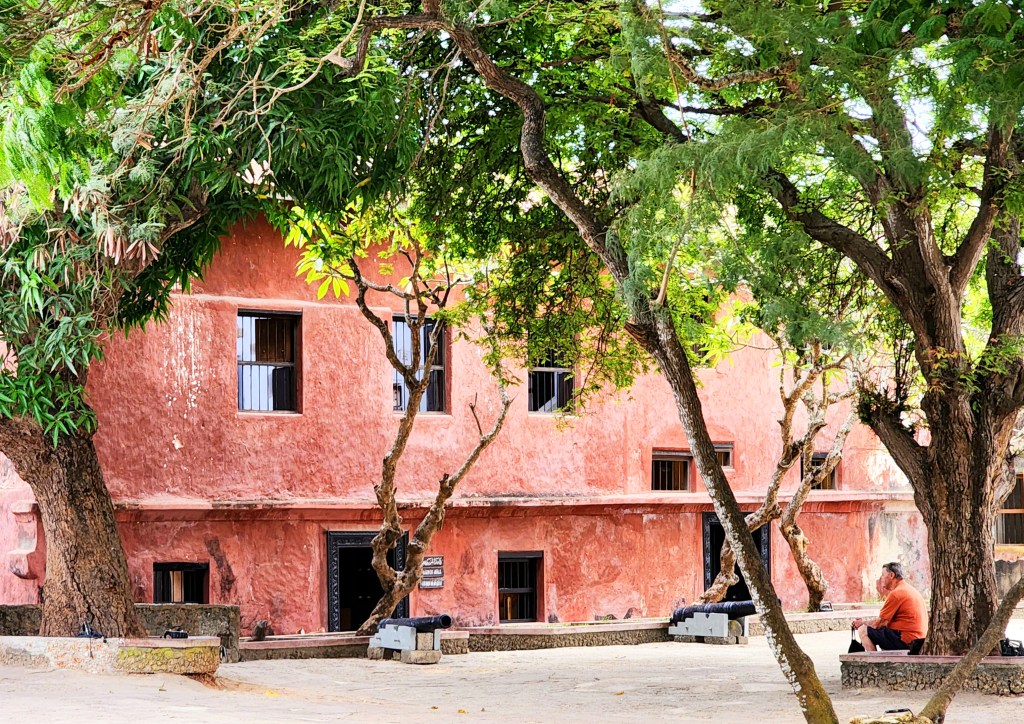
Fort Jesus was the only fort maintained by the Portuguese on the Swahili coast and is a testament to the first successful attempt by the West to establish influence over the Indian Ocean trade. The fort was captured and recaptured at least nine times between 1631, including when the Portuguese lost it to the Sultan of Mombasa, and 1895 when it fell under British rule, who converted it into a prison.
After the fort we visited a woodworking commune on the outskirts of Mombasa. The commune employs 3,000 people who carve beautiful objects from ebony, rosewood, and other woods. As we walked through the workshops the people were so welcoming, all greeting us with “Jambo!”
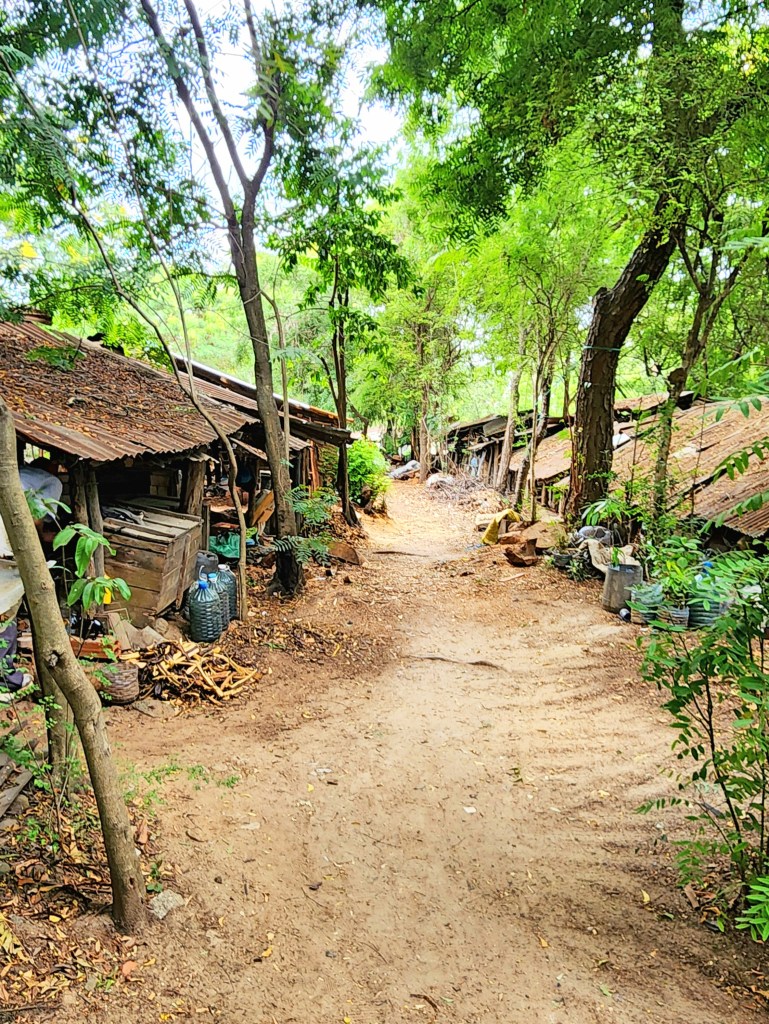
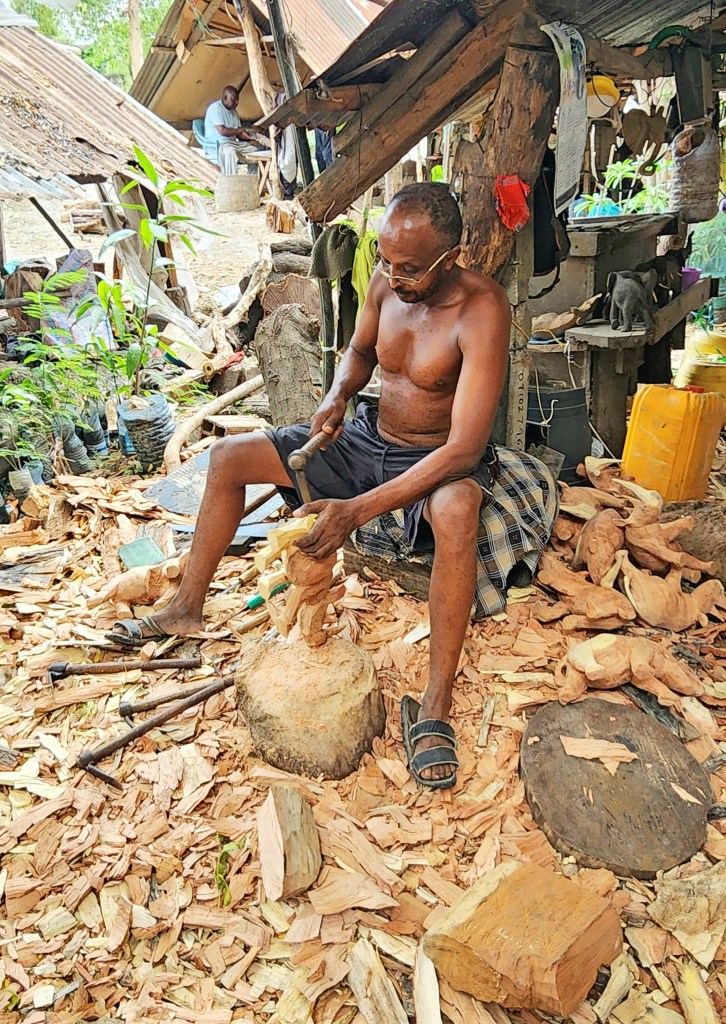
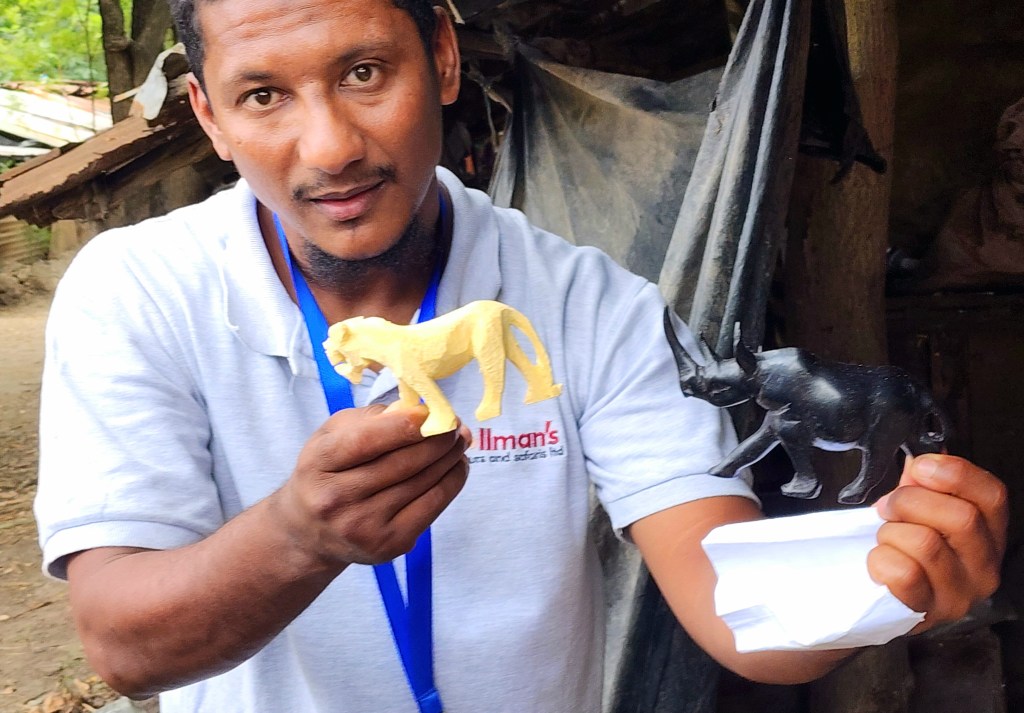

After walking through the workshops, we finished at the shop where we could purchase the carvings. Each carving had a tag that indicated which of the groups in the commune did the carving, so that a portion of the proceeds from the sale go directly back to them. What was so surprising was how inexpensive they were. We wish we had more room in the luggage!
Lastly, there was a stop at the spice market.
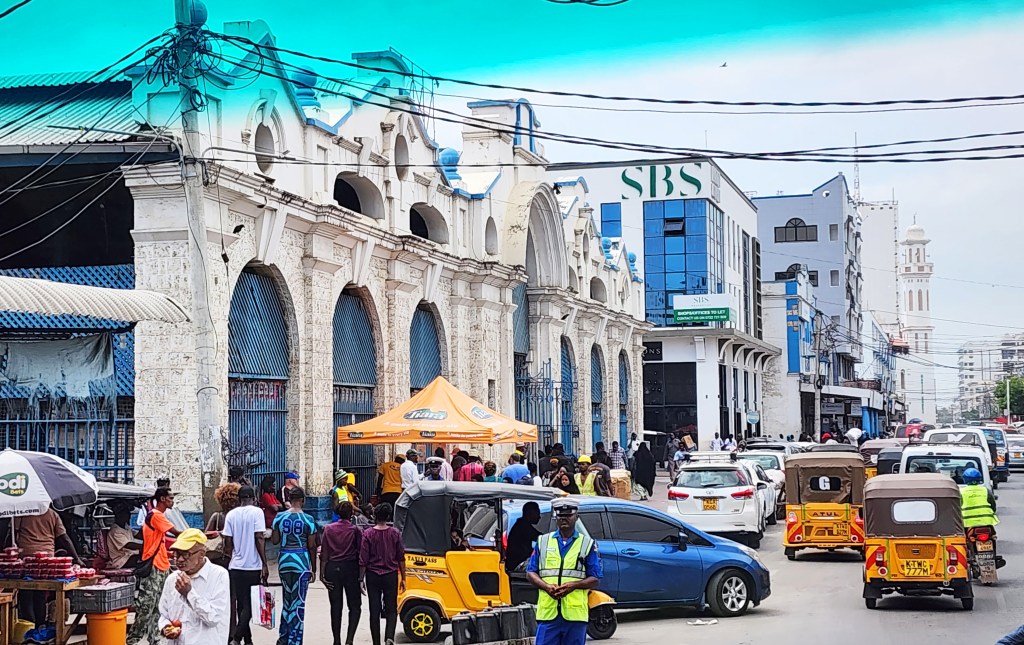
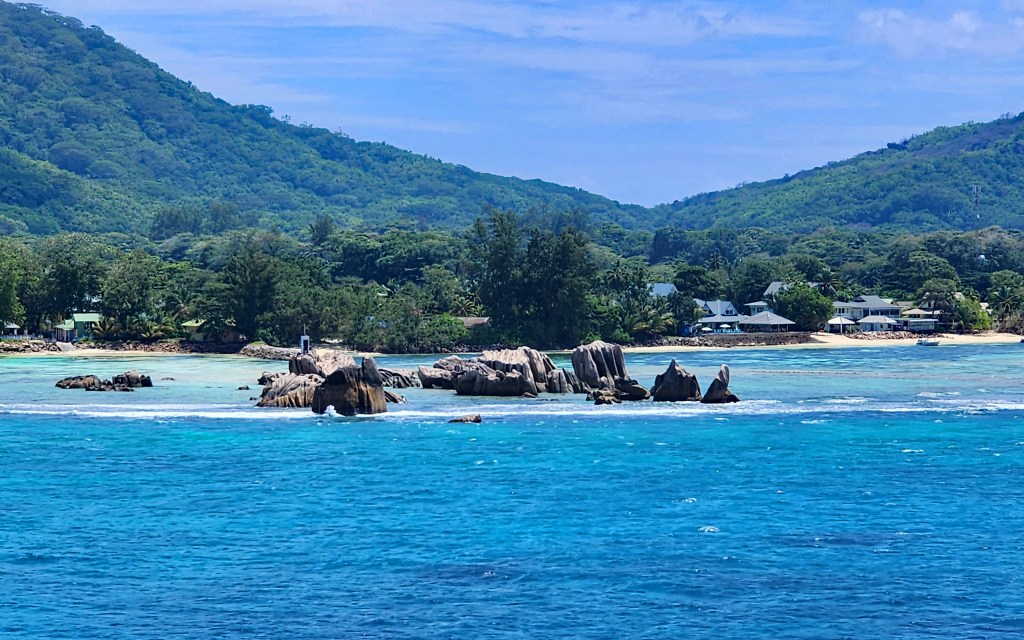
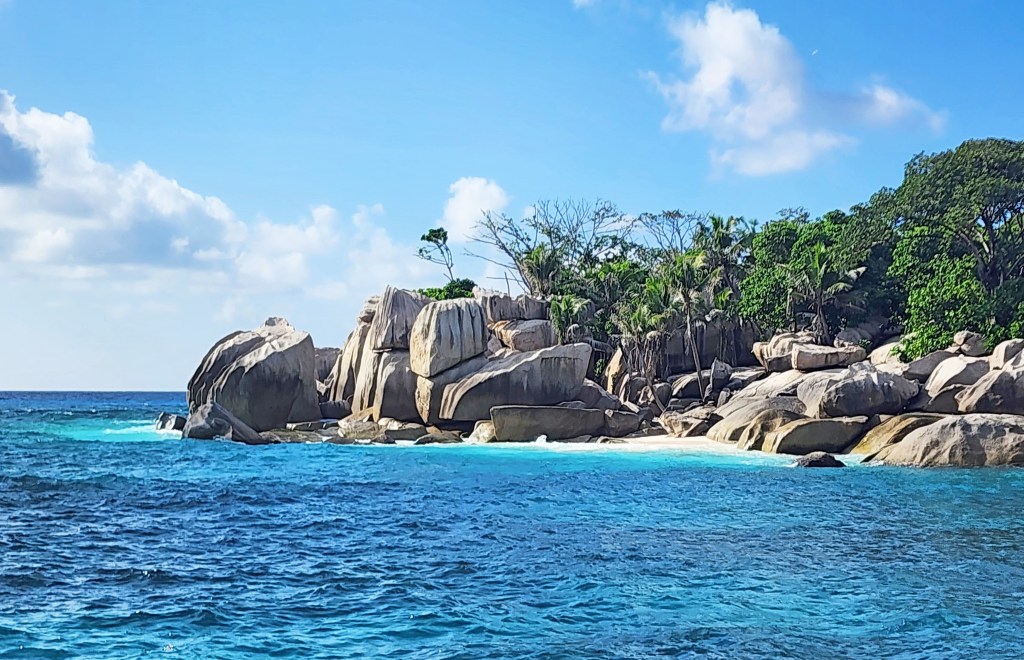
The ship departed for our last stop in the Seychelles.
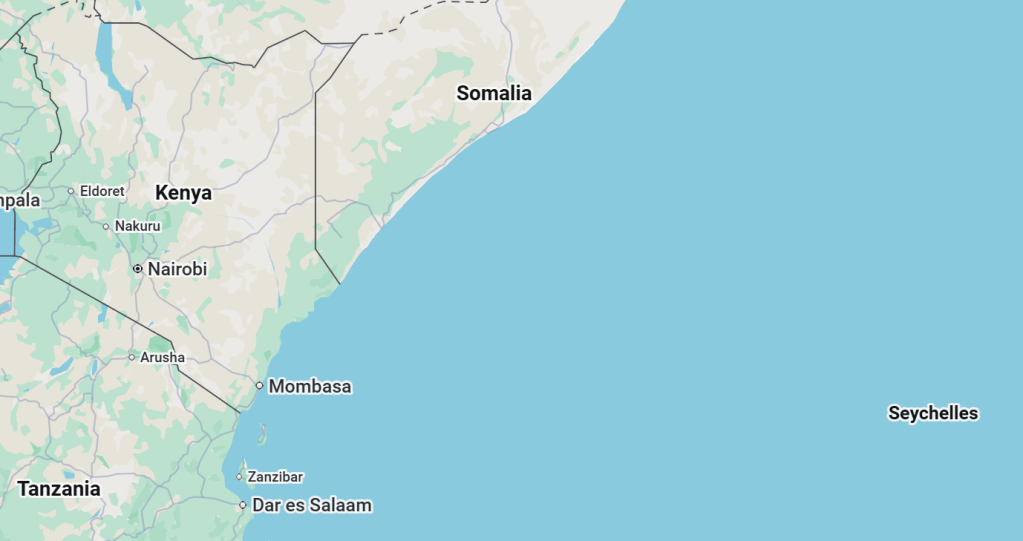
There was a nice boat trip through the islands but the stay was too short.
Next, onto the safari!
Madagascar – wet and wild!
The ship departed to Madagascar from Mauritius for the first of our stops. We went onto the island to see the lemurs. Unfortunately we started our tour in a torrential downpour 😦 We ended up soaked literally to our skin!
Lemurs are considered to be the most social primate and they are so darn cute to boot. There are a number of species of lemurs that evolved to cope with the various influences of Madagascar ecoregions and microhabitats. They vary in size from 9 cm (3.5 inches) to nearly 70 cm (28 inches). Lemurs are monogamous and the female typically bears a single young and carries it with her for three months.
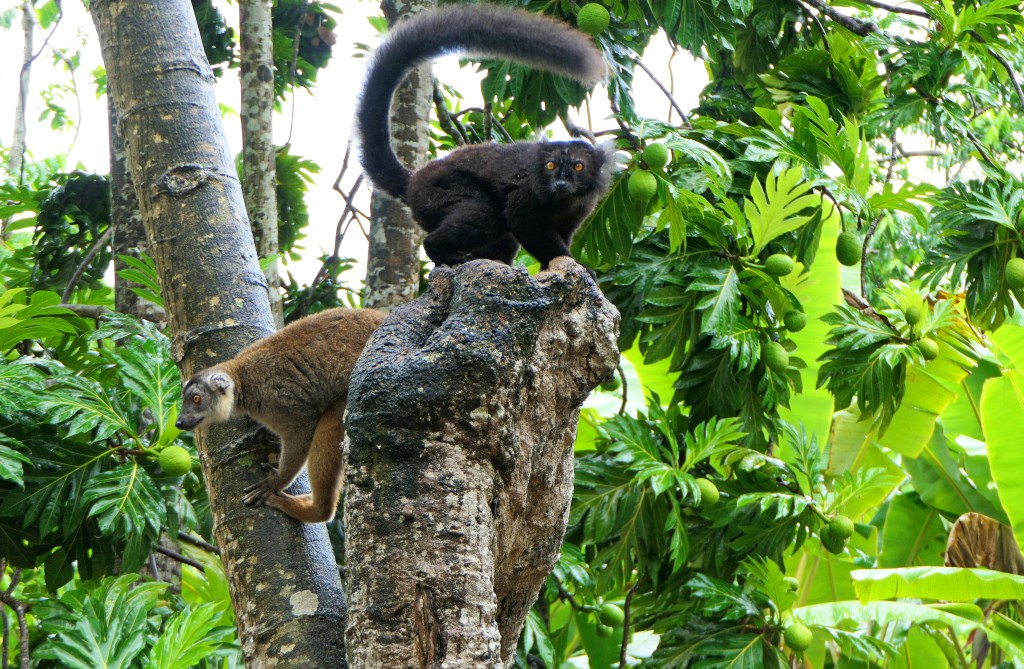

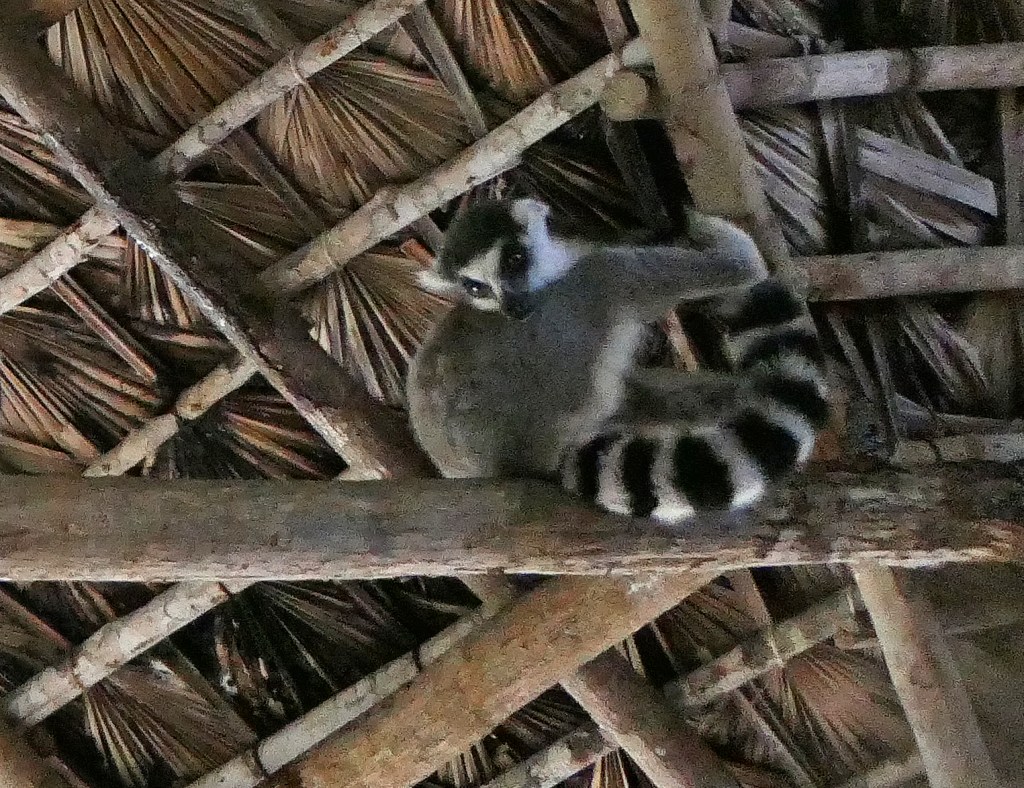
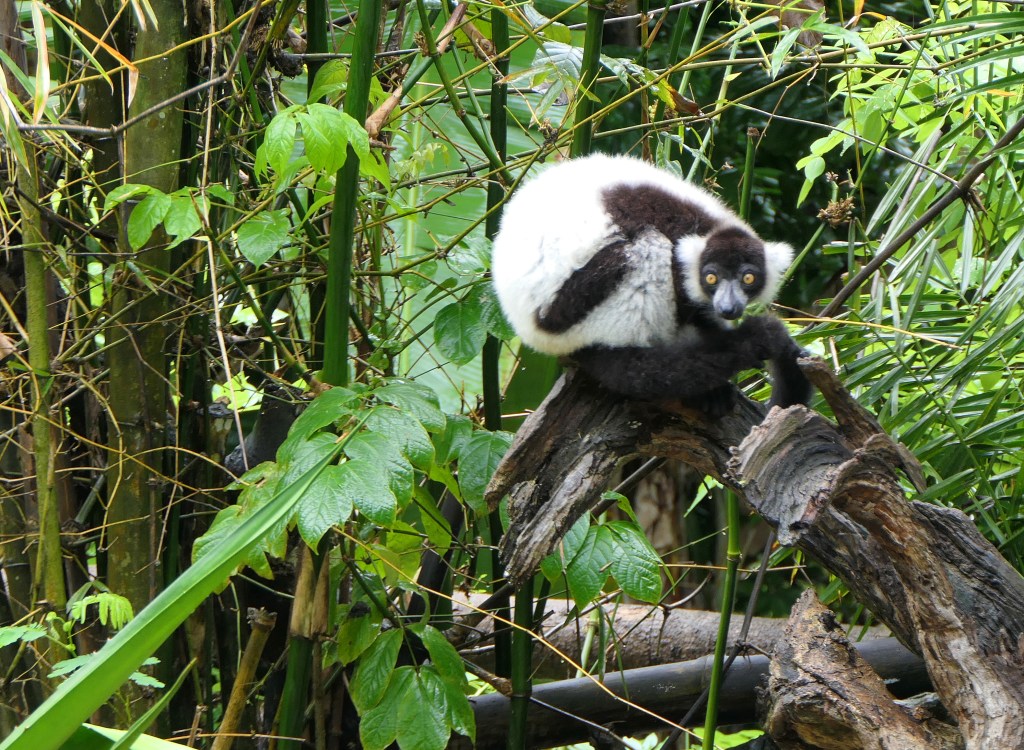
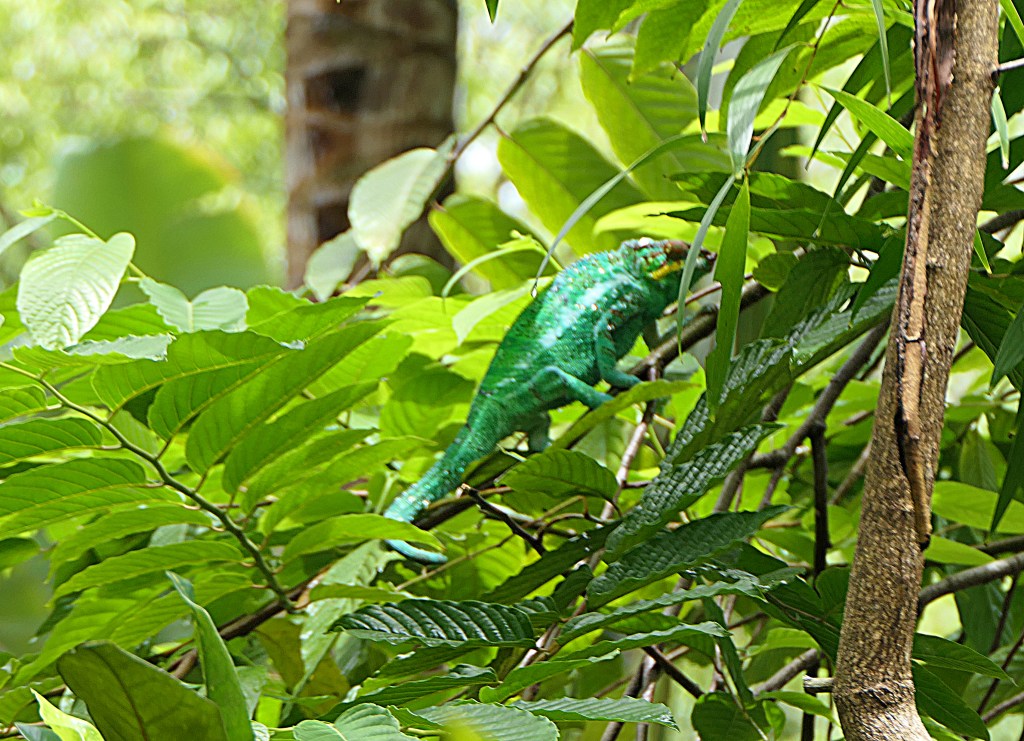
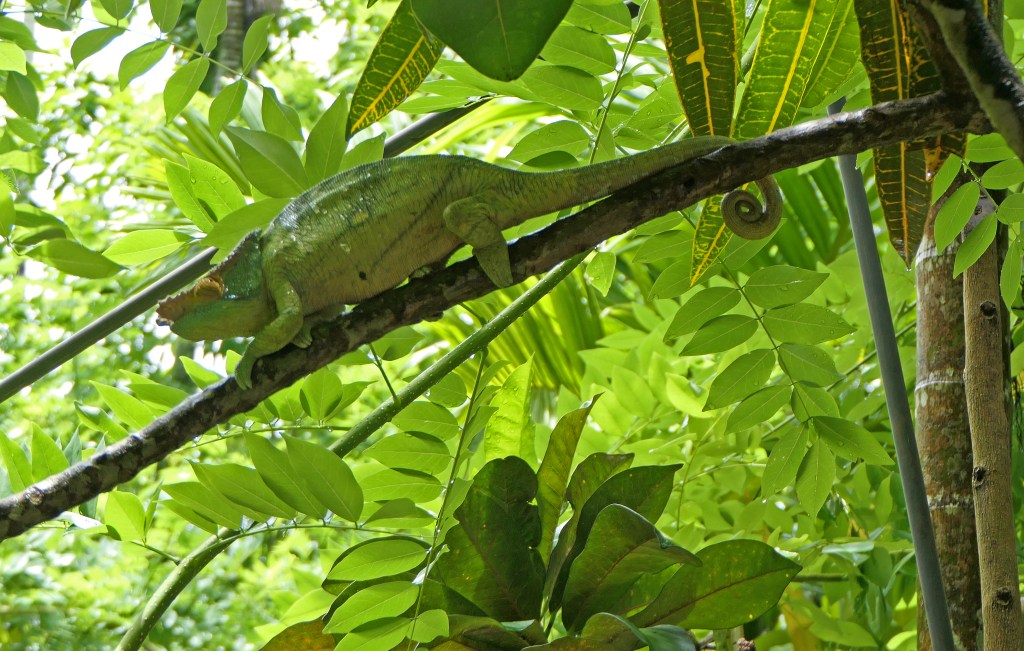
There were other interesting species common to Madagascar.
Chameleons.
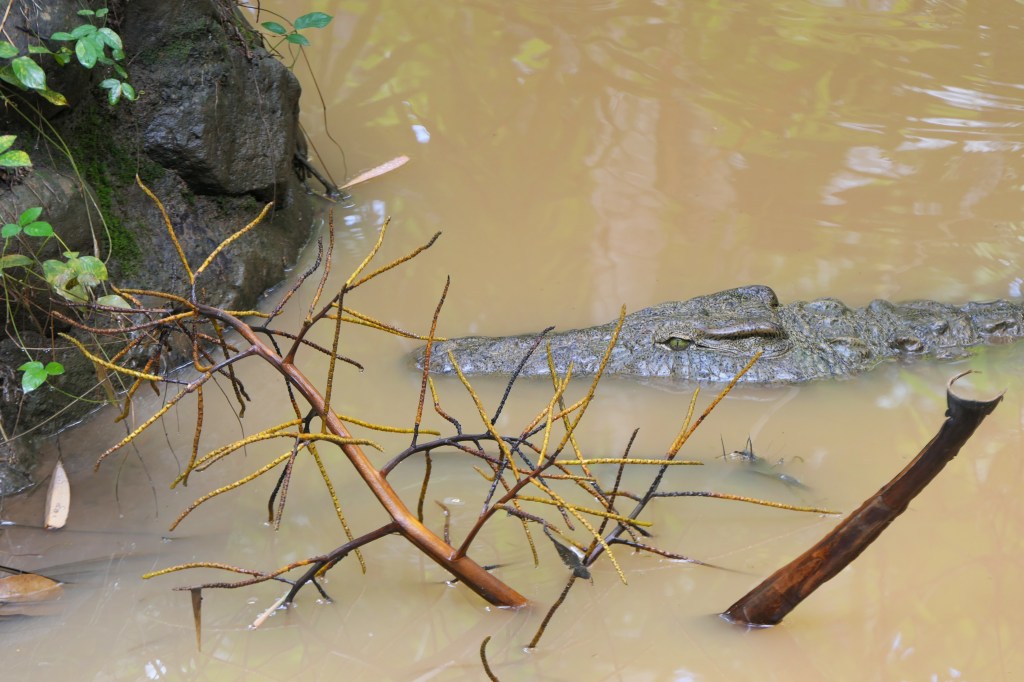
Crocodiles.
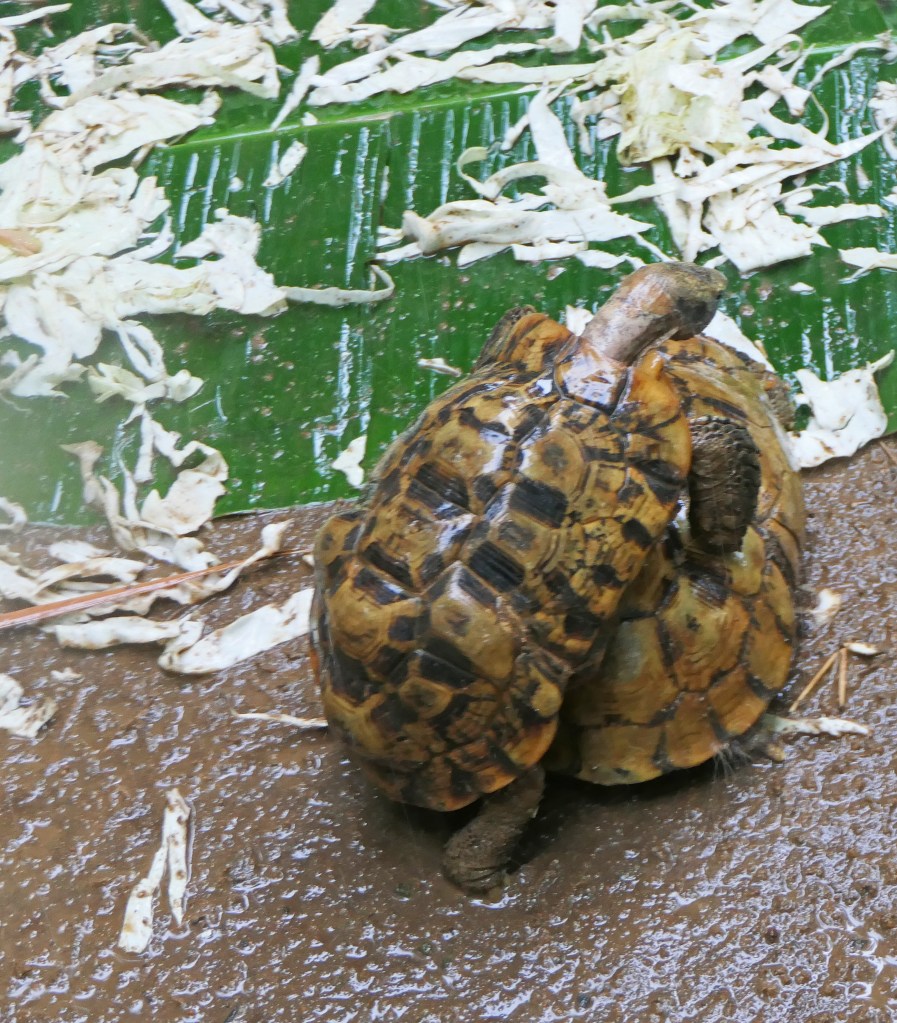
The local turtle species – need to get a room!
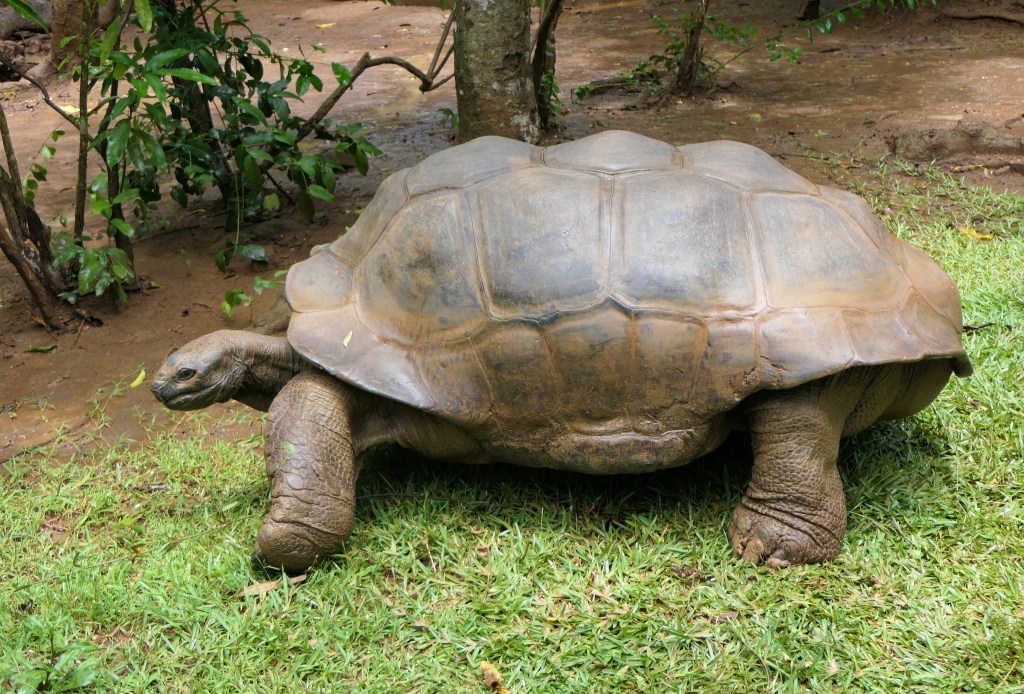
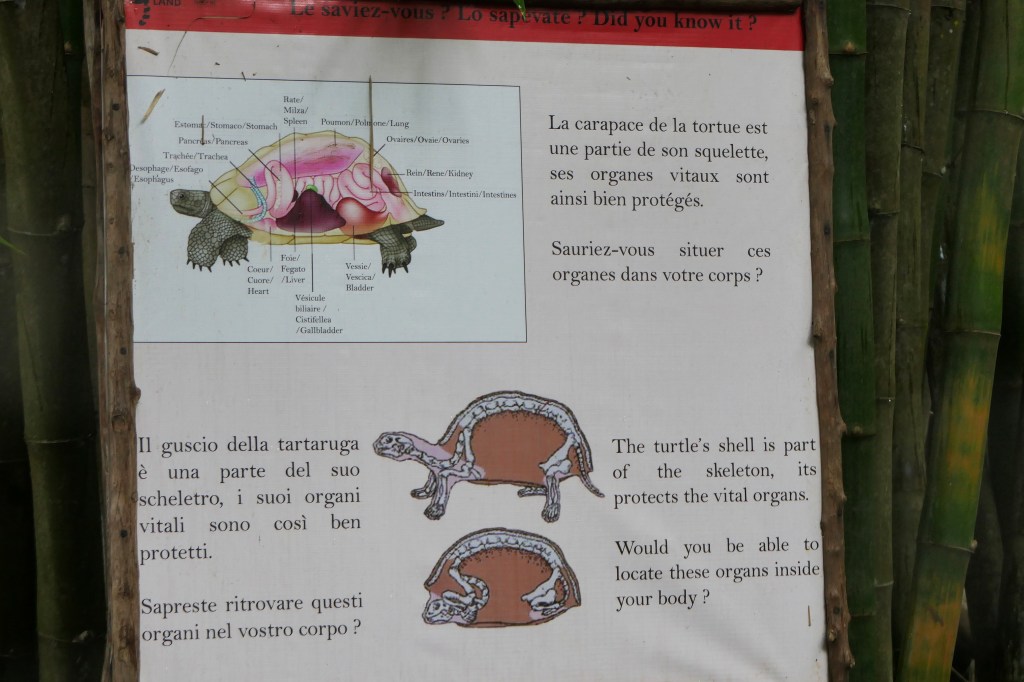
And giant tortoises that are not endemic to the island but have been brought here. This guy is 200+ years old.
From there we headed next to Zanzibar!
Onward from France to Mauritius and our ship
We closed our time in France with a great lunch with Christian’s sister and husband in Goudargues.


When we got back we took the Christmas tree down, packed up our stuff that stays in France and drove 8 hours back to Paris to the airport.
This began the trip from hell 😦
The Hilton that I booked – you couldn’t pull the car up to the door, there was a hill from parking down to the entrance. Only one luggage cart in the entire place, you had to roll it up a ramp and then roll it down again. Because this trip was both cold/snow weather and hot/tropical/safari we could not pack as light as we would normally do so it was a challenge. The room I thought we had booked was misrepresented so I had to go on a “tour” of available rooms to find one that worked for us. OK, great, we think we get settled. Then Christian notices there was shit on the outside of the toilet, and not a little…. yuck! Tell the desk, the poor girl has to go clean it herself and we go and do have a very nice dinner. Come back and our room has no hot water. They give us a key for another room to use in the morning for showers —- really?
So after tromping down the hallway to start the day and hauling the luggage back up the hill we are off to fly to Mauritius standby on Air France feeling OK – we are off to the next step of the adventure. Not so fast… have to pay to check two of our bags … but fine. Then we get to the pre-security screening and find out there is a carry-on weight limit, but AFTER we had checked our large bags. So in the middle of the airport we’re on the ground trying to consolidate the heavy but not valuable stuff into one carry-on that we now have to check. Good, do that, meet the weight limit. And then get middle seats for an almost 12 hour flight with seatmates from beyond hell lol. I won’t go into the details but it was an ugly flight!
Get to Mauritius and one bag goes temporarily missing but we do get it (thank god for air tags). Get the car and drive to our apartment rental in the beach town of Pereybere for New Years Eve.
Had a great dinner on the beach with fireworks over the harbor, but then at midnight….
The town erupted with fireworks from every direction!
Views of Mauritius.


And on to the ship 🙂

Our suite is at the back of the ship. I have to confess we didn’t try to take pictures before we messed the place up lol.


And off we go to our next destination.


The south of France
We stay at a lovely rental that we have been to for years just minutes from Christian’s family. It is in the small medieval village of St Victor la Coste.
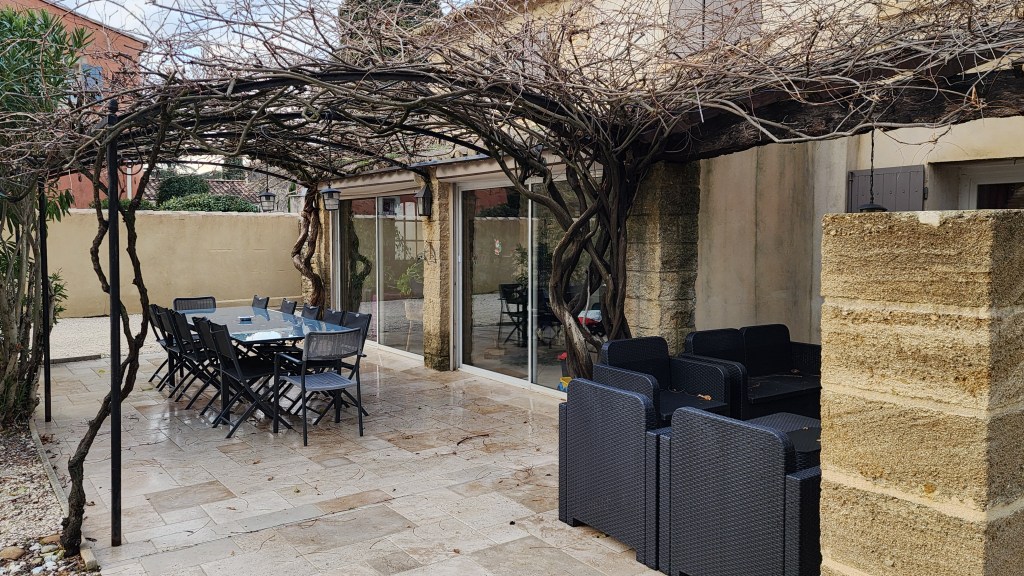
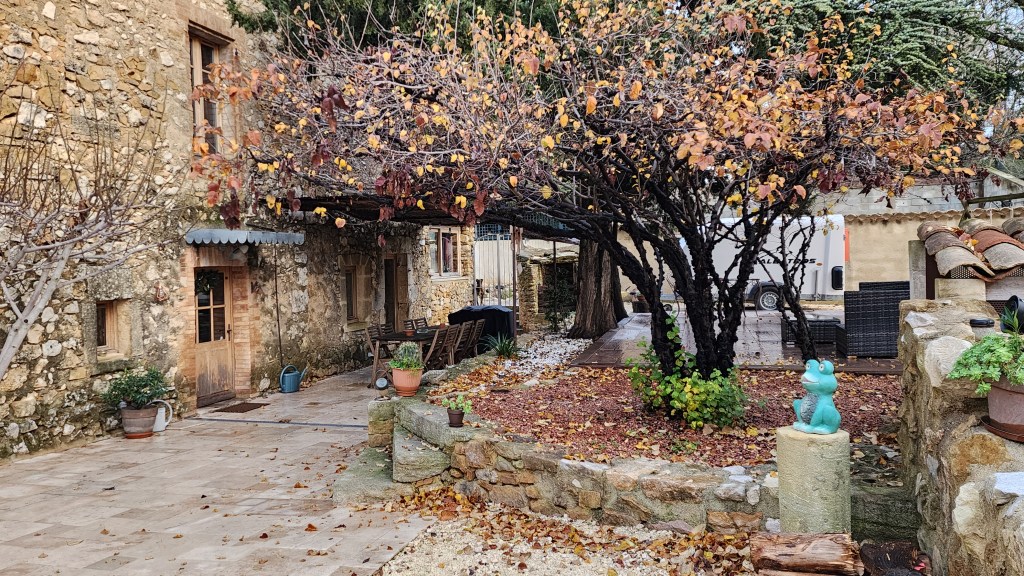

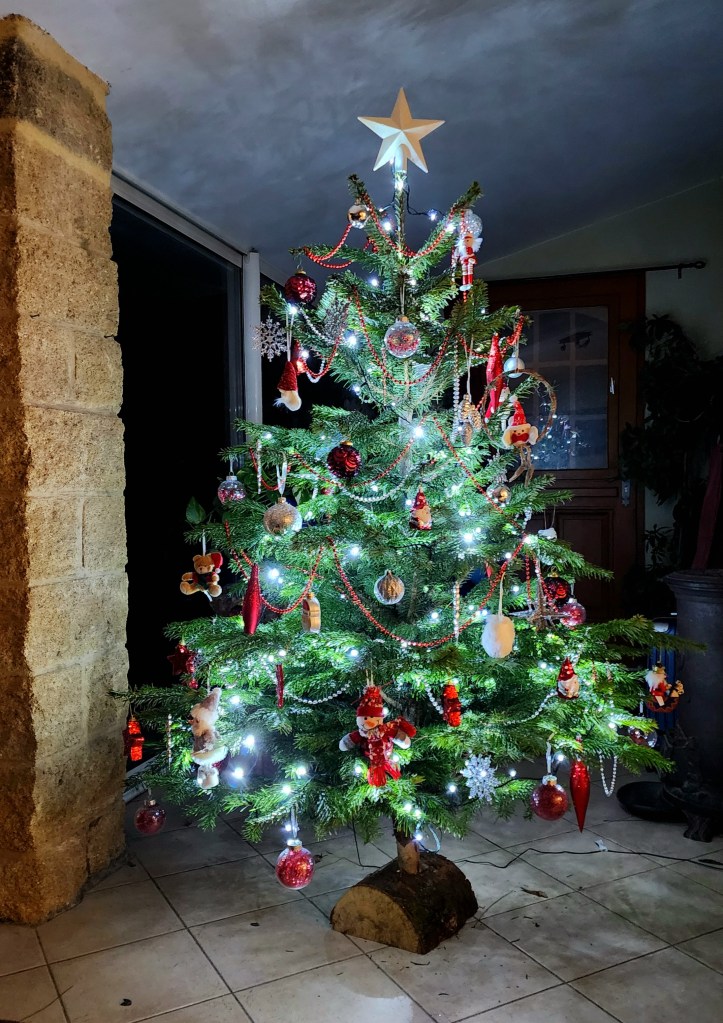
Our Christmas tree 🙂
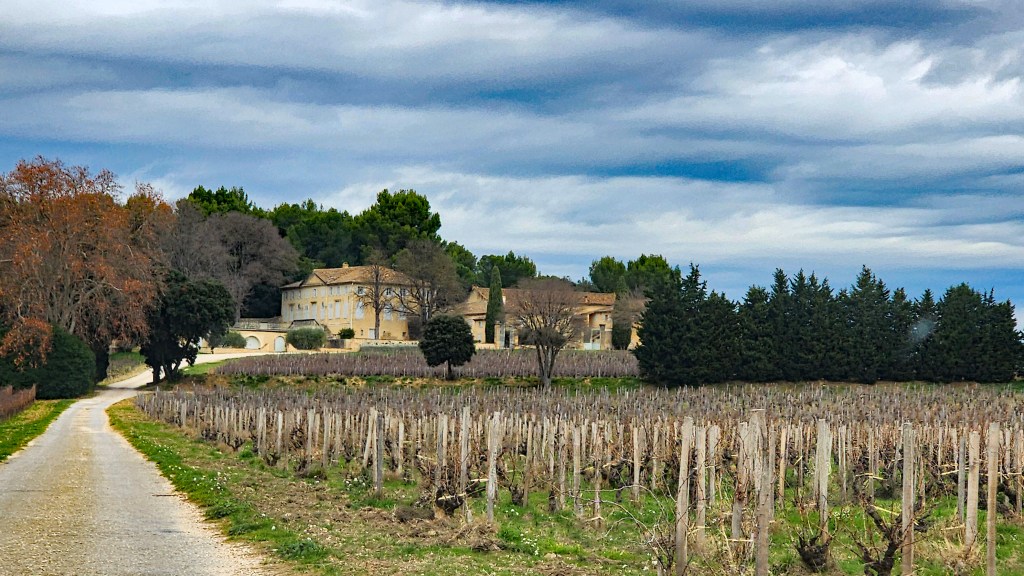
We went to the vineyard Chateau d’ Aqueiria that Christian’s niece manages to get some great wines for the stay.
Then the weather become really iffy. Rain, clouds and gloom 😦 We had a break in the grayness for a day and went to Abbaye de Montmajour, which was first built in the 10th century on a hill that was surrounded by marsh.
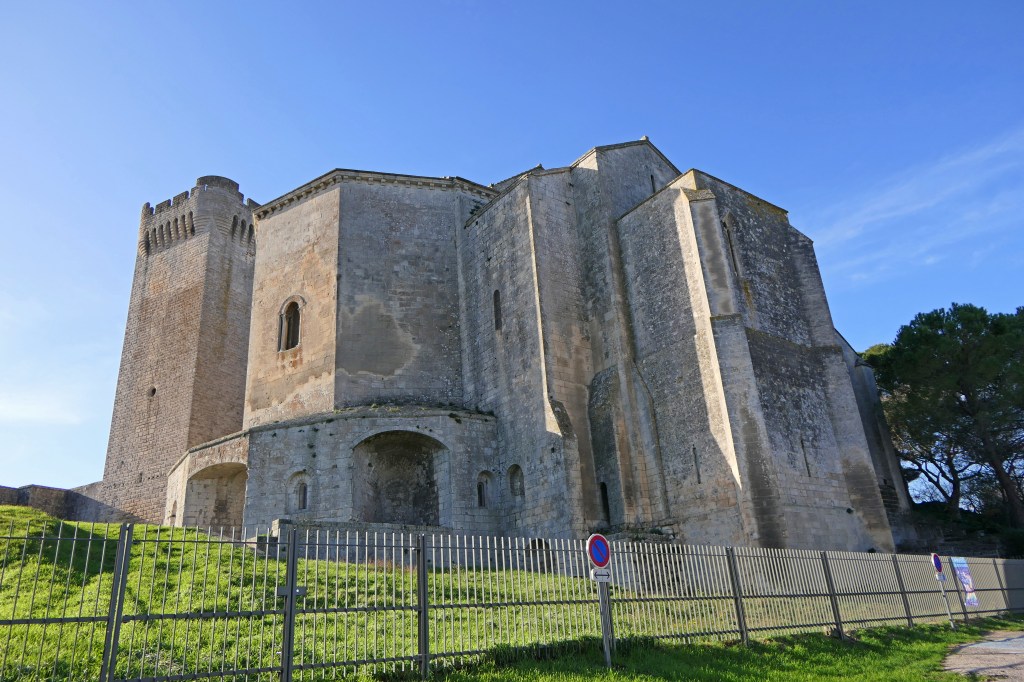

At that time it was home to Benedictine monks and expanded over the following century. The abbey was fortified during the 100-Year War in the 14th century.
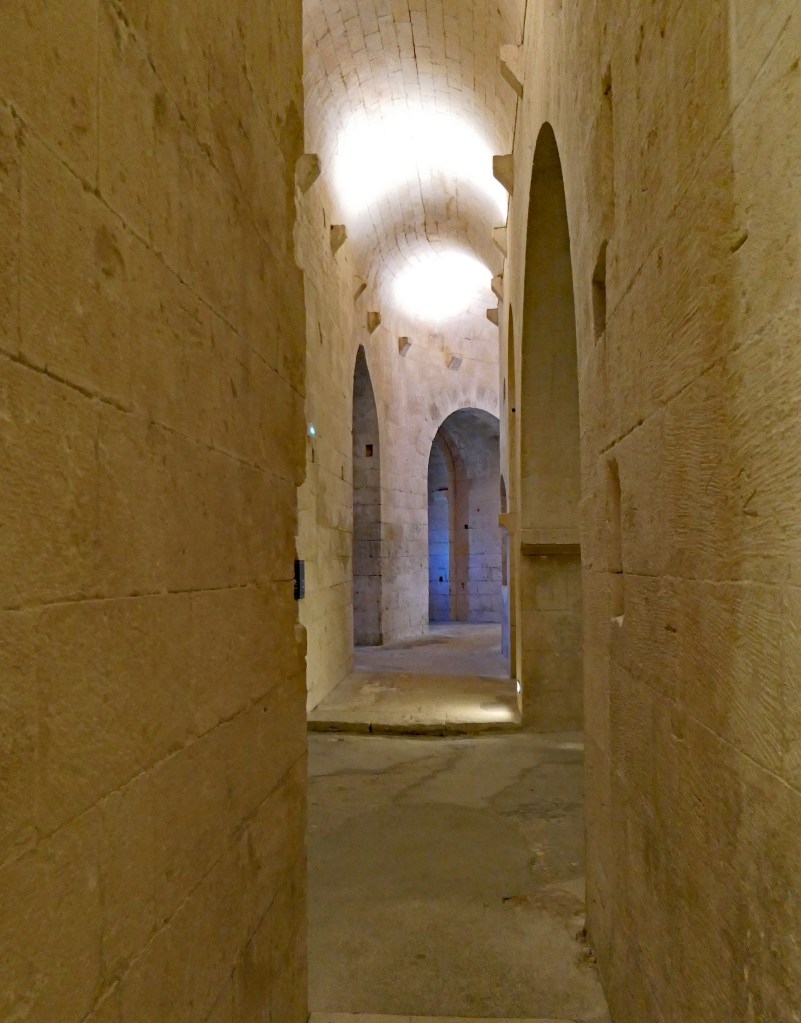
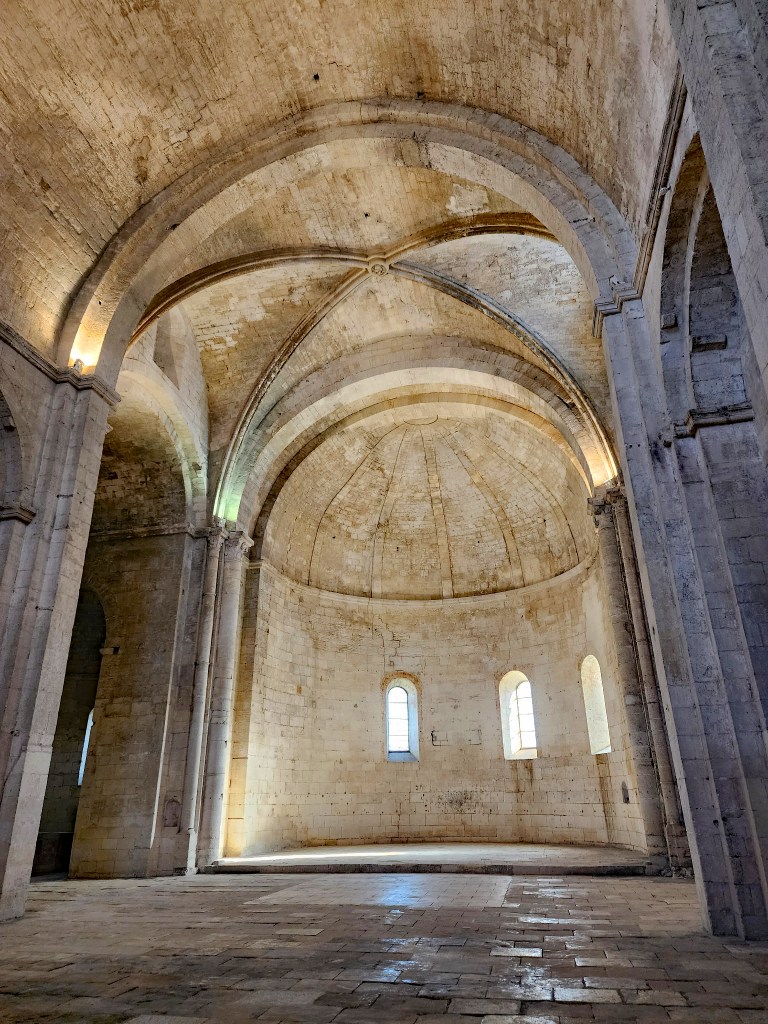
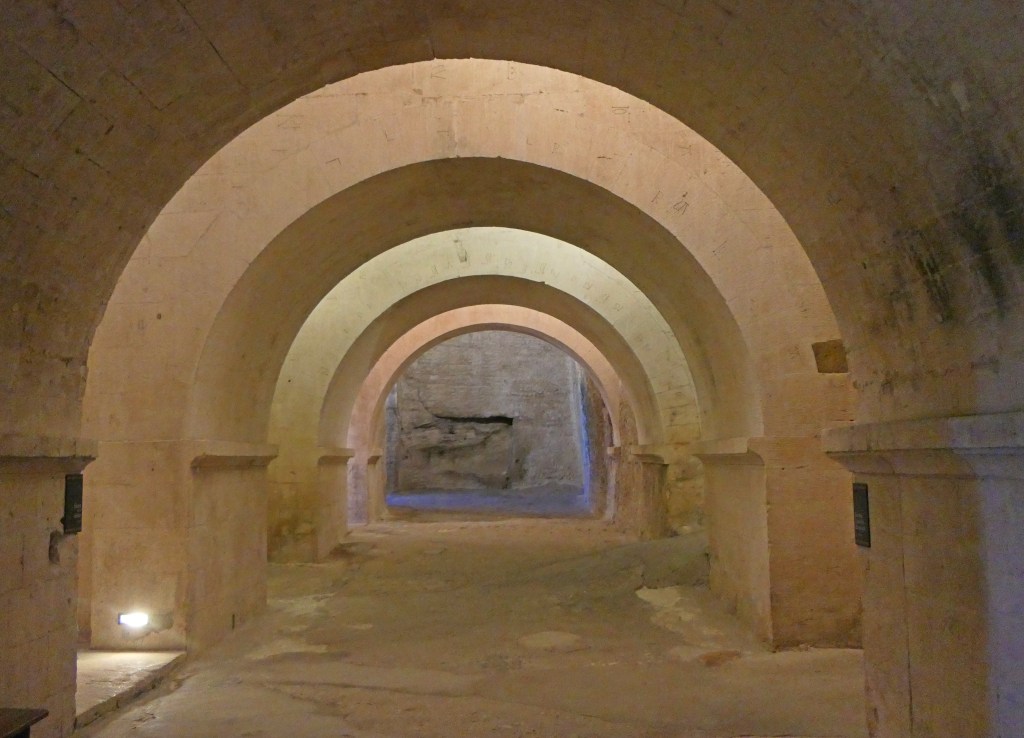
The long dark shadows in the picture below were rock tombs. As early as the 3rd millennium BC the island was used as a cemetery, with individual graves carved into the rock.
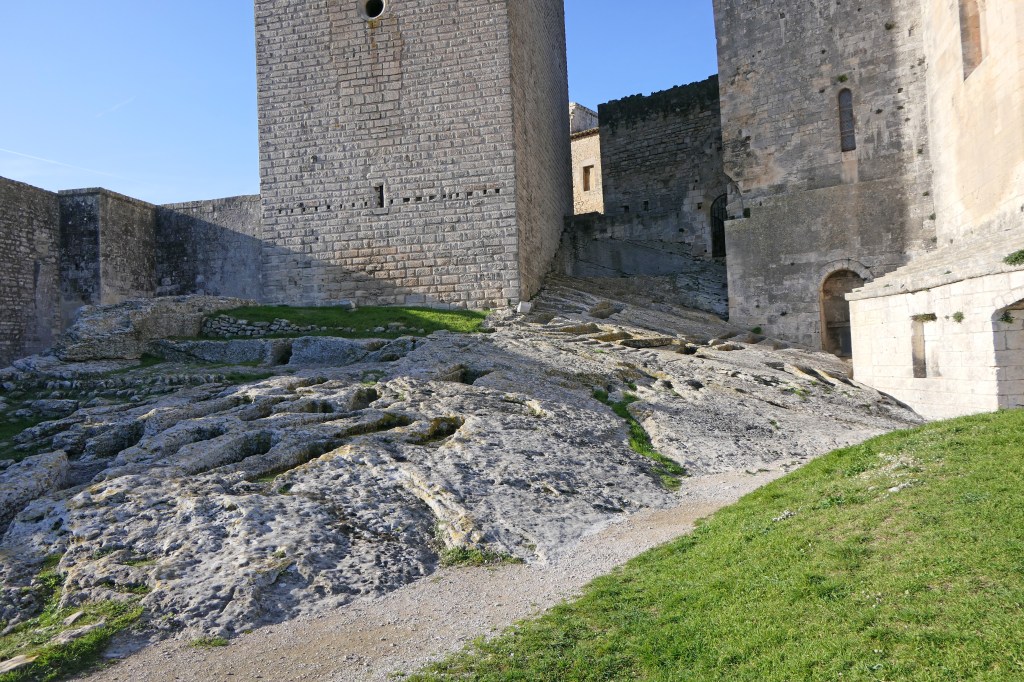
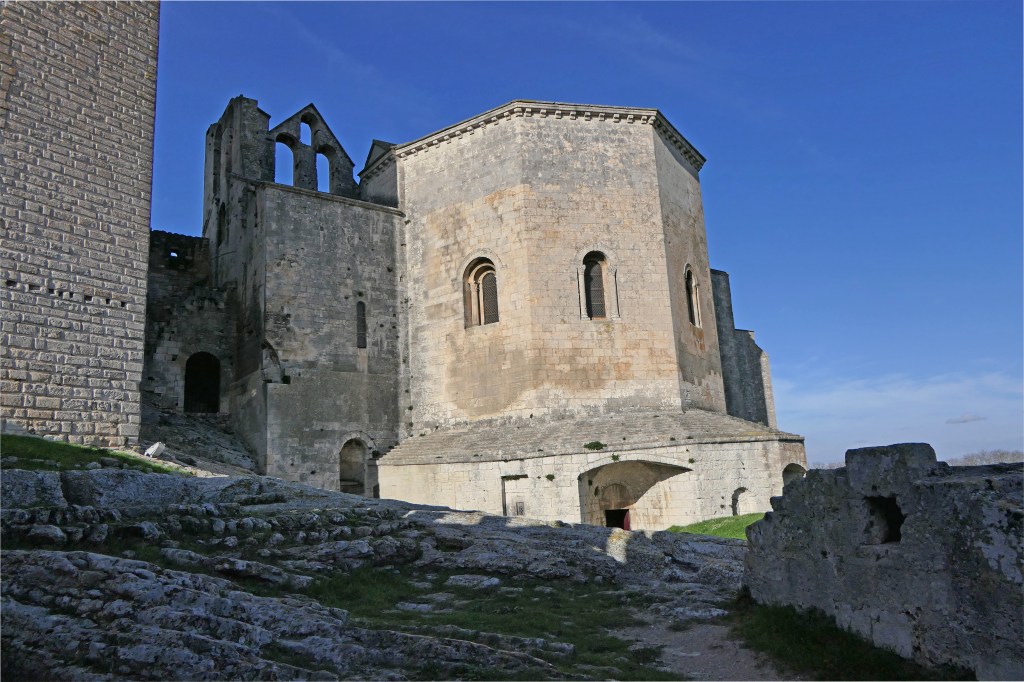
Numerous additions were made in subsequent years. It was an important pilgrimage site during the Middle Ages, and in the 18th century it was the site of a large Maurist monastery, now in ruins as is much of the rest of the site. But it is remarkable how much of the ancient construction still stands solid.
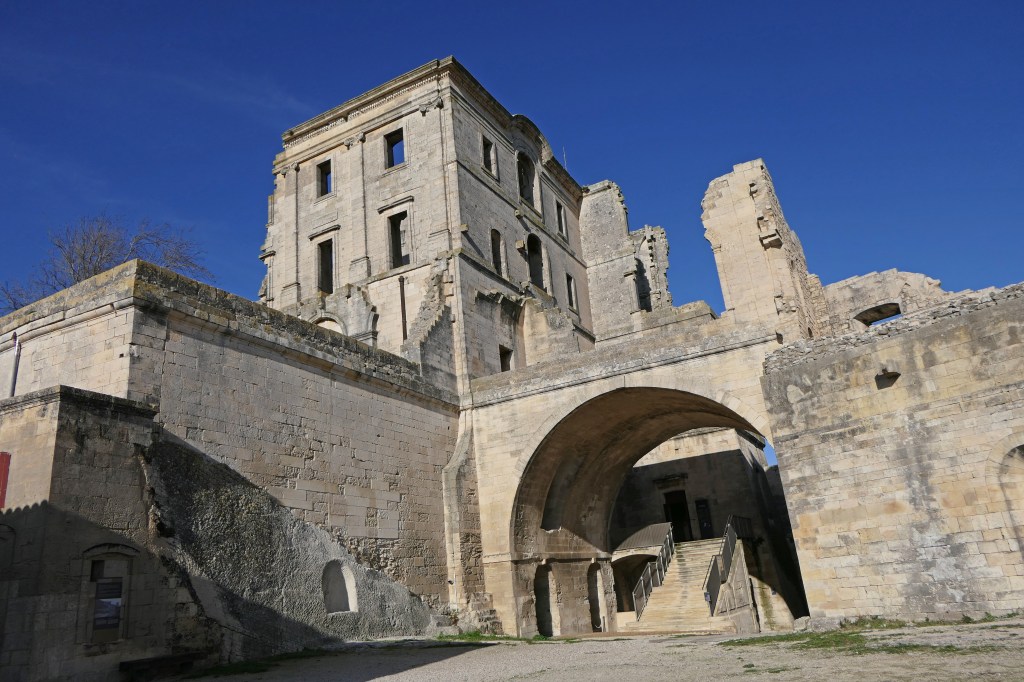
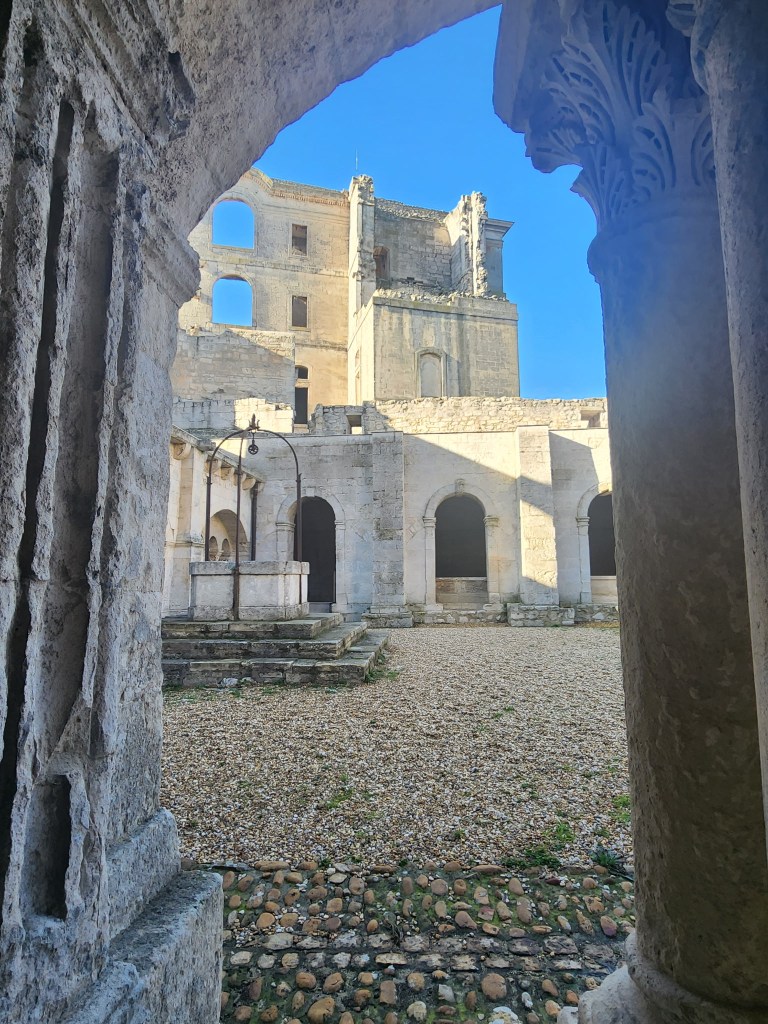
Van Gough chose to sketch and paint the abbey numerous times.
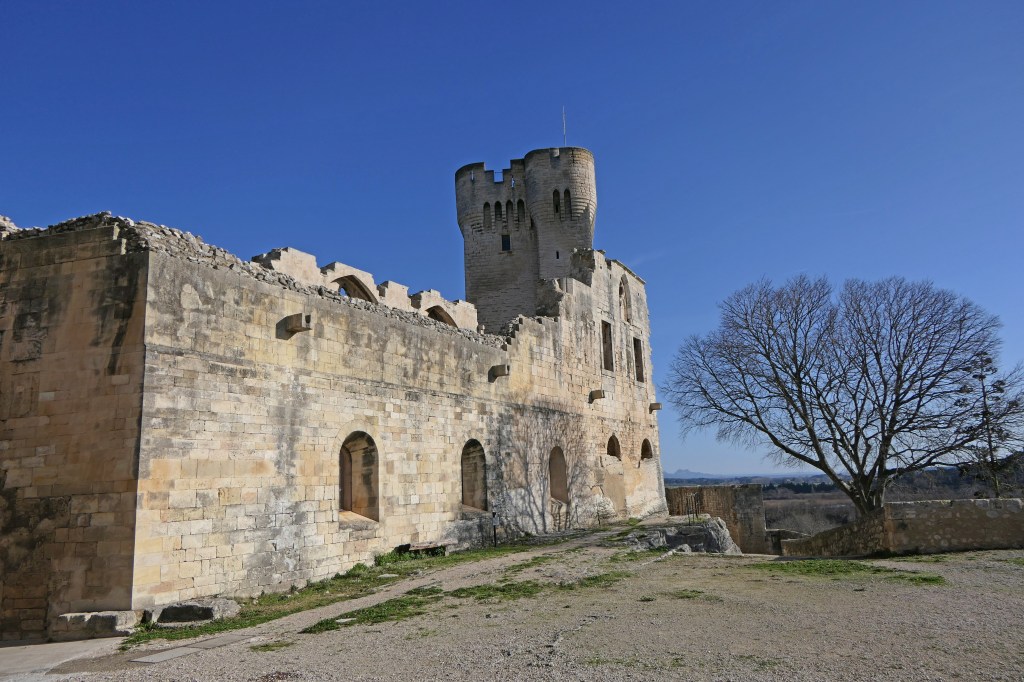
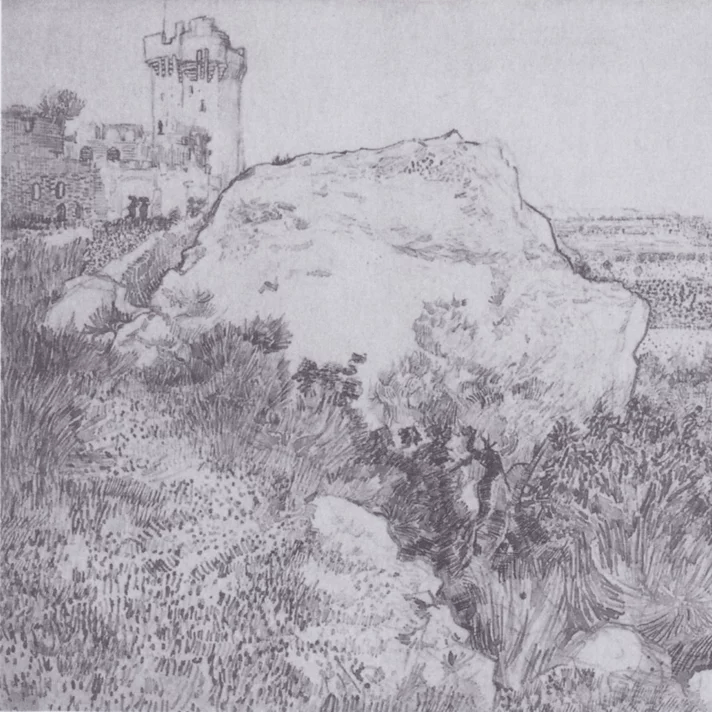
credit: abbaye-montmajour.fr
After touring the Abbey, we had a great lunch in Avignon at Wilson Cafe.
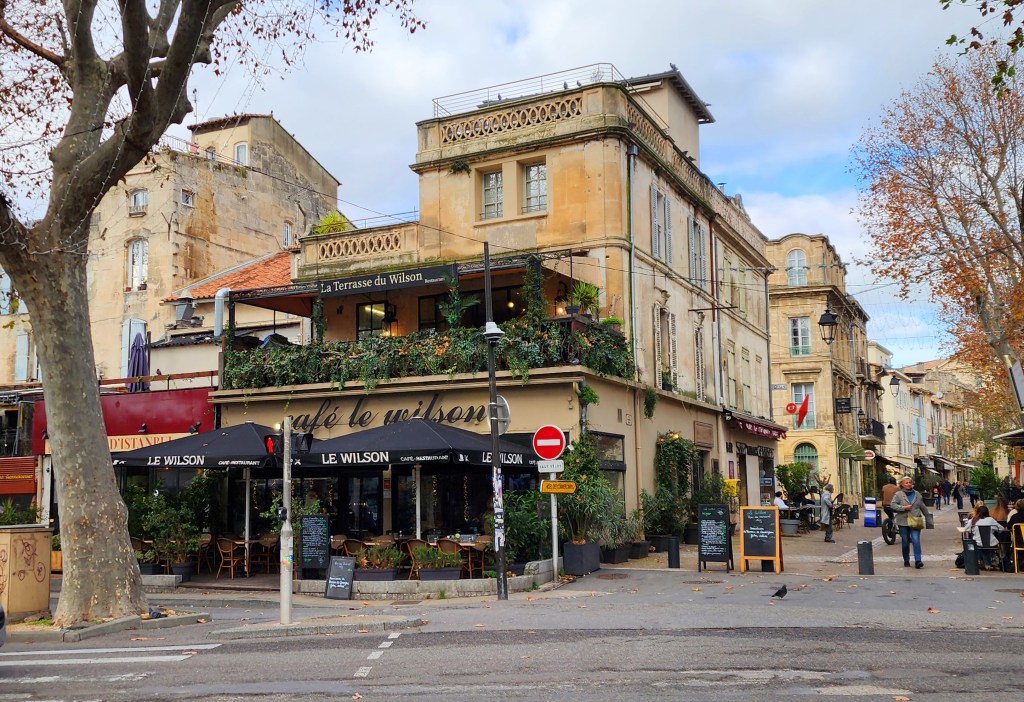
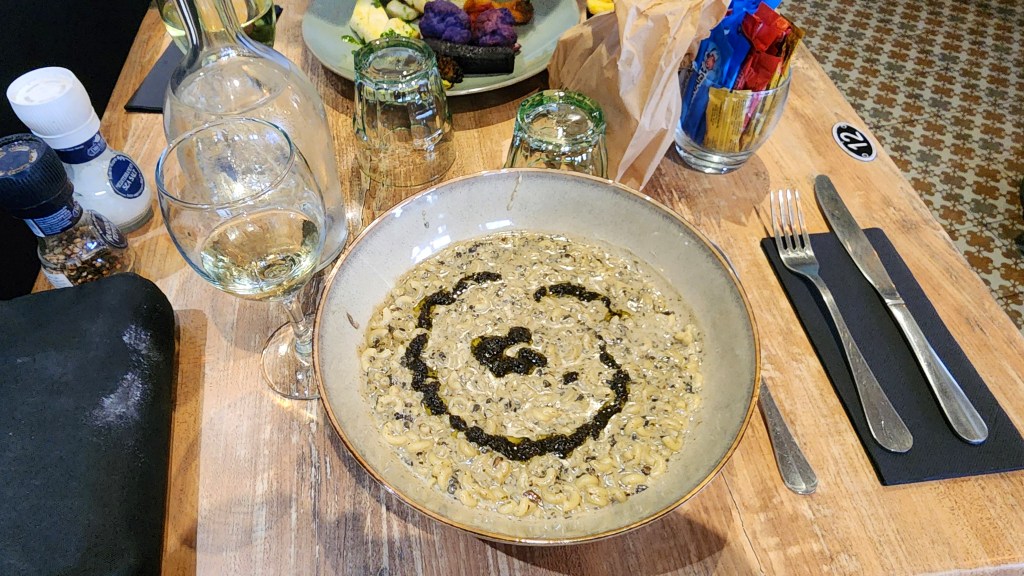
I had an incredible truffle risotto.
Then we visited a farm where they distilled essential oils from lavender, rose geranium, verbena, and other plants as well as make perfume and cosmetics. The weather and time of year did not lend to any photos worth sharing. But it was a very interesting visit.
The weather forecast for the next few days is rain, and we will be visiting the family so likely no posts for a bit.
 3 For the Road